Free tools Windows power users keep installed
One-click scans. No signup required.
Data centers can use substantial amounts of electricity, and some also use water on site for cooling. Their effects on nearby residents depend on the facility’s design and operating needs as well as local water systems, wastewater capacity, power generation, transmission and utility planning. National estimates describe a growing industry; they cannot by themselves predict a town’s water availability, utility bills or grid reliability.
How much electricity do data centers use?
Servers and other information-technology equipment consume electricity, and cooling and other supporting systems need power too. A facility’s total load depends on the equipment it houses, how intensively it is used, its efficiency, cooling design and operating practices. Data centers often need firm power for continuous operation, and demand varies by region, according to the U.S. Department of Energy (DOE).
As an Amazon Associate I earn from qualifying purchases.
National figures show the scale of demand, but they are estimates and projections rather than measurements of every facility or predictions for a particular utility area.
| Figure | What it represents |
|---|---|
| 176 TWh in 2023 | Estimated U.S. data-center electricity use, reported by Lawrence Berkeley National Laboratory (LBNL) in 2024 and summarized by DOE. |
| 325 to 580 TWh in 2028 | Range projected in LBNL’s 2024 report for U.S. data-center electricity use. This was a forecast, not a reported 2028 outcome. |
| 11.8% of total U.S. electricity by 2030 | Central modeled estimate in LBNL’s 2025 update, published in 2026. |
| 9.5% to 15.3% of total U.S. electricity by 2030 | Scenario range in LBNL’s 2025 update, published in 2026; it expresses uncertainty in the projection, not a guaranteed outcome. |
The figures come from different LBNL analyses and years, so they should not be read as a single measured trend line. The 2030 range is particularly important: the central estimate is one modeled outcome among scenarios, not a settled share.
#1 Best Overall
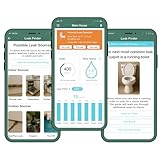
- REINFORCED DESIGN & RELIABLE CONNECTIVITY: Built for real-world conditions, Flume 2X now features a parylene coating—used in medical and underwater gear—plus an upgraded Wi-Fi chip for stronger signals and faster, smoother setup.
- LONGER BATTERY LIFE & NO PROPRIETARY PACKS: Flume 2X comes preloaded with two standard AA battery packs and upgraded electronics for extended life—no custom batteries required.
- INSTANT LEAK DETECTION, INDOORS & OUT: Flume’s smart alerts catch leaks fast—even in your yard or irrigation system. Get real-time notifications on your phone to avoid damage, water waste, and costly surprises.
- REAL-TIME USAGE TRACKING & BILL SAVINGS: See when, where, and how much water you're using—down to your sprinklers. Flume helps you spot waste, set goals, and save. Customers report cutting bills by up to 15% each month.
- FAST, DIY INSTALL—NO TOOLS NEEDED: Flume fits over 95% of home meters and installs in minutes. Just connect in the app, secure to your meter, and start monitoring. No plumbers, cutting, or special tools required. See images for full compatibility list.
Where data-center water use comes from
Water used at the facility
Some data centers use water on site to remove heat, including through cooling towers. In a cooling tower, some water evaporates as heat is rejected, and some is drained as blowdown to control dissolved minerals in the recirculating water. DOE’s Federal Energy Management Program describes evaporation as the primary source of cooling-tower water consumption and blowdown as another water loss from the system.
Cooling design and operating conditions affect how much water and electricity a facility uses. Water use also depends on factors such as climate and operational practices, so a figure from one facility cannot automatically be applied to another.
Rank #2

- ⭐NSF/ANSI 61 & 372 Certified⭐ 【LP365】--Supports viewing Temp and Flow Rate,【LP365-P】--Supports viewing Water pressure and Flow Rate(All other functions are identical)
- ⭐Real-Time Leak Alerts&Notifications--Auto Shutoff--Patented Ultrasonic Micro Leak Detection--Phone Control from Anywhere--Daily and Monthly Water Monitoring (Extra Pressure Display) --Linking with Other Smart Devices
- [24/7 Real-Time Alerts&Notifications, Wherever You Are]--Stay connected and informed in the event of a leak or even a minor risk, frizzlife sends alerts via sms, phone calls, and app notifications, and automatically closes the valve to prevent further damage. whether you're home or away, you’re always in control.
- [APP-Based Control With Real-Time Water Usage]--Using the “smart life” app, you can control the frizzlife valve remotely and access real-time insights on water usage, including flow rate and pressure. enjoy worry-free monitoring, even while on vacation, at work, or on the go.
- [Ultrasonic Technology for Precise Flow Monitoring]--Upgraded ultrasonic technology, Frizzlife accurately monitors water flow rates, detecting even the smallest changes—down to 0.01 gpm. This precise flow monitoring ensures reliable leak detection and extends device lifespan, saving you time and maintenance costs while keeping your home protected.
Water used to generate electricity
A data center can also be associated with water use away from its site: power plants may consume water to generate the electricity the facility uses. The amount depends on the electricity-generation technologies serving the load and their location. This indirect water use is separate from the water delivered to the facility for cooling.
The Tool Desk
Outbyte Driver Updater FREEFix the driver behind crashes, sound loss and screen glitchesFind Drivers →Outbyte PC Repair FREERepair Windows errors before they cause bigger problemsFix Now →Withdrawal, consumption and WUE
Water withdrawal is water taken from a source. Water consumption is water not returned to the immediate system, including water lost through evaporation. The two measures are not interchangeable: a facility may withdraw water and return some of it, while evaporated water is consumed.
Rank #3

- Breakthrough 1804 ft Connectivity: Engineered with advanced Sub-1G long-range wireless tech, our leak detector maintains robust signals over unprecedented distances—reaching up to 1804 feet even through 5 dense walls. Secure every critical space in expansive properties, from deep basements to detached garages and distant outbuildings.
- Multiple Reminder Methods: Our water leak sensor supports multiple remote alarm. It can instantly send SMS, APP, and Email notifications to your phone (no matter how many times the SMS is used, it's free). Also, the water leak sensor flashes red and sounds a 105 dB alarm. Perfect for the basement, kitchen, or vacation home!
- Feature-Rich App: Receive instant push notifications. Use the “Find Device” feature to quickly trigger audible beeps to retrieve misplaced sensors. Add multiple email addresses through the APP, and your family and friends can also receive reminders when there is a water leak at home.
- Industry Leading IP67 Waterproof: Its IP67 waterproof rating ensures durability against spills, humidity, and accidental submersion.It can be used multiple times after wiping dry.
- Four-level volume adjustment: Customize your own alarm to fit your life! Use the app to adjust the volume in 4 levels, with a maximum alarm volume of 105 decibels. Whether it's day or night, whether it's in the bedroom or the basement, you can find the right volume.
Water usage effectiveness (WUE) is a site-based measure: annual site water use divided by annual IT-equipment energy use. It can help describe direct facility water use relative to computing equipment energy, but it does not capture the water consumed off site to generate electricity.
Why water use per computing task can vary so widely
A 2025 LBNL-authored review found workload-level water-use variation exceeding 10,000-fold in its analysis. That finding is not a universal range for individual data centers. It reflects how strongly results can depend on what is counted and on the conditions behind a workload estimate.
Rank #4
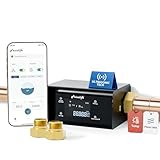
- 【LP365】--Supports viewing Temp and Flow Rate,【LP365-P】--Supports viewing Water pressure and Flow Rate (All other functions are identical)⭐NSF/ANSI 61 & 372 Certified⭐
- ⭐Whole House Water Leak Detector and Alarm--Real-Time Leak Alerts&Notifications--Auto Shutoff--Patented Ultrasonic Micro Leak Detection--Phone Control from Anywhere--Daily and Monthly Water Monitoring--Linking with Other Smart Devices-Smart AI protection-No false alarms
- [24/7 Real-Time Alarm&Notifications, Wherever You Are]--Stay connected and informed in the event of a leak or even a minor risk,Water leak detector for home, frizzlife sends alerts via sms, phone calls, and app notifications, and automatically closes the valve to prevent further damage. whether you're home or away, you’re always in control.
- [Ultrasonic Technology for Precise Flow Monitoring]--Upgraded ultrasonic technology, Frizzlife accurately monitors water flow rates, detecting even the smallest changes—down to 0.01 gpm. This precise flow monitoring ensures reliable leak detection and extends device lifespan, saving you time and maintenance costs while keeping your home protected.
- [APP-Based Control With Real-Time Water Usage]--Using the “smart life” app, you can control the frizzlife valve remotely and access real-time insights on water usage, including flow rate, temperature, and pressure. enjoy worry-free monitoring, even while on vacation, at work, or on the go.
The review identifies interacting factors that can change workload-level water use:
Do these 3 things before closing this tab:
1Repair Windows errors before they cause bigger problems2Fix the driver behind crashes, sound loss and screen glitches3Clear out junk files and repair common Windows errors- Server efficiency and utilization, including the share of servers that are inactive.
- The cooling system, infrastructure efficiency and climate zone.
- The water-consumption factors of the electricity grid supplying the workload.
- The server refresh cycle.
For that reason, a water-per-task figure is meaningful only with its system boundary and assumptions stated. It should not be treated as a direct measure of a whole facility’s annual water demand.
Best Value

- Breakthrough 1804 ft Connectivity: Engineered with advanced Sub-1G long-range wireless tech, our leak detector maintains robust signals over unprecedented distances—reaching up to 1804 feet even through 5 dense walls. Secure every critical space in expansive properties, from deep basements to detached garages and distant outbuildings.
- Multiple Reminder Methods: Our water leak sensor supports multiple remote alarm. It can instantly send SMS, APP, and Email notifications to your phone (no matter how many times the SMS is used, it's free). Also, the water leak sensor flashes red and sounds a 105 dB alarm. Perfect for the basement, kitchen, or vacation home!
- Feature-Rich App: Receive instant push notifications. Use the “Find Device” feature to quickly trigger audible beeps to retrieve misplaced sensors. Add multiple email addresses through the APP, and your family and friends can also receive reminders when there is a water leak at home.
- Industry Leading IP67 Waterproof: Its IP67 waterproof rating ensures durability against spills, humidity, and accidental submersion.It can be used multiple times after wiping dry.
- Four-level volume adjustment: Customize your own alarm to fit your life! Use the app to adjust the volume in 4 levels, with a maximum alarm volume of 105 decibels. Whether it's day or night, whether it's in the bedroom or the basement, you can find the right volume.
How a data center could affect nearby residents
Potential effects depend on the specific project and the local systems it connects to. The relevant pathways include:
- Water supply: facility withdrawals may matter to a local water source or system, especially in places where supply is constrained or drought planning is important.
- Wastewater: cooling-tower blowdown may need to be handled by a wastewater system, subject to the facility’s design and local arrangements.
- Electricity infrastructure: a large, continuous load may require utility planning for generation, transmission or other grid integration.
- Costs and reliability: whether a project changes household bills or affects local reliability depends on utility planning, cost allocation, available capacity and other project-specific facts.
These are issues to evaluate, not proof that a particular facility will cause water shortages, raise household bills or reduce reliability. DOE describes regional variation in data-center demand and the need to consider grid integration and reliability. The U.S. Geological Survey (USGS) identifies water supply, wastewater treatment and energy-use reporting as siting and planning considerations, while noting gaps in data-center energy-use reporting. Neither national analysis nor general guidance establishes what residents near an unnamed facility will experience.
What to ask about a proposed facility
For a specific project, seek the facility’s plans and compare them with local water, wastewater and utility records. Useful questions include:
- What water withdrawals and water consumption does the facility expect, and from which sources?
- What drought assumptions does its planning use, and how does it expect to operate during water restrictions?
- What cooling design will it use, and how will it handle blowdown and wastewater?
- What electricity load and operating profile does it expect, including its need for continuous service?
- What utility interconnection work or grid upgrades are planned?
- Do utility rate or cost-allocation filings explain who would pay for upgrades or additional service?
Then compare the answers with local water-supply and drought plans, wastewater-system capacity, utility filings and grid reliability plans. Those project and local records—not a national average—are needed to assess likely effects in a particular community.
Quick Recap
Product prices and availability are accurate as of the date/time indicated and are subject to change. Any price and availability information displayed on Amazon at the time of purchase will apply.

