Some coral reefs remain densely populated where seawater acidity rises and falls sharply. That persistence is real, but it is not proof that ocean acidification is harmless or that variable pH protects every coral. The most defensible conclusion is narrower: certain corals and reef communities can endure naturally fluctuating chemistry, while the underlying loss of carbonate ions still makes skeleton building harder.
What scientists mean when they say corals cope with acidity
“Coping” in this context means that corals remain present, continue contributing to a reef framework, or maintain substantial cover under measured chemical conditions. It does not mean that the corals have defeated acidification, that all species respond alike, or that a reef exposed to natural fluctuations will respond the same way to a persistent, human-caused decline in seawater chemistry.
As an Amazon Associate I earn from qualifying purchases.
Two observations motivate the question. A Pacific survey found high coral cover at some fore-reef sites where average and minimum pH were lower but pH varied more. At a volcanic carbon-dioxide vent near Mayreau Island in the Caribbean, acidity reached extreme values twice a day and sometimes made aragonite undersaturated, yet nearby reefs retained high hard- and soft-coral cover and extensive carbonate framework. Both are field observations. Neither identifies a single mechanism of resilience or predicts the future of every reef.
The chemistry that still constrains coral growth
Ocean acidification is a long-term pH decline
NOAA Ocean Service defines ocean acidification as a reduction in ocean pH over an extended period, caused primarily by the ocean taking up carbon dioxide from the atmosphere. NOAA estimates that the ocean absorbs about 30 percent of the carbon dioxide released into the atmosphere. That uptake changes seawater chemistry; it is not the same as pouring a strong acid into the sea.
#1 Best Overall

- 𝗛𝗼𝗺𝗲 𝗔𝗾𝘂𝗮𝗿𝗶𝘂𝗺 𝗪𝗮𝘁𝗲𝗿 𝗧𝗲𝘀𝘁 𝗞𝗶𝘁 - Ensure the health of your fish with aquarium water testing kit & ammonia test strips for fish tank. This complete freshwater & saltwater tank test kit provides a reliable water tester for ammonia, pH, iron, chlorine, total hardness (GH), carbonate, nitrate, nitrite, total alkalinity, copper, and temperature, allowing you to have a complete understanding of your aquarium water quality. Trusted by fish enthusiasts, it adapts to your needs, making it an essential tool for aquarium care.
- 𝗔𝗰𝗰𝘂𝗿𝗮𝘁𝗲 & 𝗙𝗮𝘀𝘁 𝗧𝗲𝘀𝘁𝗶𝗻𝗴 𝗥𝗲𝘀𝘂𝗹𝘁𝘀 - Our aquarium water test strips deliver reliable results. Each fish tank water testing kit comes with easy-to-read color charts. This fish tank test strips are highly sensitive, detecting low levels of impurities and foreign substances in aquarium water. Our aquarium water quality tester helps prevent any invisible water problems.
- 𝗜𝗻𝘀𝘁𝗮𝗻𝘁 𝗛𝗼𝗺𝗲 𝗧𝗲𝘀𝘁𝗶𝗻𝗴—𝗡𝗼 𝗧𝗿𝗶𝗽𝘀 𝘁𝗼 𝘁𝗵𝗲 𝗦𝘁𝗼𝗿𝗲 - Testing 11 key parameters in your aquarium is easier than ever with just one kit. Just dip the strip in water and use the provided color chart for instant, reliable results. Say goodbye to frequent trips to pet stores because now you have our home water test kit with the ability to monitor your aquarium's water quality in the comfort of your own home.
- 𝗧𝗲𝘀𝘁 𝗦𝗺𝗮𝗿𝘁𝗲𝗿 𝘄𝗶𝘁𝗵 𝗘𝘅𝘁𝗲𝗻𝗱𝗲𝗱 𝗦𝗵𝗲𝗹𝗳 𝗟𝗶𝗳𝗲 𝗦𝘁𝗿𝗶𝗽𝘀 - Our aquarium test kit contains 150 test strips for aquarium fish tank: 50 strips in a bottle and 100 in a separate bags to maintain freshness. Once opened, it's recommended to use the strips within 3 months for maximum accuracy of the fish water testing kit. These water testing strips allow regular water quality checks without using all water test strips at once.
- 𝗩𝗲𝗿𝘀𝗮t𝗶𝗹𝗲 𝗪𝗮𝘁𝗲𝗿 𝗧𝗲𝘀𝘁𝗶𝗻𝗴 𝗞𝗶𝘁 𝗳𝗼𝗿 𝗔𝗹𝗹 𝗔𝗾𝘂𝗮𝘁𝗶𝗰 𝗡𝗲𝗲𝗱𝘀 - Our Aquarium water quality test kit is designed to cater to a wide range of aquariums including saltwater aquariums, freshwater fish tanks, betta fish tank, and fish ponds. Our hard water test kit can be used to test the water quality effectively, which ensures that you can maintain optimal water conditions in different aquarium setups.
Why dissolved carbon dioxide matters to a skeleton
When additional carbon dioxide dissolves in seawater, hydrogen-ion concentration increases and carbonate ions become less abundant. Reef-building corals combine calcium with carbonate to produce calcium-carbonate skeletons. With fewer carbonate ions available, precipitation and maintenance of that structure can become more difficult. The response is therefore about the broader carbonate system, not pH as an isolated number. A brief low-pH episode, a lower long-term average, and reduced aragonite saturation describe related but different exposures.
NOAA’s coral overview explains why this chemistry matters biologically: calcification depends on the conditions surrounding the growing skeleton, while dissolution can remove material when carbonate minerals are less stable. A coral may survive an episode and still face a growth or repair disadvantage over longer periods.
What the Pacific survey found
Manzello and colleagues’ 2021 snapshot covered 28 reefs on 22 Pacific islands. The sampling included 13 lagoon sites and 15 fore-reef sites. Researchers compared coral cover with measurements of mean pH, minimum pH and pH variability, then used previously published relationships to estimate possible calcification and dissolution consequences.
Recommended Free Tools
Rank #2

- [DIGITAL AQUARIUM WATER TEST KIT – APP-ENABLED 10-IN-1 FRESHWATER & SALTWATER FISH TANK TEST KIT]: Test aquarium water with this all-in-one digital aquarium water test kit, fish tank test kit, and freshwater aquarium test kit. Measure ammonia, nitrate, nitrite, pH, GH, KH, chlorine, and more for freshwater aquariums, saltwater aquariums, reef tanks, shrimp tanks, and fish tanks. Scan each aquarium test strip with the DROPLYTIX app for fast digital results without comparing colors to printed charts.
- [FOR ALL AQUARIUM TYPES – FRESHWATER, SALTWATER, REEF, BETTA, SHRIMP, TURTLE & AXOLOTL]: This fish tank water testing kit works with freshwater fish tanks, saltwater aquariums, reef aquariums, planted aquariums, shrimp tanks, betta tanks, turtle aquariums, axolotl tanks, nano aquariums, and aquarium starter kits. Compatible with 5-gallon, 10-gallon, 20-gallon, and 30-gallon fish tanks. Ideal for aquarium maintenance kits, aquarium cleaning routines, and routine water testing.
- [FAST RESULTS – DIGITAL AQUARIUM TEST STRIPS WITH NO COLOR GUESSING]: Replace traditional ammonia test kits, pH drops, and manual color charts with digital aquarium test strips and fish tank test strips. Simply dip, scan, and receive detailed results for ammonia, nitrite, nitrate test strips, pH balance, GH, KH, chlorine, and aquarium water quality. Ideal for fish tank water quality testing, planted aquariums, aquarium cycling, and accurate aquarium water test results.
- [COMPLETE AQUARIUM WATER TESTING FOR HEALTHIER FISH & STABLE WATER]: Monitor the most important aquarium water parameters to help maintain balanced conditions for tropical fish, freshwater fish, saltwater fish, shrimp, snails, corals, and reef aquariums. This master aquarium test kit provides detailed monitoring of pH, ammonia, nitrate, nitrite, hardness, GH, KH, and chlorine for beginner and advanced aquarium hobbyists using digital aquarium testers and water quality test kits.
- [COMPLETE AQUARIUM TEST STRIP KIT – DIGITAL WATER TESTING AT HOME]: Everything needed to monitor aquarium water quality in one app-powered aquarium water test kit. Use as a betta fish test kit, freshwater test kit, freshwater aquarium test kit, reef aquarium water tester, fish tank test kit, or fish tank water testing kit. Ideal for aquarium cycling, water changes, routine aquarium maintenance, GH/KH test kits, saltwater master test kits, nitrate/nitrite test kits, aquarium test strips, and digital aquarium testers.
| Survey feature | What was measured or reported |
|---|---|
| Geographic scope | 28 reefs across 22 Pacific islands |
| Habitats | 13 lagoon sites and 15 fore-reef sites |
| Fore-reef pattern | Higher coral cover correlated with lower mean pH and lower minimum pH, but with greater pH variability |
| Lagoon pattern | Coral cover did not show the same pH relationships reported for fore reefs |
| Calcification and dissolution figures | Estimates calculated from relationships published in other studies, not direct measurements for every coral in the survey |
Why the habitat distinction matters
The fore-reef correlation is easy to misread as “low pH is good for corals.” It does not say that. It says that, within those sampled fore reefs, sites with more coral cover tended to have lower average and minimum pH while also experiencing larger swings. The lagoon sites did not follow that pattern, so a regional result cannot be turned into a universal rule for all reef zones.
Correlation also leaves several explanations open. A reef with strong water exchange may experience rapid chemical changes while receiving conditions that prevent prolonged exposure. Local circulation, species composition, light, temperature, food supply and other environmental factors could covary with pH. The survey does not establish that variability itself caused the higher coral cover.
The Mayreau reef: a natural test of repeated extremes
At a volcanically acidified reef near Mayreau Island in Saint Vincent and the Grenadines, carbon dioxide venting creates localized low-pH conditions. The study reported acidity extremes twice daily; during some episodes, aragonite became undersaturated. These changes were correlated with tides and were likely related to water flow, as described in the NOAA record of Enochs et al. (2020).
Rank #3
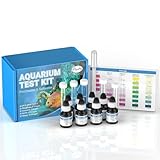
- 5-in-1 Master Test Kit: Monitor all 5 critical water parameters – pH, nitrite, nitrate, ammonia, and phosphate – in one comprehensive aquarium test kit. The rigorous analysis helps you maintain an ideal haven for your aquatic friends
- Freshwater & Saltwater Application: This aquarium water master test kit works perfectly for both freshwater and marine fish tanks. Precise color-matching charts are included – simply compare your water’s hue to the color swatches for instant results
- Enhanced Accuracy: Using professional liquid reagents, the aquarium water test kit delivers high accuracy that far exceeds traditional test strips. Get laboratory-quality results every time, safeguarding a stable and enjoyable fish tank environment
- Regular Testing: Complete with 265 measurements across all parameters – pH (100), nitrite (45), nitrate (50), ammonia (30), phosphate (40). This fish tank water testing kit supports months of consistent monitoring to keep your aquarium perfectly balanced
- Essential Fish Care: Your trusted solution to prevent fish loss from fatal ammonia, nitrite buildup, or pH imbalances! Proper water quality maintenance ensures your aquatic pets stay healthy and your plants thrive in optimal conditions
Despite those periodic conditions, the surrounding area retained high hard- and soft-coral cover and a substantial carbonate framework. This is valuable evidence that a natural reef can persist alongside repeated chemical stress. It is not a forecast for reefs exposed to a steadily declining global ocean pH. A volcanic vent is localized, and its fluctuations, water movement and associated chemistry are not interchangeable with decades of worldwide carbon-dioxide uptake.
What the Mayreau observation cannot tell us
- It does not show that all coral species tolerate the same extremes.
- It does not identify whether persistence reflects acclimation, inherited differences, species turnover, water flow or another factor.
- It does not demonstrate that the reef will maintain its present growth rate as background ocean chemistry changes.
- It does not prove that variable acidity offsets the effect of chronically reduced carbonate availability.
Variability, low-pH extremes and chronic change are different exposures
Three descriptions are often collapsed into one, but they answer different questions:
- Mean pH: the average chemical condition over a measurement period.
- Minimum pH: the lowest value recorded, which can reveal short-lived stress that an average hides.
- pH variability: the size and timing of departures from the average, including how often extremes occur.
A reef can have a relatively low mean pH with modest daily variation, or a higher mean pH punctuated by sharp lows. A natural system that cycles around a stable long-term baseline is also different from one whose baseline is moving downward because atmospheric carbon dioxide continues to accumulate. Those scenarios should not be treated as equivalent simply because both contain the phrase “acidic water.”
Rank #4
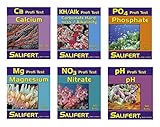
- Six Salifert Professional Test Kits
- Includes Calcium, Nitrate, Phosphate, pH, Alkalinity & Magnesium
- Includes all the Core parameters of any Saltwater Aquarium/Marine Reef Tank
Possible reasons some reefs persist—and why they remain hypotheses
The available observations support questions about resilience, not a settled explanation. Persistence at a variable-pH site could involve several processes acting together:
- Acclimation: individual corals may adjust physiology after repeated exposure.
- Genetic differences: populations living in naturally unusual chemistry may contain variants that perform better there.
- Species turnover: sensitive species may decline while more tolerant species become a larger share of the remaining cover.
- Local water movement: tides and circulation can alter the duration, intensity and recovery time of each chemical episode.
- Other environmental conditions: light, temperature, nutrients, food and habitat structure may influence both coral cover and pH.
Neither the Pacific snapshot nor the Mayreau field study, as summarized by NOAA, separates these possibilities well enough to name one as the cause. A high-cover site therefore demonstrates persistence under a particular combination of conditions, not a universal coral adaptation to acidification.
Quick wins for a faster PC:
Scan for outdated or missing drivers - takes under a minuteDriver Scan →Repair Windows errors before they cause bigger problemsFix Now →Fix the driver behind crashes, sound loss and screen glitchesFind Drivers →Reef communities can change through species interactions
Acidification may affect a reef indirectly by changing how corals interact with algae and sponges. Page and colleagues’ 2021 Florida Keys experiment ran for 28 days and examined coral–macroalga, coral–sponge and macroalga–sponge interactions. The study framed resilience as a community problem: direct responses by each organism can combine with indirect effects produced by competition or other interactions.
Best Value

- 5-in-1 Master Test Kit: Monitor all 5 critical water parameters – pH, nitrite, nitrate, ammonia, and phosphate – in one comprehensive aquarium test kit. The rigorous analysis helps you maintain an ideal haven for your aquatic friends
- Freshwater & Saltwater Application: This aquarium water master test kit works perfectly for both freshwater and marine fish tanks. Precise color-matching charts are included – simply compare your water’s hue to the color swatches for instant results
- Enhanced Accuracy: Using professional liquid reagents, the aquarium water test kit delivers high accuracy that far exceeds traditional test strips. Get laboratory-quality results every time, safeguarding a stable and enjoyable fish tank environment
- Regular Testing: Complete with 365 measurements across all parameters – pH (200), nitrite (45), nitrate (50), ammonia (30), phosphate (40). This fish tank water testing kit supports months of consistent monitoring to keep your aquarium perfectly balanced
- Essential Fish Care: Your trusted solution to prevent fish loss from fatal ammonia, nitrite buildup, or pH imbalances! Proper water quality maintenance ensures your aquatic pets stay healthy and your plants thrive in optimal conditions
The NOAA summary available for that experiment identifies its duration and interaction design but does not provide enough detail here to state the direction or size of every effect. It would therefore be inaccurate to claim, from this summary alone, that acidification consistently favors algae, harms sponges, or produces one predictable outcome for coral growth.
How to read claims that corals survive acidic water
When a study or headline reports coral persistence, check four distinctions before drawing a conclusion:
- Ask what was measured. Coral cover, calcification, dissolution, survival and community composition are different endpoints.
- Separate averages from extremes. Mean pH cannot substitute for minimum pH or the frequency of low-pH events.
- Identify the setting. Lagoon, fore reef and volcanic-vent habitats have different circulation and chemistry.
- Classify the evidence. A field correlation reveals an association; a natural analogue shows persistence under real conditions; an experiment can test a designed exposure but may not reproduce an entire reef.
Also check whether a reported calcification number is a direct measurement or a projection. In the Pacific survey, the projected calcification and dissolution impacts came from relationships published elsewhere. They are useful estimates for interpreting the pattern, not measurements made on every coral represented by the 28-reef snapshot.
What can be concluded now
Some reefs clearly endure pronounced, naturally recurring pH changes. The Pacific data show that high fore-reef coral cover can coexist with lower mean and minimum pH when variability is also greater, while lagoon reefs do not show the same relationship. The Mayreau example shows persistence beside twice-daily acidity extremes, including occasional aragonite undersaturation.
Those findings narrow the question rather than settle it. They show that coral persistence is possible under particular local regimes. They do not show that variability protects reefs, that ocean acidification is harmless, or that future chronic declines in carbonate availability will have the same biological outcome. The chemistry described by NOAA remains fundamental: atmospheric carbon dioxide entering seawater raises hydrogen ions and reduces carbonate ions, making calcium-carbonate construction and maintenance more difficult.
Quick Recap
Product prices and availability are accurate as of the date/time indicated and are subject to change. Any price and availability information displayed on Amazon at the time of purchase will apply.

