bE-More joined an Arduino light-sensing demonstration with IoT telemetry and local AI analysis to show how a workplace lighting system might reduce unnecessary use. Project lead Giovanni Zanotti says the student team shared the win at its school’s Project Day 2025. The project describes a miniature office prototype—not a measured office deployment—and reports no quantified energy savings.
What bE-More demonstrated
bE-More was presented as a semi-automatic system for monitoring workplace energy use and controlling lighting. Zanotti’s account says the project began in February 2025 for a school showcase and shared the Project Day win with another team’s project, VIPRA. That contest result is the author’s report; no independent school or organizer confirmation is available in the project sources. Zanotti’s project article and the bE-More repository describe the project and its implementation.
As an Amazon Associate I earn from qualifying purchases.
The physical exhibit was a miniature office diorama with workspace LEDs, a light sensor, an indicator LED, a buzzer, and buttons for manual or autonomous control. It was a working demonstration of a control idea, not evidence that the system had been installed or evaluated in a real office.
What’s actually slowing this PC down?
Pick the symptom - the matching free tool is one click away.
How the system’s parts fit together
The project separated immediate device control from data analysis. Its described setup connected a microcontroller, an IoT dashboard and telemetry service, a desktop controller, and a local AI service:
#1 Best Overall

- 𝐀𝐝𝐝𝐞𝐝 𝐒𝐞𝐜𝐮𝐫𝐢𝐭𝐲 𝐟𝐨𝐫 𝐲𝐨𝐮𝐫 𝐓𝐚𝐩𝐨 𝐒𝐦𝐚𝐫𝐭 𝐇𝐨𝐦𝐞 - This purchase includes 3x Tapo T110 Contact Sensors and 1x Tapo H100 Smart Hub with Chime. The sensors require the Tapo Hub to operate and use Sub-G protocol for extended range and longer battery life.
- 𝐇𝐨𝐦𝐞 𝐄𝐧𝐭𝐫𝐲 𝐏𝐫𝐨𝐭𝐞𝐜𝐭𝐢𝐨𝐧 - Receive real-time notifications when doors or windows open or close, and check their status from anywhere with the Tapo App. Also great for monitoring cabinets, refrigerators, mailboxes, and other items that open and close.
- 𝐈𝐧𝐬𝐭𝐚𝐧𝐭 𝐀𝐥𝐚𝐫𝐦𝐬 𝐟𝐨𝐫 𝐇𝐨𝐦𝐞 𝐒𝐞𝐜𝐮𝐫𝐢𝐭𝐲 - Activate a 90dB customizable alarm to deter intruders and review full activity history in the Tapo App.
- 𝐓𝐚𝐩𝐨 𝐇𝐮𝐛 - 𝐂𝐞𝐧𝐭𝐫𝐚𝐥𝐢𝐳𝐞𝐝 𝐒𝐦𝐚𝐫𝐭 𝐇𝐨𝐦𝐞 𝐂𝐨𝐧𝐭𝐫𝐨𝐥 - Connect up to 64 sensors, switches, and buttons using a low-power wireless protocol that extends connected device battery life by up to 10x compared to Wi-Fi based devices. 2.4 GHz Wi-Fi required.
- 𝐈𝐧𝐭𝐞𝐠𝐫𝐚𝐭𝐞𝐝 𝐒𝐞𝐜𝐮𝐫𝐢𝐭𝐲 𝐰𝐢𝐭𝐡 𝐓𝐚𝐩𝐨 𝐂𝐚𝐦𝐞𝐫𝐚𝐬 - Sync the contact sensors with Tapo pan/tilt cameras to detect intruders early, sound alarms, and capture footage when doors or windows are opened.
| Layer | Role in bE-More |
|---|---|
| Arduino UNO R4 | Reads the light sensor and applies the lighting rule on the demonstration hardware. |
| MQTT and ThingsBoard | Carry sensor telemetry to ThingsBoard, where the project provides dashboards and stores data in a PostgreSQL database. |
| Java 23 desktop controller | Provides a WebView dashboard and manages the AI process lifecycle, according to the project description. |
| Python and Ollama | Bridge project data to a local Mistral:7b model for analysis intended to surface insights and anomalies. |
The division matters: the Arduino’s documented lighting rule is deterministic, while the model’s role is analysis. The sources do not establish that AI recommendations controlled the lights.
How the light-sensing rule works
The prototype’s photoresistor is connected to analog pin A3. In AUTO mode, the repository documents a rule that switches the demonstration lights off when the reading is above 450. The source does not specify the reading’s units or how the sensor was calibrated, so 450 is a project-specific threshold—not a portable brightness value for another room or sensor.
Rank #2

- WiFi DOOR SENSOR WITH APP ALERTS: No hub required and No fees charge. Control with the "Tuya Smart" or "Smart Life" app. Get instant app free notification alerts on your smartphone when doors or windows open or close. Note: door sensor only works with 2.4GHz WiFi, not works with 5G.
- SPPPORTS VOICE CONTROL: Door alarms for home compatible with Amazon Alexa and Google Assistant. Alexa/Google is able to answer the question, "Alexa/Google, is the 'Device Name' Closed/Opened?"
- LINK WITH OTHER TUYA SMART DEVICES: The smart window sensor can control other Tuya smart connected devices as the status of the door or window changes. For example, Automatically turn on your smart wall switches or smart lights when door opened.
- LOW POWER WARNIGN & BATTERIES INCLUDED: Door open alert powered by 2*AAA batteries(INCLUDED). Enjoy over six months of battery life with this door alarm sensor. When the battery is running low, it will automatically push messages through App to remind you to change battery, never worry about running out of battery.
- EASY INSTALLATION AND WIDELY USE: Install the smart door sensor with the included 3M sticker for a firm and durable hold. Install the sensor on gates, mailboxes, refrigerators, drawers, bedrooms, garages, yards, pet doors, and more. Gaoducash provides a 24-month warranty for the door detector, please feel free to contact if you have any questions.
The sensor reading and rule illustrate a simple automation pattern: measure ambient light, compare the reading with a chosen threshold, and change the lighting state. A real installation would need calibration for sensor placement, the workspace and the desired illumination. It would also need a clear manual override and tests for cases such as a sensor being blocked or disconnected; the project sources do not report those deployment tests.
What “local AI” means here—and what it does not
bE-More describes Python connecting telemetry data with Ollama running Mistral:7b on a local machine. Running inference locally can avoid sending the analysis prompt to a hosted model provider. Zanotti presents privacy as a motivation for this approach, but that design intent is not proof that every part of a deployment stays on-device or is secure.
Rank #3

- [3.6'' Large LCD Display with Daily Highs and Lows] The large LCD stays crisp and readable from several meters away, suitable for the elderly, providing rich information grasped at a glance: Real-time data(updated every 5s), Max/Min data in 24-hour and comfort level signals.
- [App Remote Real-time monitoring & notification] You can monitor the temperature and humidity in real time on the App remotely, with up to 120m/400ft coverage. Receive instant alerts from the App when data exceeds the set comfort level.
- [Remote Data Display for Multi-Room Monitoring] The device can display real-time data from another temp. & humi. sensor after setting it as remote data source. Help expand your monitoring area, keep track of the nursery, bathroom, wine cellar, or greenhouse conditions without walking over.
- [High Accuracy & Real-time Chart] With the Swiss Sensirion sensor, the temperature and humidity accuracy is maintained respectively at ±0.2℃ (-20~60℃) and ±2% RH(0~100%RH). App provides a detailed real-time chart recording temp.& humi. data per minute in recent 24 hours.
- [Half-year History Record & Diverse Charts] View 6-month detailed records with maximum, minimum, and average curves across four time spans — daily, weekly, monthly, and half-year. The device also provides dew point and VPD insights. All history record can be exported for free.
The project describes MQTT telemetry, a ThingsBoard service and database, and HTTP delivery for its dashboard. Its article names migration from HTTP to HTTPS as future work. Local model inference therefore should not be confused with end-to-end local storage, encrypted network traffic, or a security review.
What the project establishes about energy savings
The intended environmental benefit is straightforward: switch lights off when the sensor indicates that natural light is sufficient. The available project descriptions give no power readings, baseline, operating period, before-and-after comparison, or carbon calculation. They support saying that bE-More demonstrated an energy-saving control rule, not that it measured savings or proved a particular environmental result.
Rank #4
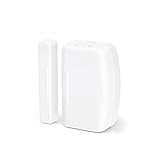
- ZIGBEE STANDARD COMPATIBLE DOOR SENSOR: Works with compatible Zigbee hubs or Echo devices with Zigbee hub built-in. Such as Echo (4th Gen), Echo Plus (1st Gen and 2nd Gen), Echo Show 8 Gen3, Echo Show 10 (Gen2 and Gen3).Echo Studio, Eero 6, Eero Pro 6, Home Assistant, SmartThings 2015/2018, Aeotec, Hubitat, Homey Bridge, Homey Pro, Third reality Hub and Third Reality Smart Bridge.
- HASSLE-FREE SETUP: Installs in a few seconds. Just make sure device in paring mode and compatible Echo device automatically discovers it by saying “Alexa, discover devices”.
- SUIT FOR MOSTLY DOORS AND WINDOWS OF THE HOUSE AND 2-YEARS LONG BATTERY LIFE: Door Sensor uses two AAA 1.5V Alkaline batteries for power, the batteries can last for up to 2 years and it is very easy to replace them. Note: Indoor use only and do not install the Door Sensor on metal door or window.
- MORE FUN WITH ALEXA ROUTINES: Using the Alexa app, create your own routines that are triggered When door or window is open, turn on a light, send an alert to your phone, let Alexa make a voice alarm or make a joke, etc.
- UPGRADED THIRD REALITY APP AND SKILL FUNCTIONS: Connected with Third Reality Hub/Speaker, you can check the battery level in the APP, then replace the batteries in time; history record is also open to the users, so you can know when the state of the movement has been detected and deal with it in time. Enabled Third Reality Skill in the Alexa APP, you will have a low battery warning by emails.
What is needed to reproduce the demonstration
The project materials identify these components and software categories; they are not a tested shopping list or a compatibility guarantee.
- An Arduino UNO R4 board matching the project code and wiring. The descriptions are not consistent enough to recommend a specific retail variant without checking the actual hardware; verify the exact Wi-Fi model if connectivity is needed.
- A photoresistor and basic prototyping components, including LEDs, buttons, a buzzer, and wiring, for a miniature office setup.
- The project-described software stack: Java JDK 23, a locally configured ThingsBoard Community Edition instance, Ollama with Mistral, the Java controller, Python middleware, and the Arduino sketch.
The repository’s setup notes describe these prerequisites, but they are not independent compatibility testing. The author mentions ESP32 as a possible future direction, not as the board used for the documented contest build. Anyone adapting the system would need to check connectivity, sensor inputs, outputs, calibration, telemetry access, and override behavior against their own hardware and code.
Best Value

- 【Monitor Indoor CO2 Levels】Equipped with a Swiss-made Sensirion CO2 sensor that utilizes NDIR technology to provide precise and sensitive measurements. The colored indicator lets users quickly judge the CO2 level. It finds extensive applications across diverse settings, including homes, schools, office buildings, hospitals, restaurants, shopping malls, factories, hotels, laboratories, and more.
- 【Temp & RH Monitoring】High-accuracy temperature and humidity sensor. Measurement ranges from -20~50°C (-4~122°F) and 0~99.9%RH (non-condensation environment).
- 【Wi-Fi Connectivity, Enables Remote Monitoring】Remotely access data via the "Qingping IoT" app or website, as the product supports Wi-Fi. Devices can be managed with Qingping IoT, shared and collaborated with teammates. The battery has a long standby time, and you can also plug it in USB power all the time.
- 【Multiple Alert Methods】The built-in buzzer will alarm if CO2, temperature or humidity is over-limit. You can also get alerts via app notifications, emails, and text messages. * The buzzer alarm feature can be turned off/on using the Qingping IoT app or website.
- 【View and Export Historical Data】Historical data graphics of recent 24 hours and 30 days are available on Qingping IoT, while the data can be exported as Excel files. No need to worry about network interruption -- the device can save up to 2,880 sets of readings locally, and the data will be uploaded to the server when the connection is back on.
Which ideas are future work
Zanotti lists HTTPS migration, improved prompts or a newer/custom model, separating sensor and actuator roles across devices, a possible ESP32 build, and an intermediary MQTT broker such as Mosquitto for bidirectional communication as future developments. These are proposals rather than features demonstrated in the described prototype.
What the contest project contributes
bE-More brings together a tangible sensor-and-lighting rule, an IoT data path, and local model analysis in a school showcase. Its clearest value is as an integrated demonstration: it makes the relationship between office telemetry and automation visible while exposing the practical work still needed for deployment—calibration, security, overrides, and measured energy evaluation.
Quick Recap
Product prices and availability are accurate as of the date/time indicated and are subject to change. Any price and availability information displayed on Amazon at the time of purchase will apply.

