PC Slower Than It Used to Be?
A free scan shows the junk files, broken settings and background clutter dragging Windows down - then fixes them in one click.Free scan · Windows 10 & 11Crashes, No Sound, or Screen Glitches?
Random freezes, missing sound and display glitches usually trace back to one bad driver. Find and replace yours safely.Free scan · under a minuteShort answer: YouTube’s AI label is mainly a transparency notice. Disclosing that a track was generated or meaningfully altered with AI does not, by itself, reduce recommendations or make the video ineligible for monetization. The larger monetization risk is a channel built from repetitive, generic or mass-produced uploads. Copyright is a separate legal question that turns on human creative contribution and on rights in voices, recordings, compositions, samples and other material.
YouTube now expects creators to disclose realistic AI content, explicitly including AI-generated music. Labels may also be added automatically, and YouTube Music began rolling out player-level labels for tracks made primarily with generative AI on October 14, 2026.
As an Amazon Associate I earn from qualifying purchases.
What YouTube’s AI music label means
The label tells viewers that generative AI played a significant role in creating or altering the audio. It is a platform-transparency mechanism, not a copyright ruling, originality certificate or monetization decision.
Quick wins for a faster PC:
Repair Windows errors before they cause bigger problemsFix Now →Scan for outdated or missing drivers - takes under a minuteDriver Scan →Clear out junk files and repair common Windows errorsFree Scan →YouTube Help says creators must disclose AI-generated or meaningfully altered content when it appears realistic. Its examples expressly include AI-generated music. During the upload process in YouTube Studio, select the applicable AI-use or altered-content disclosure setting. A label can then appear in the video player for the track.
#1 Best Overall

- Music Production and Beat Maker Essential -USB powered MIDI controller with 25 mini MIDI keyboard velocity-sensitive keys for studio production, virtual synthesizer control and beat production
- Total Control of your Production - Innovative 4-way thumbstick for dynamic pitch and modulation control, plus a built-in arpeggiator with adjustable resolution, range and modes
- Native Kontrol Standard (NKS) Integration - Akai Professional and Native Instruments have partnered to bring NKS support to the MPK Controller series, get ready to Kontrol straight from your MPK
- Choose Your Exclusive Complimentary NKS Bundle - Browse and control Native Instruments presets and sound libraries; select one of three curated Komplete 15 Select bundles: Beats, Band, or Electronic
- The MPC Experience - 8 backlit velocity-sensitive MPC-style MIDI beat pads with Note Repeat and Full Level for programming drums, triggering samples and controlling virtual synthesizer / DAW controls
YouTube states that disclosure alone “won’t limit a video’s audience or impact its eligibility to earn money.” That statement addresses the label itself; it does not exempt a channel from the separate rules governing originality, advertiser suitability, copyright or other rights.
When disclosure is expected
- Disclose music in which a generative model created the composition, vocals or another substantial part of the finished recording.
- Disclose realistic synthetic or altered material that could lead viewers to believe a real person performed or said something they did not.
- When the use of AI is minor and does not make the content appear realistic or materially changed, the disclosure requirement may not apply; if the result could mislead viewers, disclose it.
How a label can appear without your selection
YouTube may apply a label automatically when content was made with YouTube’s own generative tools, carries C2PA provenance metadata, or is identified by YouTube’s detection systems. A missing selection in Studio therefore does not guarantee that a video will remain unlabeled.
Repeatedly failing to disclose qualifying content can lead to manual labeling or penalties, including removal of content or suspension from the YouTube Partner Program. Treat the setting as a compliance step, not an optional marketing choice.
Recommended Free Tools
Does labeling AI music hurt reach or recommendations?
On the evidence YouTube has published, the disclosure label alone does not change how a video is recommended and does not reduce its monetization eligibility. The company repeated that position in its May 2026 announcement about improved automatic AI labels: “It’s important to note that a disclosure label alone does not change how a video is recommended or whether it’s eligible to earn money.”
That does not promise a particular number of views, click-through rate or revenue. Audience response, thumbnail and title performance, watch time, advertiser suitability, copyright claims and the overall quality of the channel can still affect distribution and earnings. The practical distinction is important: the presence of a label is not itself a ranking penalty, while low-value or infringing content can create independent problems.
Rank #2

- Full Creative Control - A dynamic 37-Key MPK Mini keybed for 3 full octaves of melodic and harmonic performance; Easily connect to your DAW or studio equipment with the USB-powered MIDI Controller
- Advanced Connectivity - Connect to different sound sources with CV/Gate and MIDI I/O; Control modular gear, sound modules, synthesizers, and more to bring new sound sources into your music production
- Native Kontrol Standard (NKS) Integration - Akai Professional and Native Instruments have partnered to bring NKS support to the MPK Controller series, get ready to Kontrol straight from your MPK
- Choose Your Exclusive Complimentary NKS Bundle - Browse and control Native Instruments presets and sound libraries; select one of three curated Komplete 15 Select bundles: Beats, Band, or Electronic
- Record and Compose Without a Computer - Connect to your production station and use the built-in 64-step sequencer featuring one track for drums and one for melodies or chords, with up to 8 notes each
How monetization review treats AI-generated music
YouTube’s July 15, 2025 monetization-policy update renamed “repetitious content” as inauthentic content. The updated guidance says monetized content should be the creator’s original creation, should not be mass-produced or generic, and should provide creative, educational or other value.
The policy specifically identifies AI-generated material made with generic or unoriginal templates that create an impression of mass production as content that violates the guideline. As a result, a disclosed AI song may be eligible in principle yet still fail a channel review if the channel looks automated and interchangeable.
Patterns that create monetization risk
- Uploading large batches of tracks that differ only in title, tempo or a few words.
- Using the same visualizer, artwork, description and metadata template for nearly every release.
- Publishing generic songs with little evidence of human editing, songwriting, arrangement or performance decisions.
- Releasing near-duplicate versions primarily to occupy search results or generate watch time.
- Building a channel whose most-viewed, newest and highest-watch-time videos all follow a mass-production pattern.
Signals that support an authentic channel
- Documented human direction: original lyrics, melodies, arrangements, instrumentation, production or vocal editing.
- Meaningfully different projects rather than a high-volume template series.
- Descriptions and channel information that explain the creative process without making unsupported ownership claims.
- Substantive videos such as breakdowns, live elements, commentary or demonstrations that add clear creative or educational value.
- Distinct thumbnails, titles and artwork that accurately represent each release.
Reviewers assess the channel as a whole. YouTube says they may consider the main theme, most-viewed videos, newest videos, the share of watch time, titles, thumbnails, descriptions and the About section. Improving one upload will not necessarily fix a channel dominated by interchangeable material.
Disclosure, monetization and copyright are different decisions
| Question | What it determines | What it does not determine |
|---|---|---|
| Disclosure | Whether you tell YouTube that qualifying AI use is present. | Whether you own copyright or will pass a YPP review. |
| Platform label | What viewers see on the player and, increasingly, in YouTube Music. | Whether the work is legally protected. |
| Monetization | Whether the channel meets originality, authenticity, advertiser and policy requirements. | Whether every element of a track is cleared for use. |
| Copyrightability | Whether applicable law protects human-authored expression in the work. | Whether YouTube will display or remove a label. |
| Third-party rights | Whether a voice, recording, composition, sample, likeness or other protected interest is implicated. | Whether your AI disclosure was correctly selected. |
What an AI label means for copyright ownership
A YouTube label does not grant copyright, transfer ownership or decide that a track is uncopyrightable. Those questions are governed by applicable copyright law and the facts of creation.
The U.S. Copyright Office’s multipart AI initiative places human creative contribution at the center of its current framework. Part 2, published January 29, 2025, addresses copyrightability of generative-AI outputs. Part 3, released in pre-publication form on May 9, 2025, addresses generative-AI training. The Office’s publications are guidance about legal analysis, not a YouTube licensing decision, and laws can differ by country.
Rank #3

- Next-Gen Music Production and Beat Maker Essential - USB-powered MIDI keyboard controller with 25 mini velocity-sensitive keys, optimized for studio or beat production, piano-style performance, synth leads, sample triggering
- Real-Time Control and Navigation - 8x assignable 360° knobs, a vibrant full-color screen and push/turn encoder for hands-on access to settings, presets, and DAW functions, without reaching for a computer
- Iconic MPC Pads with RGB Feedback - 8 velocity- and pressure-sensitive MPC pads deliver an iconic finger-drumming experience, plus dynamic visual feedback to match your performance in studio or on the go
- Studio Instrument Collection Included - A powerful VST/AU and standalone virtual suite packing 1000+ pro-grade drums, keys, synths, bass, FX from AIR, Akai Pro and Moog, plus MPK Mini IV integrated controls
- Pre-Mapped DAW Integration - Get producing in under 15 minutes with Ableton Live Lite 12, Logic Pro, FL Studio and more; comes with an expanded DAW-mapped transport section for uninterrupted workflow
Human contributions that may matter
Protection is more plausible when a person contributes original expression and can identify what they created or controlled: for example, writing lyrics, composing a melody, selecting and arranging musical elements, performing a vocal or instrumental part, making creative edits, or transforming generated material into a substantially human-authored arrangement. The legal result depends on the amount and nature of that contribution, not merely on operating an AI tool.
A prompt alone may not establish ownership of every audible element. Nor does paying for an AI service automatically give you copyright in output or clear all third-party rights. Keep project files, prompts, stems, drafts, recordings and edit histories so you can show your contribution and the terms under which the tool was used.
Rights beyond copyrightability
Even if your human contribution is protectable, a release can raise separate claims involving:
- Sound recordings: an AI output may resemble or incorporate a recording owned by someone else.
- Musical compositions: melody, lyrics or arrangement may be substantially similar to a protected song.
- Voices and likenesses: an imitation of an identifiable performer can trigger publicity, unfair-competition or related claims, even where copyright is uncertain.
- Samples and data: supplied samples must be licensed, and training-data disputes can create legal risk independent of your YouTube label.
- Performers and collaborators: contracts may govern synthetic versions of a person’s voice or performance.
Before monetizing or distributing a track, review the generator’s current commercial-use terms and confirm that your source material, voice model, samples and collaborators are authorized. Platform disclosure cannot cure an unlicensed input or a misleading impersonation.
YouTube Music’s new player-level labels
On October 14, 2026, YouTube Music announced player-level labels for tracks created primarily with generative AI, including music in which a generative model created the composition and vocals. The rollout uses information from music partners together with YouTube detection tools and is expanding to the main YouTube app.
Rank #4
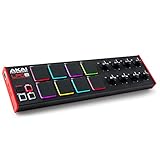
- Beat Maker Essential - 13" pad controller for music production with 8 RGB-backlit responsive MPC drum pads for triggering samples, loops, virtual instruments, and more
- Hands-On Control - 8 assignable Q-Link knobs for seamless mapping to DAW parameters, software instruments, and insert effect plugins for tactile control and precise mixing
- Customized Production - 4 programmable preset slots for instant recall of mappings for DAWs, virtual instruments, effects and more; Create, edit, load and manage all your presets from the computer
- Portable Design, Robust Build - Lightweight beat maker that adopts the sturdy build of standalone MPCs; The slim-line design stows easily in a laptop bag for hands-on production capability everywhere
- Versatile Performance - The Laptop Pad Controller is perfect for musicians, producers, DJs and other music creators on the go; The sleek design fits right in alongside your studio equipment
This change increases the number of places where listeners may see an AI indication, but it does not merge labeling with copyright or monetization review. A track can carry a label and still qualify for monetization if the channel is authentic and the rights are cleared; it can also be rejected for inauthentic content or receive a rights claim despite being correctly labeled.
Independent reader supportYour contribution helps us test, update, and keep practical guides available for everyone.A practical publishing workflow for AI-assisted music
- Map the track’s AI use. Write down whether AI generated lyrics, composition, vocals, instruments, mixing, artwork or video. Identify any realistic synthetic person or voice.
- Check permissions before upload. Read the tool’s current license, verify commercial-use rights, clear samples and obtain consent for modeled voices or performances. Do not assume a paid plan resolves every issue.
- Preserve evidence of human authorship. Save lyrics, MIDI, stems, session files, recordings, prompts, revision notes and contracts. Mark which sections were written, performed or edited by people.
- Complete the YouTube disclosure. In YouTube Studio’s upload flow, select the AI-use or altered-content option when the finished video contains qualifying realistic AI use, including AI-generated music.
- Describe the work accurately. Explain meaningful human contributions without claiming exclusive ownership over elements you did not create or license.
- Publish with genuine variation. Avoid flooding the channel with near-identical tracks and visualizers. Give each release a distinct creative purpose and presentation.
- Monitor the result. Check the published player and YouTube Music listing for an automatic label. If YouTube adds one, compare it with your disclosure and keep records of the decision.
What to do if YouTube adds a label or rejects monetization
If YouTube labels a track automatically
First, verify whether the label is accurate. Automatic labeling can be triggered by YouTube tools, C2PA metadata or internal detection. If the track genuinely contains qualifying AI use, leave the disclosure in place and make sure your description does not contradict it. If the label appears incorrect, use YouTube’s available feedback or appeal process and provide factual information about how the audio was made; do not delete evidence or repeatedly re-upload in an attempt to bypass detection.
If a video or channel loses monetization
Separate the possible causes. A disclosure label is not the same as an inauthentic-content decision, a copyright claim or an advertiser-suitability restriction. Review your newest and most-viewed uploads, watch-time concentration, metadata and About section for mass-produced patterns. Replace or supplement generic releases with clearly differentiated, human-directed work, then use the YouTube Partner Program appeal or reapplication process available in Studio.
If you receive a copyright claim
Identify whether the claim concerns the composition, sound recording, voice or another element. Dispute only when you can document the necessary rights and a valid basis for the dispute. An AI disclosure does not prove ownership and should not be used as the sole response to a rights claim.
The Tool Desk
Outbyte PC Repair FREEClear out junk files and repair common Windows errorsFree Scan →Outbyte Driver Updater FREEFix the driver behind crashes, sound loss and screen glitchesFind Drivers →Answers to common questions
Will YouTube demonetize every AI-generated song?
No. Disclosure alone is not a demonetization trigger. The practical danger is a channel that appears repetitive, generic or mass-produced under the inauthentic-content policy, or that has separate copyright, advertiser or safety violations.
Best Value

- GO WITH YOUR FLOW: MiniLab 3 is an easy keyboard controller that adapts to your needs, your style and your workflow, so you can make music just the way you like it. It lets you control instruments, mute tracks, punch in your 8 pad drums, and adjust your 4 faders with a flow so fluid you’ll forget you had a mouse. Hook it up, discover fresh sounds, enjoy premium velocity-sensitive keys, and get hands-on with your music like never before!
Do I have to label AI music on YouTube?
YouTube says creators must disclose realistic AI-generated or meaningfully altered content, and it expressly lists AI-generated music. Use the AI-use setting during upload when the track qualifies. YouTube may also apply a label automatically.
Does the label mean I do not own the copyright?
No. The label says something about how the content was made, not who owns it. Copyrightability depends on human creative contribution and applicable law; other rights can exist even when copyright protection is limited.
Can I monetize songs made with an AI music generator?
Potentially, if the generator’s terms permit commercial use, your inputs and voices are cleared, and your channel provides original, authentic value. A large catalog of interchangeable tracks can fail the inauthentic-content review even when every upload is disclosed.
Do these 3 things before closing this tab:
1Clear out junk files and repair common Windows errors2Scan for outdated or missing drivers - takes under a minute3Repair Windows errors before they cause bigger problemsWhat happens if YouTube detects my AI music automatically?
YouTube can add a label using its own generative-tool records, C2PA metadata or internal detection. Automatic labeling does not by itself change recommendations or monetization eligibility, but repeated nondisclosure can lead to manual action, removal or YPP suspension.
Quick Recap
Product prices and availability are accurate as of the date/time indicated and are subject to change. Any price and availability information displayed on Amazon at the time of purchase will apply.

