There is not enough published evidence to verify that data center fires and power failures have doubled since 2024. An October 2026 roundup describes a community register of 90 publicly reported incidents since 2014, but does not provide its entries, annual totals, or counting method. Separate 2026 outage-survey findings offer context, not confirmation of that trend.
What the reported 90 incidents do—and do not—show
The Data Center Rundown’s October 9, 2026 roundup says a community member had compiled 90 publicly reported data center fires and power failures since 2014 and asked which incidents might be missing. That is a reported total for the register, not a verified year-by-year statistic. The roundup does not show the underlying register, annual counts, inclusion rules, or method for removing duplicate reports. The Data Center Rundown
As an Amazon Associate I earn from qualifying purchases.
Without annual totals and a defined comparison period, the figure cannot establish whether incidents doubled since 2024. A doubling claim needs comparable counts for two periods—for example, a specified post-2024 interval against an equally defined earlier interval—not just a cumulative total beginning in 2014.
Why Uptime Institute’s survey figures are not a confirmation
Network World’s May 14, 2026 summary of Uptime Institute findings reports that power failures accounted for 45% of impactful data-center outages. Uptime also described major data-center fires as gradually increasing in recent years, with lithium-ion batteries in UPS systems contributing to some incidents. Neither statement gives an annual count of publicly reported fires and power failures or establishes a doubling since 2024. Network World
#1 Best Overall
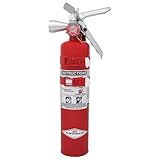
- Chemical & Capacity: Halotron I Clean Agent, 2.5 Pounds
- UL & ULC Rating: 2B:C
- Discharge Time: 9 Seconds
- Range: 6-10 Feet
- Includes: (1) Fire Extinguisher & (1) Aviation Bracket
The measures answer different questions: a public register counts reported events under its own inclusion rules; an operator survey describes respondents’ reported experiences and outage causes. A larger share of outages attributed to power does not, by itself, mean the absolute number of power failures increased. Nor can survey results be combined with a public incident count as though they describe one population.
What the 2026 outage data says about broader reliability
Network World reports that Uptime Institute’s outage frequency per site had declined for five consecutive years. In the 2026 findings, 50% of operators said they had experienced an impactful outage in the preceding three years, down from 74% in 2020; around one in ten respondents said their most recent outage was serious or severe. These are operator-survey measures, not counts from the public fire-and-power register. Network World
Rank #2
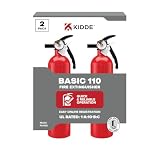
- Reliable Fire Protection: Stop basic home fires involving trash, wood, paper, liquids, gases, and electrical equipment
- All-Metal Construction: Made with robust materials for long-lasting durability
- Easy pull safety pin
- Compact & Lightweight: Aluminum construction and small size allow for easy storage and use
- Easy-to-Read Pressure Indicator: If arrow is in the green it’s charged
The same survey summary gives a broader breakdown of reported end-to-end IT service outage causes. These are survey categories, not facility incident counts:
Crashes, No Sound, or Screen Glitches?
Random freezes, missing sound and display glitches usually trace back to one bad driver. Find and replace yours safely.Free scan · under a minutePC Slower Than It Used to Be?
A free scan shows the junk files, broken settings and background clutter dragging Windows down - then fixes them in one click.Free scan · Windows 10 & 11| Reported cause or response | Share |
|---|---|
| Networking/connectivity | 23% |
| Power | 21% |
| No IT services outages | 19% |
| IT system/software | 18% |
| Third-party IT services | 10% |
| Cooling | 8% |
| Other | 2% |
The percentages are reported by Network World from Uptime Institute’s 2026 survey. Because this is a service-outage breakdown, “data-center outage” is broader than a fire or a power failure: it can involve network, software, third-party services, and cooling as well as power. Network World
Rank #3
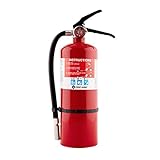
- The First Alert HOME2PRO Fire Extinguisher is UL rated 2-A: 10-B:C and meets minimum 2-A: 10-B:C code requirements; It features durable all-metal construction with a commercial-grade metal valve and trigger
- Heavy-duty fire extinguisher fights wood, paper, trash, plastics, gasoline, oil, and electrical-equipment fires; ideal for offices, homes, and workshops
- Uses mono ammonium phosphate extinguishing agent; Rechargeable by certified professionals after use
- Includes wall hook and easy-to-read, color-coded, corrosion-resistant pressure gauge
- 12-year limited
Uptime’s survey summary also says 92% of operators considered human error at least a minor contributor to significant outages in the preceding three years: 31% rated it a major contributor, 31% moderate, 30% minor, and 8% said it was not a contributor. That provides operational context, but it does not measure fire incidence or validate the doubling claim. Network World
What would be needed to verify a doubling
A reliable check requires access to the register and consistent counting rules for both periods. In particular, the dataset would need to specify:
Rank #4

- All-in-One ABC Fire Protection: Forget one-trick fire safety gear—this 5lb ABC dry chemical extinguisher crushes Class A (wood, paper), Class B (grease, gasoline), and Class C (electrical) fires like a pro. Picture this: a grease splatter gone wrong on your kitchen stove, a rogue spark near your grill, or an electrical glitch in your RV—this extinguisher handles it all. It’s not just a home fire extinguisher; it’s your sidekick for cars, boats, offices, and even your weekend camping trailer. The eco-friendly, non-toxic formula means you’re protecting your family without harsh chemicals—total peace of mind
- All-Weather Reliability That Lasts for Years: American weather is unpredictable—but your fire safety shouldn’t be. This extinguisher laughs at extreme temps, working flawlessly from -22°F (perfect for winter car trunks in the North) to 140°F (no sweat in a summer boat cabin). The corrosion-resistant steel cylinder isn’t just tough—it’s built to last 5 full years of regular use. Whether it’s sitting under your kitchen sink, mounted in your truck, or stowed on your boat, it’s ready to perform when you need it most. No more worrying about duds when emergencies strike
- Quick-Release Handle: Activate in Seconds—Emergencies don’t wait for you to fumble with complicated latches. Our quick-release handle pops open in an instant, so you can respond before a small spark becomes a disaster. The ergonomic grip fits every hand—from your teen’s first time using it to your grandma’s steady hold—no training required. And with a 15ft discharge range, you stay safely back while dousing flames. It’s commercial-grade reliability wrapped in everyday ease—perfect for busy parents, road trippers, and small business owners alike
- Compact & Easy to Mount: This compact extinguisher slips under your kitchen sink, tucks into your car trunk, or fits in your RV’s storage nook. We include a heavy-duty metal mounting bracket (way sturdier than plastic knockoffs) so you can mount it on your garage wall, boat bulkhead, or office closet—installation takes 5 minutes, no fancy tools needed. Finally: fire safety that fits your space, not the other way around. Keep it where fires are most likely to start, and stay prepared without clutter
- Stop Fires Before They Spread: The #1 rule of fire safety? Act fast. This portable extinguisher smothers flames in seconds, turning a potential tragedy into a minor hiccup. Imagine stopping a kitchen grease fire before it reaches your cabinets, or putting out a car engine spark before it melts your dashboard. It’s not just “fire safety”—it’s protecting your kids’ toys, your grandma’s recipe box, and all the things that make your home yours. This isn’t a “nice-to-have”—it’s the essential gear that stands between you and disaster
- Exact dates: the start and end of each period being compared.
- Incident scope: what qualifies as a data-center fire or power failure, and whether the two categories are counted together or separately.
- Counting unit: whether one event affecting several facilities counts once or multiple times.
- Record handling: how duplicate reports, updates, and corrections are treated.
- Reporting consistency: whether the visibility of incidents or the register’s inclusion practices changed over time.
These details matter because the register is described as a compilation of publicly reported events. Its totals can reflect not only what happened, but also what was reported and included. The roundup does not provide the information needed to assess those effects or calculate the proposed comparison. The Data Center Rundown
Free tools Windows power users keep installed
One-click scans. No signup required.
Which incidents are missing?
The roundup’s invitation to identify missing incidents signals that the register is open to correction, but the entries were not available in the cited account. It is therefore not possible to identify particular omissions or independently check the 90-event total from that account alone. Anyone reviewing the register should look for dated source reports, a clear incident definition, and a consistent way to record multiple facilities or follow-up coverage.
As of the reporting available in October 2026, the defensible conclusion is limited: a community register was described as containing 90 publicly reported fires and power failures since 2014, and Uptime’s separate survey summary points to power as a notable outage cause while describing major fires as gradually increasing. Neither establishes that the combined number of incidents doubled since 2024.
Quick Recap
Product prices and availability are accurate as of the date/time indicated and are subject to change. Any price and availability information displayed on Amazon at the time of purchase will apply.

