Windows Errors? Fix Them Before They Spread
Repair common Windows errors and clear accumulated junk for a smoother, more stable PC - no reinstall needed.Free scan · no reinstallOutdated Drivers Are Slowing You Down
One free scan finds every outdated or missing driver and matches the right update for your exact hardware.Free scan · exact hardware matchAt its 57th meeting in New Delhi on 8 October 2026, the GST Council recommended amendments to sections 68, 129 and 130 of the CGST Act. The proposal would narrow when goods and conveyances in transit can be intercepted, inspected, detained or seized over e-way bill issues, and it would take section 130 confiscation off the table for goods and conveyances in transit. These are recommendations. They do not change the law until the government gives them effect through circulars, notifications or amendments.
What the Council recommended on interception
The Ministry of Finance’s press release on the meeting (PIB, 8 October 2026, 7:03 p.m. IST) sets out the interception rules as follows:
As an Amazon Associate I earn from qualifying purchases.
- Specific intelligence is required. A conveyance carrying goods could be intercepted only on specific intelligence.
- Senior authorisation is required. The interception must be authorised by an officer not below the rank of Joint Commissioner.
- Jurisdiction matters. Inspection, and any further action for detention or seizure, could be taken only where either the supplier or the recipient is located or registered in the State where the interception happens.
- Transit States are excluded. The recommendation states that there would be no interception in transit States.
- There is an exception. Where no e-way bill has been generated, or the conveyance carries no document showing the origin or destination of the goods, inspection, detention or seizure could take place irrespective of jurisdiction.
How the scenarios compare
The recommendation turns on three questions: where the stop happens, whether the paperwork is complete, and what action is contemplated. The table below maps each situation to the proposed rule.
Do these 3 things before closing this tab:
1Scan for outdated or missing drivers - takes under a minute2Repair Windows errors before they cause bigger problems3Fix the driver behind crashes, sound loss and screen glitches| Situation | What the recommendation says | Action it contemplates |
|---|---|---|
| Goods stopped in a transit State, with neither supplier nor recipient located or registered there | No interception in transit States | Not contemplated |
| Goods stopped in a State where the supplier or recipient is located or registered | Interception only on specific intelligence, with authorisation from a Joint Commissioner or higher | Inspection; detention or seizure on further action |
| No e-way bill generated, or no document showing origin or destination | Exception applies, irrespective of jurisdiction | Inspection, detention or seizure |
| Whether the exception still requires specific intelligence or senior authorisation | Not stated in the release | Not stated in the release |
| Section 130 confiscation of goods or conveyances in transit | Recommended not to apply | Confiscation removed for goods and conveyances in transit |
What happens to confiscation under section 130
Section 130 is the provision under which goods and conveyances can be confiscated. The Council recommended that it not apply to goods or conveyances in transit. The release does not describe how confiscation would apply to goods that are not in transit, so readers should not extend the recommendation beyond that category.
#1 Best Overall

- Simple one-time purchase; No subscription fees
- Compliance Solution for Hours of Service (HOS) recording complies with FMCSA ELD mandate
- Supports 9-pin J1939 and 6-pin J1708 diagnostic ports; Not compatible with vehicles using OBD-II protocol (SAE J1979);Vehicles with Volvo engine and 16-pin J1962 require separate cable, not included
- Stores ELD records securely on your compatible smartphone, accessible for inspection via the device’s USB port or via FMCSA Web Services over Bluetooth
- Download the free Garmin eLog app to a compatible smartphone to complete your compliance solution
What the government says the change is for
The release states that the change will enable smooth movement of goods and conveyances and improve business supplies and transportation efficiency. This is the government’s stated rationale. It is not a measured result, and no figures on delays, interceptions or recoveries accompany the announcement.
What is and is not in force
The release says the recommendations will be given effect through relevant circulars, notifications or amendments to the law, and that only those instruments carry legal force. Until one of them is issued, the existing rules continue to apply, and descriptions such as “the new rule” or “now in force” would overstate the position. Watch for a notification or amendment that names these sections before treating any part of the proposal as operative.
Rank #2

- FMCSA & DOT ELD MANDATE COMPLIANT — Stay road-legal and avoid roadside fines or out-of-service orders. My20 ELD meets 100% of federal Hours-of-Service logging requirements for trucks of every size, from owner-operators to full fleets. **not Canadian certified**
- ONE OF THE MOST AFFORDABLE ELDs ON THE MARKET — $149.99 hardware, no proprietary box. Requires a My20 ELD subscription starting at $25/month, billed annually — see exact pricing in the listing details below before you order.
- SIMPLE PLUG-AND-PLAY INSTALL — Connects to your truck's standard 9-pin (J1939) diagnostic port in minutes; 6-pin (J1708) and OBD-II adapter cables available for other setups. Just add the free My20 ELD app and pair via Bluetooth.
- GPS TRACKING, DVIR, IFTA & MORE — Built by trucking-industry veterans with 100+ years of combined experience, My20 ELD gives owner-operators and small fleets the same tools as a full TMS, right from your phone.
- REAL SUPPORT WHEN YOU NEED IT — New to ELDs? Our support team walks you through account setup and pairing step-by-step, and most setup questions are resolved on the first call.
E-way bill portal notices are a separate layer
The National Informatics Centre’s e-way bill portal publishes dated operational notices on its announcements page. The version reviewed was updated on 30 July 2026 and reports that the recent EWB Closure and mandatory Ship-to GSTIN changes were put on hold. That notice predates the 8 October recommendations and concerns system functionality. It does not implement or reverse the proposed statutory changes, so the two should be tracked separately.
Practical steps for transporters and businesses
- Keep the applicable e-way bill available for every consignment in transit.
- Carry documents that show the origin and destination of the goods. Under the stated exception, their absence is the situation where enforcement is not limited by jurisdiction.
- Check the operative rules, meaning any circular, notification or amendment, before relying on a changed procedure.
- Check the e-way bill portal’s announcements page for system changes, which may affect generation and validation even when the statutory position is unchanged.
These steps follow from the exception described in the release and are prudent compliance practice. They are not a new Council requirement.
Rank #3
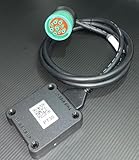
- US based, Miami, FL, we keep stock
- Bluetooth Low Energy (BLE) wireless interface
- Large capacity storage for offline operations
- Integrated engine diagnostics and antenna
- J1939, J1708/J1587 and OBD-II connections and more
Dates to keep separate
The 8 October 2026 recommendations come from the 57th meeting. The GST Council’s archive records the recommendations of the 56th meeting as uploaded on 3 September 2025. That earlier meeting dealt with other matters, including rate rationalisation, and should not be read as the source of the e-way bill proposal. Older e-way bill rollout history is also separate.
Taken together, the proposal narrows where and how in-transit goods can be stopped and removes confiscation under section 130 for goods and conveyances in transit. Its effect depends on the legal instruments that follow.
Quick Recap
Best Value
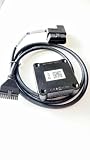
- FMCSA & DOT Compliant Electronic Logging: Accurate Hours of Service (HOS) tracking designed to help commercial drivers and fleets meet federal compliance requirements
- Light/Medium Duty OBDII Cable Included: Dedicated cable with standard 16-pin connector enables easy vehicle connection for trucks and vehicles equipped with OBDII diagnostic ports
- Plug & Play Installation: No wiring, tools, or professional installer required for setup-simply connect the cable to the device and plug into your vehicle's diagnostic port
- Bluetooth Connectivity: Pairs directly with your smartphone or tablet app for real-time duty status syncing and driving data management
- Compact & Durable Design: Device housing engineered for secure, out-of-the-way mounting in the vehicle cab to withstand commercial vehicle environments
Rank #4

- Easy Installation — Designed for straightforward installation in compatible commercial vehicles.
- Bluetooth Connectivity – Communicates with compatible mobile devices and ELD applications through Bluetooth.
- Engine Data Connection – Connects to the vehicle to provide engine and vehicle data to compatible ELD software.
Product prices and availability are accurate as of the date/time indicated and are subject to change. Any price and availability information displayed on Amazon at the time of purchase will apply.
Free tools Windows power users keep installed
One-click scans. No signup required.

