What’s actually slowing this PC down?
Pick the symptom - the matching free tool is one click away.
GST changes have made it easier for some small, unregistered sellers of goods to sell online within their own state, but they do not generally let those sellers make taxable sales of goods to customers in other states without registration. Interstate taxable supplies usually trigger compulsory registration regardless of turnover, subject to specific statutory or notified exceptions. A separate place of business in another state generally requires its own registration.
Can you sell to customers in another state without GST registration?
Usually not if you are making an interstate taxable supply. Section 24 of the Central Goods and Services Tax Act, 2017 includes “persons making any inter-State taxable supply” among those required to register. CBIC’s GST FAQ likewise says an unregistered dealer making an interstate supply must obtain registration irrespective of turnover.
As an Amazon Associate I earn from qualifying purchases.
That general rule is not a universal answer for every seller. The result depends on whether you supply goods or services, whether the supply is taxable, your circumstances, and any applicable statutory or notified exception. Do not assume that being below the ordinary turnover threshold is enough to avoid registration for interstate taxable goods sales.
What changed for small sellers using marketplaces?
A conditional relaxation lets certain unregistered suppliers of goods sell through e-commerce operators without mandatory registration, provided they meet the applicable threshold and other conditions. The permitted route is limited to intra-state supplies: it does not authorize an unregistered seller to use the relaxation for interstate taxable goods sales.
#1 Best Overall

- LARGE EIGHT-DIGIT DISPLAY – Clear and easy-to-read 8-digit display, perfect for everyday calculations and ensuring accurate results in home or office settings.
- TAX & CURRENCY EXCHANGE FUNCTIONS – Effortlessly handle tax calculations and convert home currency to other currencies for easy financial management.
- GENERAL PURPOSE CALCULATOR – Ideal for a wide range of applications, from basic math to business and personal use, with memory keys for quick storage and recall.
- USER-FRIENDLY KEYBOARD – Easy-to-use layout, featuring square root, percent calculation, and simple functions that make it perfect for everyday tasks.
- COMPACT & PORTABLE DESIGN – Space-saving design that fits easily on any desk or in a briefcase, making it ideal for both home and office use.
The GST Council’s 23rd meeting record describes the relaxation and conditions for suppliers and e-commerce operators, including checks intended to prevent ineligible interstate supplies. Central Tax Notifications 34/2023 and 37/2023 supported implementation. Check the current operative notifications and GST Portal instructions for enrollment, reporting, and marketplace procedures; access to a marketplace does not itself establish that a seller qualifies.
How the rules differ by seller and transaction
| Situation | What to understand |
|---|---|
| Unregistered seller of taxable goods ships to a customer in another state | Interstate taxable supplies generally require registration irrespective of turnover, subject to applicable exceptions. |
| Unregistered seller of goods uses an e-commerce operator within the seller’s state | A conditional registration relaxation may apply if the seller meets the threshold and other requirements and makes no interstate taxable supplies. |
| Seller supplies services to a customer in another state | Interstate supply rules and any service-specific exemption must be checked. Do not apply the goods-marketplace relaxation to services. |
| Seller opens a branch or other place of business in another state | CBIC describes registration for a branch office in another state as a fresh registration. The business structure and actual supply arrangements matter. |
| Supplier deals exclusively in wholly exempt or non-taxable supplies | The Act provides an exemption from registration for persons exclusively making such supplies; confirm that every relevant supply qualifies. |
Does the interstate-services exemption help small sellers?
There is a separate, historically documented exemption for certain small providers making interstate supplies of services. The GST Council’s 23rd meeting agenda records an exemption up to annual turnover of ₹20 lakh, and ₹10 lakh in specified special-category states other than Jammu and Kashmir, for which the document states ₹20 lakh. This is a dated Council record, not a substitute for checking the operative notification and later amendments. Confirm the state and service category before relying on it; it does not create a parallel exemption for taxable goods sellers.
Rank #2

- Profit margin calculation
- Quick and easy tax calculation
- Square root, sign change, and memory keys
- Attractive metallic design
- 12 digits
Do you need a separate GST registration for a business location in another state?
CBIC’s GST FAQ says registering a branch office in another state is a fresh registration. That issue is distinct from shipping an order across a state border from your existing place of business: opening a new state location brings its own registration and compliance considerations. The answer for a particular business depends on its structure and activities.
Do these 3 things before closing this tab:
1Scan for outdated or missing drivers - takes under a minute2Clear out junk files and repair common Windows errors3Fix the driver behind crashes, sound loss and screen glitchesWhat changed in GSTR-1 reporting for interstate B2C invoices?
The GST Portal’s GSTR-1 user guide changed the invoice-value cutoff for reporting taxable interstate supplies to unregistered customers. For return periods from August 2024, interstate B2C invoices above ₹1 lakh go invoice-wise in Table 5; interstate supplies at or below ₹1 lakh go in Table 7, along with intra-state supplies to unregistered customers. The earlier cutoff was ₹2.5 lakh through the July 2024 return period.
Rank #3

- EXTRA-LARGE 12-DIGIT DISPLAY – Clear, easy-to-read screen enhances visibility for fast, accurate data entry—ideal for finance, accounting, and office use.
- COST/SELL/MARGIN KEYS – Quickly calculate profit margins with dedicated keys designed to streamline business and retail calculations.
- TAX CALCULATION FUNCTIONS – Easily add or subtract tax values with built-in tax keys, simplifying invoice and pricing work.
- KICKSTAND DESIGN – Built-in angled display stand offers optimal viewing and reduces neck strain during long sessions.
- SOLAR + BATTERY POWER – Dual power source with solar panel and battery backup ensures reliable performance in any lighting condition.
The guide also says the HSN summary was split into B2B and B2C tabs from the May 2025 return period. These are return-reporting instructions, not changes to who must register.
Independent reader supportYour contribution helps us test, update, and keep practical guides available for everyone.Check these facts before expanding across state lines
- Classify the supply: identify whether you sell goods or services and whether the supply is taxable, wholly exempt, or non-taxable.
- Locate your business and customer: distinguish a customer in another state from a new branch or other place of business in that state.
- Check your sales channel: the conditional marketplace relaxation concerns eligible intra-state supplies of goods; it is not a general interstate exemption.
- Review registration status and turnover: assess turnover against the applicable threshold, but do not treat turnover alone as decisive for interstate taxable supplies.
- Verify current requirements: check the operative Act, notifications, and GST Portal guidance for your state and transaction, then account for registration, invoicing, and GSTR-1 reporting as applicable.
For a specific decision, verify the current rule against the seller’s state, supply classification, turnover, marketplace arrangement, and any applicable notification. The official CBIC FAQ, GST Council meeting record, and GST Portal GSTR-1 guide address different parts of the question: registration framework, historical exemption decisions, and return reporting, respectively.
Quick Recap
Best Value
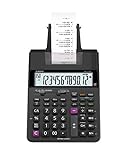
- FAST TWO-COLOR PRINTING – Prints at 2.0 lines per second with dual-color output (black/red) for easy distinction between positive and negative values.
- CHECK, CORRECT & RE-PRINT – Review and correct up to 150 steps before printing; use re-print and after-print functions for efficient documentation.
- TAX & BUSINESS FUNCTIONS – Includes cost/sell/margin, mark-up/mark-down, tax calculation keys, and currency exchange for quick financial operations.
- BIG DISPLAY & EASY INPUT – Features a 12-digit LCD and large, clearly spaced plastic keys for comfortable, accurate data entry.
- UPGRADED DESIGN – New version of the HR-100TM, ideal for taxes, bookkeeping, and accounting with clock/calendar printouts, subtotal & grand total, and percent functions.
Rank #4

- COMPACT & PORTABLE- Mini desktop size with rubberized keys for fast, comfortable input in office or on-the-go environments.
- BIG DISPLAY & EASY INPUT – 12-Digit LCD Display, large, easy-to-read screen ideal for quick and accurate business or personal calculations.
- ONE-COLOR PRINTING WITH DATE & TIME-Prints in crisp black and automatically includes the date and time—ideal for accurate recordkeeping, receipts, budgets, and accounting tasks.
- TAX & BUSINESS FUNCTIONS- Includes cost/sell/margin, tax calculation, and currency exchange functions for efficient financial decision-making.
- CHECK, CORRECT & RE-PRINT – Review and correct up to 150 steps before printing; use re-print and after-print functions for efficient documentation.
Product prices and availability are accurate as of the date/time indicated and are subject to change. Any price and availability information displayed on Amazon at the time of purchase will apply.
Free tools Windows power users keep installed
One-click scans. No signup required.

