Do these 3 things before closing this tab:
1Clear out junk files and repair common Windows errors2Fix the driver behind crashes, sound loss and screen glitches3Repair Windows errors before they cause bigger problemsNo—this was not a report that sprinkling sugar on tomato plants prevents fungal disease. The “sugar boost” in the 2005 headline referred to a laboratory synthesis: chemists built the carbohydrate portion of α-tomatine, a tomato defense glycoalkaloid. Having that sugar structure in a pure, usable form could help scientists study how tomato plants and attacking fungi interact. It did not demonstrate better disease resistance, higher yields, or longer shelf life in a crop.
The direct answer: the sugar was made in a laboratory, not fed to tomatoes
Chemistry World used the phrase “Fungus fighting tomatoes get sugar boost” in a September 8, 2005 report about work by Sergey Nepogodiev and colleagues. The team developed a chemical route to the carbohydrate part of α-tomatine. In other words, “sugar” described a molecular building block inside a defensive compound, not table sugar, syrup, or a fertilizer treatment.
As an Amazon Associate I earn from qualifying purchases.
That distinction matters because a headline can sound like a gardening recommendation when the underlying result is synthetic chemistry. Nothing in the account reports sugar being applied to plants, sprayed on leaves, added to soil, or fed to greenhouse or field-grown tomatoes. There is also no measured change in fungal infection, crop yield, fruit storage life, or plant growth.
Free tools Windows power users keep installed
One-click scans. No signup required.
What was actually synthesized
The target was identified as methyl lycotetraoside, the tetrasaccharide constituent of the tomato defense glycoalkaloid α-tomatine. A tetrasaccharide is a carbohydrate made from four linked sugar units. The researchers assembled those units into a branched structure rather than producing an agricultural product.
#1 Best Overall
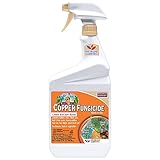
- Control fungus and disease in your garden with Captain Jack’s ready-to-use Liquid Copper Fungicide!
- Approved for organic gardening, this fungicide is suitable for the production of organic produce and can even be used up until the day of harvest!
- Copper Fungicide effective in the control and prevention of a wide range of plant diseases. Listed common garden diseases include blight, black spot, powdery mildew peach leaf curl and more.
- Apply copper fungicide to fruits, vegetables, ornamentals and other plants in your lawn and garden for complete and long-lasting disease control.
- This product arrives conveniently ready-to-use in a trigger spray bottle! To use, shake well and thoroughly apply to affected plants and foliage. Please see product label for full use instructions.
The underlying paper is N. A. Jones, S. A. Nepogodiev and R. A. Field, “Efficient synthesis of methyl lycotetraoside, the tetrasaccharide constituent of the tomato defence glycoalkaloid α-tomatine,” Organic & Biomolecular Chemistry, volume 3, page 3201 (2005), DOI 10.1039/b508752j.
Why α-tomatine matters in tomato–fungus interactions
A chemical defense made by the plant
α-Tomatine is described in the report as a tomato defense glycoalkaloid. Glycoalkaloids contain a sugar portion joined to a non-sugar chemical portion. In a living tomato plant, that combined structure is part of the plant’s chemical response to organisms that attack it.
Studying the whole molecule is difficult when scientists cannot obtain enough material with a known structure and purity. Making the carbohydrate segment separately gives researchers a defined component with which to examine molecular recognition, assembly and breakdown. It also helps distinguish what the sugar portion contributes from what the rest of α-tomatine contributes.
Recommended Free Tools
How fungi can counter the defense
The Chemistry World account says that some tomato-attacking fungi produce enzymes that deactivate α-tomatine. This is a chemical arms race: the plant makes a defensive compound, while a pathogen can produce machinery that alters or disables it.
Rank #2

- Control fungus and disease in your garden with Captain Jack’s Liquid Copper Fungicide Concentrate!
- Approved for organic gardening, this fungicide is suitable for the production of organic produce and can even be used up until the day of harvest!
- Copper Fungicide effective in the control and prevention of a wide range of plant diseases. Listed common garden diseases include blight, black spot, powdery mildew peach leaf curl and more.
- Apply copper fungicide to fruits, vegetables, ornamentals and other plants in your lawn and garden for complete and long-lasting disease control.
- This product arrives conveniently ready-to-mix! To use, mix with water according to package directions and thoroughly apply to affected plants. Please see product label for full use instructions.
That statement does not mean every fungus attacking tomatoes can neutralize α-tomatine, nor does it identify a universal treatment for fungal disease. It describes an interaction that scientists can investigate more precisely when they have pure, well-characterized compounds available.
How the chemists built the carbohydrate
Four units assembled into one branched tetrasaccharide
The reported approach joined four carbohydrate units to form a branched tetrasaccharide. The important result is the ability to construct the architecture found in the α-tomatine sugar portion. Branched carbohydrates are challenging targets because each sugar unit has several reactive positions, and the desired connections must be made in the correct order and orientation.
The report highlights “one-pot, double-coupling chemistry.” A one-pot sequence performs successive reactions in the same vessel rather than isolating every intermediate between operations. A double coupling means that two glycosidic connections are formed as part of the strategy. The account does not provide a recipe, quantities, reaction temperatures, yields or purification instructions, so those details should not be inferred from the headline.
Why synthesis is more than a manufacturing trick
For biological studies, purity and structural certainty are essential. A sample containing several similar sugar structures can make an experiment difficult to interpret: an observed effect might belong to a contaminant or to the wrong linkage. Chemical synthesis can supply a defined material and, if needed, related variants for controlled comparisons.
Rank #3

- Neudorff Copper Fungicide Controls Listed Plant Diseases: Powdery Mildew, Rusts, Black Spot, Leaf & Fruit Spot, Downy Mildew, Fruit Rot, Late Blight, Peach Leaf Curl and Other Listed Diseases.
- Fungicide for Fruit Trees and Plants For Organic Gardening & Can Be Used up to Day of Harvest: For Roses, Vegetables, Fruits, Fruit Trees, Flowers, & Ornamentals and Use for Early and Late Blight on Tomatoes and Potatoes.
- Houseplant Fungicide for Indoor Plants, Dormant and Growing Season Liquid Copper Fungicide Controls Listed Plant Diseases Using Low Concentration of Copper and Protects Buds and Flowers such as Rose.
- For Organic Gardening; For Use in Homes, Home Gardens, and Home Greenhouse, This Ready-To-Use Copper Fungicide Spray for Plants Decomposes to Form Soluble Copper and Fatty Acid, Both of Which Can Be Used by Microbes and Plants.
- How to Use: Begin Treatment for Plant Care 2 Weeks before Diseases Normally Appears or When Disease First Appears, and Repeat 7 - 10 Days Intervals for as Long as Needed. Reapply after Rain
Robert Field, who is quoted without a formal role being specified in the available article text, expressed the purpose this way: “The availability of pure materials from chemical synthesis is crucial to enabling key studies to understand the ecological relationship between plants and fungi.” The emphasis is on enabling studies, not on claiming that the synthesis itself changes a plant’s resistance.
What the 2005 report establishes—and what it does not
| Question | What the report establishes | What it does not establish |
|---|---|---|
| Was sugar added to tomato plants? | No. The work synthesized a carbohydrate component in the laboratory. | Any benefit from applying household sugar, molasses or another sugar to crops. |
| What molecule was targeted? | Methyl lycotetraoside, the tetrasaccharide portion of α-tomatine. | A complete commercial fungicide or a new tomato variety. |
| Why make it? | To obtain pure material for studying α-tomatine and plant–fungus chemistry. | A field-ready intervention or treatment schedule. |
| What do fungi do? | Some tomato-attacking fungi are reported to make enzymes that deactivate α-tomatine. | That all tomato pathogens share the same detoxification ability. |
| Were crops tested? | No agricultural trial or measured crop outcome is reported. | Improved resistance, yield or shelf life. |
Could this eventually lead to tougher tomato varieties?
Possibly, but only as a future breeding direction. Nepogodiev is quoted as saying that “it may prove possible to breed tomato strains for improved fungal resistance, and hence greater crop yield and longer shelf life.” The words “may prove possible” are important. They mark a hypothesis about what better understanding of α-tomatine could eventually support, not a result demonstrated by the synthesis.
What a breeding program would still need to show
A practical breeding claim would require several separate demonstrations: that tomato lines differ in α-tomatine or related defense chemistry; that those differences affect infection under controlled conditions; that the trait remains stable across environments; and that resistance does not bring unacceptable effects on plant growth, fruit quality or other useful traits. None of those measurements appears in the 2005 news account.
Researchers would also need to understand the pathogen side. If a fungus can enzymatically deactivate α-tomatine, simply increasing the plant’s production might not be enough. The effectiveness of a defense could depend on the amount and location of the compound, the timing of production and the pathogen’s detoxification capacity.
Rank #4

- DISEASE CONTROL: Disease & Fungus Control controls powdery mildew, rust, black spot, fruit rot, downy mildew, late blight, and other listed diseases
- PROTECTS PLANTS: Helps protect buds, flowers, and foliage from damaging diseases across a variety of plants
- FOR ORGANIC GARDENING: OMRI-listed and suitable for use in organic and hydroponic gardening
- USE UP TO DAY OF HARVEST: Can be applied up to and including the day of harvest for edible plants; Simply point and spray; Thorough coverage is essential
- USE IN MULTIPLE SETTINGS: Ideal for use in home gardens, indoor plants, and home greenhouses
Does sugar help tomatoes fight fungus?
Not according to this report. It provides no evidence that applying sugar to a tomato plant improves fungal resistance. A grower should not treat the headline as instructions to dissolve sugar in irrigation water, spray a sugar solution on leaves or replace an approved disease-management practice.
The defensible interpretation is narrower: chemists synthesized a sugar-containing part of a natural tomato defense molecule, creating material that can be used to investigate plant–fungus chemistry. Any agricultural use would require new experiments and evidence.
Independent reader supportYour contribution helps us test, update, and keep practical guides available for everyone.Why the distinction is easy to miss
“Sugar” has two meanings in ordinary coverage
In everyday language, sugar usually means a food ingredient. In chemistry, a sugar is a class of carbohydrate molecules that can be assembled into larger structures. The four-unit carbohydrate made in this work is chemically related to sugars people recognize, but it is not being discussed as a source of energy for a plant or as a soil amendment.
Crashes, No Sound, or Screen Glitches?
Random freezes, missing sound and display glitches usually trace back to one bad driver. Find and replace yours safely.Free scan · under a minutePC Slower Than It Used to Be?
A free scan shows the junk files, broken settings and background clutter dragging Windows down - then fixes them in one click.Free scan · Windows 10 & 11“Fungus fighting” describes the molecule’s context
The headline connects tomatoes, fungi and sugar because the synthesized structure belongs to α-tomatine, a compound associated with tomato defense. It does not say that the synthesized carbohydrate was tested against a fungus by itself, and the report does not give a minimum effective dose, a pathogen list, or a comparison with a conventional fungicide.
Best Value
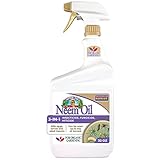
- Protect your oasis with 3 garden products in 1 from Captain Jack’s; Bonide Captain Jack’s Ready-to-Use Neem Oil spray for plants is a multi-purpose fungicide, insecticide and miticide for your lawn & garden
- Clarified Hydrophobic Extract of Neem Oil protects your garden from common fungal diseases including rust, powdery mildew and more; apply to house plants, roses, trees, shrubs, fruits, nuts & vegetables for effective protection against garden diseases
- Captain Jack’s Neem Oil kills eggs, larvae and adult stages of insects to provide full range protection against pests and insects; this is effective against spider mites, aphids, whiteflies & more
- Approved for organic gardening, Neem Oil spray is suitable for the production of organic produce and can be used up until the day of harvest
- This product arrives conveniently ready-to-use in a trigger spray bottle; to use, shake well and completely cover affected plants. Reapply as needed every 7-14 days. Please see product label for full instructions
What scientists could study with pure methyl lycotetraoside
- Structure–function relationships: Compare the natural carbohydrate arrangement with altered versions to determine which features matter for biological activity.
- Detoxification chemistry: Examine how fungal enzymes modify or deactivate α-tomatine-related structures.
- Plant–pathogen recognition: Investigate how a fungus encounters and responds to a tomato defense compound.
- Analytical standards: Use a defined compound when identifying related molecules in laboratory samples.
- Future breeding hypotheses: Provide chemical knowledge that could help decide which tomato traits deserve testing in controlled breeding work.
These are research uses, not consumer instructions. The report does not claim that methyl lycotetraoside alone reproduces the activity of complete α-tomatine or that it can be deployed as a crop protectant.
How to evaluate claims based on this story
- Identify the level of work. The reported achievement is synthetic chemistry: constructing a molecule in the laboratory.
- Separate material from application. A purified research compound is not the same thing as a spray, seed treatment, fertilizer or resistant cultivar.
- Look for measured outcomes. The account gives no infection-rate, yield, storage-life or field-performance number.
- Keep conditional language conditional. The proposed breeding benefit is phrased as a possibility, not an established effect.
- Check the biological scope. “Some” tomato-attacking fungi can make α-tomatine-deactivating enzymes; that is not a claim about every pathogen.
Source and historical context
The news report appeared on September 8, 2005, in Chemistry World. It cited the 2005 Organic & Biomolecular Chemistry paper by Jones, Nepogodiev and Field. The paper title specifies an efficient synthesis of methyl lycotetraoside, while the news account explains why that carbohydrate matters to studies of α-tomatine and fungal detoxification.
Because the report is nearly two decades old, it should be read as a description of what that work made possible at the time. It is not evidence that a commercial tomato treatment, resistant variety or yield improvement subsequently became available. No later outcome is supplied here, so none should be attached to the original headline.
What tomato growers should take away
For practical disease management, this story changes nothing by itself. It does not validate a sugar treatment and does not replace sanitation, resistant varieties, airflow management, irrigation practices or legally labeled fungicides. Its value is scientific: a difficult carbohydrate component of a tomato defense molecule became accessible in pure form, allowing more precise work on how plants and fungi affect one another.
The useful one-sentence translation is: scientists synthesized part of a tomato defense chemical so they could study fungal countermeasures; they did not give tomatoes a sugar treatment.
Quick Recap
Product prices and availability are accurate as of the date/time indicated and are subject to change. Any price and availability information displayed on Amazon at the time of purchase will apply.

