Free tools Windows power users keep installed
One-click scans. No signup required.
Neither approach is universally better. A frontline communication app is usually the better fit for employees who move between areas, locations or shifts and need messages, files, schedules and operational tools with them. A desk-phone unified communications (UC) setup is stronger at a reception desk, service counter, shared office or other fixed point where people need a dependable voice endpoint and predictable call handling. Many organizations get the best result from a mixed design: mobile or shared-device collaboration for roaming staff, plus managed phones at fixed or common-area positions.
Choose the complete workflow rather than comparing a handset with an app in isolation. Identity, device ownership, call queues, emergency calling, network coverage, integrations, training and support can matter more than the endpoint itself. The available Microsoft documentation describes capabilities and scenarios, but it does not provide a neutral head-to-head test of productivity, reliability or total cost.
As an Amazon Associate I earn from qualifying purchases.
What you are actually comparing
“Frontline app” and “desk-phone UC” describe different layers of a communications system. An app-centered design normally combines a mobile application, a shared or individually assigned device, cloud identity and collaboration services. A desk-phone design combines a physical endpoint with a calling service, user or common-area account, network connection and an administration model.
Do these 3 things before closing this tab:
1Scan for outdated or missing drivers - takes under a minute2Clear out junk files and repair common Windows errors3Fix the driver behind crashes, sound loss and screen glitchesFrontline communication apps
Microsoft’s frontline collaboration documentation describes chats, channel conversations, calls, meetings and file sharing across locations. It also identifies workforce tools such as Shifts and Walkie Talkie, with examples in retail, healthcare, financial services and manufacturing. The value is not simply that a phone can run an app; it is that coordination, information and work actions can appear in the same mobile or shared-device experience.
#1 Best Overall

- Item Package Quantity - 1
- Product Type - LANDLINE PHONE
- Memory - 0. GB
- Accessories may not be original, but will be compatible and fully functional. Product may come in generic box.
An app may be used on a company-owned phone, tablet, rugged device or a worker’s personal phone. It can support one-to-one conversations, group channels, announcements, documents, meetings and connected task or line-of-business applications. The exact features depend on the service licenses, device type, network and integrations that an organization deploys.
Desk-phone unified communications
A desk phone is a dedicated voice endpoint connected to a calling platform. In the Microsoft Teams Phone for Frontline Workers documentation, individual devices and common-area phones can support auto-attendants, call queues, call delegation, shared calling, transfers, call park and hotline functions. Examples include customer inquiries, deliveries, medical-facility coordination, appointment scheduling and warehouse inventory management.
A common-area phone stays in a known place and can serve a group or function rather than one named employee. A certified desk phone may therefore be appropriate at reception, a loading bay, a nurses’ station, a warehouse office or a security desk. Certification and service compatibility change over time, so verify the current support list before purchasing a model.
Crashes, No Sound, or Screen Glitches?
Random freezes, missing sound and display glitches usually trace back to one bad driver. Find and replace yours safely.Free scan · under a minuteWindows Errors? Fix Them Before They Spread
Repair common Windows errors and clear accumulated junk for a smoother, more stable PC - no reinstall needed.Free scan · no reinstallEndpoint choice by work pattern
| Decision axis | Frontline communication app | Desk-phone UC | What to decide |
|---|---|---|---|
| Where work happens | Useful when employees move around a store, plant, care facility, branch or service area, or work across sites. | Best where a phone can remain at a counter, office, reception point, shared station or other fixed location. | Map real movement during a shift, not just the employee’s department. |
| Main communication context | Messages, channels, meetings, files and connected work apps can support continuing coordination. | Voice access, call routing and a visible, shared endpoint are the main strengths. | Identify whether the dominant demand is team coordination, inbound and outbound calls, or both. |
| Shared access | A shared device can be signed in and out between shifts, or workers can use individually assigned devices. | A common-area phone can stay available to a group or a defined function. | Design handoff, privacy, auditing and availability at shift changes. |
| Operational workflows | Can connect communication with schedules, tasks, files, approvals and custom tools. | Can provide queues, auto-attendants, transfers, call park and hotline behavior. | Compare the deployed service and workflows, not a handset against an app icon. |
| Deployment constraints | BYOD may exclude people without reliable personal phones and may conflict with local rules or union agreements. Managed devices require enrollment, sign-in and support. | Shared phones are easy to locate but still require service provisioning, network capacity, hardware replacement and ownership decisions. | Include policy, device management and support in the initial design. |
When an app-centered design is the better fit
Roaming or multi-location teams
If employees move between aisles, wards, production zones, branches or customer sites, a fixed phone creates a communication detour: the worker must return to it or rely on someone nearby. A managed mobile device lets the worker receive messages and participate in channels while remaining in the work area. For teams spread across locations, the same conversation can include staff who are not standing beside one another.
Shift-based coordination
Frontline work often changes hands. An app can carry channel posts, files, checklists and schedule information from one shift to the next instead of relying on a verbal handoff at a single phone. Microsoft’s scenario guidance includes schedule management with Shifts, team communication and collaboration, training and digitized processes. A deployment can extend those scenarios with approved third-party or custom applications.
Information-rich work
Voice is useful for urgency, but many frontline questions need a photo, document, location, form, approval or written record. An app-centered workflow can place those artifacts beside the conversation. This is especially useful for inventory questions, maintenance evidence, customer-service updates and procedures that must be revisited later.
Distributed supervision
Supervisors who cover several work areas can use channels, direct messages and meetings without maintaining a separate phone at every point. The benefit depends on reliable coverage, sensible notification policies and training; an app is not a substitute for network planning.
The Tool Desk
Outbyte Driver Updater FREEFix the driver behind crashes, sound loss and screen glitchesFind Drivers →Outbyte PC Repair FREEClear out junk files and repair common Windows errorsFree Scan →Rank #2

- Professional Business Phone: The Poly CCX 600 desktop media phone delivers enterprise-grade communication capabilities with a premium handset, designed specifically for modern business environments requiring reliable voice and multimedia functionality
- Vibrant Touchscreen Display: Features a large 7-inch color touchscreen interface that provides intuitive navigation, easy access to contacts, and seamless control of calls and settings with responsive touch controls
- Power Over Ethernet: Equipped with PoE technology that eliminates the need for separate power adapters by delivering both data and power through a single Ethernet cable, simplifying installation and reducing cable clutter on your desk
- Open SIP Compatibility: Built with Open SIP protocol support, enabling flexible integration with multiple unified communications platforms including Zoom (Certified) and Microsoft Teams, providing versatility for various business communication needs
- Renewed Quality Product: This professionally renewed device has been inspected and tested to work like new, offering the premium features of the Poly CCX 600 at an accessible price point while maintaining high performance standards
When desk phones remain the stronger choice
Reception and customer-facing points
A reception or service counter needs a visible, always-available endpoint. Call queues and auto-attendants can route callers to a person, team or shared function, while transfers and call park support handoffs between staff. A phone’s location is obvious to visitors and employees, which can be valuable when the caller cannot use an internal app.
Shared operational stations
Loading docks, security posts, dispatch desks, nurses’ stations and warehouse offices often need a phone that remains in place between shifts. A common-area device avoids asking every worker to bring a personal phone and reduces dependence on a specific individual’s login.
Predictable voice handling
Some workflows are dominated by calls rather than messages: appointment scheduling, delivery coordination, hotline coverage or a customer queue. Physical keys, a handset and a known number can make those interactions straightforward. Call delegation, shared calling, transfer and park functions can be assigned to the role or station.
Environments where personal devices are unsuitable
Noise, gloves, sanitation requirements, restricted cameras, privacy rules or hazardous-area policies can make a personal smartphone impractical. A purpose-selected common-area phone may be easier to clean, secure, locate and replace. The suitability still depends on the site’s network, power and emergency-calling requirements.
Why a mixed deployment often works best
Mobile collaboration and fixed voice endpoints solve different problems. A store may give supervisors and floor staff an app on managed shared devices while keeping phones at customer service and the stockroom. A clinic may use mobile messaging for care-team coordination and retain common-area phones for appointment or emergency workflows. A plant may use an app for shift updates and photos while maintaining phones at control rooms and safety points.
In a mixed design, define which channel owns each type of communication. For example, urgent calls to a queue can ring a fixed function, routine updates can live in a channel, and confidential matters can use an approved one-to-one conversation. Without these rules, employees may duplicate the same request across channels and make the source of truth unclear.
Shared devices, BYOD and identity decisions
“Mobile-first” does not mean “personal-phone-only.” Microsoft’s device-management guidance asks organizations to decide whether devices are company-owned or personal, shared or individually assigned, and taken home or kept at work.
Rank #3
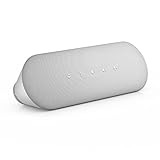
- ELEGANT AESTHETIC: With a compact style and finish, this desk micro soundbar sits easily on a monitor base, or beside a laptop or desktop.Waterproof : No
- LED LIGHTS: MS-Teams app status, call / hang-up, volume up, volume down, and mic mute / unmute are all clearly indicated by LED indicators
- FULL DUPLEX AUDIO: With AI noise cancellation, numerous people can speak at the same time, while still being heard clearly in a business conference
- ENHANCED CONNECTIVITY: With an intuitive set up process, connect the speakerphone to monitors, laptops, or desktops through the USB-A or USB-C port
- MS TEAMS BUTTON: Provides quick access to meetings and notifications -- the perfect multimedia speaker for business conferences and a home office
Company-owned shared devices
Shared phones or tablets can be signed in and out between shifts. They provide a consistent hardware baseline and allow the organization to enforce enrollment, updates, screen-lock and remote-wipe policies. The trade-off is operational: someone must charge, clean, inventory and replace them, and the sign-in process must be fast enough for shift changes.
Quick wins for a faster PC:
Repair Windows errors before they cause bigger problemsFix Now →Fix the driver behind crashes, sound loss and screen glitchesFind Drivers →Individually assigned managed devices
An assigned device simplifies accountability and can reduce repeated sign-ins. It also increases hardware count and lifecycle cost. Plan for onboarding, offboarding, loss, damage, replacement and workers who change roles or locations.
Bring your own device
BYOD can reduce initial hardware purchasing, but it is not automatically inclusive or low-cost. Microsoft notes constraints such as device variation, possible legal or union restrictions and workers who lack reliable personal mobile access. Assess mobile coverage, data costs, privacy expectations, authentication, support boundaries and whether local rules permit work data on personal devices. Do not make access to essential work information depend on a personal phone that some employees do not have.
Shift handoff and privacy
Shared sign-in must not expose the previous worker’s messages or files. Define session timeouts, sign-out responsibility, notification previews, cached data, lost-device response and the audit trail required for the role. Test the process at the busiest shift change rather than only with administrators.
Calling capabilities to specify before selecting a phone
List the call flows before shopping for hardware. The documented frontline calling scenarios include:
Recommended Free Tools
- Auto-attendants: menu-driven routing for callers who need a department or function.
- Call queues: distribution of incoming calls to a team or service group.
- Call delegation and shared calling: another person or group can answer or manage calls for a role.
- Transfer and call park: a call can be moved to the right person or held for pickup from another endpoint.
- Hotline phones: a phone can provide a direct path for a defined operational or safety purpose.
For each flow, document the number, business hours, overflow target, after-hours behavior, failover path and owner. Confirm emergency-calling behavior separately; a phone’s presence does not by itself prove that location information, routing or regulatory requirements are satisfied.
A decision process that produces a defensible answer
- Inventory work patterns. Observe where each role spends a shift, how often it changes location and whether the worker crosses sites or buildings.
- Classify communication. Separate urgent voice calls, routine coordination, announcements, documents, schedules, approvals and system-generated alerts.
- Map fixed points. Mark reception desks, shared stations, hotlines, safety points and any location that must remain reachable when no individual is signed in.
- Check access and policy. Record personal-device availability, union or local restrictions, privacy expectations, authentication requirements and network coverage.
- Design the minimum viable workflow. Decide which roles need an app, a fixed phone or both. Define the channel or queue for every common request.
- Specify service dependencies. Verify licenses, identity, device enrollment, integrations, call routing, emergency behavior, power and network requirements.
- Pilot at a busy period. Include a shift change, a coverage gap, an incoming queue and a lost-device or failed-network scenario.
- Measure and adjust. Track unanswered calls, response time, handoff errors, sign-in failures, message reach, support tickets and employee feedback by role.
Implementation blueprint for an app-centered rollout
Prepare the service and identities
- Create role-based groups for locations, shifts and functions instead of relying on ad hoc chat groups.
- Set naming, retention, notification and escalation rules before opening channels.
- Define who can create channels, add external participants, install applications and export information.
- Test authentication on every device class, including shared-device sign-in and recovery when a worker forgets a password.
Prepare devices and connectivity
- Choose managed, shared or personal devices by role, documenting why each choice is appropriate.
- Check coverage in basements, loading areas, production floors, parking areas and other weak-signal locations.
- Provide charging, protective cases, cleaning procedures and a replacement path.
- Configure screen lock, updates, remote wipe, notification privacy and application access.
Prepare the workflow
- Publish a short rule for urgent calls, routine messages, files, approvals and announcements.
- Connect approved schedule, task, training or custom applications only after deciding who owns the resulting data.
- Give each shift a handoff checklist that names unresolved conversations and the next owner.
Implementation blueprint for desk-phone UC
Design the number and queue plan
Assign numbers to people, departments, queues, common areas and hotlines deliberately. Define business hours, holidays, overflow, voicemail, recording rules where applicable and who can change routing. Avoid creating a phone at every desk before confirming that the role actually needs a dedicated endpoint.
Rank #4

- CALL CLARITY: Never miss a word or inflection with HD Voice with Acoustic Clarity technologies from Poly.
- EASY-TO-USE: Traditional dial pad experience. Ideal for glove-hand use in retail, warehouse, and manufacturing locations, thanks to durable design and debris resistance.
- BLOCK DISTRACTING NOISE: Eliminate distracting background noise with Poly Acoustic Fence and NoiseBlockAI technologies.
- SPEAKERPHONE: Keep conversations on track with full-duplex speakerphone operation and echo cancellation.
- MICROSOFT TEAMS: Great for Microsoft Teams users who want (or need) a dial pad and full Microsoft Teams integration.
Validate the infrastructure
Confirm network quality, power, switch capacity, device provisioning, firmware management and replacement stock. Test operation during a network interruption and verify the organization’s emergency-calling design with the service provider and local requirements.
Configure and label common areas
Label each phone with its function and number. Make sign-in, transfer, park and queue procedures visible at the station. A common-area phone is successful only when workers know which calls it handles and where a parked call can be retrieved.
What’s actually slowing this PC down?
Pick the symptom - the matching free tool is one click away.
Cost, evidence and the limits of published claims
Neither the cited Microsoft documentation nor the accompanying product document provides a neutral, directly comparable total-cost figure for frontline apps versus desk phones. A fair budget should include subscriptions, calling plans, devices, cases, charging, network upgrades, identity administration, enrollment, support, training, integrations, replacement and decommissioning.
The Microsoft Teams Phone document reports a 143% return on investment for enterprise customers, citing a Forrester Total Economic Impact study commissioned by Microsoft in December 2022. Its footnote describes a three-year, risk-adjusted present-value analysis for a composite organization representative of enterprise customers. That is a vendor-promoted, commissioned-study result; it is not a comparison of frontline apps with desk phones and should not be treated as typical for every organization.
The same document quotes Ted Fagerness of REI saying that Teams Phone enabled an effective customer-management system at a fraction of the cost of a traditional call-center platform. This is a vendor-published testimonial, not an independent cost comparison. Use it as an example of one customer’s stated experience, not as a forecast.
Independent reader supportYour contribution helps us test, update, and keep practical guides available for everyone.Common failure modes and fixes
“Everyone has the app, but urgent messages are missed.”
Separate urgent calls from routine channels, configure escalation and test notifications with the screen locked and the device in a noisy area. A channel post should not be assumed to have the same attention level as a ringing queue or hotline.
“The shared device keeps the previous shift’s data.”
Review sign-out, session timeout, cached files, notification previews and application data. Use a dedicated shared-device configuration and test a complete handoff with ordinary workers, not just administrators.
Best Value

- Wide Compatibility: Microsoft and zoom certified, compatible with multiple UC platforms: Teams, zoom, Google, RingCentral, Genesys, 8x8, 3CX, unify, netsapiens, etc. Ensuring a seamless experience. Covering a wider range of work scenarios, and optimizing the work experience, improve work efficiency
- Noise Canceling Microphone: Coupled with a next-generation algorithm, enhanced speaker, and two noise-canceling microphones, the WH63 E2 wireless headsets effectively blocks out background noise, ensuring full-bodied, stable, and clear voices during calls, even in noisy offices, get high-quality calls
- 8H Talk Time & 607Ft Wireless Freedom: The antenna design boosts coverage, extending the DECT range up to 185m/607 feet, while reducing interference and increasing deployment density. It gives you the freedom to move with reliable performance in any environment. And all day battery life keep your calls flowing with up to 8h talk time and 71h standby on a single charge
- Multiple Wearing Styles: 3 wearing styles to choose from: Eartips, Earhook, Headband. Users can choose accessories based on their work environment, enjoying a more personalized wearing experience with the lightweight and compact headset design. Meet the ergonomic standards, ensures that users can wear the headset comfortably for long periods
- Multi-device Connectivity: The WH63 E2 supports multi-device connectivity, allowing simultaneous telephone and PC connection. Supports mixed-mode conferencing for quicker online meetings. (No Bluetooth, unable to connect to smartphones.)
“BYOD adoption is uneven.”
Check whether every affected worker has a suitable phone, data access and permission to use it for work. Provide managed shared or assigned devices where access, policy or privacy makes personal devices unsuitable.
“The desk phone is installed, but calls still go nowhere.”
Trace the full route: number assignment, auto-attendant, queue membership, business hours, overflow, voicemail and endpoint registration. Test transfers and call park from each relevant station.
“The organization bought phones before defining the workflow.”
Stop adding endpoints until the team identifies who answers each number, which locations need common-area access and what the app handles. Hardware cannot repair an undefined ownership model.
“The app is blamed for a coverage problem.”
Measure connectivity where work occurs and during the busiest periods. Improve wireless or cellular coverage, provide an approved fallback and distinguish a service outage from a device, identity or notification configuration error.
Governance and security questions
- Who owns the account, device and data when a worker changes roles or leaves?
- What information may be stored on a personal device, and how can it be removed without erasing personal content?
- How are messages, files, recordings and call logs retained, searched and deleted?
- Which roles may create channels, forward files, add guests or install custom applications?
- How are lost devices, compromised accounts and mistaken recipients reported?
- What accessibility options are available for workers who cannot use a particular handset, screen or input method?
- Which communications require a documented record, and which may be ephemeral?
How to judge the pilot
Use role-specific measures rather than a single adoption percentage. For a queue or reception point, examine unanswered calls, transfer success, wait time and after-hours coverage. For mobile teams, examine message reach, handoff completion, time to resolve a request, sign-in failures and support tickets. For shared devices, measure charging availability, checkout time, privacy incidents and replacement frequency.
Collect feedback from workers on every shift and location. A solution that works for daytime staff in a strong-signal area may fail for night workers, temporary staff or employees in a basement. Keep the pilot long enough to include vacations, schedule changes and at least one real service interruption.
Practical recommendations by scenario
| Scenario | Starting design | Reason |
|---|---|---|
| Retail or branch staff moving across a floor | Frontline app on managed shared or assigned devices, with a phone at customer service. | Staff need mobile coordination while the service counter needs a visible voice endpoint. |
| Reception or appointment desk | Desk phone with queue and transfer functions; app for internal coordination. | External callers need predictable routing, while staff still need written updates. |
| Warehouse or loading operation | Common-area phones at fixed stations plus an app for inventory and shift communication. | Stations remain reachable while mobile workers share files, tasks and updates. |
| Healthcare or care facility | Use a mix determined by privacy, coverage, hygiene and emergency requirements. | Care teams may need mobile coordination, while fixed points require managed calling. |
| Small organization with few fixed points | Start with the app if most work is mobile; add phones only where a stable public or shared number is required. | Avoid buying fixed endpoints that no role regularly uses. |
Bottom line
Choose an app-centered design when movement, shift handoffs and information-rich collaboration define the work. Choose desk-phone UC where a known location, shared access and managed call routing are essential. For many frontline environments, the practical answer is hybrid: apps follow the people, while phones stay at the places that must always be reachable. Make the decision from observed work patterns, device access, governance and complete call flows—not from a generic claim that one endpoint is superior.
The underlying Microsoft sources establish capabilities and deployment options, including app collaboration, shared-device and BYOD patterns, and individual or common-area calling. They do not establish a universal winner or an independent head-to-head result for productivity, reliability or total cost.
Quick Recap
Product prices and availability are accurate as of the date/time indicated and are subject to change. Any price and availability information displayed on Amazon at the time of purchase will apply.

