Do these 3 things before closing this tab:
1Clear out junk files and repair common Windows errors2Fix the driver behind crashes, sound loss and screen glitches3Repair Windows errors before they cause bigger problemsScience fiction’s AI stories are not reliable forecasts of what machines will become. They are a record of what people hope, fear, and question when an artificial agent seems intelligent or socially present: who has agency, who gives care, and what humans owe a machine—or one another.
How does fiction portray relationships with AI?
Fiction moves beyond the familiar hostile-machine trope. Artificial beings can be equipment or infrastructure, but they can also help, teach, care, accompany, partner with people, or pursue aims of their own. These roles make abstract questions about intelligence and agency visible in human relationships.



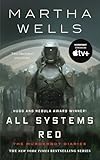
As an Amazon Associate I earn from qualifying purchases.
A 2025 AI & Society study analyzed 42 fictional works spanning antiquity to contemporary media. It proposed six recurring types—Tools, Helpers, Caregivers, Partners, Seekers, and Transcenders—and grouped them into Instrumental, Relational, and Autonomous phases. The authors examine relationship form, structure, autonomy, and emotional depth, noting that a character may shift types during a story. This is one study’s framework, not a universal classification of fiction. Read the study.
Six roles in one study’s framework
- Tools: machines used to accomplish a task.
- Helpers: agents that assist people in practical or intellectual work.
- Caregivers: agents assigned responsibility for another’s well-being.
- Partners: agents placed in a relationship of companionship or collaboration.
- Seekers: agents pursuing questions, knowledge, or goals of their own.
- Transcenders: figures imagined as exceeding ordinary human limits or categories.
These categories describe narrative roles, not a scale of real-world AI capability. A fictional character’s apparent affection, independence, or consciousness does not establish that present-day systems have feelings or subjective experience.
#1 Best Overall
Four broad forms in a separate analysis
A computational study in the International Journal of Social Robotics examined 115 AI portrayals and grouped them as human-like characters, intelligent machines, helpers such as vehicles and equipment, and infrastructure. It also compared portrayals along dimensions of intelligence and humanity. These categories offer a different lens from the six relationship types; neither study supplies a definitive taxonomy. Read the computational analysis.
Does science fiction predict AI?
It can suggest questions worth asking, but a story is not technical evidence or a dependable forecast. The computational study describes science fiction as useful for understanding how people imagine future AI and robots, rather than directly predicting the future. Fiction is made for narrative purposes and reflects its historical context; an evocative machine in a story should not be mistaken for a roadmap of engineering.
That distinction matters because stories and AI discourse can shape one another. A policy-focused AI & Society paper, drawing on analysis of almost 100 recent AI-themed science-fiction works, interviews with technologists, writers and other experts, and a workshop, argues that fiction can inform how people frame policy issues. It also identifies ambiguity about what counts as AI and where its agency begins as a challenge for cultural understanding and policy discussion. Read the policy study.
Quick wins for a faster PC:
Repair Windows errors before they cause bigger problemsFix Now →Fix the driver behind crashes, sound loss and screen glitchesFind Drivers →Fiction may influence the metaphors researchers, designers, policymakers, and the public use. That influence is a reason to read stories critically—not to transfer a fictional scenario directly into a forecast about real systems.
What hopes and anxieties do AI stories make visible?
Stories can make concerns about work, trust, identity, justice, embodiment, companionship, and governance concrete. They show who benefits from a technology, who bears its costs, and how people respond when a nonhuman entity appears socially present. The answer often depends less on whether the imagined machinery resembles a current product than on the social assumptions and historical setting behind the story.
A Royal Society workshop report grouped imagined hopes around relief from work, companionship, health, and security, alongside fears about corresponding risks. Those are themes surfaced in that workshop, not measured proportions of public opinion. Read the workshop findings.
Independent reader supportYour contribution helps us test, update, and keep practical guides available for everyone.Why do the limits of the studies matter?
Research classifications help organize examples, but their findings depend on which works researchers selected and how they analyzed them. The study of 115 portrayals used expert input; its authors say the corpus was weighted toward Japan and the United States and mostly toward novels, and call for broader coverage, including more films. Its sample is not a count of how often particular AI roles occur across all science fiction, nor a measure of what audiences believe.
Recommended Free Tools
The 2025 study’s 42 works span a long historical range, but its six types and three phases remain an analytical framework rather than a comprehensive map of every culture or tradition. Neither study demonstrates a simple historical march from threatening machines to friendly companions. Together, they support a more careful observation: fiction offers a widening range of imagined relationships, not a quantified trend across all works or evidence that real AI has crossed into personhood.
Best Value
When comparing stories, ask who or what the AI is in the narrative: an individual, a helper, or infrastructure? How autonomous and human-like does it appear? Is the relationship instrumental or social, and is its emotional role reciprocal? Then consider the story’s cultural and historical setting. Those questions reveal the assumptions at stake without treating one fictional machine as a benchmark for real technology.
What should readers ask of an AI story?
Follow the obligations the story assigns in both directions: what does it assume humans owe an intelligent-seeming machine, and what does it assume machines owe people? The answer can reveal as much about human definitions of care, responsibility, and personhood as it does about the imagined AI.
For a broader historical perspective, Oxford Academic’s AI Narratives: A History of Imaginative Thinking about Intelligent Machines traces ideas about intelligent machines across time. View the book. Nina Beguš’s Artificial Humanities: A Fictional Perspective on Language in AI connects literary representation with historical ideas and technological developments. View the book.
Windows Errors? Fix Them Before They Spread
Repair common Windows errors and clear accumulated junk for a smoother, more stable PC - no reinstall needed.Free scan · no reinstallOutdated Drivers Are Slowing You Down
One free scan finds every outdated or missing driver and matches the right update for your exact hardware.Free scan · exact hardware matchQuick Recap
Product prices and availability are accurate as of the date/time indicated and are subject to change. Any price and availability information displayed on Amazon at the time of purchase will apply.

