Indonesia can turn marine conservation into climate resilience by protecting reefs and mangroves, strengthening fisheries and coastal livelihoods, and funding preparedness as well as restoration. The country’s targets and programs show the scale of that effort; they should be distinguished from evidence that ecosystems have recovered or communities have become more resilient.
Why do Indonesia’s reefs and mangroves matter?
Indonesia’s marine ecosystems are both ecological assets and part of the foundation for food security and coastal livelihoods. The Coral Triangle Atlas profile, last updated 24 February 2025, reports approximately 19,805 km² of coral reefs and 29,631 km² of mangroves in Indonesia. It identifies overfishing, destructive fishing, pollution and climate-change effects among the pressures on marine resources.
As an Amazon Associate I earn from qualifying purchases.
Indonesia’s Ministry of Marine Affairs and Fisheries also identifies plastic pollution, illegal, unreported and unregulated fishing, habitat degradation, rising temperatures and sea-level rise as challenges in its 2026 World Ocean Day announcement. These pressures connect conservation to resilience: management must address both the condition of habitats and the risks faced by people who depend on coastal ecosystems.
Quick wins for a faster PC:
Clear out junk files and repair common Windows errorsFree Scan →Fix the driver behind crashes, sound loss and screen glitchesFind Drivers →Repair Windows errors before they cause bigger problemsFix Now →What do Indonesia’s marine-protection figures mean?
Reported coverage and targets vary across sources and dates. They should be read in their own reporting frames rather than combined into a single total.
#1 Best Overall
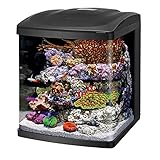
- EVERYTHING YOU NEED - Feature a compact and customizable filtration chamber that is already built-in to the back of the aquarium – easy to setup and maintain.
- GREAT FEATURES – Includes quiet submersible pump, dual intakes and adjustable return nozzle. Compatible with all existing BioCube accessories. Fish, corals, substrate and décor are sold separately.
- SLEEK and MODERN – Biocubes feature a rounded edge design and is the perfect innovative all-inclusive aquarium for all needs..
- VIBRANT LED LIGHTING - Low-profile hood contains vibrant LED lighting that is capable of sustaining and growing healthy, vibrant corals and live plants.
- MAXIMIZE BEAUTY - 24-hour timer which makes it easy to control the three independent light channels for maximum beauty: bright white, sparkling blue and color enhancing LEDs.
| Source and reporting frame | Reported figure | How to read it |
|---|---|---|
| Coral Triangle Initiative, Annual Report 2024 | 29.3 million hectares protected; 382 OECMs covering 10.2 million hectares; a target of protecting 10% of waters by 2030. | The figures are reported in the 2024 annual report. OECM means “other effective area-based conservation measure.” Do not add the OECM area to the protected-area figure without evidence that the categories are separate. |
| Indonesia’s Ministry of Foreign Affairs, statement delivered 22 June 2026 | Nearly 29 million hectares already protected; a target of 32.5 million hectares under marine protection by 2030. | These are the government’s figures in its 2026 diplomatic statement; the statement’s framing differs from the CTI annual report. |
| Coral Triangle Atlas, profile last updated 24 February 2025 | 187,221 km² listed for marine protected areas. | This is the Atlas profile’s measure. Its definition and reporting frame should not be assumed to match the hectare figures above. |
The numbers indicate reported protection and ambition, not by themselves the effectiveness of management, habitat condition, or improvement in local livelihoods. A protected-area designation, an OECM, and ecological recovery are different things to measure.
How can conservation programs connect protection with local benefits?
LAUTRA: management and economic opportunity
The World Bank describes LAUTRA (Laut untuk Kesejahteraan, or Oceans for Prosperity) as a $210 million program implemented by Indonesia’s Ministry of Marine Affairs and Fisheries and BAPPENAS. It is intended to improve the management of selected marine protected areas and coral-reef fisheries, while improving access to economic opportunities for communities in target areas. The program includes World Bank funding and grants from PROBLUE and the Government of Canada through the Oceans MDTF.
That combination matters: area protection is more durable when people in coastal communities can participate in and benefit from a sustainable local economy. The program’s stated objectives describe intended work, however, not proof that fisheries or household incomes have already improved.
Rank #2

- 🐠 EVERYTHING YOU NEED - Feature a compact and customizable filtration chamber that is already built-in to the back of the aquarium – easy to setup and maintain
- 🐠 GREAT FEATURES – Includes quiet submersible pump, dual intakes and adjustable return nozzle. Compatible with all existing BioCube accessories. Fish, corals, substrate and décor are sold separately.
- 🐠 SLEEK & MODERN – Biocubes feature a rounded edge design and is the perfect innovative all-inclusive aquarium for all needs!
- 🐠 VIBRANT LED LIGHTING - Low-profile hood contains vibrant LED lighting that is capable of sustaining and growing healthy, vibrant corals and live plants.
- 🐠 MAXIMIZE BEAUTY - 24-hour timer which makes it easy to control the three independent light channels for maximum beauty: bright white, sparkling blue and color enhancing LEDs.
COREMAP-CTI: monitoring capacity and research
The World Bank’s overview describes the 2014–2022 phase of COREMAP-CTI as strengthening institutions’ capacity for coastal ecosystem monitoring and priority research while supporting marine protected-area management. Reported outputs include monitoring coverage expanded to more than 12 million hectares, six upgraded and equipped research infrastructure sites, and 503 researchers trained. The program also developed and applied health indices for reefs, seagrass and mangroves.
Monitoring and trained researchers can help managers identify change and make better-informed decisions. These are program outputs and capabilities; they are not, on their own, evidence of ecological recovery.
How does regional cooperation extend Indonesia’s impact?
Indonesia is part of the Coral Triangle, a six-country region whose members are Indonesia, Malaysia, Papua New Guinea, the Philippines, Solomon Islands and Timor-Leste. The Coral Triangle Initiative on Coral Reefs, Fisheries and Food Security (CTI-CFF), formed in 2009, coordinates regional work on marine biodiversity, climate change and food security.
Rank #3

- Excellent Acrylic Material : KABASI coral feeder is made of quality arylic and rubber material, absolutely safe for fish and corals, and it has a long life and is not easily broken, easy to clean.
- Accurate Dispensing : As a high-brightness acrylic tube body, you can see a clear feeding amount.The SPS HPS Coral Feeder ensures that you know exactly how much you are feeding corals or other fish to avoid overfeeding.
- Multi-Purpose : The coral feeder is mainly used in marine reef tanks for coral consumption, can also be used to add liquid fertilizer to the freshwater plant pool. And can also be used to eradicate debris and excess debris from those hard to reach areas of the aquarium.
- Easy to Use : Our coral feeder is long enough to reach deep aquariums without wetting your hands. And with an improved second-generation tip, the soft rubber suction does not harm corals and fish.
- Reminder : Before each use, please ensure that the long straw has been cleaned thoroughly; When feeding coral or other fish, turn off the circulation pump; When used in hot water, the temperature of the liquid should not exceed 176℉
Cooperation can complement national protected areas by supporting shared priorities across a region whose marine ecosystems and conservation challenges are not confined to one country. Indonesia’s 2026 statement to the United Nations calls for cooperation in marine scientific research, technology transfer, capacity-building and sustainable financing, particularly to support developing countries. It also argues that marine restoration should advance coherently with climate action, biodiversity conservation, sustainable fisheries, blue-economy development and implementation of UNCLOS.
The Tool Desk
Outbyte Driver Updater FREEScan for outdated or missing drivers - takes under a minuteDriver Scan →Outbyte PC Repair FREEClear out junk files and repair common Windows errorsFree Scan →What role can technology and finance play in climate resilience?
Coral reef insurance and faster response
UNDP Indonesia describes a practical coral reef insurance toolkit and a prototype parametric insurance model that uses NOAA Coral Reef Watch satellite data to track sea-surface temperatures and heat stress. Parametric insurance is designed to make a payout when specified conditions are met, rather than waiting for a conventional assessment of every loss. The stated aim is to help communities access emergency-response and restoration funding more quickly after climate shocks.
UNDP’s 2026 release headline refers to a USD 550 million coastal economy. That figure describes the coastal-economy context in the headline, not the value of insurance coverage or a measured return. The release describes an emerging mechanism; it does not establish that all affected communities are insured or that reefs have recovered as a result.
Rank #4

- Contains one (1) API REEF MASTER TEST KIT Reef Aquarium Water Test Kit 1-Count, including 7 bottle of testing solution, 2 color cards and 4 test tubes with cap
- Helps prevent invisible water problems that can be harmful to fish and cause fish loss
- Accurately monitors 4 most vital water parameters levels in reef aquariums: Calcium, carbonate water hardness, phosphate and nitrate
- Designed for use in reef aquariums only
- Use for weekly monitoring and when water or fish problems appear
Blue finance and the coral reef bond initiative
Indonesia’s fisheries ministry presents its Indonesia Coral Reef Bond initiative as an approach to mobilizing blue finance for marine protected areas and the benefits of coral reefs. A bond-style financing approach can be part of a broader funding mix, alongside public funding and grants. The ministry’s initiative page does not establish that securities have been issued or report investment performance, so it should be understood as a financing initiative rather than demonstrated ecological or financial results.
Insurance and bonds address different needs. The insurance approach is designed to make funds available after specified climate shocks; the bond initiative concerns financing support for conservation. Neither replaces effective management, monitoring or the participation of local communities.
What do Indonesia’s mangrove and marine targets signal?
In its statement delivered to the UN on 22 June 2026, Indonesia reported approximately 3.3 million hectares of mangroves and a national mangrove rehabilitation target above 600,000 hectares under 2024–2029 commitments. The same statement connected marine restoration with biodiversity protection, climate resilience, food security and sustainable development. These are government-stated figures and commitments in that diplomatic statement; they should not be treated as a separately verified measure of completed rehabilitation.
Best Value
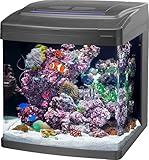
- ALL-IN-ONE SYSTEM: Everything you need for quick and easy setup. Includes a sleek and modern hood, white and blue LED lights, filter, quiet pump, dual intakes, adjustable nozzle and more.
- SMART LIGHTING: Control your aquarium from anywhere with the Aqueon BlueIQ app to toggle between white and blue LED, a programmable 24/7 schedule, feeding reminders and more.
- PERFECT FOR ALL LEVELS: Designed for both newcomers and seasoned aquarium keepers. Perfect for freshwater or saltwater environments.
- OPTIMAL GROWTH ZONES: Produces light and current within three distinct BioZones, providing the perfect light spectrum and intensity to sustain and grow different types of corals.
- PAIRS WITH BIOCUBE ACCESSORIES: Explore a range of BioCube accessories like the BioCube Protein Skimmer for advanced filtration or the Algae Cleaning Magnet and Pad for simple maintenance. Discover more options to enhance and tailor your ecosystem.
“For Indonesia, restoring marine ecosystems is not simply an environmental goal. It is a matter of biodiversity protection, climate resilience, food security, and sustainable development.”
How should progress be judged?
Targets, program activity and ecological outcomes answer different questions. A useful assessment of Indonesia’s marine strategy would track them separately:
- Protection and management: which areas are designated, how they are managed, and how reported protected-area and OECM figures are defined.
- Program delivery: whether monitoring, research capacity and community economic opportunities are being established as intended.
- Ecological condition: whether reef, seagrass and mangrove health indicators show improvement over time.
- Resilience and finance: whether financing and risk-transfer mechanisms deliver timely support to exposed communities and contribute to lasting conservation.
Indonesia’s marine wealth can contribute to global biodiversity and climate goals when national protection, regional cooperation, local livelihoods, monitoring and sustainable finance reinforce one another. The 2024 and 2026 protection figures, program outputs and financing initiatives show a substantial policy and institutional effort; demonstrating impact requires evidence of ecological and community outcomes as well.
Do these 3 things before closing this tab:
1Repair Windows errors before they cause bigger problems2Scan for outdated or missing drivers - takes under a minute3Clear out junk files and repair common Windows errorsQuick Recap
Product prices and availability are accurate as of the date/time indicated and are subject to change. Any price and availability information displayed on Amazon at the time of purchase will apply.

