A SanDisk USB flash drive can help you move photos and other files off a compatible phone so they no longer take up local space. It does not increase your phone’s built-in storage, and a single copy on one drive is not a complete backup. For a straightforward phone-to-computer transfer, start by checking whether a SanDisk Phone Drive or another compatible USB-C drive works with your phone and computer.
What kind of SanDisk storage fits your task?
Choose according to where the files come from and how you will use them. A flash drive is convenient for moving files; a portable SSD suits larger libraries and broader storage workloads; an SD or microSD card is for devices designed to use that card family.
As an Amazon Associate I earn from qualifying purchases.
| Option | Best fit | Check before buying |
|---|---|---|
| Phone Drive or compatible USB-C flash drive | Moving phone photos and files to portable storage, then reclaiming local space | Phone and computer ports, product and app compatibility, actual capacity, and transfer workflow. See SanDisk’s Phone Drive information and USB flash drive range. |
| Portable SSD | Larger photo or video libraries, travel storage, or computer backup tasks | Read/write needs, capacity, durability, connection ports, file formats, and host compatibility. SanDisk’s portable SSD information and Extreme Portable SSD data sheet describe supported device types and product details. |
| SD or microSD card | A camera or other device designed for that card family | Host support for SD, SDHC, or SDXC; capacity; and the minimum sustained write speed required for the recording mode. SanDisk explains SD, SDHC, and SDXC compatibility. |
How to move photos from a phone to a flash drive
1. Check both ends of the connection
SanDisk describes its Phone Drive as having Type-C and Type-A connectors for transferring files between compatible USB-C phones, tablets, Macs, and computers with Type-A ports. That does not mean every phone with a USB-C connector will recognize every drive. Check your phone’s manual or specifications for support for USB storage, and verify that the exact drive and its workflow are supported. Physical connector fit alone is not enough: host power, file system, partition table, and supported capacity can affect recognition. SanDisk recommends checking the host manufacturer’s specifications; see its host compatibility guidance.
Do these 3 things before closing this tab:
1Clear out junk files and repair common Windows errors2Scan for outdated or missing drivers - takes under a minute3Repair Windows errors before they cause bigger problems2. Choose a compatible transfer method
Depending on the phone and product, files may be copied through the phone’s file-management tools or a supported app. SanDisk says its Memory Zone app can automatically back up photos, videos, music, documents, and contacts when used with compatible products and platforms. Compatibility varies by product and device, so check SanDisk’s Memory Zone information and the specific drive details rather than assuming automatic backup works with any USB drive or phone.
#1 Best Overall
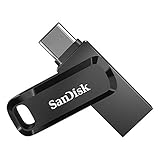
- The 2-in-1 flash drive with a reversible USB Type-C and a traditional Type-A connector.
- Seamlessly move content between your USB Type-C smartphone, tablets and Macs and USB Type-A computers(2) | (2) Mobile device requires USB Type-C port and On-The-Go (OTG) support. See the official SanDisk website for a list of compatible devices.
- Free up space on your USB Type-C smartphone(2)
- Automatically back up photos with SanDisk Memory Zone app(3) | (3) Download and installation of SanDisk Memory Zone app required.
- High-performance USB 3.1 Gen 1 drive with 150MB/s read speeds(1) | (1) Read speeds up to 150MB/s. Write speed lower and vary by capacity. USB Type-C port with USB 3.1 Gen 1/ USB 3.0 support required. Based on internal testing; performance may be lower depending upon host device, interface, usage conditions and other factors. 1MB = 1,000,000 bytes.
3. Copy first, then verify
Copy the photos to the drive, then open a selection of files from the drive to confirm they transferred correctly. If you intend to free phone space, do not delete the originals until you have checked the copies and, ideally, created another copy in a separate place. A transfer is not the same as a complete backup.
How much storage should you choose?
Estimate the space your current photos and videos occupy, how much you expect to add, and whether the drive is mainly for transfers or a longer-term storage destination. SanDisk’s USB-drive category presents these as illustrative use cases, not a universal capacity formula:
Rank #2

- Easily transfer files between smartphones, tablets and computers
- Free up space on your Android smartphone (Mobile device requires USB Type-C port and On-The-Go (OTG) support)
- Retractable design with a reversible USB Type-C connector and a traditional USB connector
- High-speed USB 3.1 performance of up to 150MB/s Read Speeds (USB Type-C port with USB 3.1, Gen. 1/USB 3.0 support required. Based on internal testing; performance may be lower depending upon host device.)
- SanDisk Memory Zone app for Android (available on Google Play; Download and installation required) lets you easily manage and back up content on your smartphone and tablet
| Capacity | SanDisk’s illustrative use |
|---|---|
| 64GB | Basic personal files and casual photos |
| 128GB | Medium-sized media libraries |
| 256GB | Larger collections and archives |
| 512GB or 1TB | Larger libraries and projects |
These examples come from SanDisk’s USB-drive category. They are starting points, not a promise that a given capacity will hold a particular number of photos: file sizes vary, and usable space may be less than the capacity printed on the product.
When a portable SSD makes more sense
If you regularly handle large photo or video libraries, need a broader destination for files from several devices, or want storage for computer backup tasks, compare a portable SSD with a flash drive. Check the drive’s capacity, connection ports, expected read/write needs, durability, file format, and compatibility with the devices you plan to connect. SanDisk’s cited Extreme Portable SSD sheet lists compatibility across USB-C devices including smartphones, laptops, and tablets, but the exact model and host requirements still matter. The sheet’s product claims are vendor specifications, not independent performance testing.
Rank #3
- The 2-in-1 flash drive with a reversible USB Type-C and a traditional Type-A connector.
- Seamlessly move content between your USB Type-C smartphone, tablets and Macs and USB Type-A computers(2) | (2) Mobile device requires USB Type-C port and On-The-Go (OTG) support. See the official SanDisk website for a list of compatible devices.
- Free up space on your USB Type-C smartphone(2)
- Automatically back up photos with SanDisk Memory Zone app(3) | (3) Download and installation of SanDisk Memory Zone app required.
- High-performance USB 3.1 Gen 1 drive with 150MB/s read speeds(1) | (1) Read speeds up to 150MB/s. Write speed lower and vary by capacity. USB Type-C port with USB 3.1 Gen 1/ USB 3.0 support required. Based on internal testing; performance may be lower depending upon host device, interface, usage conditions and other factors. 1MB = 1,000,000 bytes.
When to use an SD or microSD card
Use a memory card when the camera or other device is designed for that card type; a card is not a general substitute for a phone-connected flash drive. SanDisk’s compatibility article, updated August 13, 2026, gives these capacity ranges and host requirements:
- SDHC cards cover 4GB–32GB. SDXC cards cover 64GB–2TB.
- An SDXC card requires an SDXC-compatible host. A device that supports only SD or SDHC cannot use an SDXC card.
- For video, match the card’s minimum sustained write-speed class to the camera’s recording mode and manual. The article lists U1 and V10 at 10MB/s, U3 and V30 at 30MB/s, V60 at 60MB/s, and V90 at 90MB/s.
Those class figures describe minimum sequential write speeds; they do not by themselves establish that a card is suitable for every camera or recording setting. Check the camera manual and SanDisk’s compatibility guidance.
Rank #4
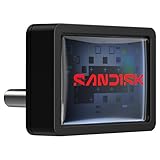
- FITS SNUGLY WITH USB-C. Plug your drive into your USB Type-C computers, tablets, and other devices for easy expansion and instant access.
- MASSIVE STORAGE, TINY DRIVE. It may look small, but with capacity up to 128GB(1), this drive holds your valuable files, personal documents, and more.
- QUICK FILE TRANSFERS. USB 3.2 Gen 1 performance powers your drive to reach read speeds up to 400MB/s(2) (128GB – 1TB), so you can move your files.
- BACK UP WITH THE SANDISK APP(3). Organize and manage your files with the SANDISK Memory Zone app(3) for Windows or Mac devices.
Keep a second copy of important files
A portable drive is useful, but one external copy can be lost, damaged, or become unreadable. SanDisk Support advises keeping data in at least two separate places and states: “Moving data from the system local drive to one other location is not a backup.” For important photos, keep another copy on a separate drive or another suitable storage destination, and check that copies remain accessible. SanDisk’s backup guidance was updated June 15, 2026.
If the drive is not recognized
- Confirm that the phone, tablet, or computer supports external USB storage, not just the connector shape.
- Check the host’s supported capacity, file system, partition table, and power requirements in its manual or specifications.
- For memory cards, verify the host supports the card family; SDXC will not work in an SD- or SDHC-only device.
- For automatic photo backup, confirm that the exact drive, app, platform, and device combination is supported.
SanDisk’s product descriptions and support pages are useful for its own specifications and compatibility advice; advertised speed figures are vendor claims, not independent test results. Product specifications and app support can change, so confirm details for the exact model and market before purchase.
Quick Recap
Best Value

- High-performance USB 3. 1 Gen 1 flash drive designed for computers, smartphones and tablets with a USB Type-C port(2) – quickly store and transfer photos, videos and other files between devices. | (2)Smartphone or tablet requires On-The-Go (OTG) support.
- Less waiting, more space – lightning-fast read speeds up to 150MB/s(1), write speeds that can transfer a full-length movie in under 30 seconds(3) and capacities up to 256GB* for all your storage needs. | (1)USB 3.1 Gen 1 or USB 3.0 port required. Read speeds up to 150MB/s. Write speed lower and varies by capacity. Based on internal testing; performance may be lower depending upon host device, usage conditions, and other factors. 1MB = 1,000,000 bytes. | (3)Based on a 1.2GB* MPEG-4 video transfer to drive with USB 3.1 Gen 1 or USB 3.0 host device. Results may vary based on host device, file attributes and other factors. | *1GB = 1,000,000, 000 bytes. Actual user storage less.
- Plug in other accessories, too – the slim retractable design leaves more space for other ports on your host device.
- Help keep private files private – the included SanDisk SecureAccesssoftware featuring password-protected encryption makes sure your sensitive info is confidently stored. (4) | (4)Password protection uses 128-bit AES encryption and supported by Windows 7, Windows 8, Windows 10, and MacOS v10.9+ (software download required for Mac)
- Control your life – easily manage and back up content on your Android smartphone or tablet(2) with the included SanDisk Memory Zone application. (5) | (5)Installation required
Product prices and availability are accurate as of the date/time indicated and are subject to change. Any price and availability information displayed on Amazon at the time of purchase will apply.

