Before launching a new Final Fantasy XIV expansion, protect your configuration, confirm that your PC or console meets the current requirements, update graphics drivers, set a frame-rate cap, and tune performance controls in a deliberate order. On a PS4-to-PS5 move, settings do not transfer automatically. On Windows and Mac, an uncapped frame rate or maximum-quality shadows can create inconsistent frame times even when average performance looks acceptable. The checklist below covers the changes that matter most for Dawntrail-era clients and future expansion updates.
Do these checks before the expansion update
- Back up your character and HUD configuration. Use FFXIV’s Server Backup Function before moving from PS4 to PS5, and export or screenshot hotbars, HUD layout, keybinds, gear-set macros, and controller mappings.
- Check free storage and hardware. The current Square Enix requirements list 140 GB of available space. An SSD is recommended, because an expansion update also needs room for temporary files and installation operations.
- Update your graphics driver. Square Enix states: “Graphics card drivers must be updated to the latest version to run the software.” Restart the computer after a driver installation if the installer requests it.
- Choose a frame-rate cap your system can hold. Start with 60 fps if your hardware can sustain it, otherwise use 30 fps or the display-refresh-rate option rather than leaving the game uncapped.
- Tune graphics from the largest performance levers to the smallest. Set resolution and the cap first, then use FSR or DLSS, dynamic resolution, shadows, textures, anti-aliasing, and GTAO in that order.
- Review controls and accessibility. Check gamepad assignments, visual alerts, color filtering, mouse sonar, cursor tracking, and cursor size before your first dungeon or raid.
- Resolve overlays and shortcut collisions. Patch 6.2 documents a conflict between Steam’s default Shift+Tab overlay shortcut and FFXIV’s target-cycling command.
Protect HUD, hotbars, and character settings
Moving from PS4 to PS5
Do not assume that a console upgrade will reproduce your interface. Patch 5.5 explicitly states that PS4 HUD and game-configuration settings are not carried over automatically to PS5. Before changing hardware, open the game’s system and character-configuration menus and use the Server Backup Function. After signing in on PS5, restore the saved data and verify it on the character you actually play.


As an Amazon Associate I earn from qualifying purchases.
The backup protects the platform-transfer case, but a human-readable record is still useful. Take screenshots of each important HUD layout and hotbar page, and record your keybinds, gear-set macros, cross-hotbar pages, and controller assignments. Keep those images somewhere other than the console so they remain available if a restore fails or a setting is reset by an update.
Windows and Mac configuration changes
If you enable the high-resolution UI assets option on Windows or Mac, plan to restart the game. Patch 5.5 says the setting takes effect only after restarting. Make that restart before your first expansion session rather than while a party is waiting for you.
#1 Best Overall
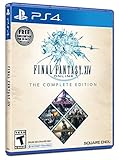
- A new adventure awaits in Norvrandt
- New jobs, including gun breaker and dancer
- New playable races: Viera and Hrothgar
- Level cap increase from 70 to 80
- New cities to explore: The Crystarium and Eulmore
After the restart, inspect the HUD at the resolution you actually use. Larger UI assets can improve text and icon clarity, but they do not replace a sensible UI scale. Check the party list, enemy list, duty gauges, chat window, and hotbars at both your normal view and a crowded combat scene.
Check the published hardware and storage requirements
Square Enix’s 2026 system-requirements listing gives the following baseline for the current Windows client. These are requirements and recommendations, not a promise of a particular frame rate in a crowded city or an effect-heavy encounter.
| Component | Minimum listed | Recommended listed | What it means before an expansion |
|---|---|---|---|
| Operating system | Windows 11, 64-bit | Windows 11, 64-bit | Use a supported 64-bit installation; an older or 32-bit operating system is outside this listing. |
| Memory | 8 GB RAM | 16 GB RAM | Sixteen gigabytes gives the client and the operating system more headroom while loading areas and running other applications. |
| Available storage | 140 GB | 140 GB on an SSD recommended | Leave at least the listed free space before downloading. An SSD is the recommended storage type, not merely a capacity figure. |
| Display resolution | 1280×720 | 1920×1080 | Choose the game’s output resolution to match the display you use; rendering above the panel’s native resolution increases workload. |
| Graphics API | DirectX 11 | DirectX 11 | Confirm that the installed graphics driver and hardware support the required API. |
| Windows graphics card | GeForce GTX 970 (4 GB) or Radeon RX 480 (4 GB) | GeForce RTX 2060 (6 GB) or Radeon RX 5600 XT (6 GB) | These classes are the published comparison points; laptop and integrated graphics can behave differently from the named desktop cards. |
The 140 GB figure is available space, so check the free-space number on the destination drive rather than the drive’s advertised capacity. If the drive is nearly full, clear space before the patch begins; failed or interrupted updates are harder to diagnose than a clean installation with room to spare.
What’s actually slowing this PC down?
Pick the symptom - the matching free tool is one click away.
Update graphics drivers before the first launch
Install the latest driver for your GPU before opening the updated client. This is an explicit Square Enix requirement, not an optional “try it if you have problems” suggestion. Reboot when the driver installer asks, then launch FFXIV once and confirm that it recognizes the intended graphics adapter.
Rank #2
If the game starts on an integrated adapter instead of a discrete GPU, select the high-performance GPU in the operating system’s graphics settings and in the driver’s application profile. The exact control-panel wording varies by vendor and Windows version, so verify the selected adapter in the game’s system information rather than relying on a desktop shortcut.
Set a frame-rate target before changing image quality
A stable cap usually feels better than an uncapped rate that swings between high and low frame times. Patch 7.0 lists four Windows and Mac choices: None, Main Display Refresh Rate, 60 fps, and 30 fps. Pick the highest option your system can maintain in both a crowded city and a combat scene with many effects.
- Use 60 fps when the client can hold it consistently at your chosen resolution.
- Use 30 fps when 60 repeatedly breaks during normal play; a firm 30 can eliminate the distracting oscillation between rates.
- Use Main Display Refresh Rate only when the system can sustain that refresh rate in the locations and duties you play.
- Avoid None as a first troubleshooting choice. It can expose every fluctuation and make a brief loading hitch feel like continuous stutter.
On PS5, PS4, and Xbox Series X|S, Patch 7.0 adds a 30-fps cap option. Console players should use the cap when the uncapped presentation is inconsistent, while remembering that console graphics controls are not identical to the Windows and Mac menus.
Do these 3 things before closing this tab:
1Repair Windows errors before they cause bigger problems2Scan for outdated or missing drivers - takes under a minute3Clear out junk files and repair common Windows errorsTune graphics in an order that preserves clarity
1. Set output resolution and the cap
Start at the display’s native resolution and apply the frame-rate target. This establishes a baseline. Changing several options at once makes it impossible to tell which control fixed a hitch or caused a quality loss.
Rank #3
2. Add upscaling or dynamic resolution when frame time is unstable
Patch 7.0 documents AMD FSR and NVIDIA DLSS on supported Windows graphics cards. These options render internally at a lower workload and reconstruct the image for the selected output. DLSS requires a supported NVIDIA card; FSR is the AMD upscaling option listed by the game.
The same patch documents dynamic resolution and its threshold choices: below 30 fps, below 60 fps, or always enabled. Use a threshold that protects your cap without making image sharpness change constantly. “Always enabled” can be useful on a system that is consistently GPU-limited, while a below-60 threshold is less aggressive for a system that normally holds 60 but dips in busy scenes.
3. Reduce shadows before textures
Shadow quality, distant-object level of detail, shadow softening, and cast shadows can consume substantial rendering time, especially in scenes with many characters and light sources. Lower these settings one step at a time before reducing texture detail or texture resolution. A lower shadow setting often preserves character and environment detail better than lowering every texture.
Free tools Windows power users keep installed
One-click scans. No signup required.
4. Choose anti-aliasing deliberately
The documented anti-aliasing choices are TSCMAA and TSCMAA + Camera Jitter. The combined option changes the presentation while smoothing edges; compare both in motion and while rotating the camera, not only in a still screenshot. If the image looks unstable or performance is tight, use the simpler option and recheck.
Rank #4

- Access to all expansion content from Heavensward and Stormblood, unlocking additional jobs, areas, story quests and more ways to explore: flying, swimming and diving
- A flexible class system that allows players to switch freely between a variety of classes and jobs, including new additions red mage and samurai, and reach the new level cap of level 70
- All the hallmarks of the FINAL FANTASY franchise, including an engaging storyline, genre-leading graphics, and HD real time cut scenes.
- Robust gameplay features such as player-managed Free Companies, diverse party finder features to group up with other players with ease, and a variety of fun activities in the Gold Saucer area, all designed to accommodate a dynamic player community.
- Challenging trials, dungeons and raids for groups of up to 24, and exciting player-vs-player (PvP) content for groups of up to 72 players
5. Adjust GTAO and effects after the major changes
GTAO (ground-truth ambient occlusion) is available as a quality or standard setting. Lowering it can reduce the depth shading around contact points and corners, but it is usually a smaller performance trade than reducing resolution or shadows. Make this change after the upscaler, dynamic-resolution behavior, and shadow settings are settled.
6. Test two representative scenes
After each change, visit a crowded city area and then load a combat scene with many visual effects. Keep the same cap and resolution while testing. If a setting helps only in a quiet area but fails in a city, the city result is the useful one for expansion launch planning.
Balance visual clarity, stimulus level, and accessibility
Performance is not the only reason to change settings. A new expansion can add busy encounters, brighter effects, and more interface information. Patch 7.4 adds an Accessibility Settings tab on PS4, PS5, and Xbox Series X|S, including visual alerts and color filtering. Review those controls before an encounter rather than waiting until an effect becomes difficult to distinguish.
Quick wins for a faster PC:
Scan for outdated or missing drivers - takes under a minuteDriver Scan →Clear out junk files and repair common Windows errorsFree Scan →Fix the driver behind crashes, sound loss and screen glitchesFind Drivers →- Visual alerts: enable the alerts that make important events easier to notice without depending on color alone.
- Color filtering: choose a filter only after checking party markers, enemy indicators, and mechanic telegraphs in an actual duty.
- Effects and glare-like presentation: reduce or alter the options that make the screen difficult to parse, then confirm that essential telegraphs remain visible.
These are clarity choices, not simply “low graphics” settings. The right balance is the one that lets you identify mechanics quickly while keeping the frame time stable.
Best Value

- Customer must have Final Fantasy XIV: A Realm Reborn to play Stormblood
- Increased level cap up to level 70
- New Jobs – Red Mage and Samurai
- New Beast Tribe and Primal
- New Alliance Raid
Review controller, mouse, and cursor settings
Gamepad assignments
Patch 7.4 adds Gamepad Customization with configurable L3 and R3 assignments, including Command Panel shortcuts. Open the customization tab, verify every assignment, and test it outside combat. A familiar button can become a menu shortcut after an update, so confirm that pressing L3 or R3 does not unexpectedly open a panel during movement.
Mouse assistance
Patch 2.5 documents mouse sonar, cursor tracking, expanded mouse functionality, and three cursor sizes: Normal, Large, and Maximum on supported platforms. Increase the cursor size or enable tracking if the pointer disappears against a busy interface. Test mouse sonar in a quiet area first so you know what feedback it produces before using it during a duty.
Keep a recovery record
Before changing bindings, capture screenshots of the old layout or write down the essential actions. Prioritize movement, camera control, target selection, sprint, limit break, mount, map, and your most-used job commands. That record makes it possible to restore muscle-memory controls quickly after a reset.
Fix overlay and shortcut conflicts before launch
Patch 6.2 identifies a specific Steam conflict: Steam’s overlay shortcut uses Shift+Tab, which overlaps FFXIV’s default command for cycling to the previous enemy target. During combat, the same key can therefore open an overlay instead of changing targets.
- Open Steam’s controller or interface settings and locate the Steam overlay shortcut.
- Change the overlay shortcut to a key combination you do not use for targeting, movement, chat, or job actions.
- Alternatively, change the FFXIV keybind for cycling to the previous enemy target, then test target switching on a training dummy.
- Restart the game and Steam if necessary, and test the shortcut in a low-risk area before entering a duty.
Apply the same check to other overlays, recording tools, and peripheral software: any program that intercepts a key, injects an overlay, or changes controller input can make an otherwise correct FFXIV binding appear broken. Disable one overlay at a time when diagnosing the conflict so you know which change solved it.
What to do if the expansion update introduces stutter
First, make the result repeatable
Write down the location, frame-rate cap, resolution, and whether the hitch occurs while moving, rotating the camera, entering a new area, or triggering a large effect. Reproduce the same situation after each change. “It feels slower” is not enough to identify whether the cause is an unstable cap, a graphics setting, or an input conflict.
Use this order of operations
- Confirm the latest graphics driver is installed and the game is using the intended GPU.
- Set a firm 60-fps or 30-fps cap instead of None.
- Enable the appropriate upscaler or choose a dynamic-resolution threshold.
- Reduce shadow quality, distant-object LOD, shadow softening, and cast shadows.
- Compare TSCMAA with TSCMAA + Camera Jitter, then adjust GTAO.
- Only after those tests, lower texture detail or texture resolution if memory or rendering load remains high.
- Disable overlays temporarily and retest, paying particular attention to the Shift+Tab conflict on Steam.
After every graphics change, revisit both a crowded city and an effect-heavy combat scene. A setting that appears smooth in an empty field may still fail where an expansion places the greatest load.
Recommended Free Tools
Quick Recap
Launch-day verification checklist
- PS4-to-PS5 users restored the Server Backup Function data and verified the correct character.
- Hotbars, HUD layout, keybinds, gear-set macros, and controller mappings match the saved screenshots or notes.
- Windows users have Windows 11 64-bit, DirectX 11 support, at least 140 GB free space, and current graphics drivers.
- The selected frame-rate cap remains stable in a city and during combat.
- FSR, DLSS, or dynamic resolution is enabled only when its image behavior is acceptable at the chosen threshold.
- Shadows, distant-object detail, anti-aliasing, textures, and GTAO were changed one at a time.
- Accessibility settings, visual alerts, color filtering, cursor size, mouse sonar, and cursor tracking suit the player who will use them.
- Gamepad L3/R3 assignments and important keyboard shortcuts work outside combat.
- Steam and other overlays no longer intercept FFXIV’s targeting or movement keys.
- High-resolution UI assets on Windows or Mac were followed by the required game restart.
Product prices and availability are accurate as of the date/time indicated and are subject to change. Any price and availability information displayed on Amazon at the time of purchase will apply.

