STEAM education can help students connect science, technology, engineering, arts, and mathematics to the languages, knowledge, places, and priorities of their own communities. It works best when tribal educators, families, and knowledge holders help shape the curriculum—not when a single “Native” approach is assumed to fit every nation. Promising programs and one exploratory study offer useful examples, but the available evidence does not establish a nationwide effect on test scores or attainment.
What STEAM education can mean in tribal communities
STEAM combines science, technology, engineering, arts, and mathematics. In a tribal school or tribal-serving program, the arts can be more than an added activity: design, making, storytelling, and other community-selected practices can give students ways to investigate and communicate technical ideas. The relevant knowledge, language, and practices must be chosen with the particular community; tribal nations are distinct cultural and governmental entities.
As an Amazon Associate I earn from qualifying purchases.
That local authority matters in the institutions serving Native students. The Bureau of Indian Education (BIE) says it serves about 40,000 K–12 students in 183 schools across 64 reservations in 23 states. Its network includes 55 BIE-operated and 128 tribally controlled schools, and it also supports Native students in public schools through Johnson O’Malley. The BIE overview page does not show a publication date, so these are the figures given on the current page, not a dated census. BIE overview
Free tools Windows power users keep installed
One-click scans. No signup required.
The BIE’s account of the Indian Self-Determination and Education Assistance Act of 1975 describes tribes gaining authority to contract to operate Bureau-funded schools and determine educational programs suitable for their children. A sound STEAM effort therefore begins by asking who has authority to decide what students learn and how community knowledge may be used—not by treating local knowledge as material for an outside lesson plan.
#1 Best Overall
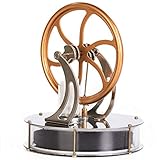
- FANTASTIC SMART THING WITH EXTREMELY WELL MADE WHICH RUNS LIKE A DREAM----The stirling engine is produced with high quality material and elegant workcraft. this stirling engine adopts mirror surface stainless steel for the base, glass cylinder liner, zinc alloy flywheel. All the parts have done surface treatment to avoid rusting. Oil-free.
- OPERATION EASILY----Pour a cup of hot coffee, put the stirling on the cup, it run magically. When it slows down, the coffee temperature is suitable for drink. Enjoy physical powertrain mechanism display and coffee. It also can work on top of ice cube. Some guys put the stirling on cup of hot water and put small ice cubes on the stirling upper plate. This makes the temperature difference much bigger than normal, then it runs even more fast and crazy. Just enjoy the toy!
- LONG LASTING----It can run for 24+ hours continuous without any broken if there are continuous power supplies. One customer put the stirling on USB hot plate (excluded in the package) and the stirling runs on his desk for weeks. Don’t burn the stirling base or put it in the stove, the stirling plastic parts will damage.
- PRIORITY GIFT OPTION FOR MANY APPLICATIONS----It is an amazing and fantastic product at this price. Its elegant gift package makes it spruce up and presentable. It has a wide range of application as, great gift for student's science project, Physical/mechanical learning, teacher’s Demo props on the class, birthday gift for friends, families, parents, students, etc. Many of our customers come from school, colleague, etc.
- AMAZING CONVERSATION PIECES ON YOUR DESK----It's funny to see people's looks and reactions when they squeeze a little shot for this Stirling engine. Put it on the cup which full with hot waters, give the flywheel a gently push, and get the flywheel going, and then it works like charm. All of your guests want to know what happened, ice-breaking success. What a marvelous toy!
What culturally responsive STEAM looks like in practice
There is no universal template. A program is more likely to be locally meaningful when it is developed with the people who know the community, reflects its priorities, and gives students sustained opportunities to apply ideas. Useful questions for educators and partners include:
- Who makes decisions? Identify the roles of tribal education leaders, school staff, families, and knowledge holders in choosing goals, materials, and what can be shared.
- What knowledge and language belong in the curriculum? Build from community-selected knowledge and language rather than inserting generic cultural references into an otherwise unchanged course.
- What will students do? Connect inquiry, design, making, or creative expression to meaningful learning goals, and make clear how each activity develops science, technology, engineering, arts, or mathematics understanding.
- How does the work connect to student futures? Where locally appropriate, link classroom learning with community needs, further study, and career exploration.
- Is the experience sustained? A single activity can introduce an idea; continued learning gives students more chances to develop skills and see where those skills can lead.
- How will progress be judged? Track engagement, course learning, and achievement as different outcomes rather than treating interest as proof of higher test scores.
Examples of programs and what they establish
Maryetta Public Schools: a funded plan, not a reported impact
The U.S. Department of Education’s FY 2025 award listing describes Maryetta Public Schools’ RISE project as a year-one award of $406,721 serving 740 students, with Cherokee Tribe(s) listed. The project description includes an Indigenous STEAM lab; mathematics and science infused with Indigenous culture; robotics and career-pathway activities; tutoring; college exploration; and teacher professional development. These are components and objectives in an award description. The listing does not establish that every activity has been implemented or demonstrate resulting changes in student outcomes. FY 2025 award listing
Rank #2

- MASSIVE SCIENCE KIT FOR CURIOUS KIDS - More than 15 experiment activities including dueling water tornadoes, building an erupting volcano, growing a crystal, two geologic dig kits, and more!
- ENOUGH TO GO AROUND - This science lab allows kids to conduct multiple experiments and is great to share with family, friends, or classmates. Enjoy the magic of discovery together!
- THE SECRET IS THE SCIENCE - A detailed, full-color Learning Guide teaches the science at work in the experiments, allowing your child to develop a deep, lasting appreciation for a variety of Earth sciences.
- HASSLE-FREE EXPERIMENTS - Clear, easy-to-follow instructions build young scientists' confidence as they experiment, allowing them to focus on the joy of exploration and discovery.
- AMAZON EXCLUSIVE - Blue Marble has developed this product exclusively for Amazon.
Flandreau Indian School: a promising but limited study
A 2017 qualitative, exploratory study of culturally responsive STEAM activities with Native American high school girls at Flandreau Indian School reported increased interest in science, technology, and engineering among a majority of participants. Mathematics attitudes remained less positive. The authors explicitly limited their conclusion to this place and situation, so the finding should not be generalized to other students, schools, or tribal nations. They also called for sustained exposure and further research. Read the study
Professional learning and Alaska Native initiatives
Arizona Department of Education materials describe educator professional learning focused on integrating Indigenous knowledge systems and culturally responsive STEM practices. The department says its prior Indigenous Literacy and STEM projects concluded; its page describes continuing work through other programs and services, not an open enrollment claim for those past projects. Arizona Department of Education resource directory
Rank #3
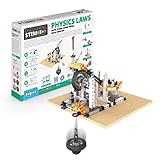
- KIDS EXPLORE the laws of motion and discover how they impact our daily lives.
- BUILD 6 incredible working models, including a rocket launcher, a crash test rig, a sharpening wheel and more. Get ready for a physics adventure with this STEM Project.
- UNLEASH your child's inner scientist with the easy-to-follow instructions, including 12 pages of theory, amazing facts, and fun experiments. And with a 4-page quiz section, kids can test their newfound knowledge and impress you with what they've learned.
- FOR KIDS 9 and up, the STEM building toy also comes with a cutting-edge, interactive 3D app that lets children build in virtual reality. And it's not just us who think this toy is amazing - it's been chosen as one of the 21 best STEM toys and gadgets to get kids interested in tech.
- WITH AWARD-WINNING components designed by Engino, complex scientific concepts are brought into clear focus for budding engineers and scientists. Make education fun with Engino, proudly made in Europe.
U.S. Department of Education professional-development materials also describe teacher preparation and culturally relevant STEM practices through partnerships involving Arizona tribal-serving schools and education entities. Alaska Native Education program materials describe an Indigenous Science and STEAM community of practice, curriculum and course development, dual-credit opportunities, internships, mentorships, and career exposure. These descriptions show approaches and program offerings; they are not, by themselves, evidence of measured student impact.
What the evidence can—and cannot—say about outcomes
The Flandreau study offers a context-specific indication that culturally responsive STEAM activities may support interest in some STEM fields for participating students. It does not establish that the same effect will occur elsewhere, that mathematics attitudes improved, or that interest translated into achievement, graduation, or career outcomes. The federal RISE award describes funded plans and aims, not an evaluation of their effects.
Rank #4

- 6 IN 1 STEM KITS: Our stem projects includes 6 colorful, easy-to-assemble projects, including: Fiber Optic Light, Graffiti Robot, Starlight, Music Box, Windmill, and Ferris Wheel. Great for kids to start easy and work up to more complex builds (Battery Not Included)
- Build Confidence & Skills: Each project is accompanied by an independent instruction manual, with its difficulty level clearly marked. Children can choose the project according to their difficulty level, making assembly fun, building confidence, and leaving them eager to try more
- Cultivate Key Skills: Our STEM kits help kids learn essential science concepts—like engineering with ferris wheels and windmill structures, light science through optical fibers and star lights, and mechanics with music box gears and robot movement—while also building hand-eye coordination, color recognition, and focus through hands-on play
- Functional & Useful: Every project in our girls engineering kits becomes a real-life item kids can use and enjoy. The ferris wheel decorates a desk, the music box plays melodies, and the star light glows as a nightlight—so the fun continues long after building
- Friendly for Kids Hand: Sntieecr stem building kits is made of kid-safe KT board. Each building block has smooth, rounded edges. Our building projects also adopt the expected cutting process, children can easily take out the building blocks without sharp tools, ensuring the safety of children
The sources here do not provide a robust comparative effect size or nationally representative causal estimate for culturally relevant STEAM in tribal communities. That is not a reason to dismiss community-led programs; it is a reason to distinguish what a program intends to do from what has been demonstrated. Evaluations are clearer when they report, separately, participation and interest, course-level learning, and longer-term academic or career outcomes, alongside how the community shaped the work.
The Tool Desk
Outbyte PC Repair FREEClear out junk files and repair common Windows errorsFree Scan →Outbyte Driver Updater FREEScan for outdated or missing drivers - takes under a minuteDriver Scan →Teaching resources for educators
The Arizona Department of Education’s Office of Indian Education resource directory curates materials including Indigenous science education resources, culturally relevant and teacher-authored curricula, culturally responsive assessment resources, Alaska Native culturally responsive school standards, Smithsonian Native Knowledge 360° lesson plans, and professional learning. Resource listings and program availability can change, so educators should check the directory and the original provider for current status. Browse the resource directory
Best Value

- Product Dimensions: 18 x 18 x 17cm. This boiler kit has 84PCS parts, you need to assemble it by yourself, after assembling the finished model can run, and the speed range: 500-1000rpm, providing a fascinating hands-on experience for young and old enthusiasts alike.
- Wonders of Steam Power: Witness the magic of steam power as this lifelike model comes to life. Fill the boiler with water, light up the alcohol lamp, and marvel at the graceful power of steam as it drives the flywheel and effortlessly powers the mechanical marvel.
- Impeccable Craftsmanship: Carefully crafted in precision, the Beam Steam Engine Model and Boiler Kit boasts outstanding craftsmanship with rich details. Each part in high-quality materials, ensuring durability and longevity, making it a valuable addition to any collection or stunning display piece.
- Versatile Display: With timeless design and impeccable aesthetics, this Boiler Kit becomes a versatile decor piece. Whether adorning the desk of a steam engine enthusiast, gracing the shelf of a history lover, or becoming the centerpiece of a steam-themed room, it is sure to captivate and spark conversations.
- Ideal Gift Choice: Looking for a unique and thoughtful gift for hobbyists, collectors, or history enthusiasts? Look no further! The Beam Steam Engine Model and Boiler Kit, an unforgettable gift, offers the joy of assembly, the allure of steam power, and the charm of bygone eras, all in a stunning package.
These resources are starting points, not substitutes for local guidance. Before adapting a lesson, educators can ask tribal education staff or other appropriate community partners whether its content, language, and use are suitable, and whether any knowledge should remain within the community.
Quick Recap
Product prices and availability are accurate as of the date/time indicated and are subject to change. Any price and availability information displayed on Amazon at the time of purchase will apply.

