What’s actually slowing this PC down?
Pick the symptom - the matching free tool is one click away.
Choose an electric screwdriver when the job is limited to driving screws, especially for furniture assembly, light fixes, or work in a cramped space. Choose a cordless drill driver when you may need to drill holes as well as drive screws. Its chuck accepts both drill and driver bits, and its adjustable clutch helps control screwdriving force. A combi drill adds hammer action for some masonry, while concrete and reinforced concrete generally call for a rotary hammer.
There is no universal winner. The right choice depends on the material, hole size, fastener, access, control requirements, and whether your household already uses a compatible battery system.
As an Amazon Associate I earn from qualifying purchases.
The short answer
| Tool | Best for | Important limitation |
|---|---|---|
| Pure cordless electric screwdriver | Driving screws in furniture, cabinets, fixtures, and other light household work | Designed for screwdriving rather than drilling; it normally uses a hexagonal bit holder instead of a drill chuck |
| Cordless drill driver | Jobs that combine drilling and screwdriving, including pilot holes in wood or metal | Usually larger than a screwdriver and requires careful clutch and speed selection for delicate work |
| Combi drill | Drilling and screwdriving plus some masonry drilling when its specifications allow it | Not the appropriate choice for concrete or reinforced concrete; a rotary hammer is recommended for those materials |
If you are buying one general-purpose tool for occasional household repairs, a cordless drill driver is usually the more versatile starting point. If you already own a drill or almost never make holes, a compact electric screwdriver can be easier to handle and less cumbersome.
What separates an electric screwdriver from a cordless drill?
Electric screwdriver: a compact screw-only tool
A pure cordless screwdriver is built around one task: turning screws. Bosch describes this category as using a hexagonal bit holder rather than a drill chuck. That interface keeps the nose short and makes the tool useful where a full-size drill is awkward, such as inside drawers, cabinets, and assembled furniture.
#1 Best Overall

- Powerful 20 V Motor and 2 x 1.5 Ah Battery: Equipped with a robust 20 V motor and 2 Li-ion battery, this cordless drill delivers smooth power for various drilling and driving tasks;Its rechargeable battery ensures you're always ready for next project
- 2 Variable Speed Settings for Versatility: With two speed options (0-400, 0-1500 RPM ), this drill provides ultimate control over your applications; Perfect for both delicate tasks and heavy-duty jobs, you can easily adjust the speed to match your needs
- Robust 266 In-lb (30 N.m) Torque and 21+1 Settings: With a maximum torque of 266 In-lb (30 N.m) and 21+1 adjustable settings, this drill excels in precision and ease; It prevents over-tightening and protects your materials with its precise torque control
- Comprehensive 34-Piece Drill Kit: You’ll get a 20 V cordless drill with battery and charger, 4 wood bits, 4 twist bits, extension bar, flexible shaft, 10 short screwdriver bits, 10 long screwdriver bits, and a screw anchor set- all essentials in one set
- Effortless Precision with LED Illumination: Lightweight and user-friendly, this electric drill features an LED light to illuminate your workspace for precise drilling in dark or tight areas; Its effortless operation and intuitive controls make it perfect for both beginners and pros
The smaller form can improve access and handling during repetitive light work. It is a sensible match for flat-pack furniture, replacing handles, tightening loose hinges, installing wall plates, or driving a few short screws into suitable material. The trade-off is capability: a screw-only tool is not a substitute for a drill when the repair requires a hole.
Cordless drill driver: one tool for holes and screws
A drill driver has a chuck that accepts drill bits as well as screwdriver bits. That lets you drill a pilot hole, remove the bit, fit a driver bit, and install the fastener with the same tool. Bosch recommends this category when a user wants one tool for occasional drilling and screwdriving.
Drill drivers also provide adjustable torque settings, commonly controlled by a numbered clutch ring. The clutch allows the tool to stop applying torque after a selected level, reducing the chance of sinking a screw too deeply or damaging a softer surface. Actual settings differ by model, bit, fastener, and material, so the numbers are a control aid rather than a universal torque scale.
Combi drill: a drill driver with hammer action
A combi drill adds a hammer function intended for some masonry drilling. The hammer mechanism helps the bit work against materials such as brick or block when the tool’s specifications support that task. It still functions as a conventional drill driver for wood, metal, and screwdriving.
Hammer action does not make a combi drill a concrete tool. Bosch advises using a rotary hammer for concrete and reinforced concrete. Check the manual for the particular combi drill, the permitted material, bit type, and hole size before drilling masonry.
Choose by the repair you actually have
| Household task | Better starting choice | Why |
|---|---|---|
| Assembling furniture or driving a few screws | Electric screwdriver | Its compact, screw-only design is convenient in confined spaces. |
| Repeated screwdriving where depth and force must be controlled | Drill driver with an adjustable clutch, or a screwdriver designed for the fastener | A clutch can limit torque; start low on soft or delicate material and increase only as needed. |
| Drilling a pilot hole and then driving a screw | Cordless drill driver | One tool handles both operations; switch from drilling to screwdriving mode between steps. |
| Drilling wood or metal | Cordless drill driver | Drill drivers are intended for drilling and screwdriving in common materials such as wood and metal. |
| Drilling some masonry | Combi drill with hammer function, if the model is rated for the material and hole | Hammer action adds a masonry-drilling function that a standard drill driver lacks. |
| Drilling concrete or reinforced concrete | Rotary hammer with a suitable bit | Bosch advises against relying on an ordinary combi or impact drill for these materials. |
These are selection rules, not a promise that every model will perform identically. A small hole in soft block is a different demand from a large hole in dense masonry, and the tool’s stated limits always take precedence.
Rank #2
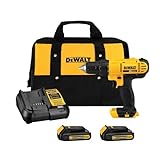
- Lightweight design fits into tight areas
- High performance motor delivers 300 unit watts out (UWO) of power ability completing a wide range of applications
- High speed transmission delivers two speeds (0-450 & 1,500 rpm) for a range of fastening and drilling applications
- 1/2' single sleeve ratcheting chuck provides tight bit gripping strength. Ergonomic handle delivers comfort and control
Torque, speed, and clutch settings
What torque means while driving a screw
Torque is turning force. Too much torque can drive a screw below the surface, crush a soft board, strip the screw head, or damage a fitting. Too little torque can leave the fastener loose or unable to seat fully.
Windows Errors? Fix Them Before They Spread
Repair common Windows errors and clear accumulated junk for a smoother, more stable PC - no reinstall needed.Free scan · no reinstallCrashes, No Sound, or Screen Glitches?
Random freezes, missing sound and display glitches usually trace back to one bad driver. Find and replace yours safely.Free scan · under a minuteA drill driver’s clutch interrupts or limits torque at the selected setting. For delicate work, begin at a low number and test on scrap or an inconspicuous area. Increase one step at a time until the screw seats without overdriving. A pure electric screwdriver may have less adjustment or a different control arrangement, so follow its manual rather than assuming that a drill’s numbered settings apply.
When to use drill mode
Use the drill setting, rather than a low clutch setting, when making a hole. Bosch notes that drilling generally calls for higher speed and lower torque than screwdriving. The drill position normally bypasses the clutch so the tool can maintain rotation while cutting; that is why it should not be used as a default setting for driving screws.
Speed should match the bit and material. Start gently, keep the bit aligned, and let the bit do the cutting instead of forcing the tool. The correct speed and pressure vary with the bit, diameter, and material.
Bosch’s torque guidance
Bosch DIY gives an example selection framework of up to 30 Nm for furniture assembly and light tasks, and 40–80 Nm for many DIY tasks. Those figures are Bosch’s guidance, not an independent standard and not a guarantee that every tool in those ranges will feel or perform the same way. Compare a manufacturer’s stated torque with the material and fasteners you actually use.
Recommended Free Tools
How to use the right tool for a typical repair
1. Define the operation before picking up the tool
- List every operation, not just the final fastening step. If the job includes drilling a pilot hole, enlarging an opening, or drilling through masonry, a screw-only tool is immediately ruled out.
- Identify the material: wood, metal, drywall, tile, ordinary masonry, concrete, or reinforced concrete. Bit choice and permissible tool mode depend on that answer.
- Check the fastener and hole size. A long structural fastener places different demands on a tool than a small cabinet screw.
- Consider access. If the work is inside a drawer or between closely spaced panels, the shorter nose of an electric screwdriver may matter more than maximum power.
2. Fit a bit made for the task
Use a driver bit that matches the screw head and a drill bit designed for the material. A drill driver’s chuck can hold both types, while a pure screwdriver’s hex holder accepts compatible driver bits. Do not use a general-purpose bit as a substitute for a tile or masonry bit.
Rank #3

- Ergonomically Designed: Work in tight areas with a compact design that gets into tough spots
- Both tools are designed to fit into difficult to reach spaces
- Complete a wide range of applications with a high-performance motor that delivers up to 300 UWO, and an impact driver delivering up to 1,400 in-lbs of torque
- Both the DEWALT impact driver and drill driver feature integrated LED work lights with a convenient 20-second delay, ensuring enhanced visibility in dimly lit or challenging work areas
- One-Handed Loading - Keep one hand free with a 1/4 in. hex chuck that accepts 1 in. bit tips
For tile, Bosch recommends a suitable tile or specialist bit and says hammer action should be off. For concrete and reinforced concrete, use a rotary hammer and a suitable carbide-tipped masonry bit as recommended by Bosch.
3. Set the mode and clutch
- For a hole, select the drill mode and choose the speed appropriate to the bit and material.
- For a screw, select the screwdriving range and start with a low clutch setting, particularly in drywall, softwood, or finished furniture.
- Keep hammer action off for tile. Engage it only when the tool and bit are rated for the masonry job.
4. Start square and control the tool
Place the bit squarely on the screw head or mark. Squeeze the trigger gradually rather than starting at full speed. Keep both hands available when the tool can generate substantial reaction force, and maintain a firm grip.
5. Test, then adjust
Drive the first screw into scrap or an unseen section when possible. If the head stops proud, raise the clutch setting slightly. If the screw sinks too far, strips, or damages the surface, lower the setting and inspect the bit and fastener. When drilling, stop if the bit overheats, wanders, or encounters a material the tool is not rated to penetrate.
Safety and material limits
Bosch’s drilling guidance recommends hearing protection, a dust mask, and safety goggles. Use them when the operation creates noise or airborne dust, and follow the tool maker’s instructions for the particular model.
- Stand securely and keep a firm grip. A rotating bit can catch, and the tool can produce significant rotational forces.
- Choose a bit designed for the material. A wood bit, metal bit, tile bit, and masonry bit are not interchangeable simply because they fit the chuck.
- Keep hammer action off when drilling tile. Hammering can crack the tile or damage the surface.
- Do not treat a combi drill as a concrete solution. For concrete or reinforced concrete, use a rotary hammer and the suitable carbide-tipped masonry bit specified for the task.
- Secure the workpiece where practical and keep the bit aligned. A slipping board or wandering bit can cause damage even at modest power.
- Inspect the bit, chuck, battery, and cable-free tool body before use. Stop if the bit is damaged or the tool behaves unusually.
What to compare when buying
1. Task range
Decide whether you need screwdriving only or drilling plus screwdriving. Buying a drill driver solely for a few screws adds size and complexity; buying a screwdriver for a job that needs holes leaves you without the required capability.
2. Access and handling
Compare compactness, weight, grip, and balance. A tool that fits between shelves or inside a cabinet can be more useful than a stronger tool that cannot reach the fastener. For repeated work, comfortable handling and a controllable trigger affect fatigue and accuracy.
Rank #4

- High-Performance Power Drill Set: FADAKWALT cordless drill with superior motor, 180 in-lbs (19 N.m) of max torque is perfect for drilling wood, metal, plastics, and all screw driving tasks at home; Precise control settings prevent stripping
- 21+1 Position Clutch: 21+1 torque settings (0-650 RPM ) of power drill can provide more precise torque or speed adjustment as required, which helps to prevent sinking a screw too deep, stripping out the head of a screw or even breaking a screw shaft
- Ergonomic Design: Compact and lightweight, with a superior motor, minimizes fatigue in most daily screwing and drilling tasks; The rubber grip ensures comfort for one-handed operation; The LED light and electric brake ensure precise work in dark areas
- Package List: You will get, 1 x Cordless Drill ,1 x Charger,1 x Magnetic Flexible Shaft, 1 x Extension Bar for Sticking on Fastener,3 x Wood Drill Bits,3 x Masonry Drill Bits,10 x 25 mm screwdriver bits, 1 x Screw anchor set
- Customer Service: If your Cordless Power Drill has quality problems or have any questions, please feel free to contact with us, we are always here
3. Control
Look for variable speed and an adjustable clutch when screw depth matters. A clutch is especially useful when working with soft materials or a series of identical screws. Confirm how the model switches between drilling, screwdriving, and hammer modes.
Do these 3 things before closing this tab:
1Fix the driver behind crashes, sound loss and screen glitches2Clear out junk files and repair common Windows errors3Scan for outdated or missing drivers - takes under a minute4. Bit interface and capacity
Check whether the tool has a hexagonal holder or a chuck, the supported bit shanks, and the manufacturer’s stated limits for screw and hole sizes. A chuck expands the range of bits, but it does not automatically make every bit or material appropriate.
5. Material rating
Read the specification for wood, metal, masonry, tile, and concrete rather than inferring capability from the tool’s name. Hammer action is a feature for some masonry, not proof that the tool is suitable for reinforced concrete.
6. Battery ecosystem
If you already own cordless tools, check whether the battery platform is compatible. A bare tool that uses batteries you already have may be more practical than starting a second system; if you have no batteries, include the required battery and charger when comparing the total setup.
Independent reader supportYour contribution helps us test, update, and keep practical guides available for everyone.Representative specifications and guidance
| Item | Published figure or guidance | How to interpret it |
|---|---|---|
| Bosch DIY selection guidance | Up to 30 Nm for furniture assembly and light tasks | Manufacturer guidance for choosing a tool, not an independent performance threshold. |
| Bosch DIY selection guidance | 40–80 Nm for many DIY tasks | Manufacturer guidance; actual suitability depends on the job, bit, fastener, and material. |
| BLACK+DECKER BDCS20C cordless screwdriver | 4V MAX, 180 RPM, 35 in-lb torque | Manufacturer specifications for that product, not a head-to-head test or a universal benchmark. |
The BDCS20C figures illustrate the type of information to compare, but they do not establish that this product is the best choice or that its specifications represent every compact screwdriver.
Quick wins for a faster PC:
Fix the driver behind crashes, sound loss and screen glitchesFind Drivers →Repair Windows errors before they cause bigger problemsFix Now →Scan for outdated or missing drivers - takes under a minuteDriver Scan →Common mistakes and how to correct them
Using a screwdriver when the job needs a hole
If the repair requires a pilot hole, drilling through metal, or making a masonry opening, switch to a drill driver or the appropriate hammer tool. A screw-only tool’s compactness does not compensate for the missing drill function.
Best Value

- Optimal Performance: 20V MAX* lithium-ion battery always ready for your next project
- 24-Position Clutch: Help achieve control and precision with the 24 clutch positions when drilling
- Soft-Grip Handle: Soft and comfortable grip when in use
- Versatile 100-piece Kit: Includes a wide variety of bits and accessories for drilling and driving tasks
- POWERCONNECT BATTERY SYSTEM: The interchangeable battery system means you can use one battery for multiple different tools
Driving every screw in drill mode
Drill mode is intended for drilling and generally bypasses clutch control. Select the screwdriving range and begin with a low torque setting instead.
Starting with too much torque
High torque can bury a screw or damage a soft surface. Lower the clutch, test the result, and increase gradually.
Using hammer action on tile
Turn hammer action off and fit a suitable tile or specialist bit. Hammering can crack the tile.
Assuming “combi” means concrete-ready
Combi drills cover some masonry work, but Bosch recommends a rotary hammer for concrete and reinforced concrete. Check the model’s limits and choose the tool accordingly.
Ignoring the bit
A correctly chosen tool cannot compensate for a worn, wrong, or mismatched bit. Replace damaged bits and match the bit type to the material and fastener.
When one tool is enough—and when two make sense
A drill driver alone can cover many household repairs because it drills and drives screws. It is the practical single-tool choice for someone who occasionally hangs hardware, assembles furniture, makes pilot holes, and works with wood or metal.
An electric screwdriver earns its place when access, compactness, and light screwdriving are the priority. It can be quicker to grab for a loose handle or a handful of furniture screws, particularly when a larger drill would be awkward.
Free tools Windows power users keep installed
One-click scans. No signup required.
Keeping both can be sensible in a household that frequently assembles furniture or performs cabinet work while also drilling holes. Use the screwdriver for confined, screw-only jobs and reserve the drill driver for holes, larger fasteners, and work requiring a clutch or broader bit range.
Evidence and scope
The distinctions and safety advice above are based on manufacturer guidance from Bosch DIY, BLACK+DECKER product information and how-to material, and Einhell guidance. No independent head-to-head household-repair test or general statistic establishes one category as objectively superior in every situation. Product availability and specifications can change; verify the current manual and product page for the model you intend to use.
Quick Recap
Product prices and availability are accurate as of the date/time indicated and are subject to change. Any price and availability information displayed on Amazon at the time of purchase will apply.

