Choose a drill-driver for general hole drilling, controlled screwdriving, and the widest choice of bits. Choose an impact driver for repetitive, high-force fastening such as long screws, lag bolts, and structural fasteners. An impact driver can drill when fitted with a compatible hex-shank bit, but its rotational hammering, 1/4-inch hex interface, and fastening-first design make it a poor replacement for a drill when holes must be accurate or when you need broad bit compatibility. If your work regularly combines both jobs, owning both tools is the most capable setup; for occasional household work, a drill-driver is usually the better first purchase.
The short answer: which tool should you use?
A conventional cordless drill-driver uses continuous rotation. You control its speed with the trigger, select a gear, and set a clutch for lighter fastening. That combination makes it the general-purpose tool for drilling wood, metal, plastic, and similar materials, as well as assembling furniture, hanging hardware, and driving ordinary screws.
As an Amazon Associate I earn from qualifying purchases.
An impact driver also rotates, but it adds a hammer-and-anvil mechanism that delivers rapid rotational blows when resistance rises. Those blows help turn a fastener under a higher load while reducing the tendency of the motor to stall. The compact body and 1/4-inch hex collet suit repeated fastening with short, quick bit changes.
The Tool Desk
Outbyte Driver Updater FREEFix the driver behind crashes, sound loss and screen glitchesFind Drivers →Outbyte PC Repair FREEClear out junk files and repair common Windows errorsFree Scan →The distinction is about the work, not which tool is universally stronger. A drill is the better starting point when drilling is a regular part of your projects or when you need control. An impact driver earns its place when you drive many long screws, lag bolts, or structural fasteners and want a tool designed for that load.
#1 Best Overall

- High performance: delivers 1,460 in-lbs. Of torque and max 2,800 rpms/3,100 ipms for quick fastening applications
- Quick and easy: quickly release chuck for easy one-handed bit changes
- Improved visibility: LED light helps in dark work areas
- Applications: fastening screws, lag bolts, and large fasteners
- Includes: (1) CMCF800 impact driver; (1) V20 20-volt MAX 1.3-amp hour lithium ion battery; (1) V20 20-volt MAX lithium ion charger
How the two tools create torque
Drill-driver: continuous rotation and adjustable control
The drill-driver sends torque directly from the motor through its gearbox and chuck. Its trigger provides variable speed, while the gear selector trades speed for torque. A clutch ring lets you set a threshold for screwdriving: once the fastener reaches that resistance, the clutch slips instead of continuing to twist. The clutch is useful for repeatable work such as cabinet hardware, electrical boxes, and furniture assembly where an overdriven screw can damage the material.
For drilling, you normally bypass the clutch by selecting the drill setting. The result is a smooth rotation that makes it easier to start a hole on a mark, keep a bit aligned, and stop at a particular depth. A drill-driver chuck can accept many round-shank and hex-shank bits, subject to the chuck size and the bit maker’s limits.
Impact driver: rotational hammering under load
An impact driver uses a hammer-and-anvil assembly. As the bit encounters resistance, the hammer disengages and strikes the anvil in the direction of rotation. The repeated blows add turning force at the fastener while the motor continues spinning between impacts. DEWALT describes the action as blows that twist the fastener; Bosch describes the same basic hammer-and-anvil principle.
The impact mechanism is valuable when a conventional driver would require heavy downward pressure, stall, or transfer more reaction torque to your wrist. It is not an axial hammer. The blows turn the bit rather than drive it forward along its length, which is why an impact driver is not the masonry-drilling tool.
Task-by-task comparison
| Job | Better starting choice | Reason |
|---|---|---|
| General holes in wood, metal, plastic, or similar materials | Drill-driver | Continuous rotation, a broad chuck, and easier speed and depth control cover more drilling situations. |
| Long screws, lag bolts, and structural fasteners | Impact driver | Rotational impacts are designed for high-force fastening and repetitive work. |
| Occasional household screws plus a few holes | Drill-driver | One tool handles both light fastening and drilling without requiring a second interface or special bits. |
| Precision holes or a wide selection of round-shank bits | Drill-driver | The chuck and smooth rotation provide better control than a fastening-oriented impact driver. |
| Masonry holes | Hammer drill or hammer-driver drill | Its axial hammering is a different function from an impact driver’s rotational blows. |
| Large nuts, seized bolts, or vehicle lug nuts | Correctly sized impact wrench or breaker bar | An impact driver’s 1/4-inch hex interface and smaller-fastener design are not intended for this job. |
This table describes the tool category, not a performance test of a particular model. Motors, batteries, gear ranges, and manufacturer limits vary, so read the manual for the exact tool you own.
When a drill-driver is the right choice
Drilling accurately
Use a drill-driver when the hole location, diameter, or depth matters. The smooth rotation makes it easier to start without the bit wandering, maintain a straight path, and stop as soon as the bit reaches a mark. A side handle or depth stop on a particular model can add control for larger bits, but those accessories are model-specific.
Rank #2

- Ergonomically Designed: Work in tight areas with a compact design that gets into tough spots
- Both tools are designed to fit into difficult to reach spaces
- Complete a wide range of applications with a high-performance motor that delivers up to 300 UWO, and an impact driver delivering up to 1,400 in-lbs of torque
- Both the DEWALT impact driver and drill driver feature integrated LED work lights with a convenient 20-second delay, ensuring enhanced visibility in dimly lit or challenging work areas
- One-Handed Loading - Keep one hand free with a 1/4 in. hex chuck that accepts 1 in. bit tips
Working across different materials
Wood twist bits, brad-point bits, metal bits, hole saws, spade bits, countersinks, and many specialty accessories are available with shanks that fit a drill chuck. That broad compatibility matters if your projects change from shelf installation to plumbing holes to light metal fabrication. Select the bit and speed recommended for the material; a drill is versatile, but no single bit or setting suits every surface.
Do these 3 things before closing this tab:
1Fix the driver behind crashes, sound loss and screen glitches2Clear out junk files and repair common Windows errors3Scan for outdated or missing drivers - takes under a minuteDriving small or delicate fasteners
A drill-driver’s clutch gives you a predictable way to limit torque. Start with a low clutch setting, drive a test fastener into scrap, and increase the setting only when the screw stops short. For softwood, thin sheet material, plastics, and cabinet hardware, this gradual approach helps prevent stripped heads, crushed fibers, and cracked parts.
When an impact driver is the right choice
Long screws and lag bolts
Fasteners that require sustained torque can make a drill-driver twist in your hand or stall. An impact driver’s rotational blows keep adding turning force as the screw enters dense wood or another resistant substrate. That makes it a natural choice for framing, decking, timber connections, ledger hardware, and other jobs involving long or structural fasteners, provided the fastener and tool are used within their specifications.
Repetitive fastening
If you are driving dozens or hundreds of screws, the compact nose and quick-change hex collet can be more convenient than repeatedly opening a chuck. The impact action also reduces the continuous reaction torque you feel compared with forcing a drill through a stubborn fastener. Noise and vibration are factors to assess in your own workspace; the available manufacturer information does not establish a controlled, numerical comparison between the two tool types.
Tight access
Impact drivers are commonly shorter than drills with a large chuck, which can help when fastening between studs, inside cabinets, or beneath a deck. Shorter does not mean universally easier: the bit, extension, battery, and your hand position still determine whether the assembly fits. Check the complete tool rather than comparing bare body dimensions.
Free tools Windows power users keep installed
One-click scans. No signup required.
Can an impact driver be used as a drill?
Yes, for suitable holes and with the correct bit; no, it is not equivalent to a drill-driver. An impact driver can turn a 1/4-inch hex-shank drill bit. DEWALT also identifies an adapter, DW0521, that converts a 1/4-inch hex shank to a three-jaw 3/8-inch drill chuck. An adapter expands the accessories you can mount, but it does not change the impact driver’s mechanism or make it a precision-drilling machine.
Rank #3
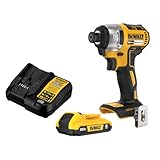
- Brushless motor for increased runtime and durability
- Compact and lightweight for hard to reach areas
- LED light with 20 second delay after trigger release
- Includes: (1) DCF787 1/4 in. Impact Driver (1) DCB203 20V MAX* 2Ah Battery (1) DCB107 Charger (1) Belt Hook
What you need
- A hex-shank drill bit or an adapter approved for the tool.
- A bit specifically rated for impact use when the bit maker requires it. Ordinary brittle bits can fail under repeated impact.
- A hole size and material within the tool, bit, and adapter limits.
- Eye protection and a firm two-handed stance when the bit may catch.
Why drilling performance can be limited
Bosch describes impact drivers as primarily fastening tools and says they are not intended for precision hole drilling. Depending on the model, DEWALT notes that an impact driver’s speed range may be higher than a drill’s. High speed, the impact action, and the short hex interface can make it harder to start cleanly, control depth, or prevent a bit from chattering. For a clean, accurately placed hole, use a drill-driver.
Practical procedure for an occasional hole
- Read the tool manual and confirm that the bit or adapter is permitted.
- Mark the hole and clamp the work so it cannot move.
- Fit the impact-rated hex bit or the approved chuck adapter, and verify that it is fully seated.
- Use the lowest suitable speed and light pressure. Let the bit cut rather than forcing the tool.
- Withdraw periodically to clear chips, especially in deep wood or metal holes.
- Stop if the bit binds, overheats, wobbles, or shows damage. Switch to a drill-driver for the controlled finish.
Bit, chuck, and interface compatibility
Drill-driver chucks
A standard drill-driver generally uses a three-jaw chuck, often keyless, that grips a range of shank shapes and diameters within its stated capacity. This is why one drill can accept common round-shank twist bits, larger wood bits, countersinks, and many accessories. The exact maximum diameter and shank range belong to the model specification.
Impact-driver hex collets
Most impact drivers use a 1/4-inch hex quick-change collet. It is optimized for hex-shank driver bits, sockets on a suitable adapter, and other accessories designed for the interface. Pull the collar forward, insert the bit fully, and release the collar; then tug the bit to verify it locked. Follow the instructions for your specific collet because retention details differ.
Impact-rated accessories
Impact-rated bits are engineered for the repeated torsional shock of an impact mechanism. A regular driver bit may fit physically yet chip, twist, or break when struck. Match the accessory to the tool, fastener, and load. A socket adapter can be useful for light nut-driving, but it does not turn a 1/4-inch impact driver into an impact wrench.
Drill, impact driver, hammer drill, and impact wrench: do not confuse them
Impact driver versus hammer drill
An impact driver’s hammer strikes rotationally to turn a fastener. A hammer drill adds rapid forward-and-back blows along the bit’s axis, helping a masonry bit break through brick, block, or concrete while it rotates. DEWALT’s support material makes this distinction explicit. A rotational impact driver should not be selected simply because its name contains the word impact.
Impact driver versus impact wrench
An impact wrench normally uses a square-drive anvil for sockets and is built around larger nuts and bolts. An impact driver normally uses a 1/4-inch hex collet for smaller fasteners and driver bits. A driver should not be recommended for removing or installing vehicle lug nuts. Use a properly sized impact wrench or a breaker bar, and follow the vehicle maker’s torque procedure for final tightening.
Rank #4
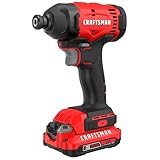
- Long Runtime - Drive up to 120 fasteners per charge**
- More Max Torque Vs. Leading Competitor - Complete fastening applications from deck screws to lag bolts with up to 1800 in-lbs. max torque.
- Quick And Easy - Quickly release the chuck for fast one-handed bit changes.
- Tailored To The Job - Customize performance to your application with a variable speed trigger and up to 2,900 RPM (no-load).
- High Visibility - Help illuminate your workspaces with a bright, onboard LED.
Hybrid and combination tools
Some specialized products combine several functions. Makita’s XPT02Z, for example, is described by its manufacturer as a four-function tool with impact, hammer, driver, and drill modes. That is a specific design, not evidence that ordinary impact drivers perform all four jobs equally well. Verify the modes, interface, and instructions for the exact combination tool.
Crashes, No Sound, or Screen Glitches?
Random freezes, missing sound and display glitches usually trace back to one bad driver. Find and replace yours safely.Free scan · under a minutePC Slower Than It Used to Be?
A free scan shows the junk files, broken settings and background clutter dragging Windows down - then fixes them in one click.Free scan · Windows 10 & 11Choosing between one tool and two
Start with a drill-driver when
- You are buying your first cordless power tool.
- Your project list includes more holes than heavy structural fasteners.
- You need one tool for furniture, shelves, fixtures, pilot holes, and routine repairs.
- You own a collection of round-shank bits or specialty drilling accessories.
- You value clutch control and a smooth start more than maximum fastening speed.
Add an impact driver when
- You routinely drive long screws, lag bolts, or structural fasteners.
- You are doing repetitive fastening where a drill stalls or causes tiring reaction torque.
- You work in confined spaces where a compact hex tool is advantageous.
- You already have a compatible battery platform and can buy the driver without duplicating batteries and a charger.
Own both when the jobs alternate
A drill-driver can hold a pilot bit while an impact driver holds a driver bit, eliminating constant bit changes during framing, decking, cabinetry, and similar work. The two-tool setup is a productivity choice, not a requirement. Occasional users can complete many household projects with a drill-driver alone; the second tool becomes worthwhile when heavy fastening is frequent enough to justify its cost and storage.
Independent reader supportYour contribution helps us test, update, and keep practical guides available for everyone.Buying checklist: specifications that change the decision
Battery platform
Choose a platform that matches batteries you already own when possible. A bare tool can look inexpensive until you add a battery and charger. Conversely, a kit may cost more initially but include the power source needed to start working. Compare the complete package rather than the body-only price.
Tool-only versus kit contents
Read the package line by line. The current US manufacturer listing for the DEWALT DCF845B identifies it as a 20V MAX XR three-speed 1/4-inch impact driver sold as a tool only, with the battery and charger sold separately. It is an example of why model names and photographs are not enough to determine what you receive. Catalog descriptions and bundle contents can change, so confirm them at purchase.
Speed and control settings
Multiple electronic speed modes can make an impact driver gentler for small screws and more forceful for long fasteners, but mode labels are not standardized across brands. A drill-driver’s clutch scale is likewise not a universal torque measurement. Test the setting on scrap and adjust based on the fastener and material.
What’s actually slowing this PC down?
Pick the symptom - the matching free tool is one click away.
Included accessories
Check whether the box includes a belt hook, bit holder, storage case, adapter, battery, and charger. None should be assumed. If you plan to drill with an impact driver, budget for compatible hex-shank or impact-rated drill bits rather than assuming your existing round-shank set will fit.
Best Value

- CMCD700: Power drill motor provides 280 uwo of power for demanding drilling and fastening tasks
- Electric drill cordless features 2 speed gearbox ranging from 0-350 RPM and 0-1,500 RPM for speed of application
- CMCF800: max torque: provides 1,460 in-lbs. of torque running at 2,800 RPM and 3,100 bpm impact drill for heavy duty fastening tasks
- Easy bit change impact gun : features a drop and load one handed bit change
- Power tool set comes with 3 Year Limited Warranty
Safe and effective use
- Inspect before use. Check the battery, collet or chuck, bit, and housing for damage. Do not use a cracked bit or a loose adapter.
- Secure the work. Clamp boards and panels; keep both hands available when a bit can catch.
- Use the right accessory. Select a bit sized for the fastener and material, and use impact-rated accessories in an impact driver.
- Start gently. Align the bit with the screw or mark before increasing trigger pressure. A pilot hole can reduce splitting and required torque.
- Keep the tool straight. Side loading can bend a bit, damage the fastener head, or make the tool kick.
- Stop for heat or binding. Let the bit and motor cool, clear chips, and investigate the cause instead of forcing the trigger.
- Finish to the fastener specification. An impact driver can bury a screw quickly. Use a drill-driver clutch or a hand tool for delicate final adjustment when appropriate.
Common mistakes and fixes
Using a regular bit in an impact driver
Symptom: the bit twists, chips, or snaps. Fix: replace it with an accessory marked for impact use and verify that the shank locks fully in the collet.
Expecting a drill to remove every stubborn fastener
Symptom: the drill stalls, overheats, or repeatedly strips the screw head. Fix: use a correctly sized impact driver and bit for the fastener, improve the pilot hole, or choose a larger tool when the manufacturer permits it.
Using an impact driver for a precision hole
Symptom: the hole starts off-center, is oversized, or has a rough entry. Fix: switch to a drill-driver, clamp the work, use a sharp bit, and control speed and depth.
Assuming an impact driver replaces a hammer drill
Symptom: slow progress or an unsuitable bit in brick or concrete. Fix: use a hammer drill or hammer-driver drill with a masonry bit rated for the material.
Trying to remove lug nuts with a driver
Symptom: the hex adapter or tool is overloaded, or the nut does not move. Fix: use a properly sized impact wrench or breaker bar; never rely on a small driver as a substitute for the vehicle manufacturer’s specified procedure.
A simple decision process
- Count the holes. If drilling is central to the work, begin with a drill-driver.
- Identify the heaviest fastener. Long screws, lag bolts, and structural fasteners point toward an impact driver.
- Check precision needs. Accurate starts, controlled depth, and delicate materials favor a drill-driver.
- Check the interface. If your accessories are mostly round-shank, a chuck is the simpler match; if they are 1/4-inch hex driver bits, an impact collet is convenient.
- Check the battery shelf. Staying within an existing platform may make a second tool far more economical.
- Decide whether one tool is enough. Occasional users can start with a drill-driver; frequent heavy fastening justifies adding an impact driver later.
Bottom line
A drill-driver is the versatile choice: it drills general holes, accepts more kinds of bits, and gives you smooth speed and clutch control for routine fastening. An impact driver is the specialist for high-force, repetitive fastening, where rotational hammering helps drive long screws and lag bolts with less stalling. It can make some holes with a hex bit or adapter, but Bosch and DEWALT guidance both place drilling limits on the category. Select the tool according to the work you actually do, verify the bit interface and battery package, and use an impact wrench or hammer drill when the job calls for those distinct functions.
Quick Recap
Product prices and availability are accurate as of the date/time indicated and are subject to change. Any price and availability information displayed on Amazon at the time of purchase will apply.
Recommended Free Tools

