Free tools Windows power users keep installed
One-click scans. No signup required.
Short answer: no. A cable does not guarantee better sound than Bluetooth. Earphone tuning, fit, source audio, listening environment and signal processing usually matter more. Wired models avoid Bluetooth’s codec, radio and battery, which can improve consistency and latency, while a well-designed wireless model can sound equally good for ordinary listening.
The most useful comparison is not “wired versus wireless” in the abstract. It is one specific earphone against another, used with a particular phone or computer, source file, codec, fit and listening situation. A poorly tuned wired earphone can sound worse than a carefully tuned wireless model. Conversely, a wired earphone can preserve a stable signal when a wireless connection is congested, mismatched or adding delay.
As an Amazon Associate I earn from qualifying purchases.
What actually determines perceived sound quality?
Acoustic tuning comes first
Drivers, acoustic chambers, vents and equalisation determine the earphone’s frequency balance. Two models can have very different bass, midrange and treble even when both use the same connection type. Wireless earphones often apply digital signal processing (DSP), including an equaliser, active noise cancellation or a hearing-profile adjustment. Those processes can improve the result, leave it unchanged or introduce artefacts depending on the implementation.
Quick wins for a faster PC:
Repair Windows errors before they cause bigger problemsFix Now →Scan for outdated or missing drivers - takes under a minuteDriver Scan →A wired connection removes one part of the signal path; it does not correct the earphone’s tuning. When comparing products, use the model’s measured or documented response and your own preferred sound, rather than assuming that a 3.5 mm plug is inherently more accurate.
#1 Best Overall

- SUPERIOR COMFORT — Unlike traditional circular ear buds, the design of EarPods is defined by the geometry of the ear. Which makes them more comfortable for more people than any other ear bud–style headphones.
- HIGH-QUALITY AUDIO — The speakers inside EarPods have been engineered to maximize sound output and minimize sound loss, which means you get high-quality audio.
- BUILT-IN REMOTE — EarPods with USB-C plug also include a built-in remote that lets you adjust the volume, control the playback of music and video, and answer or end calls with a pinch of the cord.
- COMPATIBILITY — Works with all devices that have a USB-C port.
- INTEGRATED MICROPHONE — A built-in microphone precisely captures your voice while you’re on the phone, taking a FaceTime call, or summoning Siri — so you’re always heard loud and clear.
Fit can outweigh a codec difference
In-ear models need an effective seal. A loose tip usually reduces bass and lets outside noise mask detail. The same earphone can therefore sound radically different after changing tip size or insertion depth. Wireless earbuds may also have a fit test in their companion app, while a passive wired model may require manual experimentation.
Fit is especially important in noisy places. If a train, street or office masks quiet passages, a theoretical codec advantage will not be audible. Noise cancellation can improve what you hear by reducing that masking, but it is an active processing feature rather than a consequence of Bluetooth itself.
Source material and playback level matter
A codec cannot restore information that is absent from the source. A heavily compressed stream, low-quality recording or aggressive mastering can dominate the result before Bluetooth encoding begins. Codec parameters include sample rate, bit depth and bitrate, but higher nominal numbers do not automatically make a recording better.
Volume matching is also essential when comparing. The slightly louder option is often judged as clearer or more detailed even when it is not. Compare at a comfortable, closely matched level and use the same recording, player and ear tips.
Where Bluetooth enters the audio chain
With a typical Bluetooth earphone, the source device decodes the music, encodes it with a mutually supported Bluetooth codec, sends packets over the radio link, and the earphone decodes them before its own DSP and amplifier drive the drivers. Each end must support the same codec. A codec badge on an earphone is not enough if the phone, operating system or application selects another option.
Codec negotiation is a two-device feature
The transmitter and receiver advertise their capabilities and select a common codec. If the source does not support a preferred codec, the connection falls back to another available option. Settings can also change after a connection is established; some phones expose a developer menu, while others hide the choice or let the earphone app control it.
Rank #2

- SUPERIOR COMFORT — Unlike traditional circular ear buds, the design of EarPods is defined by the geometry of the ear. Which makes them more comfortable for more people than any other ear bud–style headphones.
- HIGH-QUALITY AUDIO — The speakers inside EarPods have been engineered to maximize sound output and minimize sound loss, which means you get high-quality audio.
- BUILT-IN REMOTE — EarPods with 3.5mm Headphone Plug also include a built-in remote that lets you adjust the volume, control the playback of music and video, and answer or end calls with a pinch of the cord.
- COMPATIBILITY — Works with all devices that have a 3.5mm headphone jack.
- INTEGRATED MICROPHONE — A built-in microphone precisely captures your voice while you’re on the phone, taking a FaceTime call, or summoning Siri — so you’re always heard loud and clear.
Check the actual connected-codec display on your device rather than relying on a product box. Also check whether the application is sending a high-quality source. A high-bitrate codec fed by an already compressed stream cannot create new detail.
What’s actually slowing this PC down?
Pick the symptom - the matching free tool is one click away.
Compression, radio conditions and processing
Bluetooth codecs compress audio for transmission and decompress it at the earphone. Depending on the codec and mode, this can be lossy. Radio interference, distance, body blockage and crowded wireless environments can cause retransmissions, glitches or a fallback to a different mode. Modern products often hide these changes well, but the wireless path remains more variable than a direct passive connection.
Wireless earphones can add processing for noise cancellation, transparency, spatial audio, volume control and touch commands. That processing may be useful, yet it means the final signal is not simply an untouched copy of the source.
What codec specifications tell you—and what they do not
Bluetooth SIG identifies sample rate (samples per second), bit depth (bits per sample) and bitrate (bits encoded per second) as important codec parameters. These are engineering limits, not a promise that every product exposes every combination or that a listener will hear a difference.
For example, the Bluetooth SIG’s 2020 LC3 overview lists 7.5 ms and 10 ms frame intervals, 16-, 24- and 32-bit samples, and sampling rates of 8, 16, 24, 32, 44.1 and 48 kHz. Those are LC3 specification details; a particular earphone and operating system may implement only part of them.
LC3 and Bluetooth LE Audio
LC3 is the codec specified for Bluetooth LE Audio. Bluetooth SIG reports that its listening tests found higher quality than SBC at the same bitrate, or similar or slightly better quality than SBC at less than half the bitrate. The result is an organizational test finding, not a guarantee for every commercial implementation.
Rank #3
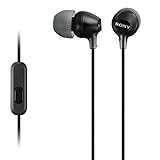
- Hybrid silicone earbuds provide long lasting comfort; small, medium and large earbuds are included to fine tune your fitment.Specific uses for product : Music
- Product Note : If the size of the earbud tips does not match the size of your ear canals or the headset is not worn properly in your ears, you may not obtain the correct sound qualities or call performance. Change the earbud tips to ones that fit more snugly in your ears
- High quality 9 mm dome type driver units coupled with high-energy neodymium magnets produce great sounding treble and midrange with powerful bass response.
- The included Y-type cord with cord-slider prevents tangles on the go.
- Accent your style with 2-tone design and colors.
| Codec or comparison | Evidence reported by Bluetooth SIG | How to interpret it |
|---|---|---|
| SBC at 345 kbps | Scored just above 4.0 on the impairment scale in the SIG’s illustrated comparison. | This is one 2020 comparison example, not a universal score for every SBC device. |
| LC3 at 160 kbps | Scored higher than the 345 kbps SBC example while using less than half the bitrate. | It demonstrates the efficiency claim in that test; device implementation and source still matter. |
| LC3 frame intervals | 7.5 ms and 10 ms are listed in the LC3 overview. | Frame duration is a specification option, not the complete end-to-end latency. |
| LC3 sample formats | 16, 24 and 32 bits per sample. | The supported format depends on the product and software path. |
| LC3 sampling rates | 8, 16, 24, 32, 44.1 and 48 kHz. | A supported rate does not by itself establish audible superiority. |
Bluetooth SIG’s FAQ also says that power reductions depend on implementation and product usage. Its stated listening-test result is that LC3 can provide higher quality than SBC at the same bitrate and power consumption, or similar or slightly better quality at less than half the bitrate and half the power consumption. Treat the battery implication as a possible design trade-off, not a promised runtime improvement for a particular earphone.
When wired earphones have a practical advantage
Consistent connection
A passive analog wired earphone does not need pairing, codec negotiation or a radio link. It will not drop out because of wireless congestion or run out of earphone battery. That consistency can matter for long listening sessions, critical monitoring and devices where Bluetooth support is unreliable.
Lower and more predictable latency
Passive analog wired earphones have virtually no transmission latency. Wireless audio adds encoding, radio transport, decoding and often DSP delay. The total varies by the source, codec, operating system and earphone mode. For recording, live monitoring, rhythm games and video synchronization, wired is the safer choice unless a wireless system explicitly provides a low-latency mode that your entire setup supports.
Crashes, No Sound, or Screen Glitches?
Random freezes, missing sound and display glitches usually trace back to one bad driver. Find and replace yours safely.Free scan · under a minuteWindows Errors? Fix Them Before They Spread
Repair common Windows errors and clear accumulated junk for a smoother, more stable PC - no reinstall needed.Free scan · no reinstall“Wired” does not always mean zero processing. USB-C earphones can contain a DAC and DSP, and active wired products can process audio internally. Their delay may still be low, but it is not guaranteed merely by the presence of a cable.
No earphone battery requirement
Traditional passive wired earphones draw their signal from the source and do not require charging. Wireless models need a charged battery for playback; noise cancellation and other processing can shorten runtime. The trade-off is convenience: wireless removes cable drag and allows controls, microphones and processing to be integrated into the earbuds.
When wireless can be the better choice
Everyday mobility
For commuting, exercise and desk use, cable-free movement may be more valuable than the small differences introduced by a codec. A well-fitting wireless model with a stable connection and sensible tuning can sound excellent, and many listeners hear little difference between good wired and wireless products in ordinary use.
Rank #4

- 【Overwhelmingly Lightweight and Comfortable Fit】These wired earphones have an ergonomic 45° inclined design that fits your ears perfectly, staying in place during commutes, running, or head movements. The design offers excellent noise-canceling, reduces sound leakage, and enhances bass response. Weighing only 3 grams per ear, they are lightweight, minimizing discomfort. Enjoy a comfortable experience during extended gaming sessions or music listening, allowing full immersion.
- 【Easy Remote Control & Clear Calls】 Equipped with sensitive sensors, the earphone microphone filters out noise, delivering clear conversations. Enjoy hands-free calls without holding your device. Plug them in for clear voice calls and online classes with software like ZOOM and SKYPE. Ideal for online meetings and web conferences. Recommended for language practice and tests. The earphones have a multifunction remote control for answering/rejecting calls, playing/pausing music and videos, adjusting volume, and switching tracks without using your smartphone.
- 【Wide Compatibility & Excellent Durability】 These earphones have a 3.5mm internationally certified plug with 24K gold plating, offering rust resistance and Hi-Fi sound without Bluetooth. They are compatible with various devices, including iPhones, iPads, Android smartphones, gaming consoles, and MP3/MP4 players. Made from high-quality TPE, they have passed thousands of bending tests and are pet-resistant. Featuring wear-resistant copper and aluminum foil, they are tangle-free, durable, and strong, ensuring long-lasting use. They are also waterproof, suitable for light rain or sweat.
- 【Industry-Leading & Peace of Mind】 Guarantee Our company develops wired earphones, providing reliable, high-quality products with continuous innovation at reasonable prices. Trusted by customers in over 100 countries, we have achieved top sales records. Each earphone is meticulously inspected. Antool wired headphones come with a 2-year warranty and unlimited customer support. For any questions, contact us via the "Ask Seller" link on your Orders page. We will resolve your issue within 12 hours.
- Note: These are passive wired earbuds. They are ready to use immediately upon plugging into your device—no powering on, charging, or Bluetooth pairing is required.
Features that require active electronics
Wireless products can combine active noise cancellation, transparency, adaptive equalisation, spatial processing, hands-free microphones and app-based controls. These features can improve the overall experience even though they add processing to the signal path.
Recommended Free Tools
LE Audio deployments
LC3 and LE Audio are designed to improve efficiency and audio performance relative to earlier Bluetooth audio approaches, according to Bluetooth SIG. Availability depends on both devices, their software and the product’s implementation. Do not buy solely for the LC3 label without confirming that your phone and earphones actually connect using LE Audio.
Independent reader supportYour contribution helps us test, update, and keep practical guides available for everyone.Wired versus wireless for common uses
| Use case | Usually the safer choice | Reason |
|---|---|---|
| Recording or live monitoring | Passive analog wired | Virtually no transmission latency and no radio dropouts. |
| Competitive or rhythm gaming | Wired, unless a verified low-latency wireless mode is supported end to end | Wireless delay varies with encoding, transport, decoding and DSP. |
| Commuting in changing environments | Either; prioritise fit and noise control | Environmental masking and seal often matter more than the connection type. |
| Long sessions without charging | Passive wired | No earphone battery is required. |
| Exercise and cable-free movement | Wireless | Convenience and freedom from cable handling can outweigh small codec differences. |
| Devices without a headphone jack | Wireless or USB-C wired | A USB-C wired model or a compatible USB-C-to-3.5 mm adapter with DAC may be needed. |
How to compare two earphones fairly
- Start with fit. Try the correct ear-tip size, confirm a stable seal and use the same insertion depth for both models.
- Match the source. Use the same recording, player, volume and listening position. Do not compare a streamed preview with a local lossless file.
- Verify the connection. Confirm the phone and earphone share the claimed codec and check which codec is active after pairing.
- Disable or match processing. Compare noise cancellation, transparency, equaliser, spatial audio and other DSP in equivalent modes.
- Check latency for your activity. Watch a video, play a timing-sensitive game or monitor an instrument if synchronization matters; specifications alone do not reveal total system delay.
- Test in the real environment. Street noise, office chatter and wind can overwhelm subtle differences that are audible in a quiet room.
- Confirm the connector and power plan. A 3.5 mm model needs a compatible jack; USB-C models depend on the device’s digital-audio support; wireless models need charging and may lose features when their battery is low.
Common mistakes and fixes
“The highest bitrate must sound best”
Bitrate is only one codec parameter. If the source is already compressed, the phone and earphone do not share that codec, or the product’s DSP dominates the result, a higher advertised number may change little. Verify the active codec and compare with matched material.
“A wired earphone is automatically hi-fi”
The cable cannot repair poor tuning, a bad seal or a noisy source. Choose based on the earphone’s acoustic performance and your preferred balance, then use the wire for its stability and latency benefits when those matter.
“LC3 guarantees longer battery life”
Bluetooth SIG explicitly says power reductions depend on implementation and usage. LC3’s efficiency can give designers more options, but runtime remains a product-level result. Check the manufacturer’s stated battery conditions and the features enabled during playback.
“Bluetooth is always delayed”
Wireless delay is real but variable. Different codecs, operating systems, game modes and DSP pipelines produce different totals. If synchronization is critical, passive analog wired remains the most predictable option; otherwise test the complete setup you intend to use.
A buying checklist
- Tuning and fit: read measurements or audition the exact model, and make sure replacement tips are available.
- Source compatibility: confirm the phone, computer and earphone support the same codec and that the operating system can select it.
- Latency: choose passive wired for the least transmission delay, or verify a low-latency wireless mode for gaming and monitoring.
- Connection reliability: consider whether pairing, radio congestion or dropouts would disrupt your use.
- Battery expectations: account for playback time with noise cancellation and other processing enabled.
- Connector: select 3.5 mm, USB-C or Bluetooth based on the ports and adapters you actually have. A USB-C-to-3.5 mm adapter with a DAC is conditional on device compatibility.
- Environment: prioritise isolation or noise cancellation when outside noise is the main problem.
The evidence has limits
Published comparisons can show that measurements and latency differ by model and operating mode, but they do not establish one universal winner. There is no established population statistic here for how many listeners can distinguish particular codecs, and the available evidence does not constitute a controlled head-to-head test of every wired and wireless earphone. The defensible conclusion is therefore conditional: compare the complete listening system, not the cable alone.
Quick Recap
Product prices and availability are accurate as of the date/time indicated and are subject to change. Any price and availability information displayed on Amazon at the time of purchase will apply.

