Free tools Windows power users keep installed
One-click scans. No signup required.
Sometimes—but not simply because an appliance connects to Wi-Fi. A smart appliance saves energy only when its underlying efficiency and its connected features reduce unnecessary operation. The strongest quantified evidence is for ENERGY STAR certified smart thermostats that control heating and cooling. For smart refrigerators, washers, dryers, dishwashers and other connected products, the available evidence supports useful controls and alerts, but does not establish one general household-savings figure.
To judge whether a particular device is worth buying, separate three questions: how efficiently the appliance operates, what the smart function actually changes, and whether those changes justify the purchase, installation and standby-power costs.
As an Amazon Associate I earn from qualifying purchases.
What makes an appliance “smart,” and where savings can come from
A conventional efficient appliance and a connected appliance are not the same thing. Efficiency is determined by the equipment’s design, energy rating, capacity and operating cycle. “Smart” generally describes a communication and control layer: an app, sensors, schedules, alerts, usage reports or a connection to a utility program.
Connectivity can reduce energy use through several mechanisms:
#1 Best Overall

- Save up to 23% every year on heating and cooling costs, adjusts to your set schedule to save energy when you’re gone and optimize comfort when you’re home. Compared to a hold of 72
- Compatible with 85% of systems, check your system’s compatibility with our online ecobee Compatibility Checker on the ecobee support page
- Change your temperature by easily tapping the color touchscreen or using the ecobee app. Plus, free software upgrades ensure you get the best out of your Smart Thermostat Essential, for years to come
- Automatically adjusts to your set schedule to save energy when you’re gone and optimize comfort when you’re home. Keep track of your energy consumption when you're on the go on the ecobee app
- Easy DIY install. No C Wire, no problem. Get the ecobee Power Extender Kit (PEK) for homes without a C-Wire and keep your walls looking nice with our trim kit – both sold separately
- Scheduling: Heating, cooling or other cycles can run when they are needed instead of following a fixed timetable.
- Occupancy response: Sensors or geofencing can reduce operation when rooms or homes are unoccupied.
- Load shifting: A device may delay a cycle or respond to a utility request when the grid is under pressure.
- Feedback: Usage reports and alerts can help a household notice waste, such as a refrigerator door left open.
None of these mechanisms saves energy automatically. A schedule that is never enabled, an alert that is ignored or a demand-response request that is overridden produces little or no reduction. The appliance’s base efficiency still matters even when its connected features work as intended.
ENERGY STAR lists connected functionality for refrigerators, freezers, clothes washers, clothes dryers, dishwashers and other categories. Its overview explains the possible functions, but it does not assign a universal savings percentage to connectivity alone. See ENERGY STAR’s connected-functionality guidance.
The clearest evidence: ENERGY STAR smart thermostats
What the field evidence says
Heating and cooling are major household energy uses, so a thermostat can affect a substantial load. ENERGY STAR reports that an average ENERGY STAR smart thermostat saves approximately 8% of heating and cooling bills, or $50 per year. The live consumer FAQ does not state a publication year for those figures. They are an average, not a guaranteed result for an individual home.
Do these 3 things before closing this tab:
1Scan for outdated or missing drivers - takes under a minute2Repair Windows errors before they cause bigger problems3Fix the driver behind crashes, sound loss and screen glitchesENERGY STAR says savings can be higher or lower depending on climate, personal comfort preferences, occupancy and the heating and cooling equipment installed. A household that already uses careful schedules may have less avoidable runtime than one that leaves a system at one constant setting. The figure applies to ENERGY STAR smart thermostats, not to every connected thermostat or every smart appliance. The source is ENERGY STAR’s smart thermostat FAQ.
“Only smart thermostats that earn the ENERGY STAR label have been independently certified, based on actual field data, to deliver energy savings.” — ENERGY STAR
Rank #2
 Amazon Smart Thermostat, Save money and energy, Works with Alexa and Ring
- An Alexa thermostat - Amazon Smart Thermostat is an easy way to switch from a traditional thermostats for homes and help reduce energy usage.
- Create comfort zones throughout your home by connecting to select Alexa devices to automatically adjust heating and cooling based on temperature readings or presence detection.
- Save money and energy - After purchase, Amazon will send you an email with details about home thermostat rebates that may be available from energy providers in your area.
- Save energy - According to EPA estimates, ENERGY STAR certified thermostats save an average of $90 on yearly energy bills.
- Programmable thermostat and automatic control - Create your own home, away and sleep schedules, or have Alexa automatically control the temperature with Alexa+ advanced features.
For certification, service providers analyze a full year of anonymized, aggregated data from customer homes. That real-world approach is stronger than relying only on a laboratory test, but an average across many homes still cannot predict one home’s bill.
What the certification thresholds measure
The certification criteria use heating and cooling runtime as the direct performance measure. They are thresholds for certification, not a promise that a customer’s bill will fall by the same percentages.
| Measure | ENERGY STAR criterion | How to interpret it |
|---|---|---|
| Heating runtime | At least 8% reduction at the lower 95% confidence limit of the weighted national average | A certification threshold for runtime across the evaluated population |
| Cooling runtime | At least 10% reduction at the lower 95% confidence limit of the weighted national average | A certification threshold for runtime, not an individual bill guarantee |
| Heating, 20th-percentile test | Weighted national average of at least 4% | Shows performance is not based only on the best-performing homes |
| Cooling, 20th-percentile test | Weighted national average of at least 5% | Another lower-performance check used in certification |
The current criteria are published at ENERGY STAR’s Smart Thermostats Key Product Criteria. Runtime is not the same as energy or money: equipment efficiency, weather, fuel prices and system type determine how a runtime change appears on a bill.
Cost, installation and payback
Purchase price is only the first cost
ENERGY STAR gives a broad smart-thermostat price range of $50 to $300; the live consumer guidance does not state a publication year. Actual prices vary by model and location. Add possible professional installation, wiring adapters, taxes and any accessories when comparing options. The range is a guide, not a current quote. ENERGY STAR’s consumer information is available at Smart Thermostats | ENERGY STAR Home Upgrade.
Check compatibility before buying
A thermostat must work with the home’s heating and/or cooling equipment. Check the system type and the wiring at the existing thermostat before ordering. Some installations require a common wire, often called a C wire, or an included adapter. A thermostat that cannot control the equipment correctly can eliminate expected savings and may require a return visit from an installer.
Rank #3

- PRIVACY PROTECTION*: Sensi won’t sell your personal information to third parties
- EASY DIY INSTALLATION: Use the built-in level and step-by-step app instructions for a quick installation. Works with HVAC equipment found in most homes. Common wire (c-wire) is not required in most applications
- SAVE ABOUT 23% ON HVAC ENERGY*: The ENERGY STAR-certified Sensi smart thermostat can help you save energy with features like flexible scheduling, remote access and usage reports
- SIMPLE CONFIGURATION: Looks and feels like a thermostat. Has buttons and fits the same space as a traditional thermostat so you don’t have to patch and paint your walls
- SMART MAINTENANCE: Sensi can help monitor the performance and efficiency of your HVAC system by delivering valuable usage reports, alerts about your equipment, and maintenance reminders like filter replacement
Use payback as a range, not a promise
An illustrative calculation shows why household variation matters. If a thermostat costs $150 and the home achieved the cited $50-per-year average, the simple hardware-only payback would be about three years. That arithmetic excludes installation, rebates, financing, maintenance and differences between the home and the reported average. A $300 model with the same result would take about six years, while a household that saves less than the average would take longer.
The Tool Desk
Outbyte Driver Updater FREEScan for outdated or missing drivers - takes under a minuteDriver Scan →Outbyte PC Repair FREERepair Windows errors before they cause bigger problemsFix Now →Before making that calculation, look for utility or government incentives. ENERGY STAR directs consumers to product listings and rebates that can depend on ZIP code and utility. Availability is local and can change, so verify the offer for the specific address and model rather than assuming a rebate exists.
What other connected appliances can—and cannot—prove
Refrigerators and freezers
A connected refrigerator may send an alert when a door is left open. That can prevent prolonged cooling loss or spoiled food, but the alert only helps if someone responds. The underlying refrigerator’s insulation, compressor and efficiency rating determine its baseline consumption.
Washers, dryers and dishwashers
Connected laundry and dishwashing products may report cycle status, allow remote control or communicate with a utility demand-response program. Delaying a cycle can help shift demand when a utility requests it, but the reviewed ENERGY STAR material does not quantify a standard household energy reduction from those features. A highly efficient non-connected model can use less energy than a less-efficient connected model.
Utility demand response and consumer control
Some connected products can communicate with a utility demand-response program with the consumer’s permission. A utility may request that a cycle or other load be delayed, and the consumer can override the request. This can support grid management and may provide an incentive where a utility offers one, but participation rules and payments are local. The connected-functionality information does not establish a universal bill saving for participating households.
What’s actually slowing this PC down?
Pick the symptom - the matching free tool is one click away.
Rank #4

- EASY DIY INSTALLATION: Do it yourself fast with a built-in level and simple step-by-step instructions. Works with the HVAC equipment found in most homes
- COMMON WIRE REQUIREMENTS: Common wire(C-Wire) required for heat pump and heat/cool only systems. C-wire not required on most systems
- SAVE ABOUT 23% ON HVAC ENERGY: ENERGY STAR-certified and packed with features that help you save money, including flexible scheduling, geofencing, remote access and usage reports
- PRIVACY PROTECTION: Sensi won’t sell your personal information to third parties or leverage your thermostat activity data for targeting or advertising purposes
- CONTROL FROM ANYWHERE: The top-rated mobile app for Android and iOS devices makes it easy to control your comfort from a smartphone or tablet
| Connected feature | Possible benefit | What is not established |
|---|---|---|
| Door-open alert | Helps a household close a refrigerator or freezer that is losing cold air | A fixed annual savings amount for all users |
| Energy-use reporting | Shows when a device or cycle is consuming power and may reveal waste | Automatic reduction without a behavior change |
| Remote scheduling | Can run a cycle at a preferred time or avoid unnecessary operation | That every schedule reduces total energy rather than simply moving it |
| Utility demand response | Can shift or briefly reduce load during a grid event | A universal household bill reduction or incentive |
Standby power: the cost of staying connected
A connected appliance can draw electricity while it appears to be off. The U.S. Department of Energy explains that standby power contributes to product energy consumption and describes IEC 62301 as a method for measuring it. Details are available in DOE’s Measuring Standby Power guidance.
For certified smart thermostats, ENERGY STAR’s criteria cap average network-standby power at 3.0 watts. That is a thermostat certification requirement; it should not be generalized to refrigerators, washers or other connected products. The available sources do not establish a category-wide net standby penalty or show that standby use cancels the savings from smart controls.
When comparing appliances, treat standby as one line in the total-energy picture. Look for a measured standby figure when the manufacturer or certification documentation provides one, and consider whether the connected function is valuable enough to justify keeping the device online.
Independent reader supportYour contribution helps us test, update, and keep practical guides available for everyone.Smart home energy-management systems
ENERGY STAR’s smart home energy-management system program describes systems that schedule operation, make energy-saving suggestions based on usage and automate equipment according to occupancy. These functions can coordinate several loads instead of optimizing each appliance in isolation.
Quick wins for a faster PC:
Scan for outdated or missing drivers - takes under a minuteDriver Scan →Repair Windows errors before they cause bigger problemsFix Now →The result still depends on setup and household behavior. Occupancy sensors need sensible boundaries, schedules must reflect real routines and users must accept or adjust recommendations. A system that turns equipment down while a room is empty can save energy; one configured for maximum comfort or frequent overrides may not. See ENERGY STAR’s Smart Home Energy Management Systems information.
Best Value
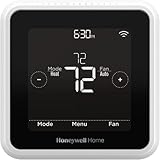
- High use of the scheduling feature of the T5 thermostat saved customers between 8 and 16% on heating and cooling bills. Dollar savings range based on nationwide average annual single-family detached home's heat and cooling bills; actual savings varies based on consumption.
- Save Energy and Get Rewarded. Check with your energy provider about available energy savings rebates to save on your purchase. Plus, eligible customers can enroll in their local Utility's "DEMAND RESPONSE PROGRAM" which can reward you for allowing the utility to slightly adjust your AC or furnace temperature settings when there is high energy demand.
- 7-Day Flexible Scheduling or Location Based Temperature Control. It’s your choice. 7-day scheduling programs your thermostat. Geofence technology helps make you comfortable by using your smartphone’s location to know when you’re away and when you return.
- Auto Home and Away Mode. Enjoy ideal temperatures at home, then save when away.
- ENERGY STAR certified. Help save energy, track your heating and cooling with monthly energy reports and get personalized tips on reducing energy use.
A practical way to decide if a smart appliance is worth it
- Identify the actual energy load. Determine whether the product controls heating, cooling, refrigeration, water heating, drying or another significant use. A feature attached to a minor load has less opportunity to affect the bill.
- Separate efficiency from connectivity. Compare the appliance’s energy performance with efficient non-connected alternatives. Do not count an app, display or voice control as an efficiency rating.
- Match the feature to a specific waste. Buy for a defined mechanism, such as occupancy-based HVAC control, a door-open alert or a utility program you can join. If you cannot describe what will change, projected savings are speculative.
- Verify compatibility and installation. For thermostats, confirm the heating and cooling system, wiring and any required adapter. Include professional installation if the work is outside your skill or local rules require it.
- Calculate total cost. Add purchase price, installation, required accessories, subscriptions if any, taxes and expected maintenance. Subtract only rebates that are confirmed for your ZIP code, utility and model.
- Estimate a conservative payback range. Use the reported ENERGY STAR thermostat average only as a reference point, then test lower and higher savings assumptions. Do not treat a national average as a personal guarantee.
- Configure the controls after installation. Set schedules, occupancy rules and notification preferences. Decide which utility requests can be accepted and when a manual override is necessary.
- Check actual results. Compare comparable billing periods or usage reports while accounting for weather, occupancy and comfort changes. A change in the bill alone cannot prove that the connected feature caused a saving.
When smart features are most likely to help
- The appliance controls a large or frequently running load, especially heating and cooling.
- The household has predictable periods of vacancy or routinely forgets to adjust settings.
- Users will respond to alerts and maintain schedules instead of leaving the device in default mode.
- The product’s base efficiency is strong compared with available non-connected alternatives.
- Compatibility is confirmed and a local rebate materially reduces the installed cost.
When the purchase is less likely to pay off
- The appliance is already operated efficiently and occupants rarely change schedules.
- The connected feature only adds convenience without changing runtime, temperature or cycle timing.
- Installation requires expensive wiring or an adapter that erases the expected savings.
- A household buys a less-efficient connected model instead of a more-efficient conventional one.
- Notifications, demand-response requests or energy recommendations are routinely ignored.
Common mistakes to avoid
Assuming “smart” means efficient
Connectivity is a capability, not a performance certification. Evaluate the appliance’s efficiency independently, then ask what the connected function contributes.
Using thermostat certification numbers as bill guarantees
The 8% and 10% certification thresholds concern runtime, while the approximately 8% or $50-per-year figure is an average reported for ENERGY STAR smart thermostats. Climate, equipment, occupancy and comfort choices can move an individual result in either direction.
Ignoring local conditions
Prices, rebates, utility programs and installation requirements vary by location. A calculation made without the home’s ZIP code, utility and equipment details can be misleading.
PC Slower Than It Used to Be?
A free scan shows the junk files, broken settings and background clutter dragging Windows down - then fixes them in one click.Free scan · Windows 10 & 11Crashes, No Sound, or Screen Glitches?
Random freezes, missing sound and display glitches usually trace back to one bad driver. Find and replace yours safely.Free scan · under a minuteLeaving automation in its default state
A smart device cannot save energy through a feature that has not been configured. Review schedules, occupancy settings, alerts and demand-response permissions after setup and whenever the household routine changes.
Verdict
Smart appliances can save energy when a connected function changes real operation, with ENERGY STAR certified smart thermostats providing the clearest field-supported example. Other connected appliances may reduce waste through alerts, reporting or demand response, but connectivity alone is not evidence of lower bills. Buy the most efficient compatible appliance first, then pay for smart features only when you can identify the behavior or load they will change.
Quick Recap
Product prices and availability are accurate as of the date/time indicated and are subject to change. Any price and availability information displayed on Amazon at the time of purchase will apply.

