No. Most high-handicap golfers do not need blade irons; a more forgiving game-improvement design is a sensible starting point. But handicap alone cannot tell you which irons will work best. Compare how different designs fit your launch, distance, dispersion and consistency, then choose based on fitting results and the look and feel you prefer.
What makes blades harder to hit?
“Blades” usually refers to muscle-back irons: compact heads intended to offer workability and shot-shaping control. Callaway contrasts those with game-improvement irons, which it describes as designed to help beginners and mid-to-high-handicap golfers. Those are broad design intentions, not a promise of how a particular club will perform for you.
As an Amazon Associate I earn from qualifying purchases.
A blade is not automatically wrong for every high-handicap golfer, nor does choosing one establish that your scores will improve. The available manufacturer guidance describes design goals and fitting considerations; it does not provide an independent controlled comparison showing how much blades change scores, distance or dispersion for high-handicap players. Callaway’s iron buying guide
How the main iron designs trade off
| Design | What the source says | What to assess in a fitting |
|---|---|---|
| Muscle-back (blade) | Callaway describes workability and shot-shaping ability as design aims. It does not establish a standardized comparison of forgiveness or outcomes against other designs. | Whether you value shaping and the compact look or feel, and how your distance, dispersion and descent angle compare with other heads. |
| Game-improvement | Callaway describes these irons as designed to help beginners and mid-to-high-handicap golfers. That broad aim is not a guarantee for an individual player. | Whether the club improves your consistency and produces a suitable launch and descent angle in your own fitting. |
| High-launch design | PING says the G440 HL places saved weight lower and farther back, with claimed benefits to ball speed and dispersion; it recommends finding a suitable shaft through fitting. | Whether the complete head-and-shaft combination produces the flight and dispersion you need. |
The cited sources do not provide standardized head-to-head test results across these designs, so the table describes stated design aims and fitting questions—not measured rankings.
#1 Best Overall
![PGF Men's Gold TP Complete Golf Club Package Set [11-Pieces] [Hand: Right] [Length: Standard]](https://m.media-amazon.com/images/I/51wyIJhWbAL._SL160_.jpg)
- #1 Driver: Engineered for forgiveness and speed with a lightweight 460cc forged driver, featuring a titanium head, low and back CG, large sweet spot, and optimized Inertia Generator for longer, controlled drives. (Headcover included)
- #3 Fairway Wood:Experience forgiveness and maximize distance with our oversized easy-to-launch fairway wood, featuring a sleek, aerodynamic head shape low CG for powerful and high-flying shots.
- #Hybrids: Extreme playability, easy launch. Versatile sole, low CG, and lightweight construction for high-flying shots from any lie, boosting confidence and swing speeds.
- Irons 5,7,9, PW, SW: Experience high launch and forgiveness with advanced perimeter weighting and a lower CG, promoting playability from any lie. The multi-function sole geometry ensures smooth turf interaction for enhanced performance.
- Putter:Classic Matte putter with 'L neck' hosel for offset and improved roll. Bold sight lines aid alignment, while the parallel grip ensures equal pressure for a confident stroke.
Choose by ball flight and consistency, not handicap alone
Titleist says handicap can play a role in iron selection but is not necessarily the most important factor. Its guidance focuses on distance, dispersion and descent angle, and identifies 7-iron performance and preferred ball flight as fitting inputs. Those measures help answer a more useful question than “What handicap is this iron for?”: does the club produce a repeatable shot that flies and lands as you need?
- Distance: Look at how far your 7-iron carries and how consistently it does so.
- Dispersion: Compare the spread of your shots, not just your best strike.
- Descent angle and launch: Check whether the ball flies high enough and comes down suitably for your needs.
- Preference: Include your preferred ball flight and the look and feel you want; a fitting can show the trade-offs against your results.
Titleist’s iron selector explains its fitting dimensions. Use them to compare options rather than treating a handicap label as a rule.
Rank #2
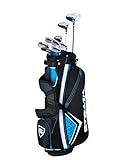
- The Strata 12-Piece Men's is designed to give you maximum performance right out of the box for more confidence from tee-to-green. The lightweight 460cc forged driver, fairway wood, hybrid, irons and putter make up a set that provides a great combination of distance, forgiveness and control, and is very easy to hit.
Use product examples as fitting candidates, not prescriptions
Titleist positions the T350 primarily for mid-to-high-handicap golfers seeking forgiveness, distance and improved launch. PING’s G440 HL is another high-launch design to consider in a fitting. These examples illustrate categories and manufacturer positioning; neither is a universal recommendation or proof that one model will suit every golfer in that handicap range.
Product specifications and model availability can change. Check the manufacturer’s current information when arranging a fitting or considering a purchase: Titleist T350 and PING G440 HL.
Quick Recap
Best Value
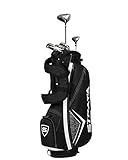
- Complete Set: Includes Driver, 5 Hybrid, 7 & 9 Irons, Sand Wedge, Putter, Stand Bag, and 2 Headcovers for comprehensive golfing
- Driver: Lightweight 460cc Forged Design with Large Sweet Spot and Titanium Head for Maximum Distance
- Oversized Fairway Wood for Long, High-Flying Shots with Ease
- Hybrid for Difficult Long Irons, Providing Versatility and Control
- Stainless Steel Irons for a Combination of Forgiveness and Control, Mallet Putter with Alignment for Accuracy
Rank #4

- Complete Set for Beginners: This all-in-one set includes everything you need to get started, featuring a driver, fairway woods, irons, wedges, and a putter, ensuring you're ready for any round.
- Premium Quality: Crafted with high-quality materials and advanced design, providing a professional feel and performance at an affordable price.
- Enhanced Forgiveness: The clubs are designed with forgiveness in mind, helping you improve accuracy and distance on off-center hits for a more enjoyable playing experience.
- Sleek, Modern Design: Stylish and sleek, the set's design not only looks great but also promotes better aerodynamics and performance.
- Durable Carry Bag: The set includes a lightweight, durable carry bag with ample storage space and comfortable straps for easy transport around the course.
Rank #3
![PGF Labs Men's BD-77 Complete Golf Club Package Set [14-Pieces][Flex: Regular] [Hand: Right] [Length: Standard]](https://m.media-amazon.com/images/I/51BmW4rGzCL._SL160_.jpg)
- Driver – High Launch & Maximum Forgiveness:Lightweight 460cc titanium driver designed for fast ball speed and easy distance. Features a deep, low center of gravity and a generous sweet spot to deliver straighter, more controlled drives. (Headcover included)
- #3 Fairway Wood – Effortless Distance:Oversized fairway wood built for easy launch and long carry. The aerodynamic profile and low CG help produce high-flying, stable shots from the tee or fairway. (Headcover included)
- Hybrids – Easy to Hit From Any Lie:Hybrid clubs engineered for versatility and confidence. A wide sole, low CG, and lightweight build promote fast swings and high launch, making tough lies easier to handle. (Headcover included)
- Irons Set (6I/7I/8I/9I/PW/ SW) – Forgiving & Consistent:Perimeter-weighted irons designed for stability and accuracy. Lower CG encourages higher launch, while the multi-purpose sole improves turf interaction for cleaner contact and more consistent results.
- Putter – Classic Balance & Better Alignment:Matte-finish putter with an L-neck hosel for natural alignment and smoother roll. High-contrast sight lines assist aim, while the parallel grip helps keep hand pressure even for a more repeatable stroke.
How to make the decision
- Start with a comparison, not a handicap cutoff. Ask a fitter to compare a forgiving game-improvement option with any more compact or workable design you are considering.
- Bring your normal swing. Use your actual 7-iron performance and preferred ball flight as inputs; handicap is context, not a substitute for those results.
- Compare the outcomes that matter. Review distance, dispersion and descent angle across the options, including ordinary strikes rather than only the best shots.
- Choose the trade-off you can live with. If you prefer a blade’s workability or appearance, weigh that preference against the fitting results. If consistency or launch is the priority, assess whether a game-improvement or high-launch design serves it better.
Product prices and availability are accurate as of the date/time indicated and are subject to change. Any price and availability information displayed on Amazon at the time of purchase will apply.

