Glasses can change how your face looks and how other people respond to it, but available studies do not show that they make wearers universally feel better or worse about their appearance. The most important distinction is between observer impressions and self-image: the strongest recent study measured people rating photographs, not eyeglass wearers describing their own confidence.
Your reaction can therefore be real without being a rule for everyone. A new reflection, a frame that feels unlike you, supportive comments, or simply feeling more comfortable seeing clearly may all shape your experience. None of those possibilities means glasses are inherently attractive, unattractive, confidence-building, or confidence-damaging.
As an Amazon Associate I earn from qualifying purchases.
The short answer: appearance and self-image are different outcomes
Putting on glasses changes the visual information in a face. Frames can outline the eyes, add color and geometry, cover part of the brow or cheeks, and alter the balance that you are used to seeing in a mirror. Other people may notice those changes, too. But an observer’s rating of a photograph does not tell you how you should feel when you look at yourself.
No population-level percentage, pooled effect estimate, or named statistic establishes how often glasses change wearers’ self-perception. The available evidence is narrower: studies have tested ratings such as attractiveness, confidence, intelligence, trustworthiness, competence, and face recognition. Those outcomes vary with the people judging, the faces shown, the frame style, the culture, and whether the eyewear was real or digitally simulated.
#1 Best Overall

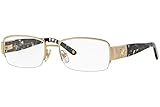
- PRESCRIPTION READY EYEGLASS FRAMES: The Armani Exchange eyeglass frames feature lenses that need to be replaced with prescription lenses so you can enjoy clear vision
- CASE & CLEANING CLOTH INCLUDED: Each pair of Armani Exchange sunglasses come with a cleaning cloth and case to clean and protect your sunglasses from scratches and damage
- VISIT THE ARMANI EXCHANGE BRAND SHOP: Click on the Armani Exchange link above the product title to shop the entire Armani Exchange sunglass and eyeglass assortment
- CASE & CLEANING CLOTH INCLUDED: Each pair of Armani Exchange A/X optical glasses come with a cleaning cloth and case to clean and protect your eyeglass frames from scratches and damage
- Item dimensions: lens width 2.13 in, lens height 1.59 in, bridge width 0.67 in and temple height 5.51 in
What the main studies actually tested
Keeping the study design attached to each result prevents a common mistake: turning “people rated these images differently” into “glasses make wearers feel bad about themselves.”
| Study | Who and where | Eyewear and task | Main result relevant to appearance | What it cannot establish |
|---|---|---|---|---|
| AlRyalat and coauthors, 2022 | 517 participants recruited through five Jordanian universities; online survey, May–July 2020 | Standardized images of four young adults, each shown with and without simulated glasses; ratings of attractiveness, confidence, and intelligence | No-glasses images received higher ratings overall on all three domains, with an intelligence exception for one male image | It did not ask eyeglass wearers how they felt about their own faces, and it is not representative of every country, age group, or culture |
| Leder, Forster, and Gerger, 2011 | Four experiments summarized in a University of Vienna research record | Different frame types, including rimless glasses; impression, recognition, and face-processing tasks | Rimless glasses increased perceived trustworthiness without reducing attractiveness in those experiments; they also reduced distinctiveness in some matching and recognition tasks | The experiments assessed observers and face processing, not a wearer’s long-term self-esteem or mirror experience |
| Graham and Ritchie, 2019 | Observers rating faces and attempting to match unfamiliar faces across images | Ordinary eyewear and sunglasses shown in differing conditions | Sunglasses lowered trustworthiness ratings, and changing eyewear between two photographs reduced face-matching accuracy | The abstract does not report a general attractiveness penalty for ordinary glasses, and face matching is not the same as confidence or self-image |
The 517 people in the Jordanian study are a sample size, not a percentage of wearers who dislike their appearance. Likewise, the recognition effects in the other studies do not show that a person feels less attractive when a frame is on their face.
What the 2022 Jordanian study found—and why its scope matters
AlRyalat and coauthors conducted a cross-sectional online survey involving students at five Jordanian universities. Between May and July 2020, 517 participants rated standardized photographs of four young adults. Each face appeared with simulated glasses and without them. Participants scored attractiveness, confidence, and intelligence.
Quick wins for a faster PC:
Fix the driver behind crashes, sound loss and screen glitchesFind Drivers →Repair Windows errors before they cause bigger problemsFix Now →Scan for outdated or missing drivers - takes under a minuteDriver Scan →Across the images, the no-glasses versions received higher ratings on the measured domains overall. One male image was an exception for intelligence, illustrating that even within this small set of faces the pattern was not identical. The authors’ cautious wording was: In our study on Jordanian college students of Arabian ethnicity, we found that eyeglasses may have a negative impact on a person’s image in regard to attractiveness, confidence, and intelligence.
That sentence describes ratings made by Jordanian university students looking at images; it does not report how the pictured people, or glasses wearers generally, felt about themselves.
Rank #2

- [Filter Blue light Glasses] Blue light filterer with UV400 protection, help you resist harmful blu-ray, reduce discomfort from TV, phone, digital screen and reading under fluorescent lights; Reduce glare, fatigue, eye strain and dry eye, protect your vision and help sleep better
- [Lightweight Computer Glasses] Durable, flexible and super light plycarbonate Frame, suitable for long-term wearing; Stylish style, puts you in the spotlight all the time
- [Polycarbonate HD Lens] Anti reflective, non-prescription amber tint lens; High transparency, restore the true color; Besides, you can remove the lens and replace it with the prescription lens you want
- [Product Dimension] Lens Width: 52mm(2.05in), Lens Height: 42mm(1.65in), Temple Length: 140mm(5.51in), Nose Bridge: 14mm(0.55in), Frame Width: 140mm(5.51in)
- [Worry-free Service] We attach great importance to the quality of our products; Please feel free to contact us if there is any problem with the eye glasses, you have no risk to try
The authors explicitly limit their conclusion to that population and note that demographic and cultural factors may change social effects. Their design also leaves several variables unresolved. The glasses were simulated, which can introduce visual artifacts. Participants saw the same faces in both conditions, so familiarity or comparison effects could influence ratings. The study did not examine frame rims and facial features in depth. It therefore supports a context-specific observation, not a universal rule that glasses lower attractiveness or confidence.
Why frame type and culture can reverse an impression
The Jordanian article discusses earlier Western studies with variable findings: some reported positive associations between glasses and perceived intelligence, competency, warmth, or socio-professional status, while the Jordanian sample rated several glasses-wearing images lower. Cultural associations may contribute to that variation. A person’s age, ethnicity, profession, local style norms, and whether glasses are common in their social group can all affect what observers infer.
Frame construction matters as well. The University of Vienna record for Leder, Forster, and Gerger’s 2011 experiments summarizes the conclusion that These effects depend on the kind of glasses worn.
In those experiments, rimless glasses increased perceived trustworthiness without reducing attractiveness. Rimless frames also made faces less distinctive in some matching and recognition tasks, while glasses generally directed observers’ gaze toward the eyes. A full-rim, half-rim, brightly colored, oversized, or rimless frame can therefore produce a different visual signal. These are observer effects in particular experiments, not a promise that one style will improve your self-confidence.
Recommended Free Tools
“Glasses make you look smarter” and “glasses make you less attractive” are both too broad. The evidence supports a conditional statement: a frame can alter specific impressions for specific observers viewing specific faces in a specific setting.
Sunglasses and face recognition are separate questions
It is easy to blend all eyewear into one claim, but the 2019 study by Graham and Ritchie tested several distinct outcomes. Its abstract reports lower trustworthiness ratings for sunglasses and lower accuracy when two photographs showed the same unfamiliar person with different eyewear. Changing glasses can make matching a face harder because observers use stable visual features to decide whether two images depict one person.
That finding does not establish that prescription glasses reduce attractiveness. The abstract does not report a general attractiveness penalty for ordinary glasses, and a recognition error is not a measure of self-esteem. If you look different to yourself after changing frames, that may reflect a genuine change in visual cues and familiarity rather than a verdict that your face looks worse.
Why observer ratings cannot predict how you will feel
Self-image includes an internal comparison: how your current reflection fits the face you recognize, the identity you want to project, and the feedback you receive. The cited experiments did not follow wearers over time, ask them to rate their own appearance, or measure whether a frame changed daily confidence. Their results therefore cannot tell you that you will feel unattractive, more professional, more recognizable, or more secure.
Free tools Windows power users keep installed
One-click scans. No signup required.
People can have different reactions to the same frame. Someone who has always worn glasses may feel that a bare face looks unfamiliar. Someone receiving a first prescription may feel relieved because clearer vision makes social interaction easier. Another person may dislike a frame’s color or weight but like the way it emphasizes their eyes. These are plausible individual experiences, not effects quantified by the three studies.
Rank #4

- STYLISH & FRESH: Our fashion glasses boast UV400 protection, blocking harmful blue rays from computer screens. With these oversized blue light glasses for woman, you can enjoy looking stylish without any worries of eye strain.
- FASHIONABLE & USEFUL: Our bluelight glasses womens are designed to reduce blurry vision or strain caused by prolonged screen time. These blue light blocking glasses aid in better sleep by preventing blue light from Instagram scrolling before bed disrupting your natural sleep cycle.
- COMFORT FOR DAILY USE: Crafted from durable material, our trendy fake glasses ensure long-lasting comfort. The high-transmittance lenses on the computer glasses women help keep your eyes relaxed. Need some Mother's Day gift ideas? These glasses are perfect Mothers day present for any woman.
- LIGHTWEIGHT: These blue blockers glasses for women feature a stylish lightweight frame, so they’re a great addition to any outfit. Perfect as non prescription glasses for women, these blue light glasses for woman big frame are a perfect christmas gifts for women. The glasses for computer eye strain feature polycarbonate HD lenses, which are anti-reflective.
- RISK-FREE PURCHASE: If you encounter any issues with your fashionable blue screen glasses, contact us for prompt resolution.
Social feedback can also be mixed. A colleague’s comment reflects that person’s taste and expectations, not an objective measurement. A frame that fits a workplace’s style may feel out of place in another setting. Treating one compliment or criticism as proof of a universal appearance effect gives too much weight to a single observer.
Independent reader supportYour contribution helps us test, update, and keep practical guides available for everyone.A practical way to separate your preference from outside judgment
If you are unsure whether glasses change how you feel, use a simple personal comparison rather than trying to apply a population finding to yourself. This is a self-observation exercise, not a clinically validated confidence treatment.
- Define the outcome. Write down what you are evaluating: comfort with your reflection, feeling recognizable, perceived professionalism, attractiveness, or willingness to be photographed. “I look different” is not the same as “I dislike how I look.”
- Compare under consistent conditions. Look at yourself in the same mirror or take photographs from the same distance and lighting with the glasses on and off, if it is safe and practical to remove prescribed correction briefly. Avoid judging a frame from a distorted close-up selfie.
- Test more than one frame style. Try rimless, subtle, full-rim, different colors, and different shapes if those options are available. Notice which one feels most like your usual style instead of assuming that a style associated with intelligence or attractiveness must suit you.
- Record your own rating before asking others. Give each option a brief score for comfort, familiarity, and appearance. Then ask one or two trusted people for specific feedback, such as whether the frame overwhelms your features or fits your usual clothing. Their comments are opinions, not measurements of your worth.
- Recheck after an adjustment period. A new frame changes the reflection you see repeatedly. If your first reaction is surprise, revisit the comparison after several days rather than treating unfamiliarity as a permanent judgment.
Do not stop using prescribed vision correction to pursue an appearance result. Eye-health decisions belong with an optometrist or ophthalmologist. If a frame causes headaches, slipping, pressure, or visual problems, have it adjusted or seek professional advice; those are fit and vision issues, not evidence that your face looks better without glasses.
How to read a claim about glasses and attractiveness
When you encounter a headline saying glasses improve or damage appearance, check five details before applying it to yourself:
Best Value

- AX3050
- Non-Polarized
- Plastic
- Width: 53 millimeters
- Bridge: 18 millimeters
- Who was judging? Wearers rating their own faces answer a different question from strangers rating photographs.
- What was rated? Attractiveness, confidence, intelligence, trustworthiness, competence, and face matching are separate outcomes.
- Which eyewear was shown? Rimless frames, full-rim frames, ordinary prescription glasses, and sunglasses are not interchangeable.
- Who was pictured and who was rating? Age, ethnicity, culture, glasses-wearing experience, and local norms can influence impressions.
- How were the images made? Real photographs and digitally simulated glasses can produce different visual cues and artifacts.
A claim is especially weak when it turns a small, culturally specific image-rating study into advice for every wearer, or when it cites a sunglasses result as evidence about ordinary prescription frames.
What frame choice can—and cannot—do for confidence
Frame selection is a legitimate personal-style decision. You can compare shapes, colors, bridge designs, and rim widths; choose what feels comfortable; and ask an optician to check fit and lens positioning. Those steps may help you find a frame that matches your preferences and routine.
There is no verified evidence in these studies that buying new frames reliably improves a wearer’s confidence or self-perception. A frame can change the visual impression you prefer, but it is not a proven intervention for low self-esteem. If distress about appearance is persistent, intense, or affecting daily activities, discuss it with a qualified mental-health professional rather than relying on eyewear as the solution.
The most defensible conclusion
Glasses change facial cues, so observers can rate the same face differently when eyewear is added or changed. The 2022 Jordanian university study found lower overall ratings for simulated-glasses images in its 517-person sample, while the 2011 experiments found frame-dependent effects such as higher trustworthiness for rimless glasses. The 2019 study showed that sunglasses and mismatched eyewear can affect trust judgments and face matching.
None of those findings tells every wearer how to feel about their own appearance. Your response may depend more on familiarity, frame design, cultural setting, vision comfort, and personal style than on a universal attractiveness effect. Treat studies as context for understanding other people’s impressions, then use your own comfort and preferences—without sacrificing necessary vision correction—to decide what belongs on your face.
Quick Recap
Product prices and availability are accurate as of the date/time indicated and are subject to change. Any price and availability information displayed on Amazon at the time of purchase will apply.

