Free tools Windows power users keep installed
One-click scans. No signup required.
DNA-based uranium sensors are laboratory analytical methods that detect dissolved uranyl ions (UO₂²⁺), not uranium by sequencing biological DNA. A purpose-designed DNAzyme catalyzes cleavage of a strand when uranyl is present, while a uranyl-binding aptamer changes shape or surface interactions after binding the ion. Fluorescence, color, electrochemistry or electrochemiluminescence then converts that molecular event into a measurable result.
Published studies report very low detection limits in controlled water, soil and experimental biological matrices, but those numbers are design-specific. They do not establish a validated household test, a universal field instrument or automatic compliance testing for untreated drinking water. The useful question is therefore not simply whether DNA can detect uranium, but which recognition chemistry, readout and sample-preparation workflow fit the matrix and accuracy requirement.
As an Amazon Associate I earn from qualifying purchases.
What “DNA-based uranium detection” actually means
In this field, “DNA-based” describes the recognition molecule and signal-processing chemistry. Researchers synthesize short DNA strands whose sequence and folded structure are selected to respond to uranyl, the soluble UO₂²⁺ ion that is the principal target in the cited assays. The method is unrelated to extracting a person’s or microorganism’s genome and looking for a uranium-related gene.
Uranyl is the usual target
Uranium can occur in several chemical forms depending on oxidation state, pH and ligands. The reviewed sensors are designed mainly for uranyl. A result therefore means that the assay responded to the chemical species and conditions for which it was calibrated; it is not automatically a measurement of every uranium compound in every sample.
#1 Best Overall

- “COMPLETE” IS 2-KITS-IN-1: Safe Home provides the only COMBO DRINKING WATER TEST KIT for freshwater sources (tap-water & well water) that includes Do-It-Yourself screening AND optional in-depth testing at our EPA-certified laboratory. All of this…in ONE KIT!
- DIY SCREENING: Safe Home provides the only DIY water test kit that uses ultra-sensitive ACS (American Chemical Society) grade reagents in our screening mechanisms, which provide you more reliable results. You get 10 test strips that screen for 12 different parameters each (see attached list). You also get one test each for our #1 selling Lead and Bacteria test kits.
- OPTIONAL TESTING AT OUR EPA-CERTIFIED LAB: Inside this same package is a second kit that provides everything needed to collect a water sample and send it to our EPA-certified lab for professional analysis. You have multiple testing packages to choose from, for up to 48 different parameters (see attached list). *Note: Fees are required for optional testing at our EPA-certified lab.
- AWARD-WINNING & MADE IN THE USA: The only water test kit brand to earn the Good Housekeeping Seal and named a Top 10 New Product at the National Hardware Show. Includes easy-to-follow instructions and is MADE in the USA.
- REAL SUPPORT + REAL IMPACT: Before, during, and after DIY screening or LAB testing, Safe Home provides qualified personnel with 40+ years of experience in testing water, to guide you. Plus, every purchase helps fund global clean water initiatives.
Two recognition strategies
- DNAzymes: catalytic DNA structures use uranyl as an activating cofactor. Activation causes cleavage of a substrate strand, which is coupled to a reporter reaction.
- Aptamers: binding DNA sequences recognize uranyl and undergo a conformational or interfacial change. That change modulates an electrode, a nanomaterial, a fluorophore or another signal-generating component.
Some systems combine both ideas. An aptamer can regulate a catalytic nanomaterial, or a DNAzyme cleavage product can initiate a second DNA assembly reaction. The terminology should be kept clear: a DNAzyme is a catalytic recognition construct, whereas an aptamer is primarily a binding construct.
How the sensing principle produces a result
DNAzyme cleavage and signal release
A typical catalytic beacon contains a reporter strand carrying a fluorophore and a quencher. In the intact state, the quencher suppresses fluorescence. Uranyl activates the DNAzyme, the substrate is cut, and the fragments separate so fluorescence rises. Other designs release a fragment that starts a chain reaction, giving signal amplification.
The early catalytic-beacon study reported a detection limit of 11 parts per trillion (45 pM), a dynamic range extending to 400 nM and selectivity greater than one million-fold over other tested metal ions. Those are performance figures for that particular construct and protocol, including a contaminated-soil demonstration; they are not a universal specification for DNA sensors.
Recommended Free Tools
Rank #2

- Contains one (1) API FRESHWATER MASTER TEST KIT 800-Test Freshwater Aquarium Water Master Test Kit, including 7 bottles of testing solutions, 1 color card and 4 tubes with cap
- Helps monitor water quality and prevent invisible water problems that can be harmful to fish and cause fish loss
- Accurately monitors 5 most vital water parameters levels in freshwater aquariums: pH, high range pH, ammonia, nitrite, nitrate
- Designed for use in freshwater aquariums only
- Use for weekly monitoring and when water or fish problems appear
Aptamer binding and structural change
An aptamer may fold differently after uranyl binding, expose or hide an electrode-active tag, or bring a reporter close to a surface. The EPA HERO record summarizing Jett and Bonham’s 2017 reusable electrochemical design gives an apparent dissociation constant of 15 ± 5 μM. It describes a detection limit within an order of magnitude of the U.S. EPA maximum contaminant level for uranium in drinking water, but does not provide a single numeric limit and is an abstract-level summary rather than a field-validation report.
Ways to read the molecular event
- Fluorescence: sensitive and compatible with amplification, but normally requires a fluorimeter or imaging reader and careful control of background fluorescence.
- Colorimetric or visual readout: a colored product can be measured spectrometrically or judged by eye. Visual thresholds are less precise than instrument readings.
- Electrochemical readout: current, potential or impedance changes at an electrode. This can support compact instrumentation, but electrode preparation, fouling and reference-electrode stability matter.
- Electrochemiluminescence: an electrical stimulus produces light from a reporter system, combining electrochemical control with optical detection.
What published DNA uranium assays have demonstrated
The following figures come from different constructs, matrices and measurement conditions. They are not a head-to-head ranking.
| Study and year | Recognition and readout | Demonstrated matrix | Reported performance | How to interpret it |
|---|---|---|---|---|
| Catalytic beacon study, 2007 | Uranyl-activated DNAzyme cleavage with a beacon signal | Solution testing and contaminated soil | 11 ppt (45 pM) detection limit; range up to 400 nM; selectivity greater than 1,000,000-fold over other metal ions | Exceptional figures for one design; not a general benchmark or proof of routine field use |
| DNAzyme cascade visual assay, Analyst, 2022 | DNAzyme recognition followed by cascade amplification; spectrometric and naked-eye color distinction | Water samples under optimized assay conditions | 0.48 nM detection limit; 1–50 nM linear spectrometric range; 5 nM naked-eye distinction; procedure about 40 minutes | The visual threshold is higher than the instrumental limit, as expected; timing and sensitivity depend on the stated protocol |
| DNA network biosensor, Analytical Chemistry, 2024 | DNAzyme-triggered cleavage starts assembly of double-loop hairpin probes into fluorescent DNA nanostructures | Water and soil | The article presents ultrasensitive monitoring; a single cross-study value should not be inferred without its exact calibration conditions | “Enzyme-free” operation refers to signal assembly after the recognition step; the DNAzyme recognition element is still part of the design |
| G-quadruplex proximate DNAzyme assay, Journal of Hazardous Materials, 2021 | Ratiometric DNAzyme chemistry with sample digestion | Uranium-pollution and microbial-biosorbent studies | Enzymatic digestion tested from 18 to 41 °C | This is the tested digestion range for that assay, not an operating range for every DNA sensor |
| Aptamer-regulated covalent-organic-framework nanozyme, Analytical Chemistry, 2023 | Uranyl-specific aptamer regulates two catalytic activities; colorimetric output | Experimental analytical samples | Performance depends on the framework, aptamer and color reaction used | A color change can simplify observation, but matrix color and reaction chemistry must be controlled |
| Dual-enhancement electrochemiluminescence device, Analytical Chemistry, 2024 | Aptamer-modified polymer dots with DNA-associated rhodamine B | Experimental fish, hair and nail samples, including simulated fish samples | 12 pg/L detection limit; linear range 113 pg/L to 11.3 mg/L | Units and biological matrix are essential qualifiers; these data do not establish drinking-water performance |
| Reusable electrochemical aptamer biosensor, Jett and Bonham, 2017 | Uranyl-binding aptamer on an electrochemical platform | Water-focused design summarized in the EPA HERO database | Apparent dissociation constant 15 ± 5 μM; detection limit within an order of magnitude of the EPA drinking-water maximum contaminant level | The database summary does not establish a validated field workflow or a numeric detection limit |
How a laboratory workflow is assembled
Although the published platforms differ, a practical experiment normally follows the sequence below. Each stage can alter the final detection limit.
Rank #3
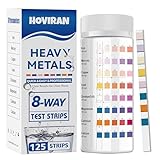
- 8-way Heavy Metals Water Test Kit: With our 8 parameters Heavy metals water test strips, you will know levels of Iron, Mercury, Copper, Lead, Chromium, Magnesium, Cadmium and Calcium easily
- Define the chemical question. Decide whether the goal is dissolved uranyl, total uranium after digestion, or a screening indication. Record pH, oxidation state assumptions and any required conversion or digestion.
- Prepare the matrix. Water may need filtration, dilution or adjustment of ionic strength. Soil and biological material generally require extraction or digestion to release uranium and reduce particulate or organic interference. The 18–41 °C digestion range belongs specifically to the 2021 G-quadruplex assay.
- Run recognition and reaction controls. Include a blank, a series of uranyl standards and a matrix-spiked sample. A no-DNAzyme or no-aptamer control helps show whether the signal comes from nonspecific chemistry.
- Allow the prescribed reaction time. The 2022 visual cascade procedure took about 40 minutes under its optimized conditions. Incubation time, temperature and mixing cannot be transferred unchanged between constructs.
- Measure the chosen signal. Use a fluorimeter, spectrometer, potentiostat or electrochemiluminescence reader as required. A visual color call should be treated as a screening result unless it is backed by an instrument calibration.
- Calibrate in the same matrix when possible. Build the curve with standards processed like the unknowns. Report the linear range, dilution factor and whether the reported limit is a blank-based detection limit, a quantification limit or another criterion.
- Check recovery and interference. Compare spiked recovery before and after sample preparation and test likely competing ions. A high selectivity claim from one study does not remove the need for interference testing in a new water, soil or biological matrix.
How to compare detection limits without being misled
A smaller number is not automatically a better method. Compare at least six axes together:
Do these 3 things before closing this tab:
1Fix the driver behind crashes, sound loss and screen glitches2Repair Windows errors before they cause bigger problems3Scan for outdated or missing drivers - takes under a minute- Recognition chemistry: catalytic cleavage and aptamer binding respond differently to pH, ligands and competing metals.
- Readout: fluorescence, electrochemistry, color and electrochemiluminescence have different noise sources and equipment requirements.
- Matrix: buffer, treated water, natural water, soil and digested tissue are not interchangeable.
- Units and range: 45 pM, 0.48 nM and 12 pg/L cannot be ordered sensibly without converting units and checking uranium species, molecular mass conventions and calibration ranges.
- Preparation burden: filtration, digestion, extraction and dilution may dominate the total time and uncertainty.
- Validation status: a controlled laboratory demonstration is different from an interlaboratory method, certified reference-material study or regulatory workflow.
The 12 pg/L result, for example, was reported for experimental fish, hair and nail matrices with a 113 pg/L–11.3 mg/L linear range. It should not be presented as a drinking-water limit. Likewise, the 11 ppt catalytic-beacon result includes a soil demonstration but does not mean an untreated soil slurry can be read directly with the same sensitivity.
Can these sensors test drinking water?
They can be designed to analyze water, and several studies used water samples, but “can detect in water” is narrower than “is ready for household or regulatory drinking-water testing.” Natural water contains dissolved salts, organic matter, suspended particles and other metals that can change DNA folding, adsorption and reporter chemistry. Sample preservation, uranium speciation and recovery must be demonstrated for the particular source.
Rank #4

- DO-IT-YOURSELF screening of any freshwater supply for Arsenic (tap water, well water, ponds, lakes, streams etc.). Arsenic occurs naturally in the earth's crust, is found in more than 50% of U.S. water supplies and can cause organ-cancer in humans and animals.
- PATENT PENDING DIY TECHNOLOGIES indicate Arsenic concentration ranges of 0 - 500 PPB.
- CERTIFIED “ACCURATE” by EPA-certified scientists with over 150 years of combined experience in testing drinking water. 10 PPB is the USEPA’s Maximum Contamination Level for Arsenic in drinking water. However, no amount of Arsenic is safe to consume.
- FAST RESULTS: At-home screening delivers your test results in just 30 minutes. Unlike most other DIY kits, this kit tests without messy test strips. Includes detailed instructions. One test per kit. NOTE: Testing for Arsenic at a lab can cost hundreds of dollars, making this kit a cost-effective at-home option to screen for Arsenic.
- OPTIONAL TESTING AT OUR EPA-CERTIFIED LAB: Inside this same package is a second kit that provides everything needed to collect a water sample and send it to our EPA-certified lab for professional analysis. You have multiple testing packages to choose from, for up to 48 different parameters (see attached list). *Note: Fees are required for optional testing at our EPA-certified lab.
The EPA HERO summary places one reusable electrochemical aptamer design within an order of magnitude of the U.S. drinking-water maximum contaminant level. That comparison indicates analytical relevance, not approval or field readiness. A laboratory or utility would still need a defined sample-preparation protocol, calibration and quality-control program, interference data and validation against an established uranium method.
Independent reader supportYour contribution helps us test, update, and keep practical guides available for everyone.What about soil, food and biological samples?
Soil
Soil demonstrations show that DNA recognition can work after extracting or otherwise processing contaminated material. Clay, iron minerals, humic substances and uneven uranium distribution make direct measurement difficult. Report the extraction and digestion steps with any soil result.
What’s actually slowing this PC down?
Pick the symptom - the matching free tool is one click away.
Food and aquatic products
The 2024 electrochemiluminescence work used experimental fish-related samples. Such a matrix requires digestion or extraction to release uranium and remove proteins, lipids and pigments that can suppress or mimic optical signals. A simulated sample is not equivalent to a survey of commercial food.
Best Value

- All for health: with global water quality issues constantly threatening, it's important to protect your health by ensuring that your drinking water is free of harmful substances. Our water quality testing kits can quickly identify these problems, making it easier to protect your health and that of your family. The 16 in1 drinking water test strips also screens pool, hot tub and spa water for chlorine, bromine, pH and alkalinity—one kit for softener well tap home drinking water and backyard care.
- 16-Parameter Initial Screening in 30 Seconds – Quickly determine if further laboratory testing is needed. Our simple immersion reading method allows you to obtain accurate water quality information without waiting or traveling. Add water to the testing kit, set a timer, and read the results.
- Tips for accurate testing: To obtain reliable water quality test results, it is recommended that you Keep wet fingers away from the strips; Use and Read in DAYLIGHT or 6500K LED; Keep strip HORIZONTAL — running colors can darken the pad; Match within 30-45 sec — colors keep changing after 60 sec; If between two blocks, record the HIGHER value for safety;
- Complete test: our test currently offers the most cared for parameters on the market, it contains 16 parameters covering all the major contaminants you need to worry about, it tests for total hardness, free chlorine, total chlorine, bromine, total alkalinity, pH, nitrate, nitrite, copper, iron, lead, nickel, carbonate, MPS, cyanuric acid, sulfite.Lead Testing Note: 1 ppm = 1 second vs 1 ppb = 0.001 seconds. If the test result is ≤15 ppb, it is recommended to send the sample to a laboratory for more accurate results.
- Test various water sources: Our drinking water testing kit allows you to test any water source in your home, including drinking water, well water, tap water, hard water, hardness water, softened water, pool water, spa water, hot tub water, aquarium water and api freshwater master test kit.
Hair and nails
Hair and nail measurements are retrospective or exposure-oriented matrices, not substitutes for water monitoring. The reported 12 pg/L limit belongs to the complete experimental workflow and should remain attached to those sample types.
Is there a consumer DNA uranium test?
The reviewed evidence does not establish a consumer-ready DNA uranium kit. These assays require custom DNAzyme or aptamer sequences, controlled reagents, calibrated standards and specialized optical or electrochemical readers. An ordinary test strip cannot be assumed to reproduce a published parts-per-trillion result.
A researcher can commission oligonucleotides and assemble a method from a paper, but the exact sequence, surface chemistry, buffer, temperature, reaction time and calibration must match the publication. Generic uranium water-test products and laboratory instruments may use entirely different chemistries; their compatibility with a DNA assay is not established by these studies.
Common failure modes and corrective checks
- Signal in the blank: contamination, spontaneous substrate cleavage or reporter instability may be responsible. Replace reagents, shorten storage time and verify the no-target control.
- Good buffer response but poor sample recovery: matrix suppression is likely. Dilute, digest or clean up the sample, then recalibrate with matrix-matched standards.
- Color visible but concentration inaccurate: visual thresholds are qualitative. Use a spectrometer and a calibration curve for quantitative work.
- Inconsistent electrochemical readings: inspect electrode surface preparation, reference-electrode condition, fouling and equilibration time.
- Apparent sensitivity that changes with temperature: verify the assay’s prescribed incubation and digestion conditions. The 18–41 °C range cannot be generalized from one G-quadruplex protocol.
- Results disagree across papers: check species, matrix, units, amplification scheme and definition of detection limit before concluding that one platform is superior.
What would be needed for routine deployment?
A deployable method would need a fixed sequence and reagent formulation, stable storage, simple and documented sample preparation, matrix-specific calibration, interference testing, quality controls and reproducibility across operators and sites. It would also need comparison with a recognized uranium method and evidence that results remain accurate during transport and storage.
DNA chemistry offers genuine advantages: programmable recognition, very high selectivity in some designs and compatibility with several signal formats. Its practical limits are equally important: DNA folding is condition-dependent, complex matrices require preparation, and the most impressive analytical figures come from individual research protocols. Treating those figures as universal specifications is the fastest way to overstate what the technology can do.
Bottom line
DNA-based uranium detection is a versatile research platform for uranyl analysis. DNAzymes convert uranyl-triggered cleavage into amplified signals, while aptamers convert binding into optical or electrochemical changes. Published assays have reached nanomolar, picomolar or picogram-per-liter figures in defined experiments, but each value belongs to a particular design and matrix. Today, the evidence supports laboratory research and method development—not an off-the-shelf household test or an automatically validated drinking-water monitor.
Quick Recap
Product prices and availability are accurate as of the date/time indicated and are subject to change. Any price and availability information displayed on Amazon at the time of purchase will apply.
Quick wins for a faster PC:
Repair Windows errors before they cause bigger problemsFix Now →Scan for outdated or missing drivers - takes under a minuteDriver Scan →
