Free tools Windows power users keep installed
One-click scans. No signup required.
Choose by connection and recording workflow first. Elgato Wave Go is designed for USB-C phones and computers, while DJI Mic 2 supports USB-C, Lightning and 3.5 mm TRS analog output and is described by DJI as compatible with most cameras, smartphones and computers. If you need a local recording as a safety copy, DJI Mic 2 has onboard storage; Wave Go does not. DJI Mic 3 and Mic Mini add other form factors and specifications, so “DJI Mic” is not one fixed set of features.
The figures below are manufacturer specifications, not results from an independent head-to-head test. Confirm the specific kit, connectors and compatibility with your device before buying; bundle contents, availability and prices can vary by region and change over time.
As an Amazon Associate I earn from qualifying purchases.
Start with the device you need to record to
A wireless microphone system is only useful if its receiver can connect to the device that will capture the recording. Before comparing range, battery life or price, check the input on your phone, computer or camera and the output supported by the exact kit you are considering.
Elgato Wave Go: a USB-C workflow
Elgato describes Wave Go as designed for USB-C phones and computers. Its USB-C receiver sends audio to the connected device; it is not made for direct use with professional cameras such as DSLR or mirrorless models. If your camera is the recording destination, do not assume that the USB-C receiver will connect to its audio input. Check the camera’s supported inputs and the kit’s connection options before choosing it.
#1 Best Overall

- Small but Mighty - The DJI Mic Mini lavalier microphone transmitter is small and ultralight, weighing only 10 g, [1] making it comfortable to wear, discreet, and aesthetically pleasing on-camera.
- Detail-Rich Sound - Mic Mini wireless microphones delivers high-quality audio. A 400m max transmission range [2] ensures stable recording, even in bustling outdoor environments like a busy street. 48kHz sampling & 120 dB SPL for full, clear sound, 48h battery life with charging case [3].
- Extended Battery, More Recording Time - Mic Mini wireless lavalier microphone with Charging Case offers up to 48 hours of battery life, [3] ideal for long trips, interviews, livestreaming and other intensive usage scenarios.
- DJI Ecosystem Direct Connection - With DJI OsmoAudio, a transmitter can connect to Osmo Nano, Osmo 360, Osmo Mobile 7P, Osmo Action 5 Pro, Osmo Action 4, or Osmo Pocket 3 without a receiver, delivering premium audio.
- Powerful Noise Cancelling - 2 noise cancellation levels are available—Basic is ideal for quiet indoor settings, while Strong excels in noisy environments to give you clear vocals. [8]
Elgato says Wave Go uses a dedicated 2.4 GHz connection to its USB-C receiver rather than Bluetooth. That describes the connection between the transmitter and receiver; it does not change the receiver’s USB-C device requirement.
DJI Mic 2: more stated output options
DJI lists USB-C, Lightning and 3.5 mm TRS analog outputs for Mic 2 and says it is compatible with most cameras, smartphones and computers. “Most” is not “all”: confirm that your chosen receiver and any necessary adapter match the recording device. A camera’s 3.5 mm input, a phone’s USB-C port and a Lightning-equipped phone are different connection cases, and a kit may not include every adapter you need.
For Mic 3 and Mic Mini, confirm the connection options and package contents for the specific model and bundle rather than carrying Mic 2’s published port list over to the rest of the family. The product names alone do not establish that every kit connects in the same way.
A quick compatibility check
- Phone: Identify its port, operating system and any adapter requirement. Wave Go is intended for USB-C devices; DJI Mic 2 lists USB-C and Lightning output options.
- Computer: Confirm that the receiver connects through a supported port and that the computer recognizes the audio input you intend to use.
- Camera: Check for a compatible camera receiver connection or 3.5 mm TRS input. DJI Mic 2 lists 3.5 mm TRS analog output; Wave Go is not designed for direct professional-camera use.
- Exact bundle: Verify which receiver, transmitters, cables and adapters are included. Do not infer package contents from a product-family name or from another bundle’s listing.
Make the check before ordering, not after unboxing: write down the exact device model and port, then match it to the selected microphone kit’s receiver and any required cable or adapter. If you plan to switch between a phone and a camera, verify both connections separately. One compatible setup does not guarantee the same bundle will connect to every device you own.
Decide whether you need a recording backup
Onboard recording can preserve audio on the transmitter if the connected phone or computer fails to capture it as expected. It is a meaningful workflow difference, not merely a specification to compare after everything else.
DJI Mic 2 and Mic 3
Each DJI Mic 2 transmitter has 8 GB of built-in storage. DJI lists up to 14 hours of internal recording at 24-bit or up to 11 hours at 32-bit float. Those are format-specific maximum recording figures; they are not a promise that every transmitter will hold those durations in every recording setup.
DJI’s Mic series comparison also lists internal 24-bit and 32-bit float recording for Mic 3. It gives Mic 3 capacity of up to 57.3 hours in 24-bit single-file mode or 43 hours in 32-bit float single-file mode. These are DJI’s published capacities for the stated modes, not interchangeable guarantees for every workflow. Check the model’s recording settings and file-management requirements if capacity is critical.
What’s actually slowing this PC down?
Pick the symptom - the matching free tool is one click away.
Elgato Wave Go
Wave Go does not record onboard. It sends audio to the connected phone or computer, so the recording depends on that device and the recording software or app being used. If you need a separate local copy, that limitation may rule it out unless your broader recording setup provides another backup.
Rank #2

- Lightweight & Intuitive, Compact Storage [9] - Take it anywhere—this wireless mic fits in your pocket or bag, ready for travel vlogs, street interviews, or capturing ideas on the go.
- 4TX + 8RX Capability & Four-Channel Output [1] - This lavalier mic's receiver can pair with 4 TX and sync audio to 7 additional RX—ideal for podcasts or group interviews.
- Consistent, Balanced Audio in Every Scene - Whether you're whispering or shouting, this wireless mic's adaptive gain control [5] keeps your audio crisp in busy cafes or outdoor adventures.
- Sound Your Best, Anywhere You Record - Choose from three voice tones [3] and two noise-cancelling [5] levels of this wireless mic to match your vibe—cut the noise in studios, parks, or city streets.
- Crystal-Clear Audio, Even in Crowded Spaces - Dual-band anti-interference [2] of this wireless mic ensures flawless, lossless audio transmission, even at live events or in busy offices.
Before a shoot, decide where the primary recording will live and what happens if that device stops recording. A transmitter backup can help when a phone or computer capture is interrupted, but it does not replace checking that the system is recording and that the files can be retrieved afterward.
Think through the failure you are trying to guard against. Local transmitter audio can provide another copy if the phone or computer recording is interrupted, but it does not make the connected device irrelevant: you still need a functioning recording workflow, and you should verify that the backup file is available and usable. Wave Go’s lack of onboard recording means its audio is captured on the connected device rather than independently on the transmitter.
Compare DJI models individually
DJI Mic 3, Mic 2 and Mic Mini differ in published audio formats, battery figures, transmission-distance claims and form factor. The comparison below uses DJI’s current Mic series comparison figures, accessed in 2026. Reference prices are in US dollars and may differ by geography, bundle and current availability.
| Model | Published audio and recording details | Published operating time | Published transmission distance | DJI reference price |
|---|---|---|---|---|
| DJI Mic 3 | Switchable 24-bit and 32-bit float; internal recording listed | Transmitter: 8 hours; receiver: 10 hours, under DJI’s specified setup | Up to 400 m open and interference-free; 80 m in DJI’s specified simulated high-interference test | USD $169 |
| DJI Mic 2 | Switchable 24-bit and 32-bit float; 8 GB storage per transmitter; up to 14 hours at 24-bit or 11 hours at 32-bit float | Transmitter and receiver: 6 hours under DJI’s stated test | 250 m FCC or 160 m CE in unobstructed outdoor conditions | USD $129 |
| DJI Mic Mini | 24-bit audio | Transmitter: 11.5 hours; receiver: 10.5 hours | Up to 400 m in unobstructed outdoor conditions | USD $59 |
These are manufacturer figures, and each model’s range and battery notes depend on DJI’s model-specific test conditions. The prices are reference figures from DJI’s comparison page, not guaranteed checkout prices or a statement about what a particular bundle contains.
When Mic 3 deserves a closer look
Mic 3 is the DJI option in this comparison with a published 80 m figure for a simulated high-interference test as well as a stated open-condition maximum. It also has DJI-listed internal recording and switchable 24-bit or 32-bit float depth. If those details matter to your shoot, confirm the exact kit and settings rather than treating the model’s headline range or storage capacity as a real-world guarantee.
When Mic 2 is the useful reference point
Mic 2 has the clearest connection details in DJI’s published product information: USB-C, Lightning and 3.5 mm TRS analog output, plus 8 GB storage per transmitter. It is a relevant comparison when you need those output choices or local transmitter recording. Its 250 m FCC and 160 m CE figures apply to unobstructed outdoor conditions and should not be read as routine indoor operating distances.
When Mic Mini fits the comparison
Mic Mini has DJI-listed 24-bit audio and longer transmitter and receiver operating-time figures than the listed Mic 2 test figures. Its published range is also up to 400 m in unobstructed outdoor conditions. Those numbers alone do not establish compatibility with your device, what is included in a particular package, or whether it offers the features you need; check the exact kit.
Quick wins for a faster PC:
Repair Windows errors before they cause bigger problemsFix Now →Scan for outdated or missing drivers - takes under a minuteDriver Scan →Clear out junk files and repair common Windows errorsFree Scan →How to think about the price figures
DJI’s comparison page gives reference prices of USD $59 for Mic Mini, $129 for Mic 2 and $169 for Mic 3. These are useful for seeing the listed price points across DJI’s models, but they are not a like-for-like quote for every kit. A bundle can differ in the receivers, transmitters, charging accessories and adapters it includes, and the listed reference price may not match the current price in your country. Elgato’s Wave Go technical specifications provide no price figure in the cited details, so there is not enough information here to make a direct cost comparison with Wave Go.
Rank #3

- Small but Mighty - The DJI Mic Mini Transmitter is small and ultralight, weighing only 10 g [1], making it comfortable to wear, discreet, and aesthetically pleasing.
- Detail-Rich Sound - Mic Mini delivers high-quality audio. A 300m max transmission range [2] ensures stable recording, even in bustling outdoor environments like a busy street.
- Record Longer - Two transmitters and a mobile receiver offer a maximum operating time of 11.5 hours [5]. That's enough time for high-usage scenarios like interviews.
- DJI Ecosystem Direct Connection - With DJI OsmoAudio, a transmitter can connect to Osmo Nano, Osmo 360, Osmo Mobile 7P, Osmo Action 5 Pro, Osmo Action 4, or Osmo Pocket 3 without a receiver, delivering premium audio.
- Powerful Noise Cancelling - 2 noise cancellation levels are available—Basic is ideal for quiet indoor settings, while Strong excels in noisy environments to give you clear vocals. [8]
Before comparing checkout totals, decide which components you actually need. If your recording device requires a particular receiver, cable or adapter, include that in the cost calculation and make sure it is compatible with the selected model. A lower headline figure is not necessarily the lower-cost setup if it does not include the components your workflow requires. Check current listings for the exact model and bundle rather than assuming a price or package from another retailer or region.
Read range figures as conditional claims
DJI lists Mic 3 at up to 400 m in open, unobstructed and interference-free conditions, and 80 m in a specified simulated high-interference test. Its comparison lists Mic 2 at 250 m under FCC conditions or 160 m under CE conditions, in unobstructed outdoor use. Mic Mini is listed up to 400 m in unobstructed outdoor conditions. Elgato lists Wave Go at approximately 30 m (100 ft).
Those figures are not a controlled cross-brand comparison: the manufacturers describe different conditions and model-specific tests. In actual use, obstacles and radio interference can make a published maximum a poor guide to dependable working distance. Treat the figures as context for the systems, not as a guarantee that a person can move that far from the receiver in your location.
If your subject will move away from the recording device, plan the receiver’s position and test the connection in the environment where you will record. A stated open-area maximum does not establish performance through walls, in a crowded wireless environment or at a particular venue.
For an interview or walk-and-talk, think about the route and surroundings, not just the farthest distance in a product table. Keep the receiver where it has a suitable connection to the transmitter and do a test recording at the locations where the speaker will stand or move. The 80 m Mic 3 figure is specifically tied to DJI’s simulated high-interference test; it should not be treated as a universal range for every crowded venue. Similarly, the Mic 2 FCC and CE numbers are different regional claims, not two results that can be averaged into an everyday estimate.
Compare battery claims by component and test
Battery figures are not directly interchangeable unless you compare the same component under comparable test conditions. A transmitter’s operating time is different from a receiver’s, and a handle’s figure is not a transmitter figure.
| System or component | Manufacturer-listed figure | How to interpret it |
|---|---|---|
| DJI Mic 3 transmitter | 8 hours | DJI’s specified operating-time figure for the transmitter |
| DJI Mic 3 receiver | 10 hours | DJI’s specified operating-time figure for the receiver |
| DJI Mic 2 transmitter and receiver | 6 hours each | DJI’s stated test figure for each component |
| DJI Mic Mini transmitter | 11.5 hours | DJI-listed transmitter operating time |
| DJI Mic Mini receiver | 10.5 hours | DJI-listed receiver operating time |
| Elgato Wave Go transmitter | Approximately 8 hours | Elgato’s listed transmitter figure |
| Elgato Wave Go Smart Handle | Approximately 48 hours | Elgato’s listed Smart Handle figure; not the transmitter’s operating time |
These specifications do not establish identical test methods between DJI and Elgato. For a long session, compare the component that must stay powered in your setup, allow for charging time between sessions and check what the package provides. Do not use the Smart Handle’s approximately 48-hour figure as the run time of Wave Go’s transmitter.
Elgato’s approximately 8-hour figure applies to the Wave Go transmitter; its approximately 48-hour figure is for the Smart Handle. Those two values refer to different components and should not be collapsed into one claim about how long the whole recording setup runs. DJI likewise lists separate transmitter and receiver figures for Mic 3 and Mic Mini, while its Mic 2 comparison gives six hours for both components under its stated test. Match the figure to the part of the system that must remain powered for your session.
Rank #4

- Crystal-Clear Audio Makes You Sound Like a Pro - This wireless microphone delivers high-quality audio with brighter, clearer, and more enjoyable vocal recording, making it ideal for interviews, vlogs, and much more.
- Ready When You Are - The transmitters and receiver are pre-linked and ready to go, letting you easily save time and improve efficiency. Features USB-C and Lightning adapters for more scenarios.
- No More Worrying About Lost Audio - This wireless lavalier microphone's transmitters can each be used as standalone recorders with up to 14 hours of internal recording [4]. And 32-bit float ensures clear audio even if audio levels spike.
- Less Noise, Better Vocals - Intelligent noise cancelling of wireless lavalier microphone makes vocals more clear, even when conducting interviews or shooting videos in locations with erratic and unpredictable sounds
- Extended Range, Expanded Possibilities - Experience stable wireless audio recording within a 250-meter range (FCC) [6], microphone for iphone allowing you to shoot and record more flexibly in more scenarios
Account for the physical setup
Elgato lists Wave Go’s transmitter at 7 g and describes clip-on and handheld modes. Its package offering includes the Smart Handle, but verify the contents of the particular listing you plan to buy. Those details may suit someone who wants to switch between wearing the transmitter and holding it, provided the USB-C recording workflow fits the destination device.
DJI’s systems use transmitters and receivers, with form factors and ecosystem links that vary by model and accessories. A kit for one speaker may not be the right package for an interview or a two-person recording. The product details here do not establish a universal transmitter count or identical accessories across bundles, so check the kit’s included components against the number of speakers and the intended connection.
- Solo recording: Prioritize a receiver that connects to your recording device and a setup you can monitor while filming alone.
- Interview: Confirm that the chosen kit supports the number of people you will mic and that its recording workflow suits the session.
- Camera shoot: Favor a kit with a confirmed camera-compatible connection; Mic 2’s listed 3.5 mm TRS analog output is relevant, while Wave Go is not designed for direct professional-camera use.
- Desk or phone recording: Wave Go’s USB-C receiver is aimed at USB-C phones and computers; confirm port and software compatibility for your device.
Wave Go’s listed 48 kHz / 24-bit audio, omnidirectional pickup pattern and 6 mm electret condenser capsule help describe what the product is, but they are not a substitute for checking your room and placement. An omnidirectional pattern does not imply a ranking against another microphone, and the listed format alone does not establish which system will sound better in a given recording. If you are unsure how the transmitter will sit while worn or held, consider the physical mode you expect to use and confirm that the relevant handle or accessory is part of the actual bundle.
Do these 3 things before closing this tab:
1Scan for outdated or missing drivers - takes under a minute2Clear out junk files and repair common Windows errors3Fix the driver behind crashes, sound loss and screen glitchesWhich system makes sense for your workflow?
Choose Wave Go when USB-C capture is the intended path
Wave Go is a candidate if you are recording to a compatible USB-C phone or computer, prefer a clip-on or handheld option, and do not need the microphone itself to create an onboard backup. Its listed 48 kHz / 24-bit audio, omnidirectional pattern and 6 mm electret condenser capsule describe the published audio specification; they do not establish that it will sound better than a DJI model in your particular room or use case.
Consider DJI Mic 2 when you need its connection options or onboard backup
Mic 2 is a relevant fit when its USB-C, Lightning or 3.5 mm TRS outputs match your device and the 8 GB transmitter storage is useful as a local recording. Check whether the selected kit supplies the receiver and adapters your specific phone, camera or computer needs.
Compare Mic 3 or Mic Mini against a specific need
Mic 3’s listed internal recording, switchable depth and model-specific range claims may matter for a more demanding recording setup. Mic Mini’s published 24-bit audio and longer listed operating times may be relevant when session duration is a priority. Neither model should be selected from headline figures alone: confirm device connection, kit contents, local-recording needs and the conditions behind any range or battery number.
What the specifications do not prove
The published figures establish manufacturer-stated connections, formats, storage, battery life, range and physical specifications. They do not establish an independent ranking of sound quality, latency, reliability, noise handling or ease of use between Wave Go and the DJI models. Elgato’s own listening comparisons are its presentation, not independent verification. Select based on the recording destination and safeguards you need, then assess audio in the setting where you expect to use the system.
Recommended Free Tools
The relevant figures come from DJI’s current Mic series comparison and Mic 2 product information, and Elgato’s Wave Go FAQ and technical specifications, accessed in 2026. The Wave Go technical-specification page is marked © 2026. These are product-page claims from the manufacturers; they are not independent tests. Product pages, bundle contents, regional availability, prices and compatibility details can change, so check the current listing for the exact kit and your device before purchase.
Best Value
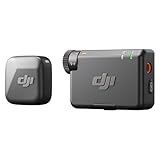
- Small but Mighty - The DJI Mic Mini lavalier microphone transmitter is small and ultralight, weighing only 10 g, [1] making it comfortable to wear, discreet, and aesthetically pleasing on-camera.
- Detail-Rich Sound - Mic Mini wireless lavalier microphones delivers high-quality audio. A 400m max transmission range [2] ensures stable recording, even in bustling outdoor environments like a busy street. 48kHz sampling & 120 dB SPL for rich, distortion-free audio, approx. 10h battery life [5].
- Record Longer - A transmitter and a receiver offer a maximum operating time of 10 hours, [5] respectively. That's enough time for high-usage scenarios like interviews.
- DJI Ecosystem Direct Connection - With DJI OsmoAudio, a transmitter can connect to Osmo Nano, Osmo 360, Osmo Mobile 7P, Osmo Action 5 Pro, Osmo Action 4, or Osmo Pocket 3 without a receiver, delivering premium audio.
- Powerful Noise Cancelling - 2 noise cancellation levels are available—Basic is ideal for quiet indoor settings, while Strong excels in noisy environments to give you clear vocals. [8]
Frequently Asked Questions
Will Elgato Wave Go work directly with a DSLR or mirrorless camera?
Elgato says Wave Go is designed for USB-C phones and computers and is not made for direct use with professional cameras such as DSLR or mirrorless models. For a camera workflow, check the camera’s supported input and the exact kit’s connection options. DJI Mic 2 lists 3.5 mm TRS analog output, but you should still confirm the receiver and any required adapter.
Can I use DJI Mic 2 with a phone or computer?
DJI lists USB-C and Lightning outputs for Mic 2, and says it is compatible with most smartphones and computers. Confirm that the receiver and any adapter match your specific device and operating system; compatibility is not guaranteed for every model or setup.
Does Elgato Wave Go record a backup on the transmitter?
No. Elgato says Wave Go sends audio to the connected phone or computer and does not record onboard. DJI Mic 2 transmitters have 8 GB of built-in storage, with DJI listing up to 14 hours at 24-bit or 11 hours at 32-bit float.
Outdated Drivers Are Slowing You Down
One free scan finds every outdated or missing driver and matches the right update for your exact hardware.Free scan · exact hardware matchWindows Errors? Fix Them Before They Spread
Repair common Windows errors and clear accumulated junk for a smoother, more stable PC - no reinstall needed.Free scan · no reinstallHow long does the battery last?
Manufacturer figures vary by model and component. Elgato lists approximately 8 hours for the Wave Go transmitter and approximately 48 hours for the Smart Handle. DJI lists Mic 3 at 8 hours for its transmitter and 10 for its receiver, Mic 2 at 6 hours for each, and Mic Mini at 11.5 hours for its transmitter and 10.5 for its receiver. These figures use manufacturer-specific tests and are not directly equivalent.
Which has the longer wireless range?
The published maximums favor DJI on paper, but the figures are tied to different test conditions. DJI lists Mic 3 up to 400 m in open, interference-free conditions and 80 m in a specified simulated high-interference test; Mic 2 is listed at 250 m FCC or 160 m CE in unobstructed outdoor conditions; Mic Mini is listed up to 400 m outdoors. Elgato lists Wave Go at approximately 30 m. Treat these as manufacturer claims, not guaranteed working distances.
Is DJI Mic 3 worth paying more for than Mic 2 or Mic Mini?
That depends on the features you need. DJI’s current comparison lists reference prices of USD $169 for Mic 3, $129 for Mic 2 and $59 for Mic Mini, but prices can vary by region and bundle. Mic 3 has listed internal recording and switchable 24-bit/32-bit float depth; Mic 2 has 8 GB storage per transmitter and detailed USB-C, Lightning and 3.5 mm TRS output listings; Mic Mini lists 24-bit audio and longer operating-time figures. Check the exact kit and current price rather than choosing from headline specifications alone.
The Bottom Line
Choose by destination and backup needs before comparing headline specs. Wave Go is intended for compatible USB-C phones and computers, with no onboard recording; DJI Mic 2 lists USB-C, Lightning and 3.5 mm TRS outputs and onboard transmitter storage. Treat range, battery and price figures as model- and bundle-specific manufacturer claims, and confirm the exact kit will connect to your device.
The Tool Desk
Outbyte Driver Updater FREEFix the driver behind crashes, sound loss and screen glitchesFind Drivers →Outbyte PC Repair FREEClear out junk files and repair common Windows errorsFree Scan →Quick Recap
Product prices and availability are accurate as of the date/time indicated and are subject to change. Any price and availability information displayed on Amazon at the time of purchase will apply.

