Helicos BioSciences’ 2009 method sequenced RNA directly by anchoring each polyadenylated molecule to a surface and reading bases through fluorescent sequencing-by-synthesis cycles. It did not first reverse-transcribe the RNA into complementary DNA (cDNA) or amplify that DNA.
The demonstration was a proof of principle, not a specification for a current sequencing service. It used femtomole quantities of poly(A)+ Saccharomyces cerevisiae RNA and showed what direct capture could reveal, while leaving important questions about reliability, scale and present-day availability unresolved.
As an Amazon Associate I earn from qualifying purchases.
What “direct RNA sequencing” meant in 2009
In the report published by Chemistry World on 23 September 2009, “direct” had a precise meaning: the instrument obtained sequence information from RNA molecules without first converting them into cDNA. The work came from Helicos BioSciences and was described in the Nature paper “Direct RNA sequencing” by Fatih Ozsolak and colleagues, electronically published on 23 September 2009 and issued in volume 461, pages 814–818 (8 October 2009).
At the time, a common route to RNA sequence information involved several transformations. RNA was copied into cDNA by reverse transcription, the DNA product was amplified, and the amplified material was then sequenced. Each manipulation could introduce selection, loss or copying artifacts. The authors presented direct reading as a way to avoid biases associated with cDNA synthesis; that rationale describes the motivation for this experiment, not a claim that every cDNA-based workflow is inaccurate or unusable.
#1 Best Overall
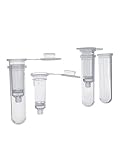
- 100pcs/Pack 6-Layer-Plasmid Purification Column with Filter
- This product is widely used in plasmid purification
- Widely used in molecular biology laboratories
The key distinction is therefore sample identity. In the Helicos approach, the molecule presented to the sequencing chemistry remained RNA. In the conventional comparison, the sequencer read a DNA copy that had been made from RNA.
How can RNA be sequenced without converting it to cDNA?
The method used a property of many mature messenger RNAs and other transcripts: a run of adenine bases at the 3′ end, called a poly(A) tail. A surface was coated with short poly(dT) oligonucleotides. Because adenine and thymine bases pair, the poly(A) tail of an RNA molecule could hybridize to a poly(dT) strand and hold the RNA on the surface.
1. Capture through the natural poly(A) tail
The experiment started with poly(A)+ RNA, meaning RNA molecules selected for having poly(A) tails. The RNA was introduced to the poly(dT)-coated surface, where complementary base pairing captured individual molecules. This is not a universal RNA-capture mechanism: transcripts without a suitable poly(A) tail would not be represented in the same way, and the demonstration’s conclusions apply to the material that was selected and captured.
Windows Errors? Fix Them Before They Spread
Repair common Windows errors and clear accumulated junk for a smoother, more stable PC - no reinstall needed.Free scan · no reinstallCrashes, No Sound, or Screen Glitches?
Random freezes, missing sound and display glitches usually trace back to one bad driver. Find and replace yours safely.Free scan · under a minute2. Keep molecules separate
Unlike a bulk library in which many copies of a cDNA fragment may be amplified together, the reported platform was designed to observe individual RNA strands. Keeping molecules spatially separated allowed the optical system to associate a fluorescent signal with a particular surface location and, therefore, with one captured strand.
3. Add complementary nucleotides in cycles
Sequencing began by synthesis. The instrument supplied nucleotides complementary to the next base in the RNA template. When a nucleotide was incorporated, its fluorescent label produced a signal. The chemistry then moved to the next cycle, with repeated nucleotide presentation and imaging. A succession of signals at one molecular position represented the sequence read from that RNA strand.
Rank #2

- High yield, up to 20 ug plasmid DNA can be extracted per prep
- Simple and reliable procedure
- High purity without contamination
- Cost effective
4. Infer the sequence from the signal record
The output was a sequence assembled from the order of incorporated bases. Because each position was read from a captured molecule rather than from an amplified cDNA population, the workflow could in principle preserve information about molecules that differ at their ends or in their processing state. That potential was one reason the authors emphasized avoiding artifacts introduced during cDNA preparation.
What the yeast demonstration actually tested
Ozsolak and colleagues tested femtomole quantities of poly(A)+ Saccharomyces cerevisiae RNA. “Femtomole” describes the amount of substance used; it does not mean that every RNA molecule in a biological sample was captured or that the experiment represented all RNA classes. The poly(A)+ selection and the surface chemistry defined the population available for sequencing.
The study reported two findings that illustrate why direct molecule-level observation could be useful:
- Transcript 3′-end heterogeneity: reads showed that transcripts from the same gene could end at different positions. Such variation can be obscured or altered when RNA is copied and processed into a library.
- Polyadenylated small nucleolar RNAs: the yeast sample included small nucleolar RNAs carrying poly(A) tails, and the experiment detected them. This was an observation in that sample, not evidence that all small RNAs are polyadenylated or equally accessible to this method.
These results demonstrate the scope of the experiment rather than a blanket guarantee. The paper did not establish equivalent performance for non-polyadenylated RNA, every transcript length, degraded clinical material or every other organism.
Direct RNA versus the then-usual cDNA route
The historical contrast can be summarized as a difference in preparation and in the molecule that reaches the detector.
| Stage | Reported direct approach | Then-common indirect route |
|---|---|---|
| Starting template | RNA molecule itself | RNA converted into cDNA |
| Capture or copying | Poly(A) tail hybridized to surface-bound poly(dT) | Reverse transcription creates a DNA copy; additional preparation and amplification follow |
| What is sequenced | Captured RNA read by sequencing-by-synthesis | Amplified or otherwise prepared cDNA library |
| Potential bias addressed by the paper | Avoids cDNA-synthesis and amplification steps that can alter representation | Additional manipulations may introduce bias or artifacts |
| Evidence in the cited 2009 work | Proof-of-principle yeast experiment | Historical comparison, not a head-to-head modern benchmark |
The table should not be read as a ranking of today’s platforms. The cited sources do not provide current error rates, read lengths, costs, throughput comparisons or routine-use data for modern alternatives.
Do these 3 things before closing this tab:
1Clear out junk files and repair common Windows errors2Fix the driver behind crashes, sound loss and screen glitches3Repair Windows errors before they cause bigger problemsHow the signal became a sequence
Sequencing-by-synthesis is easier to understand as a repeated measurement loop:
- Present a nucleotide: a complementary base is made available to the captured template.
- Allow incorporation: if that base is next in the RNA sequence, the polymerase-mediated chemistry incorporates it.
- Detect fluorescence: the incorporated label is imaged at the strand’s surface position.
- Reset for the next cycle: the chemistry removes or manages the signal-producing group so another base can be read.
- Repeat: a time-ordered series of fluorescent observations is translated into a base sequence.
The report’s description of presenting complementary nucleotides in repeated cycles explains the operating concept. The sources do not provide enough detail to specify every reagent, surface-treatment condition or signal-processing algorithm, so those should not be inferred as part of the published demonstration.
How much material and how many molecules were involved?
The Nature study used femtomole quantities of poly(A)+ yeast RNA. Chemistry World attributed a proof-of-principle scale of around 150,000 strands read in parallel. That figure belongs to the 2009 demonstration and should not be treated as a current instrument specification.
Patrice Milos, identified in the report as Helicos’ chief scientific officer, projected that the company’s commercial instrument could process many millions of molecules over seven or eight days. This was a contemporaneous expectation, not a completed run reported in the paper. The distinction matters: a projected capacity cannot be substituted for measured throughput, and a 2009 projection cannot establish what the platform can do today.
What’s actually slowing this PC down?
Pick the symptom - the matching free tool is one click away.
Rank #4
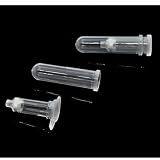
- Suitable for a wide range of samples.
- The extracted genomic DNA fragments are large and highly pure.
- Compatible with mainstream kit formulations.
- Shelf life: 12 months
- High-quality silica gel membrane with stable performance and good reproducibility.
Why direct reading was attractive
Fewer conversion steps
Removing reverse transcription and amplification from the stated workflow could reduce opportunities for a transcript to be lost, copied unevenly or altered in representation. The authors framed this as a route toward less biased transcriptome measurement.
Potentially faithful transcript ends
Because the RNA itself was captured through its 3′ poly(A) tail, the method could expose differences in transcript termination. The reported 3′-end heterogeneity finding is a concrete example of information that the authors sought to preserve.
Single-molecule observation
Reading individual strands can reveal a distribution of molecules rather than only an average over an amplified population. That is useful conceptually for heterogeneous ends and rare transcript forms, although the cited experiment does not establish performance for every rare-event analysis.
Independent reader supportYour contribution helps us test, update, and keep practical guides available for everyone.Important limitations and the 2009 reliability warning
Direct capture does not remove every source of error. It makes the capture chemistry, nucleotide incorporation, fluorescence detection and base calling central to the result. Selection through poly(A) tails also defines which molecules enter the experiment. A transcript lacking a poly(A) tail, or one whose tail is unsuitable for hybridization, is outside the demonstrated capture strategy unless another method is added.
The Tool Desk
Outbyte Driver Updater FREEScan for outdated or missing drivers - takes under a minuteDriver Scan →Outbyte PC Repair FREEClear out junk files and repair common Windows errorsFree Scan →The published experiment was narrow: one reported yeast sample, poly(A)+ selection and a proof-of-principle scale. It did not establish that all RNA classes, organisms, sample qualities or transcript lengths would behave identically.
Best Value
Chemistry World quoted Jürgen Kjems, an RNA researcher at Aarhus University, as saying: “the method’s reliability will need to be improved before it is used routinely”. That was a contemporaneous assessment in 2009. It is useful historical context, but it is not a current evaluation of any platform.
What the authors claimed—and what that claim does not prove
The paper’s final abstract sentence said: “This study provides a path to high-throughput and low-cost direct RNA sequencing and achieving the ultimate goal of a comprehensive and bias-free understanding of transcriptomes.” This is the authors’ characterization of the promise of their work in 2009. It is not independent evidence that comprehensive, bias-free transcriptomes or low-cost routine sequencing had already been achieved.
The evidence supports a more limited conclusion: the study demonstrated that poly(A)+ RNA could be captured on a poly(dT) surface and sequenced by synthesis without a prior cDNA-conversion step, and that the resulting reads revealed specific features in the yeast sample.
Is this a currently available sequencing service?
The cited 2009 report and paper do not establish whether the Helicos platform remains commercially available, supported, or used routinely today. They describe an experimental platform and a company’s expectations at that time. No present-day instrument listing, service menu, reagent supply, maintenance status or adoption data is established by these sources.
Accordingly, “direct route to RNA sequences” should be read as the title of a historical method report, not as an instruction to order a currently offered service. Anyone evaluating a present workflow would need up-to-date documentation on instrument availability, supported RNA types, sample requirements, throughput, accuracy and operating costs before drawing a practical conclusion.
Why the 2009 report still matters
The significance of the work is methodological. It separated the act of sequencing from the act of making a DNA copy. By using a natural poly(A) tail as the capture handle and reading individual molecules through fluorescent synthesis cycles, the researchers showed a different way to obtain transcript information. The yeast results made the idea testable rather than purely theoretical: they included variable 3′ ends and polyadenylated small nucleolar RNAs.
At the same time, the scale, reliability caveat and limited sample scope show why a proof of principle is not the same as a mature routine assay. The historical record supports both points: direct RNA sequencing was demonstrated, and its broader practical deployment still required validation beyond that initial report.
Free tools Windows power users keep installed
One-click scans. No signup required.
Quick Recap
Product prices and availability are accurate as of the date/time indicated and are subject to change. Any price and availability information displayed on Amazon at the time of purchase will apply.

