Digital agriculture platforms should usually complement, not replace, traditional extension services. Apps, SMS, calls, messaging groups and web tools can deliver frequent information at lower travel cost, while field agents and local organizations provide context, demonstrations, feedback and trust. Evidence shows that some digital information interventions improve fertilizer use, yields and farm income on average, but studies do not establish that digital platforms outperform face-to-face extension for every crop, location or farmer.
The practical decision is therefore about the right delivery mix. Compare channels for the same farmers, crop, geography, service objective and budget, then design digital contact and human support around the access conditions that actually exist.


As an Amazon Associate I earn from qualifying purchases.
What the comparison actually covers
“Traditional agricultural extension” and “digital agriculture platform” describe delivery approaches, not two perfectly separate institutions. Extension and advisory services are pluralistic: public agencies, private providers, nongovernmental organizations and farmer organizations may all provide advice. A conventional program may use government or community agents who visit farms, run demonstrations and organize group learning. A digital program may use mobile calls, SMS, messaging groups, smartphone applications, web portals or knowledge-management systems.
What’s actually slowing this PC down?
Pick the symptom - the matching free tool is one click away.
Many platforms bundle several services. Advice can appear alongside weather information, market prices, farm-management records or other decision tools. Conversely, an extension service that employs field agents may also use messaging, digital records or remote consultations. Judge the service a farmer receives, not the label attached to the channel.
#1 Best Overall
Traditional extension in practice
Face-to-face extension relies on interpersonal knowledge transfer. An agent can inspect a field, ask follow-up questions, demonstrate a technique, notice a problem the farmer did not report and adapt advice to local soil, climate, crop stage or household constraints. Group meetings and demonstrations can also create peer learning and social confidence.
Those strengths come with practical limits. A field worker may serve a large territory, travel long distances and have limited time for repeat visits. Advice may arrive after a pest outbreak or other time-sensitive event. The quality of service depends on staffing, training, transport, supervision and incentives.
Digital agriculture platforms
Digital extension distributes information through communication technologies. A farmer might receive a voice call, send a question in a messaging group, read an SMS, watch an offline video, use a smartphone app or access a web platform through a shared device. Platforms can send reminders repeatedly and coordinate information from several services.
The Tool Desk
Outbyte Driver Updater FREEFix the driver behind crashes, sound loss and screen glitchesFind Drivers →Outbyte PC Repair FREEClear out junk files and repair common Windows errorsFree Scan →Digital delivery is not automatically impersonal or one-way. A call or chat can support questions and answers, and a moderated group can connect farmers with advisers and peers. However, a digital interface cannot be assumed to provide the same diagnosis, demonstration or trust as a skilled person who knows the locality.
What the evidence says about outcomes
The strongest quantitative result in the available evidence is a 2025 meta-analysis by Beach, Milliken, Franzen and Lapidus, published in Global Food Security. It combined estimates from 20 studies of digital information interventions implemented from 2005 through 2019: 15 studies in Sub-Saharan Africa, four in India and one in Cambodia.
| Outcome | Mean impact reported | 95% confidence interval |
|---|---|---|
| Fertilizer adoption | 23% increase | 6% to 40% increase |
| Yield | 6% increase | 2% to 9% increase |
| Farm income | 6% increase | 2% to 9% increase |
Improved-seed adoption effects were not statistically significant in that analysis. The averages describe digital information interventions compared with their study controls; they are not a head-to-head test against traditional extension. The authors found considerable variation between studies and too few comparable observations to reliably separate results by delivery modality, human assistance, geography or farmer type. The figures therefore support the possibility of meaningful benefits, not a claim that every platform will produce those gains or beat a field-based service.
Evidence on how people use digital tools adds important context. Coggins and colleagues’ 2022 study interviewed 40 developers across 21 countries and 101 users in Bihar, India. Participants repeatedly identified device access, electricity, network coverage, literacy, language, relevance and trust as barriers. The study reports that involving users in design and allowing tools to adapt to their needs can improve usability and use. Its defined interview sample is qualitative evidence, not a population-wide adoption rate.
Rank #2

- SMART GNSS GUIDANCE & AB LINE PLANNING – Set your field boundary and working width, then let the system generate guidance lines, record driving tracks, and show real-time deviation alerts. Helps you keep straighter passes, reduce overlaps and skips, and work with more confidence in large fields
- MULTI-GNSS, MULTI-FREQUENCY POSITIONING – Supports GPS, GLONASS, GALILEO, and BDS for stable satellite positioning in field operations. The large 9-inch display shows guidance lines, field boundaries, tractor position, and route direction clearly at a glance
- SAVE FIELDS & TRACKS FOR REUSE – Record, name, save, and recall multiple fields and task routes for repeat seasonal work. Easily return to previous field boundaries and guidance tracks for plowing, seeding, spraying, fertilizing, mowing, and other field tasks
- FAST SETUP & WIDE TRACTOR COMPATIBILITY – Designed for most tractors with a suitable metal mounting surface and cab window. The magnetic GNSS antenna mounts outside, while the suction-cup monitor bracket attaches inside the cab with no drilling required. Set up in about 3 minutes and move between machines when needed
- BUILT FOR REAL FARM CONDITIONS – The outdoor GNSS antenna is built to handle rain, dust, mud, and tough field environments, while the monitor stays protected inside the tractor cab. Clear on-screen guidance helps operators stay on track during long working days and low-visibility conditions
A 2019 World Bank report describes one offline approach: Digital Green had produced and disseminated more than 5,000 locally relevant videos in over 50 languages. Communities with limited electricity and internet screened the videos offline. That number describes the program at the time of publication, not current reach or measured impact. The same report says evaluations of e-extension approaches were ongoing.
“At the same time, digital technologies are often a complement to field advisory visits, rather than a substitute.” — World Bank, Future of Food: Harnessing Digital Technologies to Improve Food System Outcomes (2019)
Where each model has an advantage
Compare channels for an identical service objective. A platform that sends weather alerts is not serving the same function as an agent diagnosing a disease in a field. The following dimensions help make the comparison fair.
| Decision dimension | Digital platforms | Traditional extension | What to verify locally |
|---|---|---|---|
| Reach and frequency | Can send information to many users repeatedly and reduce some travel or transaction costs. | Usually reaches fewer farmers per worker and depends on visit schedules. | Actual coverage, response rates, repeat use and travel time. |
| Local specificity and timeliness | Can target messages by crop, place or timing, but generic or outdated content may mislead. | Agents can interpret local conditions during a visit and adjust advice in conversation. | Whether content is current, locally relevant, understandable and available in the right language. |
| Interaction and demonstration | Calls and chats permit rapid questions; videos can show procedures. | Agents can inspect fields, demonstrate techniques and observe unreported problems. | Need for physical diagnosis, hands-on practice and follow-up. |
| Access and inclusion | Requires an accessible channel, electricity or charging, network access and sufficient literacy or language support. | Does not require a personal phone, data plan or digital skills, but depends on staff availability and safe travel. | Device ownership, shared-device arrangements, gender, wealth, education, language and trust. |
| Institutional capacity and cost | Message delivery can be inexpensive at the margin, but platforms require design, content, data, support and maintenance. | Requires trained personnel, transport, supervision and time for visits. | Total cost of delivery and support, not only the cost of sending a message. |
| Feedback and accountability | Usage logs and questions can reveal reach and response times, but silent non-users remain hard to see. | Agents can observe participation and receive verbal feedback, though records may be less consistent. | How complaints, unanswered questions and excluded groups are identified and resolved. |
Access is the first test of a digital service
A technically capable platform fails if the intended farmer cannot use it at the moment advice is needed. Assess access before choosing an app-centered design.
- Device: Determine whether farmers own a suitable phone, share one with household members or rely on a community device. A smartphone is optional; calls, SMS, messaging, shared phones and offline media can support digital advice without one.
- Power: Check charging availability and the reliability of electricity. Offline content or low-bandwidth formats may be necessary where charging is irregular.
- Network: Map where mobile and data coverage is dependable. A service that works only under a strong connection excludes farmers in dead zones.
- Literacy and language: Text-heavy menus can exclude people who prefer voice, images or local-language explanations. Translation alone is insufficient if examples and terminology are unfamiliar.
- Gender, wealth and education: Household phone control, subscription costs and confidence using technology can differ within a community. Measure who actually receives and acts on advice, not just how many accounts were created.
- Trust and relevance: Farmers may ignore messages from an unknown source or advice that does not fit their crops, inputs, market or risk tolerance. Local advisers and farmer organizations can establish credibility.
Coggins et al. found that user-driven tools such as calls and chat groups were often used more than externally designed specialist applications. That finding does not make every call or group effective; it shows why a service should begin with observed user behavior rather than an assumption that an advanced app is preferable.
Why local specificity matters more than novelty
Timely advice must be actionable for a particular farming concern. A message about fertilizer can be technically correct yet unusable if it ignores the available product, soil conditions, crop stage, rainfall or cash constraints. A pest warning needs a location, crop and time window. A market-price feed needs coverage of the market where the farmer can actually sell.
Traditional agents create local specificity through conversation and observation. Digital systems can create it through well-maintained location, crop and season data, but that requires reliable content management and a way to correct errors. A platform should show when information was updated, explain uncertainty where appropriate and provide a route to ask a human adviser.
Rank #3

- 【High-Precision Positioning Technology】The SMA10 GPS for tractors for spraying integrates multiple positioning technologies including PPP,SBAS and RTK ensuring positioning accuracy up to 2.5cm for manual steering, helping users stay on the planned path and enhancing operational efficiency
- 【Versatile Guidance System】The SMA10 farm tractor GPS guidance systems offer a variety of guidance lines such as straight, curve, A+ line, pivot, and line group to cater to diverse field shapes and operational needs. Facilitates guidance line translation and seamless data transfer across various formats, ensuring top-tier performance at a competitive, budget-friendly price point
- 【Implement Management】Equipped with a wireless module, the SMA10 tractor agricultural GPS system offers VT/TC functionalities for real-time equipment monitoring and control, simplifying operations such as seeding, fertilizing, and spraying, thereby substantially increasing work efficiency and reducing waste
- 【High-Performance Hardware Specifications】The SMA10 Tractor GPS System for spraying fields feature a 10.1 inch high-resolution display, 2.0 GHz CPU, 6 GB RAM, and 128 GB ROM storage, Wi-Fi 802.11a/b/g/n/ac, and Bluetooth 5.0, ensuring smooth operation of the system
- 【Support and Warranty】Relax with the assurance of a one-year warranty and ongoing lifetime technical support for a worry-free experience. Get up to speed with ease using our comprehensive user manual and step-by-step video tutorials. The tractor guidance system's software included in the collector is permanently valid, and we offer a commitment to perpetually free software upgrades and updates to keep your system current and efficient
Demonstration remains a distinct capability. A video can show a procedure consistently and can be replayed, while an agent can adapt a demonstration to the farmer’s tools and correct mistakes in real time. The choice depends on whether the task needs repeatable visual instruction, physical inspection, or both.
Costs and institutional capacity
Comparing the price of a message with the cost of a farm visit gives a misleading answer. Digital delivery has fixed and continuing costs: service design, software, content production, translation, hosting, data protection, moderation, user support, monitoring and updates. Devices, charging and connectivity may be borne by farmers or programs. A platform that is cheap to launch can become expensive to maintain when content, systems or staff change.
Traditional extension has visible recurring costs for recruitment, training, salaries, transport, supervision and demonstrations. It also has an institutional advantage when a trusted network already exists. At the same time, agencies may lack technical and human resources, investment and incentives to adopt new roles. Digital transformation therefore requires capacity building for advisers as well as farmers.
Budget decisions should compare the full cost of delivering a defined outcome. For example, estimate the cost per farmer who receives, understands and uses a recommendation, not merely the cost per SMS sent or app download. Include the cost of reaching people who need assisted access and of answering questions that automated content cannot resolve.
Can digital platforms replace traditional extension?
There is no general evidence-based “yes” or “no.” Replacement is plausible only when the digital channel can perform the required service for the target population and a credible alternative exists for people it cannot reach. For many programs, the more defensible design is a layered service:
Recommended Free Tools
- Digital broadcast: Send timely alerts, reminders, forecasts or market information through the channel most farmers can access.
- Digital interaction: Offer a phone line, moderated group or messaging route for questions and reports.
- Human escalation: Route complex, uncertain or high-risk cases to an adviser who can call or visit.
- Local demonstration: Use field days, plots or community screenings for practices that require seeing and doing.
- Feedback and revision: Use farmer questions and non-use patterns to correct content, language and timing.
This approach treats technology as an extension of the service rather than a substitute for every function. It can also make field visits more productive: an agent can review questions submitted remotely, prioritize urgent cases and use digital material during a demonstration.
A practical decision framework for program managers
1. Define the service outcome
Specify whether the goal is awareness, adoption, diagnosis, skill practice, input selection, market access or ongoing coaching. A one-way alert may be adequate for awareness; diagnosis and skill-building usually need interaction or demonstration.
Rank #4
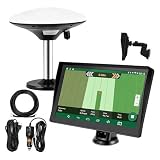
- Complete Tractor Guidance System: Includes stable software to guide tractor along AB lines, featuring a 7 inch waterproof navigator display with high-precision GNSS Board, high precision GNSS GPS Antenna, and all necessary accessories cables and tools
- Smart GNSS Guidance & AB Line Planning: Generates straight AB lines or curve paths based on your field boundary and working width, records driving tracks and provides real-time deviation alerts to keep passes straight at night or in low visibility conditions
- Multi-Frequency Positioning (L1L5): Large 7 inch screen displays guidance lines, field boundaries, and tractor position in real time. The L1L5 multi-frequency module delivers higher accuracy and more stable signals than single-frequency GPS, keeping every pass on track even near trees or buildings. The device needs to be connected to either a cell phone hotspot or a personal mobile network
- Wide Application Compatibility: Tractor GPS navigation system can be widely used for sowing, cultivating, trenching, ridging, spraying pesticide, transplanting, land consolidation, harvesting and other work scenes. Suitable for John Deere, Case IH, New Holland, Massey Ferguson, Fendt, Kubota, and most tractors. Suction-cup tablet bracket mounts on cab window with no drilling required. Swap between machines in approximately 3 minutes
- Google Maps & 48 Languages: Built on Google Maps for use in most regions worldwide, suitable for international farms or contractors. 48 language options let operators work in their native language, reducing training time and errors
2. Profile the target farmers
Document crops, language, literacy, phone ownership, network and electricity conditions, gender and age differences, seasonal workload and trust in institutions. Test the profile with farmers rather than relying on administrative averages.
3. Match channel to task
Use voice for low-literacy or conversational support, SMS for short reminders where phones and networks are reliable, messaging groups for questions and peer exchange, apps or web tools for richer records, and offline video where connectivity is limited. Retain visits for physical inspection, demonstrations and cases that digital channels cannot safely resolve.
Do these 3 things before closing this tab:
1Scan for outdated or missing drivers - takes under a minute2Repair Windows errors before they cause bigger problems3Fix the driver behind crashes, sound loss and screen glitches4. Design with users
Prototype messages, menus, languages and escalation routes with farmers. Observe whether they can find, understand and act on advice. User involvement is especially important when a platform changes its workflow or asks farmers to enter data.
5. Establish human responsibility
Name the person or organization responsible for answering questions, correcting harmful information, updating content and protecting user data. A platform without a responsive service team can increase confusion rather than access.
6. Pilot and compare fairly
Measure a digital service against the existing service or a clearly defined alternative for the same crop and population. Record baseline conditions and implementation quality. Do not infer that digital delivery caused an outcome from usage numbers alone.
Independent reader supportYour contribution helps us test, update, and keep practical guides available for everyone.How to evaluate whether a platform is working
Downloads and registered users are only reach indicators. A useful evaluation follows the chain from access to outcome:
Quick wins for a faster PC:
Fix the driver behind crashes, sound loss and screen glitchesFind Drivers →Repair Windows errors before they cause bigger problemsFix Now →- Reach: Who received a call, message, video or visit, and how often?
- Use: Did farmers open, listen to, watch or discuss the material? Could they return to it later?
- Understanding: Can users explain the recommendation and its limits in their own words?
- Behavior: Did they adopt the recommended practice, fertilizer or management action?
- Production and welfare: What happened to yield, income, costs, risk and labor?
- Equity: Which groups benefited, and which were missed because of device, language, gender, wealth or connectivity barriers?
- Service quality: How quickly were questions answered, how often was content corrected, and how many cases required field support?
Evaluation should report uncertainty and variation. The 2025 meta-analysis found positive average effects for several outcomes but could not reliably identify which delivery modes, places, farmer groups or levels of human assistance generated them. A local pilot can therefore inform a local decision without proving universal superiority.
Best Value
Common failure modes and fixes
Launching an app where basic access is unreliable
If electricity, data coverage or compatible devices are scarce, app-only delivery creates a barrier before advice begins. Add voice, SMS, shared-device and offline options, and keep a field or community route available.
Sending generic advice at the wrong time
Messages that ignore crop stage, local weather or available inputs are easy to disregard. Segment content by location and season, show update dates, and let farmers report when recommendations do not fit.
Treating registration as adoption
An account does not show that a farmer understood or used advice. Track active use, comprehension, practice change and outcomes, including people who never register.
Removing human support too early
Complex diagnoses, demonstrations and trust-building cannot always be automated. Keep escalation to trained advisers and use digital questions to target visits more effectively.
Designing for specialists instead of farmers
Complicated forms, unfamiliar language and excessive data entry discourage use. Test with farmers, simplify tasks, and provide local-language voice or visual formats where appropriate.
Ignoring institutional incentives
Advisers may be expected to maintain a platform without time, training or recognition. Define roles, provide technical support and align digital work with supervision and performance systems.
What this means for farmers and organizations
For a farmer, the best channel is the one that provides understandable, trusted and timely help in the circumstances of the farm. A basic phone with a reliable call or messaging service may be more useful than an advanced application that cannot be used offline. A field visit remains essential when a problem needs inspection, a technique needs practice or a recommendation carries substantial risk.
Free tools Windows power users keep installed
One-click scans. No signup required.
For an extension organization, digital tools can extend the frequency and reach of contact, collect questions before visits and distribute locally produced demonstrations. The organization still needs advisers who can interpret information, respond to exceptions and maintain relationships with communities.
For governments, NGOs and farmer organizations, digital inclusion is part of extension policy, not a separate technology project. Investment should cover connectivity and access barriers, adviser skills, content governance, user participation, monitoring and safeguards. Pluralistic extension systems can combine public services, private or nonprofit expertise and farmer organizations while keeping clear responsibility for quality and inclusion.
Bottom line: choose a delivery mix, not a winner
Digital agriculture platforms can make advice more frequent, searchable and scalable, and the available meta-analysis reports average gains in fertilizer adoption, yield and income for studied digital information interventions. Traditional extension remains valuable for local diagnosis, demonstration, interpersonal trust and support for farmers who cannot reliably use digital channels. Because current evidence does not compare every platform with face-to-face services under the same conditions, neither model is universally superior. Start with the service outcome and farmers’ real access, then combine digital contact with human and local support wherever the task requires it.
Quick Recap
Product prices and availability are accurate as of the date/time indicated and are subject to change. Any price and availability information displayed on Amazon at the time of purchase will apply.

