No. The 2006 Sheffield work did not produce a working nanorobot. It demonstrated a pH-responsive synthetic muscle: a self-assembled block copolymer that repeatedly bent a cantilever while researchers measured its force and power. The nanorobot was a possible future application, not a completed machine.
The experiment matters because it showed how molecular-scale chemical changes could be amplified into visible mechanical movement. The paper reported a peak power of 20 mW kg−1 when the actuator was coupled to a chemical oscillator. Chemistry World illustrated the material’s affine scaling with an example in which 10 nanometres of molecular deformation corresponded to 1 millimetre of movement across five orders of magnitude.
As an Amazon Associate I earn from qualifying purchases.
What the Sheffield team actually built
Tony Ryan’s team at the University of Sheffield made a self-assembled block copolymer. Its structure contained nanoscopic hydrophobic domains dispersed through a weak polyacid matrix. Rather than using gears, bearings or a conventional motor, the device used a chemical response in the polymer to create motion.
When the material experienced a change in pH, it deformed. The researchers incorporated the polymer into a device connected to a cantilever, allowing the deformation to do measurable mechanical work. During an oscillating chemical reaction, the cantilever moved up and down as the polymer repeatedly changed shape. This was a laboratory actuator experiment, not a free-swimming or task-performing robot.
#1 Best Overall
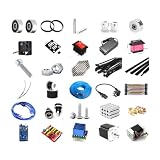
- This project was designed by Arctos Robotics. We have simply assembled the components needed for the robot based on this project and selected high quality parts to make it easier for Arctos v2.0 enthusiasts to purchase parts kits. The project website is located at arctosrobotics.com
- Powerful Components: Includes Arctos V2.0 Robotic Hardware Kit with six high-torque motors, assorted bearings, gears, pulleys and more for building complex robots.
- Easy Assembly: Extensive documentation and tutorials guide assembly, with all required hardware, fasteners and tools included for smooth construction.
- Endless Customization: Modular design allows for flexible configurations to achieve a wide range of robotic functions and motions for any project.
- Lifetime Support: Backed by expert technical assistance for help with any stage of your builds, from initial planning to ongoing programming and improvements.
The primary paper, “Reciprocating Power Generation in a Chemically Driven Synthetic Muscle,” was published online in Nano Letters on December 10, 2005, and appeared as a 2006 research result. Its DOI is 10.1021/nl0520617; the same paper is indexed in PubMed as PMID 16402790.
How a pH change became mechanical movement
A polymer with two kinds of domains
The block copolymer assembled itself into a material with hydrophobic nanodomains inside a weak polyacid environment. That organization is important: the polymer was not just a uniform lump whose entire shape changed at once. Its nanoscale domains and surrounding matrix responded together when the chemical environment changed.
The experiment used pH as the trigger. A change in acidity altered the state of the polyacid portion, producing a change in the material’s dimensions. Reversing the chemical condition reversed the deformation, so the actuator could reciprocate rather than make only one one-way movement.
Do these 3 things before closing this tab:
1Fix the driver behind crashes, sound loss and screen glitches2Clear out junk files and repair common Windows errors3Scan for outdated or missing drivers - takes under a minuteAn oscillating reaction supplied the cycle
The researchers coupled the polymer to a chemical oscillator. Instead of an operator manually switching the pH for every movement, the oscillating reaction repeatedly drove the chemical state back and forth. That made the actuator a free-running chemical motor in the specific laboratory arrangement reported by the paper.
“Free-running” describes the coupled chemical oscillator and actuator operating through repeated cycles. It does not mean that the material contained a complete autonomous robot with its own navigation, sensing, control software or mission.
Rank #2
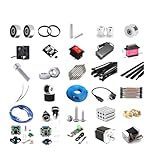
- Closed loop provides better precission, greater speeds and overall better performance.
The cantilever made the work visible and measurable
A cantilever is a beam fixed at one end and free at the other. Connecting the synthetic muscle to one let the team observe displacement and determine the mechanical effect of the polymer’s deformation. Chemistry World described the cantilever moving up and down during the oscillating reaction. The setup converted a nanoscale material response into a macroscopic motion that could be measured as force and power.
The key measurements and what they mean
| Measurement or description | Value | What it establishes |
|---|---|---|
| Peak power from the chemically driven muscle | 20 mW kg−1 | The peak power reported in the Nano Letters paper when the actuator was coupled to a chemical oscillator. |
| Illustrative affine scaling | 10 nm of molecular deformation to 1 mm of movement | Chemistry World’s explanation of how small molecular changes could add up to a much larger displacement across five orders of magnitude. |
| Observed mechanical action | Reciprocating cantilever motion | The polymer performed work on a cantilever during the oscillating chemical reaction. |
The 20 mW kg−1 figure is a peak value, not a claim that the device delivered that output continuously in every operating condition. It is also a power density for the reported laboratory actuator, not a specification for a nanorobot. A useful robot would need additional information such as sustained output, force at a particular load, cycle life, response time, efficiency and control range; those are separate engineering questions from the peak figure in the abstract.
Quick wins for a faster PC:
Clear out junk files and repair common Windows errorsFree Scan →Fix the driver behind crashes, sound loss and screen glitchesFind Drivers →How 10 nanometres can become 1 millimetre
Chemistry World called the material affine and used a striking example: a 10 nm molecular deformation could correspond to 1 mm of movement. The ratio is 100,000 to 1, or five orders of magnitude. In practical terms, many local changes in the polymer are coordinated so that their effects add across a larger structure.
This is an amplification of displacement, not the creation of extra energy. A large movement can still produce only modest force, and friction or a load can reduce the displacement. The example explains why a molecular actuator can move a visible beam; it does not show that any arbitrary object can be moved, nor does it establish the force needed to propel a robot through liquid or carry a payload.
The scaling description should therefore be read as a property of the demonstrated material arrangement. It explains the connection between molecular chemistry and cantilever motion in this experiment, rather than serving as a universal design rule for all synthetic muscles.
Rank #3

- Hands-On STEM Robot Learning---This STEM robot kit combines coding, electronics, and robotics into a fun, hands-on learning experience. Powered by an ESP32 controller and guided by 16 story-based tutorials, this robotics kit for kids helps children ages 8–12 and 12–16 build real-world STEM skills. Ideal for robotics for kids, classroom teaching, or at-home learning.
- 3 Programming Languages for All Skill Levels---This coding robot kit supports Scratch, Arduino, and Python, making it suitable for beginners and advanced learners alike. Scratch block coding is perfect for younger kids and first-time coders, while Arduino and Python support deeper learning for teens and tech enthusiasts. A flexible programmable robot designed to grow with students.
- Mobile-Friendly Coding – Learn Anytime, Anywhere---Unlike many traditional robot kits, this robotics kit supports programming on computers, laptops, tablets, and mobile devices like smartphones and iPads. Kids can code directly on mobile devices, making it especially suitable for schools, training centers, and self-learning at home. A practical STEM kit for kids in modern learning environments.
- Build Your Own Robot – Beginner-Friendly DIY---This robot building kit includes HD videos and illustrated step-by-step instructions, allowing kids to assemble the robot independently or with parents. No soldering required. The building process strengthens hands-on skills, patience, and confidence—making it a strong choice among STEM toys for kids and engineering kits for kids. Tutorial path: ACEBOTT Official Website → Resources → WIKI & Assembly Video Note: Batteries not included.
- App & Remote Control for Interactive Learning---Control the robot using the smartphone App (iOS & Android) or the included IR remote. Kids can instantly see how their code affects movement and behavior, reinforcing core coding logic. This robot kit keeps learning engaging while remaining easy to use for beginners.
Why the result was connected to a future nanorobot
Ryan presented the synthetic muscle as one component that might eventually contribute to a working nanorobot. His description emphasized a biological design approach rather than a miniature version of a conventional machine:
“The nanobot is designed on biological principles rather than mechanical engineering principles.”
He also identified the unresolved integration problem: “we’ve just got to work out how to fit the force generator – the motor – into a membrane.” Those comments describe a research direction. They do not report that the motor had already been installed in a membrane or that a complete robot had been assembled.
Geoffrey Ozin, identified in the 2006 Chemistry World account as a nanochemistry expert at the University of Toronto, called the work “another creative and clever step towards helping to show the way to biological and abiological powered nanobots that can perform a useful task.” His statement is an assessment of the work’s potential, not evidence that the Sheffield actuator itself performed a useful robotic task.
What the experiment proves
- A self-assembled block copolymer can change shape in response to pH.
- The deformation can be coupled to a cantilever so that the material performs mechanical work.
- An oscillating chemical reaction can drive repeated, reciprocating motion rather than a single transient bend.
- The coupled system produced a reported peak power of 20 mW kg−1 in the paper’s measurement.
- Coordinated molecular changes can produce a much larger displacement at the device scale, illustrated by the 10 nm-to-1 mm example.
Together, these findings establish a chemically driven actuator and a way to quantify its output. They are a proof of principle for a synthetic muscle mechanism, not a demonstration of a finished nanorobot.
What’s actually slowing this PC down?
Pick the symptom - the matching free tool is one click away.
Rank #4

- Highly-integrated Includes motor, driver circuitry, planetary reducer, and dual magnetic encoders in a lightweight 310g design
- Simplified Wiring Features a "One-in-One-out" wiring design, enabling easy daisy-chain connections for complex robot joints
- Dual Encoder Features 14-bit absolute magnetic encoders for high-precision position control
- Wide Voltage Compatibility Supports 24-60V input range (Rated 48V), optimized for modern battery-powered robots
- High Torque Density Delivers 14 N.m peak torque with a 10:1 reduction ratio using machined steel gears
What it does not prove
- It does not show that the Sheffield team built a nanorobot.
- It does not demonstrate locomotion, steering, sensing, communication or a biological payload.
- It does not show that the actuator was integrated into a membrane.
- It does not establish that the device could operate in a living organism or in an application environment.
- It does not establish a practical force level for moving a robot, because the cited result reports peak power and the article’s account says Ryan acknowledged that it was “not a strong muscle.”
- It does not provide a product, kit or consumer-ready component.
The distinction matters because “nanorobot” can mean very different things. In a speculative design discussion it may refer to a future machine assembled from molecularly inspired components. In an experimental report it should not be taken to mean that a complete autonomous robot already exists.
How to read the 20 mW kg−1 power figure
Power describes the rate of doing mechanical work. The reported 20 mW kg−1 peak value says how much peak mechanical power the chemically driven actuator generated relative to its mass in the reported setup. It is useful for comparing actuator demonstrations made under defined conditions, but it is not a complete performance profile.
For a robot designer, several other quantities would determine whether the actuator is useful:
- Force: the load the actuator can move at a specified displacement.
- Stroke: how far it can move under that load.
- Cycle life: how many chemical oscillations it can survive before degrading.
- Control: whether the timing, direction and amplitude can be adjusted on demand.
- Integration: how the actuator, chemical source and surrounding membrane can be packaged together.
- Environment: whether the polymer remains stable in the fluid, temperature and chemical conditions required by the intended application.
The 2006 sources do not report all of those values. A careful account should therefore keep the power number attached to its qualification: it is the paper’s peak result for a chemically oscillated laboratory actuator.
Crashes, No Sound, or Screen Glitches?
Random freezes, missing sound and display glitches usually trace back to one bad driver. Find and replace yours safely.Free scan · under a minutePC Slower Than It Used to Be?
A free scan shows the junk files, broken settings and background clutter dragging Windows down - then fixes them in one click.Free scan · Windows 10 & 11Reconstructing the reported experiment
- Assemble the polymer. The team formed the block copolymer with hydrophobic nanodomains in a weak polyacid matrix.
- Apply a chemical change. Varying pH caused the polymer to deform.
- Connect the actuator to a cantilever. The cantilever provided a mechanical load and a visible displacement signal.
- Drive repeated cycles. A chemical oscillator alternated the chemical conditions, making the polymer move back and forth.
- Observe the motion. The cantilever rose and fell as the actuator changed shape.
- Measure output. The team measured the generated force and reported peak power for the coupled chemical motor.
This sequence explains the title’s wording. The synthetic muscle “powers hopes” because it supplies a demonstrated type of force generator that could, in principle, become one subsystem of a future nanorobot. The experiment itself stopped at the actuator-and-cantilever stage.
Best Value

- 35+ Guided Electronics Projects: Progress from LEDs and buttons to RFID access, real-time clocks, motion and distance sensing, environmental monitoring, motor control and interactive displays for STEM learning, coding clubs and maker projects
- More I/O and Memory for Larger Builds: The MEGA 2560 R3 provides 54 digital I/O pins, including 15 PWM outputs, 16 analog inputs, 4 hardware serial ports and 256 KB flash for projects that combine more sensors, controls and displays
- 200+ Components for Prototyping: Includes LCD1602, RC522 RFID, RTC, DHT11, HC-SR501 PIR, ultrasonic and water-level sensors, GY-521, MAX7219, keypad, joystick, rotary encoder, relay, SG90 servo, stepper motor, DC motor, breadboard and more
- Learn, Modify and Create: Follow 35+ guided lessons with example code, then adjust sensor thresholds, timing, display text, motor behavior and control logic to turn structured exercises into access systems, monitors, alarms and interactive projects
- Organized for Repeatable Learning: Pre-soldered modules, a solderless breadboard, storage case and small-parts box reduce setup time and keep sensors, LEDs, ICs, wires and other components easy to find between projects
Why Ryan called it a weak muscle
Ryan’s qualification that the actuator was “not a strong muscle” is central to interpreting the result. The work’s appeal was not that it had already matched biological muscle or conventional motors. Its appeal was that the material was scalable: molecular events could be organized into a larger displacement and repeated through chemical oscillation.
Strength and scalability are different properties. A mechanism may be easy to reproduce over a larger area while still producing limited force. Conversely, a strong actuator may be difficult to manufacture in the tiny, integrated form required for a nanorobot. The Sheffield result addressed the chemical actuation and scaling idea; it did not solve the complete balance of force, size, control and packaging.
The historical significance of the 2006 report
The report appeared at a time when researchers were exploring whether soft materials and chemical reactions could perform functions normally associated with machines. The Sheffield experiment offered a bridge between those areas: a polymer designed through molecular self-assembly acted as a mechanical element, and a chemical oscillator supplied repeated operation.
Recommended Free Tools
That bridge is why the work attracted nanorobot speculation. Biological systems routinely convert chemical energy into motion through molecular machines, while engineered robots traditionally rely on rigid mechanical parts and external power supplies. Ryan’s comments framed the proposed nanobot around the former model. The demonstrated actuator provided one plausible ingredient, but the sources do not claim that the rest of the biological-style system had been built.
The accurate answer to the headline question
“Synthetic muscle powers hopes for building nanorobot” should be read as a report about an enabling component and a future goal. Sheffield researchers built and measured a pH-responsive polymer actuator that moved a cantilever. The Nano Letters paper reported 20 mW kg−1 peak power when the actuator was coupled to a chemical oscillator, and Chemistry World explained its large-scale displacement through affine molecular-to-device scaling.
No cited source says that the team built a complete nanorobot. The motor still had to be integrated into a membrane, and Ryan explicitly described the actuator as weak. The lasting result is therefore a measured synthetic muscle mechanism, not a finished microscopic robot.
Quick Recap
Product prices and availability are accurate as of the date/time indicated and are subject to change. Any price and availability information displayed on Amazon at the time of purchase will apply.
Free tools Windows power users keep installed
One-click scans. No signup required.

