What’s actually slowing this PC down?
Pick the symptom - the matching free tool is one click away.
If you know Stardew Valley, you already understand the basic decision behind a Dungeons & Dragons session: choose what to do with limited time, prepare the right tools, and decide whether a risky opportunity is worth the possible reward. D&D differs in how it resolves those decisions. You describe an intention in ordinary language, the Dungeon Master (DM) interprets the situation, and dice and rules determine uncertain outcomes.
This guide uses Stardew Valley only as a teaching metaphor. The games do not share a rules engine, and a Stardew activity does not map one-to-one to a D&D class, die roll, or combat action. The examples below identify the edition where that matters: the 2014 D&D Basic Rules and the newer SRD v5.2.1 are related references, not interchangeable lists of every option in the game.
As an Amazon Associate I earn from qualifying purchases.
Is D&D like Stardew Valley?
Only in the broadest player experience. In both games you choose priorities, manage risk, and live with consequences. In Stardew Valley, you normally select a defined activity and the game applies its programmed rules. In D&D, you can attempt an action that is not a menu option at all: distract a guard with a story, climb a ruined tower, bargain with a monster, or combine equipment in an unusual way. The DM decides whether the attempt is possible and which rule resolves the uncertainty.
Quick wins for a faster PC:
Clear out junk files and repair common Windows errorsFree Scan →Scan for outdated or missing drivers - takes under a minuteDriver Scan →Repair Windows errors before they cause bigger problemsFix Now →| Question | Stardew Valley | D&D |
|---|---|---|
| How do you express an action? | Choose an available game action, tool use, dialogue option, or destination. | Declare what your character attempts in natural language; the DM asks for details when needed. |
| How is uncertainty resolved? | The game’s fixed simulation rules calculate the result. | Rules may call for a die roll against a target number such as a Difficulty Class (DC) or Armor Class (AC). |
| How does time feel? | A day advances through a real-time routine with limited energy and a bedtime deadline. | Exploration can be free-form, while a fight is divided into rounds and turns. |
| What defines your character? | Skills, tools, relationships, inventory, and chosen activities. | Class features, ability scores, proficiencies, equipment, spells, and your character’s decisions. |
| What does failure cost? | You may lose time, energy, health, items, or an opportunity. | The fictional situation changes: an alarm may sound, an attack may miss, a resource may be spent, or a new problem may appear. |
That difference in agency is the key adjustment for a Stardew player. Instead of asking which button performs an action, ask, “What exactly am I trying to accomplish, and what would I risk by trying?”
#1 Best Overall

- 49PCS SET: Includes 49 polyhedral dice in 7 different color sets. Each 7-piece set contains D4, D6, D8, D10, percentile D10, D12 and D20, giving you plenty of options for characters, campaigns and tabletop play
- CLEAR NUMBERS: High-contrast numbers make each die quick and easy to read during gameplay. Different colors also help players distinguish their sets when sharing dice around the table
- ACRYLIC DICE: Made from lightweight acrylic with smooth polished surfaces and defined edges for a comfortable feel in hand, ideal for repeated rolling during RPG campaigns and game nights
- 7 COLOR SETS: Use different sets for characters, share them with friends or keep extras ready for larger gaming sessions. Seven complete sets offer more flexibility for RPGs, tabletop games and group play
- 7-POCKET BAG: The included drawstring bag features 7 separate compartments to keep each dice set sorted and organized, making all 49 dice easy to store and carry between gaming sessions
What is a class in D&D?
A class is your character’s vocation and package of talents, defenses, and tactics. Wizards of the Coast’s D&D Basic Rules, Version 1.0 puts it plainly: “Every adventurer is a member of a class.” The same rules describe a class as broadly covering “a character’s vocation, what special talents he or she possesses, and the tactics he or she is most likely to employ.”
Think of class as the closest D&D equivalent to choosing a play style, not as a single job title in the Stardew sense. Your class influences what your character can do reliably, but your background, ability scores, equipment, spells, and role-play choices also matter. Two characters with the same class can still play very differently.
What a class gives you
- Proficiencies: Training with particular weapons, armor, tools, skills, or saving throws.
- Hit points and defenses: A starting hit-point framework and features that affect how safely you can stay in danger.
- Class features: Special abilities gained as your character advances.
- Available tactics: The actions, spells, reactions, and resource-management choices that make the class distinctive.
These benefits are not a rigid script. A fighter can negotiate, a wizard can carry a sword, and a cleric can investigate a crime. Class tells you where your strongest tools are; it does not forbid creative solutions.
Four illustrative archetypes
These examples are a small sample, not a complete list of D&D classes.
- Fighter: Built around direct martial capability. A fighter is a natural choice when you want dependable weapon attacks, armor, and tactical positioning.
- Rogue: Emphasizes skills, stealth, precision, and exploiting an opening. A rogue often contributes before a fight starts as well as during it.
- Cleric: Combines support, protection, and divine magic. The exact balance depends on the character’s choices and subclass, but helping allies and controlling danger are common strengths.
- Wizard: Uses learned spellcasting and a broad selection of magical solutions. A wizard may be fragile in a direct exchange but exceptionally flexible when the player chooses the right spell.
If you enjoy planning a crop cycle, you might like a class with predictable resource management. If you prefer entering the mines with a weapon and reacting to whatever appears, a martial class may feel intuitive. Those are play-style comparisons, not rules equivalences.
Rank #2
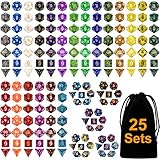
- You will receive 25 sets polyhedral dices, each 7-die set contains 1 piece d20, 1 piece d12, 2 pieces d10 (00-90 and 0-9), 1 piece d8, 1 piece d6, 1 piece d4; 175Pieces in total.
- Comes with a black flannel bag, convenient to store and carry.
- The polyhedral game dice are made of acrylic, easy to roll, durable and lightweight.
- You can experience the fun of the game with you and your friends.
- These polyhedral dices have gold, black and white painted lettering which are as large as possible on each surface for easy reading.
What dice do I need for D&D?
The most useful first purchase is a complete polyhedral RPG dice set: one each of a d4, d6, d8, d10, d12, and d20. The letter “d” means die and the number tells you how many faces it has. Some sets include multiple copies, which is convenient when a spell or attack rolls several dice, but one complete set is enough to learn the core procedure.
The d20 is the uncertainty die
For a typical ability check, attack roll, or saving throw, you roll a d20, add the relevant ability modifier and, when the rules grant it, your proficiency bonus, then compare the total with a target number.
Example: you say, “I try to leap the broken bridge.” The DM decides which ability applies and sets a Difficulty Class (DC) based on the situation. You roll a d20 and add the modifier shown on your character sheet. If your total meets or exceeds the DC, the attempt succeeds under the stated rules; if it falls short, the DM describes the consequence. A high roll is not automatically a success if it does not reach the target, and a roll is not needed when the DM determines that an outcome is certain.
What the other dice do
The other polyhedral dice commonly determine damage, healing, or the size of another game effect. A weapon, spell, or feature tells you which die to roll and how many to roll. The d20 is therefore not the only die you use in play: it usually answers whether an uncertain attempt works, while other dice often answer how much an effect changes the situation.
| Die | Typical beginner use |
|---|---|
| d4 | Small damage or healing effects and other low-range results. |
| d6 | Common weapon damage and many spell or feature effects. |
| d8 | Medium weapon damage and varied class or spell effects. |
| d10 | Larger damage or healing rolls; one d10 is also used in a pair for percentile notation in some materials. |
| d12 | Heavy weapon damage and other high-range effects. |
| d20 | Ability checks, attack rolls, saving throws, and other major uncertainty tests. |
Dice notation can look like 2d6 + 3: roll two six-sided dice, add them together, then add 3. The exact formula always comes from the feature, weapon, or spell being used.
Rank #3

- 🎲 5 Complete Dual-Color DND Dice Sets – 35 Pieces Total – Includes five full 7-piece dice sets (35 acrylic dice total). Each set comes with one d4, one d6, one d8, two d10s (standard 0–9 and percentile 00–90), one d12, and one d20. Perfect for D&D, Pathfinder, and other tabletop RPGs.
- 🎲 5 Unique Two-Tone Color Combinations – You get five striking dual-color sets: green/blue, blue/yellow, brown/blue, red/black, and purple/blue. Each set has a distinct swirl or marble pattern, making them easy to tell apart and fun to collect.
- 🎲 Durable Acrylic Build – Easy-to-Read Numbers – Made from high-quality acrylic that's waterproof, oxidation-proof, and built to last. The numbers are crisp, clear, and high-contrast for quick reading.
- 🎲 Well-Balanced & Precision-Molded – Ensures proper weight distribution and fair, random rolls every time. No bias, no wobble — just honest rolls you can trust. Standard size fits comfortably in any dice tray.
- 🎲 Includes 5 Black Velvet Drawstring Bags – Comes with five black velvet pouches — one for each dice set. Keeps your collection organized, quiet, and travel-ready. Recommended for ages 14 and up. Perfect for DMs, gaming groups, or as a thoughtful gift.
How does combat work in D&D?
D&D combat is a structured conversation between player intent and the rules. You describe a goal, the DM identifies what happens in the fiction, and the rules determine whether a roll, an action, or a consequence is required. It is more open-ended than selecting a fixed attack button, but it is organized enough that everyone gets a fair turn.
1. Determine initiative
When a fight begins, the DM determines who is aware of the danger and calls for initiative. Each participant receives a place in the order, and play proceeds from the highest result to the lowest. The order normally remains in effect for the encounter unless the DM has a reason to change the situation.
2. Take turns inside rounds
A round represents a short span in which every participant gets a turn. On your turn, you normally have movement and an action. Movement can be split around your action when the rules allow it, so you might approach an enemy, attack, and move behind cover.
- Movement: Travel up to the distance your character’s speed permits, accounting for terrain, obstacles, and the DM’s description of the space.
- Action: Attack, cast a spell, Dash, Disengage, Dodge, Help, Hide, Ready, Search, or take another action granted by the rules or the situation.
- Bonus action: Available only when a class feature, spell, feat, or other rule specifically grants one. It is not an extra action that every character receives every turn.
- Reaction: A response taken when a feature or rule provides a trigger, often outside your own turn. You generally have one reaction available until the start of your next turn.
This is the combat equivalent of managing a Stardew day: you have a limited set of meaningful choices, and positioning or preparation can matter as much as the obvious attack.
3. Resolve an attack
An attack roll uses the d20-based procedure. Add the applicable attack modifier and compare the total with the target’s Armor Class (AC). Meeting or exceeding the AC is a hit; otherwise the attack misses. The attack’s damage dice are rolled only after a hit, using the weapon, spell, or feature’s instructions.
Rank #4
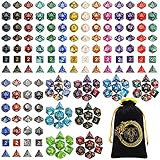
- 🎲Massive 26‑set DND dice bundle – perfect for game nights & gifting. Includes 182 total dice (26 complete 7‑piece sets: D4, D6, D8, 2 D10s, D12, and D20), Ideal for D&D(dungeons and dragons), Pathfinder, MTG, and all RPGs. Makes an awesome birthday or holiday gift.
- 🎲26 Vibrant Colorways – 20 solid‑color sets + 6 two‑tone mixed sets, most with a pearl‑textured surface. Each set is visually distinct – great for group play or collectors.
- 🎲Durable Acrylic Build – Easy-to-Read Numbers – Made from high-quality acrylic that's waterproof, oxidation-proof, and built to last. The numbers are crisp, clear, and high-contrast for quick reading.
- 🎲 Well-Balanced & Precision-Molded – Ensures proper weight distribution and fair, random rolls every time. No bias, no wobble — just honest rolls you can trust. Standard size fits comfortably in any dice tray.
- 🎲Bonus Velvet Dice Bag – Comes with a large black drawstring pouch featuring dragon & tiger. Keeps all 182 dice organized. Recommended for ages 14 and up. Perfect for beginners, DMs, or as a thoughtful gift for any tabletop gamer.
For example, a fighter might declare, “I strike the goblin with my longsword.” The player rolls the attack, compares it with the goblin’s AC, and rolls the weapon’s damage only if the attack connects. A rogue might instead Hide, look for an advantageous position, or attempt to slip past the guard. The rules support those intentions when the circumstances permit them.
4. Keep track of conditions and resources
Combat can change through movement, cover, concentration on a spell, conditions, hit points, and limited-use class features. The DM tracks enemies and the environment; players track their character’s resources and communicate their plans. If an effect grants a bonus action or reaction, its own text defines when it can be used and what it does.
Which D&D rules edition should a Stardew player use?
Edition labels matter because terminology, class features, and available options can change. The 2014 Basic Rules are an older introductory rules reference. SRD v5.2.1 is a newer reference document for the fifth-edition rules family, but it is a subset rather than a promise that every option from paid books appears there.
| Reference | Best use | Important qualification |
|---|---|---|
| 2014 Basic Rules | Learning the classic introductory presentation of character creation, classes, equipment, and play. | It is not the newest complete rules presentation. |
| SRD v5.2.1 | Checking the newer rules reference and the material included in that reference document. | It does not contain every class option, spell, monster, or rule found in paid books. |
| Player’s Handbook | Using a paid, consolidated reference when your group wants more character options and fuller rules coverage. | Check the edition on the cover or digital listing before combining it with other books. |
Choose one rules presentation for character creation and ask the DM which edition the campaign uses. Do not silently combine a 2014 example with SRD v5.2.1 wording and assume the details are identical.
The Tool Desk
Outbyte Driver Updater FREEScan for outdated or missing drivers - takes under a minuteDriver Scan →Outbyte PC Repair FREEClear out junk files and repair common Windows errorsFree Scan →What do I need to start playing D&D?
You can begin with a small set of practical necessities rather than a collection of every book.
Best Value

- 🎲CREEBUY 7Pcs Colorful Acrylic Game Dice: Acrylic dice as a traditional board game dice, the production technology is mature, it is durable and economical. Besides, the dice are colorful, and the styles are diverse, in any case, you can always find a dice that you like the most.
- 🎲Well Balanced, More Professional: Using precise dice mold production,only acrylic material, no other materials and decorations are added to the dice, well balance easy to roll, ensure professional and practicality of the table game dice.
- 🎲Easy to Read: The golden numbers on the surface of the dice, using underscoring to differentiate 6 and 9,no visual trouble,so you can focus more on your games. Now, pick your dice up as weapon, hold all the might in your hand, roll it! Fighting!
- 🎲Wide Compatibility: Can be used for role playing games, board games sach as Dungeons and Dragons 2/3/4/5e, Yahtzee, Pathfinder, Shadowrun, Savage World, Warhammer,RPGs,COC,MTG,tabletop,card gaming,math teaching or anything else you can think of.
- 🎲Easy to Collect and Carry: Set of 7 pcs dice, including D20 D12 D10 D% D8 D6 D4, equipped with a dice bag, convenient for you to store and carry these dices anywhere you like, no need to worry about losing.
- A group and a DM: D&D is a cooperative game. The DM presents the world, adjudicates rules, and plays the other characters and creatures.
- A rules reference: Use the rules your group has selected, whether that is the 2014 Basic Rules, SRD v5.2.1 material, or a paid handbook.
- A character sheet: Record ability scores, modifiers, proficiencies, hit points, equipment, spells, and class features.
- A polyhedral dice set: Start with a d4, d6, d8, d10, d12, and d20. A second set is convenience, not a requirement.
- Writing materials or a digital equivalent: You will track hit points, spell uses, conditions, money, ammunition, and other changing information.
- An adventure and a shared expectation: Agree on the edition, tone, starting level, scheduling, and any topics the group wants to avoid before play begins.
A Starter Set can be a useful beginner bundle, but its edition and box contents should be checked at the time you buy it. Do not assume that a product with a familiar name uses the same rules or includes the same materials as an earlier release.
How to translate Stardew instincts without importing the wrong rules
Preparation helps, but it does not guarantee success
Bringing the right tool to a Stardew task usually gives a predictable result. In D&D, preparation can improve your options or modifiers, but an uncertain attempt may still require a roll. Carrying rope, choosing a useful spell, scouting a room, or asking an ally for help changes what is possible; it does not turn every risk into a guaranteed outcome.
Energy is not a universal D&D meter
Stardew’s energy bar is a useful reminder that actions have costs, but D&D does not use one shared energy resource for every character. A character may instead manage hit points, spell slots, class features, equipment, movement, concentration, and time-sensitive opportunities. The relevant resource depends on the class and the rule being used.
PC Slower Than It Used to Be?
A free scan shows the junk files, broken settings and background clutter dragging Windows down - then fixes them in one click.Free scan · Windows 10 & 11Outdated Drivers Are Slowing You Down
One free scan finds every outdated or missing driver and matches the right update for your exact hardware.Free scan · exact hardware matchFailure moves the story
A missed attack, failed check, or poor choice is not necessarily a reload screen. The DM may let the attempt fail quietly, impose a cost, reveal a new threat, or offer a harder route forward. Ask what your character is willing to risk, then make the most informed choice available.
Quick Recap
A first-session checklist
- Confirm whether the group is using the 2014 Basic Rules or SRD v5.2.1-based rules.
- Choose a class for the tactics you want to try, not just for its label.
- Write down your ability modifiers, proficiency bonus, hit points, AC, speed, and core actions.
- Learn what your class features, spells, and equipment actually allow before the first fight.
- Bring a complete polyhedral dice set or a method agreed on by the group for rolling.
- When unsure, state your intention clearly: what you want, how you plan to do it, and what you are prepared to risk.
Product prices and availability are accurate as of the date/time indicated and are subject to change. Any price and availability information displayed on Amazon at the time of purchase will apply.

