Recommended Free Tools
Data Center Dynamics’ DCD Studio episode published October 15, 2026 examines how data centers can clean diesel-generator exhaust using three after-treatment categories: selective catalytic reduction (SCR), diesel particulate filters (DPF) and diesel oxidation catalysts (DOC). Host Seb Moss interviews Senna Nijs of Multronic in a vendor-focused discussion. DCD describes the technologies as tools to reduce pollutants and support air-quality regulatory compliance, but the indexed episode description does not publish reduction percentages, supported engine models, jurisdictions, prices or purchasing terms.
Why generator after-treatment matters in data centers
Backup generators are essential to resilient data-center operations, yet diesel combustion produces nitrogen oxides (NOx), particulate matter, carbon monoxide and unburned hydrocarbons. Emissions rules vary by jurisdiction, generator rating, operating profile and whether equipment is new, existing, stationary or treated as an emergency source. After-treatment places catalytic or filtration equipment in the exhaust path so pollutants are converted or captured before discharge.

As an Amazon Associate I earn from qualifying purchases.
The DCD Studio conversation is therefore most useful as an introduction to an engineering and compliance decision, not as a published performance test. The episode description identifies the technology families and their intended role, while leaving the project-specific evidence to be established with the equipment supplier, engine manufacturer and permitting authority.
What’s actually slowing this PC down?
Pick the symptom - the matching free tool is one click away.
What each technology does
| Technology | Primary target | How it generally works | Questions to verify for a generator project |
|---|---|---|---|
| Selective catalytic reduction (SCR) | NOx | Uses a catalyst and a reducing reagent to convert NOx in exhaust into nitrogen and water. | Required reagent and storage; dosing control; catalyst temperature window; engine and load compatibility; monitoring, refill and freeze-protection requirements; jurisdiction-specific certification. |
| Diesel particulate filter (DPF) | Particulate matter and soot | Traps solid particles in a filter. Accumulated soot must be oxidized through a controlled regeneration process. | Regeneration strategy at the generator’s duty cycle; allowable exhaust backpressure; ash-cleaning interval; thermal clearances; sensors and alarms; behavior during short, low-load or emergency runs. |
| Diesel oxidation catalyst (DOC) | Carbon monoxide and hydrocarbons, with some particulate-related benefits depending on the system | Uses a catalyst to oxidize selected exhaust constituents as the gas passes through the coated substrate. | Light-off temperature; fuel and lubricating-oil compatibility; expected conversion under standby loads; heat release; maintenance and certification documentation. |
These categories can be combined, but the best arrangement depends on the engine, exhaust temperature, enclosure, available space, operating hours and permit conditions. A technology name alone does not establish a guaranteed reduction level.
#1 Best Overall

- Keep DPF clean
- Diesel additive
- Maintaining a clean DPF improves fuel economy
- Keep DPF clean from Carbon & Soot
How to evaluate an after-treatment system
- Define the regulatory case. Identify the installation’s country, state or province, local air district, permit status and emergency-generator rules. Ask the authority what pollutants, test methods, operating scenarios and certification documents it will accept.
- Characterize the generator fleet. Record engine make and model, rated power, fuel, exhaust flow, outlet temperature, duty cycle, altitude, enclosure layout and expected annual runtime. Include every generator that may share an exhaust or controls strategy.
- Match pollutant controls to conditions. Determine whether the project needs NOx control, particulate filtration, oxidation of carbon monoxide and hydrocarbons, or a combined system. Confirm that catalyst temperatures and flow ranges are achievable during the actual load profile.
- Check integration limits. Request calculated backpressure, heat rejection, acoustic effects, structural loads, stack dimensions, electrical demand and controls interfaces. Verify clearances from combustible materials and service access for filters, catalysts and sensors.
- Plan consumables and maintenance. SCR may require a reducing reagent and replenishment logistics. DPF systems require regeneration management and eventual ash removal. All systems need inspection, alarms, records and a response plan for faults or bypass conditions.
- Demand evidence for the exact configuration. Ask for engine-specific test reports, certification or approval documents, test methods, load points, durability assumptions and emissions monitoring requirements. Results from another engine, rating or duty cycle should not be treated as interchangeable.
What the Multronic discussion establishes—and what it does not
DCD presents Multronic’s Senna Nijs as the subject-matter voice in a discussion of advanced emissions after-treatment for data-center diesel generators. The published description establishes the focus on SCR, DPF and DOC and frames their purpose as pollutant reduction and regulatory-compliance support.
It does not state a percentage reduction, supported generator brands or sizes, installation cost, reagent consumption, regeneration interval, maintenance life, noise or heat performance, or the jurisdictions in which a particular package is certified. Those details must be obtained directly from Multronic and checked against the project’s engine documentation and regulator requirements.
Rank #2

- PROFESSIONAL-GRADE DPF & CATALYTIC CONVERTER FOAM CLEANER — Trusted by thousands of diesel specialists. This German-engineered spray foam dissolves heavy soot and carbon buildup inside your DPF or catalytic converter without any disassembly.
- NO REMOVAL REQUIRED — Clean through the O2 sensor or temperature sensor port using the included long-reach nozzle. Spray, soak 20-25 minutes, reinstall sensor, and drive. Saves $500-$2,000 vs. professional DPF cleaning services.
- WORKS ON DIESEL, GAS & HYBRID VEHICLES — Unlike fuel additives that only work on mild buildup, this direct-spray foam penetrates and dissolves even severely clogged filters. Use on DPF filters, catalytic converters, and EGR valves.
- RESTORE FULL ENGINE POWER & FUEL ECONOMY — A clogged DPF triggers constant regen cycles, kills fuel economy, and robs horsepower. Our foam cleaner restores flow, reduces regen frequency, and brings back the performance you're missing.
- Use regularlPAIRS WITH DPF PURGE ADDITIVE (SKU 808) — After foam cleaning, maintain results by adding our DPF Purge fuel additive every 3,000 miles. This preventive maintenance combo keeps your DPF clean and avoids the $3,000-$8,000 DPF replacement cost.y MotorPower Care DPF Foam Cleaning to maintain a proper operating emission system.
Practical risks if the system is underspecified
- Low-load operation: Exhaust may not reach the temperature needed for catalyst activity or DPF regeneration.
- Excessive backpressure: An improperly sized filter or catalyst can affect engine performance and trigger protective controls.
- Thermal management: Regeneration and catalytic reactions can raise exhaust temperatures, requiring revised stack, insulation and clearance designs.
- Consumable interruptions: An SCR installation needs reliable reagent supply, storage and quality control.
- Compliance mismatch: A system can reduce emissions without satisfying a particular permit, test protocol or certification rule.
- Maintenance gaps: Soot, ash, catalyst aging, sensor failure and alarm bypasses can undermine performance unless inspection and records are assigned.
What to request before selecting a supplier
Prepare a written data request covering the generator schedule, exhaust measurements, expected loads and permit conditions. Request a proposed process-and-instrumentation diagram, pressure-drop and temperature calculations, controls narrative, reagent and regeneration requirements, maintenance schedule, spare-parts plan, commissioning test and operator training. Ask which claims are measured results, which are modeled estimates and which depend on site conditions.
Quick wins for a faster PC:
Clear out junk files and repair common Windows errorsFree Scan →Fix the driver behind crashes, sound loss and screen glitchesFind Drivers →For a data center, the credible path to cleaner air is an engine-specific design tied to the applicable permit—not simply adding a catalog filter. The DCD Studio episode provides a useful map of the available technology categories; engineering and regulatory verification determine whether a particular package is suitable.
Quick Recap
Rank #4

- For cleaning of diesel particle filter (GPF/DPF) as installed on vehicle
- Dissolves contaminants inside DPF units, restores vehicle performance and fuel consumption
- For professional repair shop use only.
- For use with DPF Pressurized Tank Spray Gun (part no.7946
Rank #3
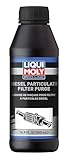
- Dissolves typical contamination in diesel particle filters that can rob the vehicle of its performance
- Effective for closed diesel particle filters on passenger and commercial diesel powered motor vehicles including Cummins and Drama diesel engines and Sprinter vans
- Returns the vehicle to optimal driving characteristics, engine performance and lowers fuel consumption
- Lower fuel consumption means better MPG and money saved
- Liquid Moly 20112 Diesel Particulate Filter Purge Fluid - 500 ml
Product prices and availability are accurate as of the date/time indicated and are subject to change. Any price and availability information displayed on Amazon at the time of purchase will apply.

