What’s actually slowing this PC down?
Pick the symptom - the matching free tool is one click away.
For most PC players, start with the conventional or Ray Tracing preset that your hardware can render at a steady native frame rate, then add DLSS, FSR or XeSS upscaling only as needed. Treat frame generation as a second step: CD PROJEKT RED recommends at least 60 rendered frames per second before enabling FSR Frame Generation and strongly advises a 120 Hz-or-faster display.
Overdrive is the demanding exception. It sits above Ray Tracing Ultra, includes path-traced rendering, is off by default and is described by CDPR as very GPU intensive. The official 2160p/60 target uses a GeForce RTX 4080 with DLSS Frame Generation enabled, so it is a vendor target rather than a promise for every computer.

As an Amazon Associate I earn from qualifying purchases.
What the graphics options actually change
Cyberpunk 2077’s menu combines several different technologies. A preset changes lighting, reflections, shadows, volumetric effects, crowd density and other rendering details. Ray tracing changes how selected lighting and reflection effects are calculated. Path tracing is a more comprehensive ray-traced approach, and CDPR specifically associates it with the Ray Tracing: Overdrive preset rather than with every ray-tracing option.
The Tool Desk
Outbyte Driver Updater FREEScan for outdated or missing drivers - takes under a minuteDriver Scan →Outbyte PC Repair FREEClear out junk files and repair common Windows errorsFree Scan →Ray Tracing Ultra versus Overdrive
Ray Tracing Ultra is the upper conventional ray-tracing preset in the official requirements. Overdrive is the preset above it and includes path-traced rendering. CDPR’s support guidance says, “Ray Tracing: Overdrive is very GPU intensive, therefore it’s set to ‘off’ by default.” That is why turning on Overdrive can reduce performance far more than moving between ordinary raster presets.
#1 Best Overall
You can enable it through Settings → Graphics → Quick Preset, or turn on Path Tracing (Technology Preview) separately in Settings → Graphics in the Ray Tracing section. Do not assume that enabling one ordinary ray-tracing toggle turns on path tracing; the game distinguishes those modes.
Photo Mode path tracing is a separate workload
Photo Mode offers path-traced screenshots on supported ray-tracing GPUs. CDPR lists minimum video-memory thresholds of 8 GB at 1080p, 10 GB at 1440p and 12 GB at 2160p for that screenshot feature. These are Photo Mode support thresholds, not general game VRAM requirements. At a higher resolution or with a less powerful GPU, rendering a screenshot can take seconds or minutes.
How DLSS works in this game
NVIDIA DLSS Super Resolution renders internally at a lower resolution and reconstructs the output at your selected display resolution. In practice, it is a performance control: lowering the quality mode generally increases frame rate while making reconstruction more aggressive. The best mode depends on your resolution, motion, lighting and tolerance for shimmer, so inspect busy scenes rather than treating one label as universally correct.
DLSS Ray Reconstruction
Update 2.0 introduced DLSS 3.5 and its Ray Reconstruction feature. CDPR describes Ray Reconstruction as improving the quality of ray-traced effects. It requires a GeForce RTX card and is available only when Path Tracing is enabled. If the option is missing, verify both conditions before changing other settings.
Rank #2

- The perfect quick reference tool for Cyberpunk RED.
- Includes all the tables a Gamemaster or Player needs to play the game.
- Four panels of gorgeous art, complete with a great view of Night City.
- Shield your notes from the prying eyes of others at your table
- Made of sturdy thick cardstock
The original Update 2.0 notes listed Game Ready Driver 537.42 as the minimum for Ray Reconstruction at that time. That number is historical guidance; driver requirements can change, so use the current game’s notes and NVIDIA driver information for a present-day installation.
What changed in Update 2.3
Update 2.3, dated July 16, 2025, added more detailed information to the DLSS Super Resolution preset tooltip. It also fixed a problem involving selection of the CNN and Transformer presets. The tooltip can help you choose for your setup, but it does not establish that CNN or Transformer is categorically better in every scene or on every GPU.
How FSR, FSR Frame Generation and XeSS differ
FSR upscaling and frame generation are separate controls
CDPR explains that AMD FidelityFX Super Resolution 3 combines image upscaling with frame-generation technology. In the earlier FSR 3 implementation, Frame Generation had its own setting but could be enabled only when FSR 3 upscaling was selected. CDPR kept both FSR 2.1 and FSR 3 so players could choose between their own visual-quality and performance preferences.
That relationship changed in the PC features listed for Update 2.3: AMD FSR Frame Generation 3.1 can be used with any upscaler. Therefore, the exact choices visible in your menu depend on the game build. If you are running a build that predates the 2.3 changes, expect the older requirement that FSR 3 upscaling must be enabled.
Rank #3
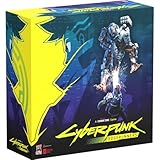
- Command Edgerunners like David, Lucy, and Maine in intense tactical battles against the Arasaka Corporation and Adam Smasher.
- Features a complete 2-player starter set with acrylic StandUpz, double-sided game board, scenery, and essential components for immediate play.
- Utilizes Monster Fight Club’s [RE]action System for fluid, cinematic combat that rewards smart strategy and quick decisions.
- Fully compatible with Cyberpunk RED: Combat Zone, allowing cross-play and expanded tactical possibilities.
- Immerse yourself in a dark futuristic world of rebellion, cybernetic warfare, and street survival.
FSR 4 and Intel XeSS 2.0
Update 2.3 added AMD FidelityFX Super Resolution 4 support for compatible AMD GPUs. CDPR says a supporting AMD driver is required before the FSR 4 option appears in the game’s settings. The same notes add Intel XeSS 2.0 with XeSS Frame Generation on compatible hardware.
These are capabilities announced in the July 2025 PC notes, not a guarantee that every later or earlier build exposes identical options. Check your current patch notes, GPU compatibility and driver support if a control is absent.
There is no official universal winner
The cited CDPR documentation explains what DLSS, FSR and XeSS controls do, but it does not declare one of them the universal image-quality winner. Compare them on your own hardware at the same output resolution and with the same baseline frame rate. Look closely at moving foliage, neon signs, hair, thin geometry, rain and reflections; those areas reveal reconstruction differences faster than a static view.
Windows Errors? Fix Them Before They Spread
Repair common Windows errors and clear accumulated junk for a smoother, more stable PC - no reinstall needed.Free scan · no reinstallCrashes, No Sound, or Screen Glitches?
Random freezes, missing sound and display glitches usually trace back to one bad driver. Find and replace yours safely.Free scan · under a minuteFrame Generation: when it helps and when it hurts
Frame Generation creates additional displayed frames between traditionally rendered frames. It should not be used to disguise a very low underlying frame rate. CDPR recommends reaching a baseline of at least 60 FPS before enabling FSR Frame Generation. At lower rates, it warns that artifacts become more prominent and frame pacing can suffer.
Rank #4

- FOR CYBERPUNK 2077 VIDEO GAME FANS: You might lose your sanity in Night City, but at least you won't lose your keys
- QUALITY DESIGN: Molded flat relief design; sturdy metal alloy construction with enamel color finish
- IDEAL SIZE: Keychain design measures approximately 2.75 inches x 0.84 inches
- AUTHENTIC CYBERPUNK 2077 KEY CHAIN: Officially licensed by CD PROJEKT RED; designed and created by JINX
CDPR also strongly advises a monitor with a refresh rate of 120 Hz or higher for this use case. A 120 Hz gaming monitor gives the display enough refresh capacity to show the extra frames; it does not make a weak GPU meet the game’s rendering target by itself.
Recommended order for testing
- Disable frame generation and choose a preset that produces a stable rendered frame rate in a demanding area of Night City.
- Enable your preferred upscaler and select a quality mode that preserves readable text, fine geometry and stable reflections.
- Confirm that the rendered rate remains at least 60 FPS. Use the game’s performance overlay or a trusted frame-time tool rather than judging only by a menu counter.
- Enable Frame Generation only after that baseline is met. If motion shows obvious artifacts or uneven pacing, turn it back off before lowering more settings.
- Check that Hardware-Accelerated GPU Scheduling is enabled when using FSR Frame Generation, as CDPR’s support guidance requires it.
Driver version numbers in the FSR support article are volatile. Follow the current AMD, NVIDIA or Intel driver guidance for your card instead of copying an old number from an earlier support page.
Official PC targets from Update 2.0 and Phantom Liberty
CDPR describes Cyberpunk 2077 as both graphics- and processor-intensive, requires DirectX 12, and says the table below applies to the base game and Phantom Liberty. These are vendor expectations, not independent benchmark results. The listed frame rates are targets for the specified combination; do not extrapolate them to an unlisted graphics card.
Quick wins for a faster PC:
Scan for outdated or missing drivers - takes under a minuteDriver Scan →Clear out junk files and repair common Windows errorsFree Scan →| Rendering mode | Resolution and target | Preset | Processor | Graphics card | Memory and storage |
|---|---|---|---|---|---|
| Conventional minimum | 1080p, 30 FPS | Low | Core i7-6700 or Ryzen 5 1600 | GeForce GTX 1060 6 GB, Radeon RX 580 8 GB or Intel Arc A380 | 12 GB RAM; 70 GB SSD |
| Conventional recommended | 1080p, 60 FPS | High | Core i7-12700 or Ryzen 7 7800X3D | GeForce RTX 2060 Super, Radeon RX 5700 XT or Intel Arc A770 | 16 GB RAM; 70 GB SSD |
| Conventional Ultra target | 2160p, 60 FPS | Ultra | Core i9-12900 or Ryzen 9 7900X | GeForce RTX 3080 or Radeon RX 7900 XTX | 20 GB RAM; 70 GB NVMe |
| Ray-tracing minimum | 1080p, 30 FPS | RT Low | Core i7-9700 or Ryzen 5 5600 | GeForce RTX 2060, Radeon RX 6800 XT or Intel Arc A750 | 16 GB RAM; 70 GB SSD |
| Ray-tracing recommended | 1080p, 60 FPS | RT Ultra | Core i9-12900 or Ryzen 9 7900X | GeForce RTX 3080 Ti or Radeon RX 7900 XTX | 20 GB RAM; 70 GB NVMe |
| Ray Tracing: Overdrive | 2160p, 60 FPS | Overdrive | Core i9-12900 or Ryzen 9 7900X | GeForce RTX 4080 | 24 GB RAM; 70 GB NVMe |
For the Overdrive row, CDPR explicitly measured the 2160p/60 target with DLSS Frame Generation enabled. That qualification matters: the figure is not a claim that an RTX 4080 will render 4K path tracing at 60 native frames without reconstruction or generated frames.
Best Value

- From the award-winning game Cyberpunk 2077
- The ex-nomad of the Aldecaldo family is recreated with incredible detail
- Stands approximately 9” tall
- Display base included
Choosing settings by your priorities
If you want the steadiest performance
Begin with conventional rendering. Use the official 1080p/30 minimum or 1080p/60 recommended tiers as orientation, then adjust until frame time is stable in the busiest location you regularly visit. Add upscaling before enabling ray tracing if maintaining a consistent frame rate matters more than path-traced lighting.
If you want ray-traced lighting without Overdrive
Select the Ray Tracing preset appropriate to your hardware and test RT Ultra separately from Overdrive. The official RT recommended target is 1080p/60 with a GeForce RTX 3080 Ti or Radeon RX 7900 XTX and a high-end processor. A card that meets a different row in the table may not deliver the same result; use the listed tier only as a reference for its stated resolution and target.
If you want path tracing
Enable Overdrive from the Quick Preset menu or enable Path Tracing (Technology Preview) in the Ray Tracing section. Then select an upscaler supported by your GPU. On GeForce RTX hardware, DLSS Ray Reconstruction is available only with Path Tracing enabled. Expect to tune output resolution and reconstruction quality around your GPU’s actual frame rate, not around the 2160p/60 vendor target alone.
Free tools Windows power users keep installed
One-click scans. No signup required.
If you are considering frame generation
Prioritize the six factors CDPR’s guidance makes relevant: target resolution, rendered (pre-generation) frame rate, GPU and VRAM, processor capacity, upscaler and driver compatibility, and display refresh rate. A 120 Hz-or-faster monitor is strongly advised. If your baseline is below 60 FPS, lower the rendering workload or leave Frame Generation disabled.
A practical setup procedure
- Update the game and GPU driver, while checking the current patch notes for feature and compatibility changes.
- Open Settings → Graphics and select the conventional, Ray Tracing or Overdrive preset closest to your goal.
- Set the display resolution and refresh rate you actually use. Do not evaluate a 2160p target while testing at a different output mode.
- Run a repeatable route through a dense area and record the rendered frame rate and frame-time consistency with Frame Generation off.
- Choose DLSS, FSR or XeSS upscaling. Compare identical scenes at equivalent output resolution, checking foliage, signs, reflections and moving objects.
- If using Path Tracing on a GeForce RTX card, enable DLSS Ray Reconstruction and verify that the option remains available only while Path Tracing is on.
- For FSR Frame Generation, confirm the required FSR mode for your build, enable Hardware-Accelerated GPU Scheduling, and verify a rendered baseline of at least 60 FPS.
- Enable Frame Generation, test again on a 120 Hz-or-higher display, and disable it if artifacts or uneven pacing are more distracting than the extra displayed frames.
- Change one setting at a time. This identifies whether a problem comes from ray tracing, reconstruction quality, frame generation or a driver rather than from the entire preset.
Common problems and fixes
Overdrive is missing or immediately turns off
- Confirm that you are using the PC version and a build that includes the feature.
- Use Settings → Graphics → Quick Preset or the separate Path Tracing (Technology Preview) control.
- Check GPU support, available VRAM and the current driver. Overdrive is intentionally off by default because of its GPU demand.
DLSS Ray Reconstruction is unavailable
- It requires a GeForce RTX card.
- It appears only when Path Tracing is enabled.
- Check current driver guidance; the 537.42 minimum in the original Update 2.0 notes is historical, not a timeless requirement.
FSR Frame Generation cannot be selected
- On older FSR 3 implementations, enable FSR 3 upscaling first.
- On Update 2.3’s PC feature set, FSR Frame Generation 3.1 can work with any upscaler, but compatibility still depends on the GPU, driver and build.
- Enable Hardware-Accelerated GPU Scheduling and verify that the rendered baseline is at least 60 FPS.
The image looks worse after enabling frame generation
Check the pre-generation frame rate first. CDPR warns that lower baseline rates make artifacts more visible and can create frame-pacing problems. Compare with Frame Generation off, then adjust the upscaler or lower the ray-tracing workload before trying to generate frames again.
Quick Recap
What the official documentation does not prove
- It does not provide an independent benchmark or a population-wide performance statistic.
- It does not guarantee that every graphics card will meet a listed target; each target belongs to a specific resolution, preset, processor, GPU and memory configuration.
- It does not establish a universal DLSS-versus-FSR-versus-XeSS image-quality ranking.
- It does not make the Photo Mode VRAM thresholds general game requirements.
- Update 2.3, dated July 16, 2025, is the latest update identified in the cited material, not proof that no later patch changed the available options.
Product prices and availability are accurate as of the date/time indicated and are subject to change. Any price and availability information displayed on Amazon at the time of purchase will apply.

