Potentially—but aerogel is a family of materials, not one heat-proof product. NASA research describes promising high-temperature candidates and tested aerogel composites, while separate NASA pages identify possible uses in firefighting clothing and spacecraft. That evidence does not establish certified aerogel firefighter gear or a universal replacement for spacecraft thermal-protection systems.
What makes an aerogel “highly stable”?
Aerogels are very porous, low-density materials. NASA describes some aerogels as containing up to 99% air, but composition determines how they respond to heat. “Stable” can mean that a material resists structural or phase changes at high temperature; it does not, by itself, prove that the material keeps insulating effectively, withstands mechanical stress, or is ready for use in protective equipment.
As an Amazon Associate I earn from qualifying purchases.
NASA’s 2018 project description compares several compositions and explains why one temperature figure cannot serve as a rating for all aerogels:
PC Slower Than It Used to Be?
A free scan shows the junk files, broken settings and background clutter dragging Windows down - then fixes them in one click.Free scan · Windows 10 & 11Crashes, No Sound, or Screen Glitches?
Random freezes, missing sound and display glitches usually trace back to one bad driver. Find and replace yours safely.Free scan · under a minute| Composition | What NASA reports about heat and structure | Evidence stage described |
|---|---|---|
| Silica | Silica aerogels densify and lose their favorable porous structure at 700°C. | Material-class behavior described in NASA’s 2018 project description. |
| Alumina | Alumina aerogels densify to alpha-alumina at 1300°C. | Material-class behavior described in NASA’s 2018 project description. |
| Aluminosilicate | Silica additions slow transformations. The source says these aerogels can maintain a mesoporous structure at 1100°C for more than 96 hours and at 1200°C for more than 24 hours. Later phase changes can still degrade useful thermal properties. | High-temperature behavior described in NASA’s 2018 project description, with duration and property-change qualifications. |
| Yttria-stabilized zirconia (YSZ) | Identified as a candidate to withstand temperatures to 1200°C without phase transformation. | NASA’s project describes planned synthesis and characterization work, not a qualified spacecraft shield. |
NASA’s 2018 description of thermally stable aerogels focuses on how composition and processing affect phase transitions, morphology, and surface area. The figures above concern particular material behavior; they are not a claim that a finished product can continuously protect people or a vehicle at those temperatures.
#1 Best Overall

- Specification: 1"(Thick) 1inch (Thick) x24inch x32inch
- High Temperature Insulation: Ceramic fiber blanket is high heat and fireproof blanket, with high temperature resistance, insulation and fireproof.
- Easy to Install: easy to install by using mechanical fastening or high temperature adhesive, such as sodium silicate, refractory cement or RTV silicone.
- Easy to Operate: easy to cut and press by using a sharp knife or blade Very easy to transport and install.
- Applicable to: fireplace insulation, foundry, such as wood stove baffle, fireplace, pellet stove, chimney, boiler, pizza oven, forging furnace, brazing, welding, soldering, muffler packing, etc.
Could aerogel be used in firefighter clothing?
NASA’s Technology Transfer Program describes a flexible, foldable polyimide aerogel and lists protective clothing—including firefighting jackets and spacesuits—as possible applications. The page says NASA-developed polyimide aerogels are “500 times stronger than conventional silica aerogels.” That is NASA’s comparison with conventional silica aerogels; it is not a strength claim about every aerogel, nor evidence that a finished garment meets protective-equipment requirements.
The technology-transfer page presents a possible application, not a certification record or proof of operational use. It does not identify an approved aerogel firefighter garment. A material’s heat behavior alone cannot establish how a finished garment performs as a whole.
Rank #2
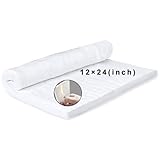
- Ceramic Fiber Insulation is high-temperature resistance, insulated, and fireproof. It is rated to 2400F so that it can maintain complete shape and size after the fire burns.
- The insulation blanket has high quality, good flexibility and tear resistance. This fiber insulation is flexible, easy to cut and stamping.
- Each is made of rockwool acoustic mineral wool insulation odorless. It has polar thermal conductivity,non-conductive, and good sound insulation.
- The fiber blankets are easy to use, easy to roll out and cut with a sharp knife or blade. They are also easy to move and install.
- It is used widely in various places. Such as dishwasher insulation blanket, wood stove baffle, fireplace, pellet stove, chimney, boiler, pizza ovens, forge and more.
NASA’s Durable Aerogel Technologies page describes the polyimide material and its potential uses.
Quick wins for a faster PC:
Clear out junk files and repair common Windows errorsFree Scan →Fix the driver behind crashes, sound loss and screen glitchesFind Drivers →What do spacecraft heat tests show?
Spacecraft thermal protection has to be judged by the construction and heating conditions tested—not by a material’s maximum temperature in isolation. NASA describes both aerogel-reinforced composite tests and a separate arc-jet evaluation of aerogel composites for atmospheric-entry conditions.
Rank #3

- Fire Proof Insulation: Ceramic fiber blanket insulation, rated to 2400 F
- Product Specifications: 1" Thick x 16" x 48", density 8 lb/ft3, made in the USA
- Uses: Wood stove baffle, fireplace, pellet stove, chimney, furnace, boiler, pizza ovens and forge
- Uses: Brazing, soldering, welding, foundry, kiln, refractory, glass blowing, and jewelry making
- Similar to: Kaowool, Inswool, Durablanket, Cerablanket, TaoFiber, Fiberfrax, Ceramic Wool
Aerogel-reinforced composite tests
NASA’s Technology Transfer Program reports that seven layers of an aerogel-reinforced composite, each 1.25 mm thick, produced a 700°C temperature drop in NASA Langley’s 8-foot high-temperature wind tunnel. It also describes a different configuration, used with other insulators, that withstood heat fluxes up to 65 W/cm² and produced a 625°C temperature drop across 8 mm. These are results for the specific tested constructions and setup, not general ratings for aerogel sheets or products.
The same NASA page lists potential uses including thermal-protection systems, fire blankets, tents, and heat shields. Those listed applications indicate possible directions for the technology, not proof that each is an operational product.
Rank #4

- Designed for Diverse Places: these ceramic fiber blankets are practical and useful, they can be applied in smelting metal places, forging workplaces, kiln places, chimney lining and other high risk for fire places, multifunctional for you
- Fire Prevention and Insulation: the dishwasher insulation blankets are made of aluminum silicate, with high temperature resistance, which can be resistant to high temperature about 2600 Fahrenheit, good choices for you to smelting metals usage
- Easy to Use: the insulation blanket can be cut and divided into a proper size you need, just use scissors to cut into a size you want, please wear gloves and masks, to protect your yourself, safe and easy
- Good Smelting Choices: when you smelt metals, high temperature environment will cause hurt, you should stack up our fireproof blanket, for the prevention of fire and protection of your safety, bringing you a satisfying experience
- Ample to Use and Share: you will receive 2 pieces of ceramic fiber insulation blankets, the size of which is 60 x 24 inches, enough quantity and proper size can satisfy your daily using and replacing needs, you can also share them with others
Atmospheric-entry tests and ablative designs
A 2003 NASA technical report describes aerogel composites fabricated and tested in NASA Ames arc-jet facilities under conditions simulating atmospheric entry for the Mars Science Lander entry probe. The report distinguishes performance as reusable insulation at lower heat fluxes from an ablative response under the more extreme heating predicted for the probe’s forebody.
An ablative material is sacrificed as part of its thermal-protection response. The report therefore supports two different design roles—reusable insulation in one heating range and material loss under more extreme conditions—not the idea that every aerogel survives reentry unchanged.
Best Value

- MORE APPLICATIOONS:Wood Stove Baffle, Fireplace, Pellet Stove, Chimney, Furnace, Boiler, Pizza Ovens, Forge & Many More
- FIRE PROOF INSULATION: Ceramic insulation blanket withstands direct flame, and 2600 ℉ constant temperature
- Ceramic Blankets SIZE: 24'' x 15.7'' x 1''
- EASY TO USE: Use scissors to cut to the size and shape you need. It is recommended that you wear gloves and a mask when using it
- What you'll get: Well-packaged ceramic insulation blanket and Instructions Included
NASA’s Aerogel Reinforced Composites page describes the wind-tunnel results and potential uses. The NASA technical report on aerogel composites for aerospace thermal protection describes the arc-jet work.
Independent reader supportYour contribution helps us test, update, and keep practical guides available for everyone.Why not replace spacecraft heat shields with aerogel?
Low density and strong insulation are attractive, but neither alone answers whether a material can protect a spacecraft. The relevant evidence depends on the heating environment, the composite or layered construction, heat flux, mechanical durability, and whether the design is meant to be reused or to ablate. NASA’s cited work includes particular composite tests and a mission-specific arc-jet study; it does not establish that aerogel alone can replace spacecraft thermal-protection systems across missions.
This distinction also matters when comparing aerogel with ceramic tiles. The available NASA evidence here does not provide a direct, like-for-like test of aerogel against shuttle tiles, so it cannot establish that aerogel is a better substitute. Insulation performance, physical robustness, and readiness for a particular vehicle are separate questions.
Free tools Windows power users keep installed
One-click scans. No signup required.
What newer NASA work is exploring
A NASA TechPort record updated February 15, 2026, describes a completed project to develop a porous aerogel shielding film reinforced by boron nitride nanofoam. The record names spacesuits, spacecraft, habitats, and flexible thermal-protection systems as anticipated applications. These are project goals and proposed uses; the record does not establish operational deployment.
NASA TechPort’s project record for the ultralight flexible shielding film describes that work and its intended applications.
Quick Recap
What the evidence does—and doesn’t—establish
- Material promise: NASA has described aerogel compositions and composites with noteworthy high-temperature behavior, but those properties depend on composition, processing, construction, and exposure conditions.
- Application ideas: NASA identifies protective clothing, fire blankets, and aerospace thermal protection as possible uses for particular technologies.
- Tests are not product ratings: Wind-tunnel and arc-jet results apply to the tested configurations and conditions; they do not automatically transfer to an unrelated aerogel blanket, garment, or heat shield.
- Readiness remains specific: The cited sources do not establish certified aerogel firefighter garments or a single aerogel material ready for universal spacecraft heat-shield use.
Product prices and availability are accurate as of the date/time indicated and are subject to change. Any price and availability information displayed on Amazon at the time of purchase will apply.

