Free tools Windows power users keep installed
One-click scans. No signup required.
A colorimetric toxin test turns a particular chemical reaction or biological recognition event into a visible color signal. That can make a test useful for screening, but a color change is not a general-purpose toxin detector—and a negative result does not prove that food or water is safe. The test must be designed and validated for the toxin, sample and decision in question.
How does a colorimetric toxin test work?
A colorimetric assay links recognition of a target to a reaction that changes color. The recognition step may involve an antibody or another chemical or biological interaction; the color-producing step is the signal a person or instrument reads. The test is therefore specific to its assay design, not to the broad category of “toxins.”
As an Amazon Associate I earn from qualifying purchases.
Nanozyme color assays
A 2024 review by Feng, Zhang and Fan surveys colorimetric biosensors built with nanozymes: nanomaterials that show enzyme-like activity. The reviewed approaches use activities such as peroxidase, oxidase, superoxide dismutase or catalase to help produce a color signal. Reported research applications span bacterial food toxins, mycotoxins and marine toxins. This is a survey of a research field, not evidence of one standardized consumer test that detects all of those toxins.
The Tool Desk
Outbyte PC Repair FREEClear out junk files and repair common Windows errorsFree Scan →Outbyte Driver Updater FREEFix the driver behind crashes, sound loss and screen glitchesFind Drivers →Lateral-flow assays
Lateral-flow immunoassays use recognition elements and labels in a format that can produce a visible test-line result. Their speed and ease of visual interpretation can suit screening, but performance depends on the target, assay design and sample. A food-toxin review notes that processing-related changes can also affect sensitivity and specificity. A visible line should be interpreted according to that specific test’s instructions and validation, not as a universal measure of toxin concentration.
#1 Best Overall
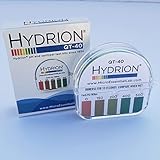
- Provides a simple, reliable, and economical means to measure the concentration of Quaternary Sanitizers, particularly multi-quat broad range quaternary ammonium sanitizer solutions
- Sanitizer solutions are essential in the food service industry to ensure that sanitizers are at the proper concentration
- Quick Results: This test produces quick results; Simply tear off a small strip of the test paper, dip it into your sanitizing solution for 10 seconds, and instantly compare the resulting color with the matching color chart
- Convenient Case: Since the test papers are packaged in a plastic case, they'll have some level of protection from water and other liquids that can cause them damage; However, they should not be stored in humid environments; Also, the case has a serrated edge that makes it easy for users to tear off a strip of the test paper; Additionally, instructions are printed on the case for the user's convenience
What toxin tests can detect—and what they measure
Tests differ not only in the toxin they target, but also in what they detect. A method may measure toxin itself, antibody recognition, biological toxicity or activity, or genes associated with toxin production. Those are different questions, and results are not automatically interchangeable.
| Approach | What the evidence describes | Key interpretation limit |
|---|---|---|
| Nanozyme-based colorimetric biosensors | A 2024 review surveys research applications involving bacterial food toxins, mycotoxins and marine toxins. | A research review does not establish a single standardized consumer assay or broad toxin coverage. |
| Lateral-flow immunoassays | Rapid, visually interpreted assays using target-recognition elements and labels. | Results and performance depend on the particular assay, target and sample; some are qualitative screening tests. |
| Cyanobacterial-toxin field kits and analytical methods | WHO guidance describes methods that can measure dissolved toxin, total toxin including cell-bound material, antibody recognition, toxicity or toxin-production potential. | Methods may be qualitative or semi-quantitative, may not distinguish variants, and can be affected by the sample matrix. |
| Validated laboratory analysis | FDA’s Foods Program Compendium lists regulatory laboratory methods tied to specified analytes and matrices. One example, C-003.03, uses stable-isotope dilution and LC-MS/MS for multiple mycotoxins in corn, peanut butter and wheat flour. | A method’s applicability is limited to the analytes and sample types for which it is specified; a regulatory method listing is not a home-test recommendation. |
Why a color change cannot establish that food or water is safe
A test result answers only the question its method was designed to answer. For cyanobacterial toxins in water, WHO guidance emphasizes that methods can measure different things, including direct toxin concentration, toxicity or toxin-production potential. Some tests may not distinguish toxin variants, and sample-matrix effects can influence results.
Rank #2

- FAST DIP & READ: Verify sanitizer strength quickly during daily operations—dip the strip for 1 second, wait 5–10 seconds, then compare the color change to the chart. Designed for fast checks in busy food service environments where consistent sanitizer levels matter.
- 0–500 PPM MEASUREMENT RANGE: Accurately monitor QAC QR5 sanitizer concentration from 0–500 ppm with clearly defined color steps at 0, 150, 200, 400, and 500 ppm. Helps ensure quaternary sanitizer solutions are mixed correctly to meet restaurant sanitation and safety guidelines.
- ACCURATE QUAT READING: These test strips are formulated specifically for quaternary ammonium sanitizer solutions to help prevent cross-testing errors. Not intended for chlorine or water testing. Suitable for use at sink compartments, sanitizer buckets, wiping cloth stations, and food contact surfaces.
- CLEAR COLOR CHART FOR QUICK DECISIONS: The easy-to-read color chart allows fast, confident ppm readings during opening checks, mid-shift monitoring, and closing procedures. Reliable chemical test strips support routine sanitizing solution verification and food service compliance.
- PROTECTIVE STORAGE VIAL: Each vial features a tight-sealing cap to keep test strips clean, dry, and protected between uses. Compact and easy to store in drawers, carts, or sanitation stations, supporting organized kitchen workflows and sanitation recordkeeping.
For water field kits, it matters whether the method measures dissolved toxin or total toxin that also includes cell-bound material, and whether its output is qualitative or semi-quantitative. WHO also notes that field-kit results can be difficult to interpret. A negative result from one method therefore cannot be extended to toxins, forms or concentrations outside that method’s validated scope.
How accurate are rapid toxin test strips?
There is no single accuracy figure for rapid toxin strips as a category. Sensitivity and specificity depend on the target, recognition chemistry, sample preparation, food matrix and the form of toxin the test is intended to detect. A test that performs for one toxin in one sample type cannot be assumed to perform equally for another.
Rank #3

- LAB-TESTED FOR ACCURACY: Take the guesswork out of routine water checks with our lab-tested pool test strips. Compare the strip colors with the bottle chart to monitor water chemistry and help guide pool and spa maintenance.
- 7-IN-1 POOL WATER TEST KIT: Check Total Hardness, Free Chlorine, Bromine, Total Chlorine, pH, Total Alkalinity and Cyanuric Acid Cya with one easy-to-use strip. Simplify routine water testing for your pool, hot tub or spa. It provides more results than most digital pool water testers.
- 162 STRIPS VALUE PACK: Keep up with regular water checks with best 162 pool and hot tub test strips in one convenient bottle. A starter value pack for families, inground saltwater pool owners, and pool service professionals.
- EASY TO USE, FAST RESULTS: Dip a pool test strip in water for 2 seconds, then hold it horizontally for 15 seconds without shaking off the water. Compare the colors with the bottle chart in natural daylight.
- HELP MAINTAIN BALANCED WATER: Monitor sanitizer levels, pH and other key water parameters with ease with these pool and spa test strips. Use the readings to help guide chemical adjustments for your swimming pool, hot tub or spa.
A study-specific botulinum example
In a 2005 study, Sharma and colleagues evaluated lateral-flow assays for botulinum neurotoxin types A, B and E in food. Under the study’s test conditions, the assays detected types A and B at 10 ng/ml and type E at 20 ng/ml. The authors described them as rapid and easy to use, but strictly qualitative and less sensitive than some in-vitro alternatives. These are findings from those particular assays and conditions—not general detection limits for current kits or other toxins.
When is laboratory confirmation needed?
Whether a screening result needs confirmation depends on the toxin, sample and intended decision. For a consequential food or water safety question, identify a method validated for the specific analyte and matrix, and follow the relevant public-health or regulatory process. WHO guidance says method selection depends on the sample type and the question being asked; for cyanobacterial toxins and toxicity, it reports that there is no single “gold standard” technique.
Rank #4

- CHLORINE TEST STRIPS FOR SANITIZER SOLUTIONS IN FOOD SERVICE ENVIRONMENTS – These easy-to-use chlorine test strips provide fast, accurate readings to ensure your sanitizing solutions meet required chlorine levels for effective cleaning and health code compliance. Perfect for restaurants, bars, commercial kitchens, cafeterias, and other food service operations, they offer a quick and reliable way to verify sanitizer concentrations during routine surface checks or dishwashing rinse cycles. An essential tool for maintaining a clean, safe, and compliant environment, these cost-effective test strips support consistent hygiene standards with minimal effort.
- CHLORINE TESTING STRIPS FOR CONSISTENT SANITATION IN FOOD SERVICE ENVIRONMENTS – This value pack includes 100 chlorine test strips, offering an affordable and long-lasting solution for restaurants, bars, commercial kitchens, cafeterias, and other high-traffic food service operations. Designed for fast and accurate chlorine level testing, these easy-to-use strips help ensure your sanitizing solutions meet health department standards for effective cleaning. Perfect for daily use in busy environments, these reliable test strips support consistent hygiene, reduce the need for frequent restocking, and make it easy to maintain a safe, clean, and compliant workspace.
- ACCURATE AND RELIABLE CHLORINE TEST STRIPS WITH WIDE 0–200 PPM RANGE – Designed for precision and ease of use, these professional-grade chlorine test strips provide accurate detection across a broad 0–200 ppm range, making them essential for restaurants, bars, commercial kitchens, cafeterias, and food service operations. Ideal for daily sanitization checks and routine compliance testing, these strips help ensure your sanitizing solutions maintain proper chlorine levels in line with health and safety regulations. Perfect for verifying disinfectant strength on surfaces, utensils, and equipment, they offer dependable performance to support a clean, safe, and compliant environment.
- PRE-CUT STRIPS, A CLEANER, FASTER, AND HASSLE-FREE ALTERNATIVE TO ROLLS – These pre-cut chlorine test strips offer a superior solution to traditional roll formats by eliminating the mess and frustration of tearing strips and avoiding paper waste in sinks or prep areas. Ready to use straight from the container, they provide quick, accurate chlorine level readings for food service sanitation checks with minimal effort. Perfect for busy restaurants, bars, commercial kitchens, and catering operations, these pre-cut strips streamline your sanitizing routine and help maintain a clean, efficient, and compliant workspace.
- NOT FOR POOL OR TAP WATER – These chlorine sanitizer test strips are specifically designed for use in restaurants, commercial kitchens, bars, and food-handling environments to accurately measure chlorine levels in food-safe sanitizing solutions. Ideal for ensuring compliance with health department regulations, they provide precise results tailored to the sanitation needs of food service operations. Please note: these test strips are not intended for use with pools, spas, or tap water, and are not compatible with quaternary ammonia sanitizers—use quat test strips for those applications.
FDA’s Bacteriological Analytical Manual points users toward other recognized methods when a toxin or sample is not covered or special handling is needed. Its list of commercially available rapid methods does not necessarily mean FDA evaluated those methods, and inclusion is not a recommendation. FDA’s Foods Program Compendium, by contrast, describes validated methods used by FDA regulatory laboratories, with each method applying to specified analytes and matrices.
Crashes, No Sound, or Screen Glitches?
Random freezes, missing sound and display glitches usually trace back to one bad driver. Find and replace yours safely.Free scan · under a minuteWindows Errors? Fix Them Before They Spread
Repair common Windows errors and clear accumulated junk for a smoother, more stable PC - no reinstall needed.Free scan · no reinstallWhat to check before relying on a result
- Target: Which toxin or toxin family does the assay detect?
- Sample: Is the method validated for this food or water matrix, and does it require particular preparation?
- What is measured: Does the result represent toxin concentration, biological activity, antibody recognition or toxin-production potential?
- Scope: For water, does the method detect dissolved toxin or total toxin including cell-bound material? Can it distinguish relevant variants?
- Output: Is the result qualitative, semi-quantitative or quantitative?
- Evidence: Are the stated detection limit and validation results for this exact assay and sample type, or are they from a research study under specific conditions?
- Next step: Does the test’s documentation or the relevant authority require specialist laboratory analysis to confirm a screening result?
If a toxin exposure is suspected, the appropriate test depends on the toxin and sample and may require qualified laboratory or public-health support. A generic “toxin test” or an apparently clear sample cannot settle that question.
Quick Recap
Best Value
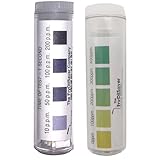
- DUAL SANITIZER TEST KIT, 200 STRIPS FOR CHLORINE & QUAT TESTING – Ensure proper sanitation in commercial kitchens with this essential dual test kit, designed for food service professionals who prioritize health and safety. The kit includes two sealed vials—100 test strips for Quaternary Ammonium (Quat) and 100 for Chlorine—providing accurate, dependable readings to verify sanitizer strength. Perfect for restaurants, cafeterias, food prep areas, and industrial kitchens, these high-quality test strips help maintain compliance with food safety regulations and support consistent, hygienic cleaning practices.
- EASY-READ COLOR MATCHING CHART FOR FAST & ACCURATE SANITIZER TESTING – Simplify your sanitation routine with the included color matching charts in each vial, designed for quick and reliable readings. Just dip a strip into the sanitizer solution, wait a few seconds, and compare the color to the chart for instant results. The Quat test strips measure from 0 to 200ppm, while the Chlorine strips range from 0 to 400ppm—perfect for ensuring proper sanitizer strength. Ideal for commercial kitchens, restaurants, and food prep areas, this user-friendly system supports accurate testing and helps maintain health code compliance with ease.
- RESTAURANT SANITIZER TEST STRIP KIT - The FryOilSaver Co. Quat and Chlorine Sanitizer Test Kit is a must-have for commercial kitchens, restaurants, and food service operations. This dual-kit includes two vials with 100 premium test strips each, one for Quaternary Ammonium (Quat) and one for Chlorine, designed to deliver fast, accurate sanitizer strength readings. Perfect for busy food prep environments, the kit simplifies routine testing to ensure compliance with health regulations and optimal sanitation. Reliable, easy to use, and essential for maintaining food safety standards.
- QUAT & CHLORINE SANITIZER TEST STRIPS FOR FOOD SAFETY – Maintain optimal cleanliness and hygiene with this essential Sanitizer Testing Kit, perfect for both commercial kitchens and home use. The kit includes both Quat and Chlorine test strips, providing accurate and convenient testing for a wide range of sanitizer solutions. Designed for ease of use, these high-quality strips ensure your sanitizers are at the correct strength, helping to meet health and safety standards. A must-have tool for daily sanitation checks, this kit guarantees that your kitchen stays clean, safe, and compliant with food service regulations.
- INSTANT RESULTS WITH QUICK SANITIZER TESTING – Get fast, accurate readings in seconds with our Quat and Chlorine Sanitizer Test Strips. Simply dip a strip into the solution, wait a moment, and compare it to the color chart for immediate results, making it easy to monitor sanitizer levels and maintain food safety. Designed for efficiency, these strips provide reliable readings in busy kitchen environments, helping streamline your sanitation process. Ideal for restaurants, cafeterias, and food service operations, this time-saving tool ensures your sanitizers are performing effectively without the need for lengthy testing procedures.
Product prices and availability are accurate as of the date/time indicated and are subject to change. Any price and availability information displayed on Amazon at the time of purchase will apply.

