Recommended Free Tools
A CNC machine and a plasma cutter are not opposing categories. CNC describes computer-controlled motion, while plasma cutting describes a thermal process that melts electrically conductive metal. A CNC mill removes material with a rotating cutting tool; a plasma torch melts metal with an ionized-gas arc and blows the molten material away. A plasma cutter can also be mounted on a CNC table, so the right comparison is usually milling versus plasma cutting—and then manual equipment versus automated equipment.
What the terms actually mean
The word CNC (computer numerical control) identifies how equipment is controlled, not what cutting process it uses. A CNC mill, router, lathe, grinder, and plasma table can all follow programmed coordinates. The machine type determines how material is processed.
As an Amazon Associate I earn from qualifying purchases.
In the common comparison implied by this question, “CNC machine” usually means a CNC milling machine. Haas describes end milling as using a rotating end mill to remove workpiece material, producing features such as slots, pockets, contours, and intricate profiles. Its mill safety guidance describes mills as machines for cutting and shaping metals and other hard materials, with most cutting performed by a spindle-mounted rotating tool (Haas end-milling guide; Haas mill safety summary).
A plasma cutter uses a different physical mechanism. Hypertherm defines it as a machine that uses a plasma stream to transfer energy to a conductive work material. The arc melts the metal, and a gas stream removes the molten material (Hypertherm plasma technology overview). The plasma arc temperature is described on that page as approaching about 11,700°C (40,000°F); that is a general characterization of the arc, not a guaranteed operating temperature for every product or cut.
#1 Best Overall

- All-Aluminum Structure & Enhanced Stability: Engineered with an all-metal framework and linear rail Z-axis, the FoxAlien Masuter Pro offers superior precision, durability, and stability for detailed engraving and cutting on wood, acrylic, MDF, nylon, and more.
- Upgraded Dust-Proof Controller & User-Friendly Design: Features a compact, dust-resistant controller box with easily accessible emergency stop and home buttons for safer, more convenient operation.
- Versatile Spindle Compatibility & Customization: Includes two spindle clamps (52mm & 65mm) compatible with 60W and 300W spindles, as well as custom upgrade options like 65mm router or 1.5KW spindle for advanced carving needs. It also supports the 69mm spindle clamp, please buy separately.
- Quick Assembly & Pre-Wired Components: Main parts are pre-assembled with pre-wired wiring to the controller, plus a detailed step-by-step manual—set up in just 10-15 minutes, ideal for hobbyists and DIY enthusiasts.
- Large Working Area & Expandability: Features a generous 15.75” x 15.75” x 2.36” (400 x 400 x 60mm) engraving surface, with optional Y-axis extension kit, perfect for larger projects and versatile woodworking applications.
How CNC milling removes material
The cutting action
An end mill is held in a spindle and rotated at a programmed speed. As the tool travels through the workpiece, its flutes shear away chips. The controller coordinates spindle movement and the machine axes so the tool follows a toolpath generated from the part design.
Features a mill can make
- Slots: linear grooves cut to a specified width and depth.
- Pockets: recessed areas cleared inside a boundary.
- Contours and profiles: outside or inside shapes followed by the tool.
- Intricate profiles: three-dimensional or closely detailed surfaces that require coordinated tool motion.
Milling is therefore suited to parts whose geometry is defined by controlled removal from a block, plate, or other workpiece. The process can address more than an outline: it can create internal features and vary depth within the same setup, subject to the machine’s axes, tooling, workholding, and programming.
Typical milling sequence
- Create or import a CAD model and decide which surfaces and features must be machined.
- Use CAM software to select tools, cutting paths, speeds, feeds, and machining order.
- Secure the workpiece, install the tools, set the work and tool offsets, and verify the programmed coordinates.
- Run the program, allowing the rotating tool to remove material in successive passes.
- Inspect critical dimensions and surfaces; adjust tooling or the program if the required result is not achieved.
The exact tools, cutting parameters, number of passes, and achievable finish depend on the particular mill, material, tooling, fixture, and operator. A CNC label alone does not establish a tolerance, speed, or surface finish.
What’s actually slowing this PC down?
Pick the symptom - the matching free tool is one click away.
How plasma cutting removes metal
The thermal cutting action
In a plasma system, an electrical arc turns a gas stream into plasma. The concentrated energy melts the workpiece along the torch path, while the gas flow ejects the molten metal and leaves a cut. Because the process transfers energy to a conductive work material, plasma is intended for electrically conductive metals rather than insulating materials.
Hypertherm lists mild or carbon steel, stainless steel, aluminum, copper, and brass among materials that plasma systems can cut (Hypertherm plasma technology overview). Suitability still depends on the actual alloy, thickness, power supply, torch, gas configuration, and required cut quality.
Rank #2

- 【Precise CNC Engraving Machine】This CNC router machine uses a 32-bit STM32 processor and GRBL control, achieving 0.1mm engraving accuracy and speeds up to 1500mm/min. It's perfect for detailed work on wood, plastics, acrylic, and soft metals like copper and aluminum.
- 【Desktop engraving machine】With a overall size of 420x355x280mm and a spacious 300x180x40mm work area, this compact CNC mill is a perfect desktop workshop for beginners and creators, ideal for education, prototyping, and personal projects.
- 【User-Friendly CNC Machine】Wood carving machine operate easily via USB connection. Compatible with popular software like Artcam and Fusion360, this engraving machine is officially supported on Windows XP through Win 10 systems.
- 【Versatile CNC Router & Mill】CNC wood cutting machine with a 775 spindle (7000-9000 RPM) and an ER11 collet that supports 0.5-7mm bits, this machine functions as both a capable CNC router for woods/plastics and a light-duty CNC mill for soft metals.
- 【Peace of Mind: Certified Assurance and Professional Support】The product holds multiple international safety certifications including CE-EMC, CE-LVD, CE-MD, CE-RED, ROHS, FCC-Sdoc, and FCC-ID, guaranteeing quality assurance. The main components are pre-assembled with clearly labelled cables, ensuring straightforward and swift installation. Our dedicated customer service team provides 24-hour technical support, ensuring a seamless experience from assembly to operation.
Where plasma is used
Plasma cutting is commonly associated with plate and sheet-metal fabrication. Hypertherm lists fabrication, repair, plate cutting, bevel cutting, gouging, marking, automotive restoration, construction, and pipe work as applications (Hypertherm cutting applications). A handheld torch is useful for manually guided cuts and repair work. A mechanized table is intended for repeatable programmed cuts in a production or job-shop setting.
Typical manual plasma sequence
- Confirm that the workpiece is an electrically conductive metal and that its thickness is within the system’s capability.
- Install the torch consumables and connect the specified power, gas, and work-return arrangements for the system.
- Mark or lay out the cut path, position the torch, and set the cutting mode and parameters recommended for the material.
- Start the arc and guide the torch at a consistent speed along the path.
- Check the cut edge and underside for incomplete penetration or unwanted dross, then correct the setup or technique before making production parts.
Manual results depend strongly on operator travel, torch position, material condition, and settings. A handheld plasma cutter should not be treated as equivalent to a complete CNC plasma table.
The Tool Desk
Outbyte Driver Updater FREEFix the driver behind crashes, sound loss and screen glitchesFind Drivers →Outbyte PC Repair FREERepair Windows errors before they cause bigger problemsFix Now →What a CNC plasma cutter adds
A CNC plasma cutter is the overlap between the two terms. It combines plasma’s thermal cutting process with computer-controlled motion. In Hypertherm’s description of an automated system, a typical arrangement includes a cutting table, plasma torch and power supply, gas controls, and a CNC controller. The controller reads a CAM file and determines torch start and stop signals, travel speed, and direction (Hypertherm automated cutting systems guide).
The CNC controller does not turn plasma into milling. It automates where and how the plasma torch travels. CNC cutting tables can carry other technologies as well, so “CNC” never means “plasma” by itself. When buying or specifying equipment, state both the motion system and the process—for example, “three-axis CNC mill” or “CNC plasma table.”
CNC mill versus plasma cutter: practical differences
| Decision factor | CNC milling | Plasma cutting |
|---|---|---|
| What does the work? | A rotating end mill mechanically removes chips. | An arc melts conductive metal and gas flow ejects the melt. |
| Control category | Often CNC-controlled, but milling is the process being compared. | Can be handheld or CNC-controlled on a mechanized table. |
| Best-known geometry | Slots, pockets, contours, profiles, and depth-controlled features. | Through-cuts, outlines, plate shapes, bevels, gouges, and marked paths. |
| Material requirement | Works with metals and other hard materials within the mill’s tooling and capacity. | Requires electrically conductive material; listed examples include carbon steel, stainless steel, aluminum, copper, and brass. |
| Typical workpiece | A block, plate, or component that needs material removed from multiple surfaces or at controlled depths. | Conductive sheet or plate that needs a profile or other thermal cut. |
| Automation inputs | Toolpaths include tool selection, spindle motion, and cutting passes. | A CAM file can specify torch start/stop, travel direction, and speed. |
| What determines operating cost? | Tooling, electricity, labor, workholding, maintenance, and the time required for machining. | Consumables, electricity, gas, labor, table and torch configuration, and cutting time. |
The table shows why a universal winner does not exist. Milling and plasma solve different manufacturing problems. A plasma system may complete a plate outline quickly, while a mill may be the appropriate choice when the same part needs pockets, drilled features, controlled-depth surfaces, or a machined finish. Performance varies with machine configuration, programming, material, thickness, tooling or consumables, operator skill, and the output specification.
Rank #3
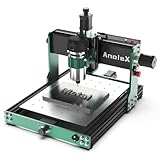
- Small home machine for light-duty work, with a robust and rigid structure. Repeatability accuracy ±0.01mm and cutting accuracy of 6061 aluminum plate ±0.05mm
- [800w Trim Router & Upgradeable 1.5kw Spindle ] Comes with 800W trim router & Er11-1/8" collet with 6-speed settings (8000-24000 RPM). Can easily cut metals such as aluminum, copper, etc. Software-controlled run/stop functionality, with speed adjustment requiring manual dial control. Comes with ⌀65mm spindle mount, it can be directly upgraded to our 1.5kw spindle kit for greater cutting capacity, precision and improved efficiency
- [Dual Linear Guides & Upgradeable Ball Screws] Each axis (X, Y, Z) is equipped with MGN-15 dual linear guides and T8 lead screws. It has high precision, high rigidity and high load for metal cutting, and improved dust protection for X and Y axes. 1204 ball screw kit available for upgrade.
- [Nema 17 stepper & Upgradable Closed-loop Motor] The 3030-Evo Max employs a higher-torque 650mN·m stepper motor compared to the common Nema17 motor (420mN·m), significantly enhancing its capability to process metallic materials. Upgradeable Nema17 closed-loop motor to obtain greater torque and achieve no step loss.
- [Easy Assembly & Upgradeable 3060 Table] Major components pre-assembled with clear cable management, accompanied by a detailed paper user manual and assembly/demo video for quick setup. The 3060 extension table base can be upgraded. The steps are simple, just remove the original base and replace it.
Which one should you use for cutting metal?
Choose the process after defining the part, not before choosing a machine brand or control package. Work through these questions:
1. Is the material conductive?
If the answer is no, plasma is not the appropriate process. If it is conductive, plasma remains only one option; the alloy, thickness, and required edge condition still matter. A mill can process metals and other hard materials when the machine and tooling are suitable.
2. Do you need a profile or machined features?
For a flat outline in plate, especially repeated outlines, a CNC plasma table may fit. For pockets, slots, contours with controlled depth, or intricate profiles, milling provides the cutting action needed to form those features. A plasma torch removes material through the sheet; it does not substitute for a rotating tool that machines an internal pocket.
3. What edge and feature quality is required?
Define the acceptable edge condition, dimensional accuracy, heat effect, and secondary finishing before comparing quotes. Do not assume that plasma is always faster, that milling is always more accurate, or that either is always cheaper. Those outcomes depend on the specific configuration and the required result.
4. How many parts will you make?
For one-off work, a handheld torch or manual setup may be adequate if the geometry and quality allow it. Repeated parts favor programmed motion, because a CNC controller can replay the CAM-defined path. The table size, gantry, torch package, and control features should match the largest part and expected batch quantities.
Do these 3 things before closing this tab:
1Clear out junk files and repair common Windows errors2Scan for outdated or missing drivers - takes under a minute3Repair Windows errors before they cause bigger problemsRank #4
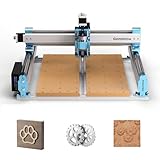
- MORE CONSISTENT CUTS, LESS BED FLEX - The upgraded 4040-PRO CNC router machine features a reinforced hybrid spoilboard with a center aluminum support bar to reduce sagging and maintain a flatter work surface, helping deliver more consistent cutting and carving depth across larger projects.
- RIGID MOTION FOR STABLE MACHINING - Dual 16mm HSS steel tubes on each axis and lead-screw drives create a rigid motion system for smooth, accurate movement. A 32-bit controller with silent Toshiba drivers provides stable, quieter operation for detailed carving, engraving, and CNC milling projects.
- MORE ROOM FOR CREATIVE PROJECTS - A 435 x 400 x 80mm (17.13 x 15.75 x 3.15 in) working area gives this desktop CNC machine room for signs, reliefs, prototypes, and woodworking projects. Machine wood, acrylic, MDF, nylon, and carbon fiber composites with the appropriate bits and cutting settings.
- FROM ASSEMBLY TO CNC FASTER - Pre-assembled modules let you build the 4040-PRO in about 15 minutes, while the relocated Z-probe port provides easier access during setup. GRBL control gives makers a flexible, widely supported workflow for learning CNC, preparing jobs, and running G-code projects.
- UPGRADE AS YOUR SKILLS GROW - Expand your CNC machine instead of outgrowing it. The redesigned Z-axis carriage supports 65mm or 69mm spindle mounts with an additional mount, while dedicated 3-pin ports support compatible accessories such as air assistance and MPG controllers for more advanced projects.
5. What supporting equipment and costs are involved?
Compare the complete setup rather than the torch or spindle alone. A plasma table may require a cutting table, power supply, gas controls, CNC controller, and compatible consumables. A mill requires the machine, spindle tooling, workholding, programming, and maintenance. Include consumables, electricity, gas where applicable, labor, and time spent setting up and finishing parts. Hypertherm’s guidance also emphasizes matching a CNC plasma table to parts, quantities, and system configuration (Hypertherm CNC plasma table selection guide).
Independent reader supportYour contribution helps us test, update, and keep practical guides available for everyone.Common terminology mistakes
“CNC” means one machine
CNC is a control method. Ask whether the speaker means a mill, router, lathe, or plasma table. Their tools, materials, axes, and applications differ.
A plasma cutter is never CNC
Handheld plasma cutters are manually guided, but mechanized CNC plasma systems are established equipment. The CNC controller automates torch movement; the plasma arc remains the cutting process.
Any CNC table is a plasma table
A CNC table can be configured for plasma or other cutting technologies. Confirm the torch, power supply, table, gas controls, and software rather than relying on the word CNC.
Comparing a handheld torch with a complete machining center
These are different equipment packages and scales. A fair comparison identifies whether the plasma side is handheld or mechanized and whether the CNC side is a mill, router, or another machine.
Best Value

- 【Capacitive Touch Screen + Professional Expansion Ports】The TTC450 Pro CNC engraving machine is equipped with a highly responsive 3.5-inch IPS capacitive touch screen for intuitive and smooth operation. Its control box integrates a 4th-axis rotation port, laser module port and 500W spindle speed control port, enabling seamless upgrades to a 4-axis engraving machine or combined CNC wood carving and laser engraving/cutting machine to meet your growing creative needs.
- 【High-Precision Z-Axis Creative Freedom for CNC Router Machine】This premium CNC router features an extra-large square working area of 18.1 inches (460 x 460 x 80 mm), easily handling furniture panels, large signage and batch production. The high-precision Z-axis driven by a 57 stepping motor (positioning accuracy up to 0.0025 mm) delivers outstanding depth control and surface finish for multi-layer engraving and intricate relief work.
- 【Wide CNC MachineCompatibility】This desktop CNC router adopts the open-source GRBL control system, perfectly compatible with mainstream design software including ArtCam, Fusion 360, Easel and Carveco Maker. It supports Windows, macOS and Linux operating systems. A large user community and abundant technical resources ensure a smooth workflow from design to production.
- 【Sturdy Structure for Stable Performance】Wood CNC machine Constructed with aluminum alloy and stainless steel, the CNC milling machine body is built with dual limit switches (TM-1618D micro switches) on XYZ axes, forming a solid and safe working platform. With industrial-grade overall structure, this wood engraving machine effectively suppresses vibration, ensuring stable operation and repeat positioning accuracy during long-hour and high-load machining.
- 【Complete CNC Router Accessories for Woodworking】You will receive a full accessory set including 10 cutting tools: pointed carving bits, flat end mills, chamfer cutters, 6 clamping plates, test engraving materials and a 775 brushed spindle motor. The machine works with a wide range of materials such as wood, acrylic, carbon fiber, as well as aluminum, copper and stainless steel, covering creative prototyping and functional parts production.
Planning a reliable workflow
- Specify the material: name the alloy and verify conductivity for plasma.
- Record thickness: use the actual plate or stock thickness, not a general material label.
- Define geometry: distinguish a through-profile from pockets, slots, contours, or other depth-controlled features.
- Set the quality target: document edge, dimensional, and finish requirements before selecting a process.
- Choose manual or automated motion: decide whether one guided cut is enough or whether a CNC table or mill must repeat a CAM path.
- Budget the whole operation: include tooling or consumables, power, gas, labor, setup, inspection, and any secondary work.
- Validate the specific setup: follow the machine and torch manufacturer’s operating instructions and verify the program before cutting production material.
Bottom line for a purchase or job decision
Use a CNC mill when the part requires mechanical shaping such as slots, pockets, contours, profiles, or controlled-depth machining. Use plasma when you need to thermally cut conductive metal, particularly plate and sheet, and select a CNC plasma table when programmed, repeatable torch motion is important. The key distinction is not “CNC versus plasma”: it is mechanical material removal versus thermal cutting, with CNC available as the control method for either kind of automated equipment.
Frequently Asked Questions
Can a handheld plasma cutter run a CAD or CAM file by itself?
No. A handheld unit is manually guided. Running a CAM-defined path requires a mechanized arrangement with a table, torch and power supply, gas controls, and a CNC controller.
Can plasma cut aluminum and stainless steel, or only carbon steel?
Plasma systems can cut conductive metals including aluminum, stainless steel, copper, brass, and mild or carbon steel. The actual thickness, alloy, power supply, gas setup, and required edge quality determine whether a particular cut is suitable.
Crashes, No Sound, or Screen Glitches?
Random freezes, missing sound and display glitches usually trace back to one bad driver. Find and replace yours safely.Free scan · under a minuteWindows Errors? Fix Them Before They Spread
Repair common Windows errors and clear accumulated junk for a smoother, more stable PC - no reinstall needed.Free scan · no reinstallWhy might a cut part still need milling afterward?
Plasma can produce the required plate outline, but milling may still be needed for pockets, slots, controlled-depth surfaces, or other features that require a rotating tool and mechanically machined geometry.
Quick Recap
Product prices and availability are accurate as of the date/time indicated and are subject to change. Any price and availability information displayed on Amazon at the time of purchase will apply.

