Free tools Windows power users keep installed
One-click scans. No signup required.
No Yu-Gi-Oh! card has a literal “never” guarantee. Konami can revise the Forbidden & Limited List at any time, so the cards below are predictions: they are the safest bets to remain forbidden without a functional rewrite. Pot of Greed is the clearest case, followed by Graceful Charity, Delinquent Duo, Painful Choice, Last Turn, Mystic Mine and Victory Dragon.
“Never” is a prediction, not an official status
Konami’s Forbidden & Limited List controls cards in official Yu-Gi-Oh! Trading Card Game tournaments. A Forbidden card cannot be used in a player’s Main Deck, Extra Deck or Side Deck. That restriction concerns tournament play; it does not prevent you from owning, trading or displaying the physical card.


As an Amazon Associate I earn from qualifying purchases.
The official Neuron list was updated September 21, 2026 and showed 122 Forbidden cards, 95 Limited cards, eight Semi-Limited cards and 10 cards removed from the list. On October 16, 2026, GamesRadar reported an emergency update announcing 34 newly Forbidden cards and eight Limited cards. Those changes illustrate why “permanent” is editorial shorthand rather than a promise from Konami.
Quick wins for a faster PC:
Fix the driver behind crashes, sound loss and screen glitchesFind Drivers →Repair Windows errors before they cause bigger problemsFix Now →The seven strongest permanent-ban bets
Each candidate is currently listed as Forbidden. The ranking reflects how difficult the card would be to return unchanged in a modern card pool.
#1 Best Overall
1. Pot of Greed
Pot of Greed is the highest-confidence permanence bet because its text is almost impossible to balance: a Spell with no cost or restriction that simply draws two cards. It improves virtually every deck, increases consistency before an opponent can interact, and has no archetype condition that limits where it can be used. An errata-free return would give every strategy a universal source of card advantage, making an unrestricted comeback extraordinarily unlikely.
2. Graceful Charity
Graceful Charity draws three cards and then requires two discards. In its early-era context, that looked like a drawback. Modern decks routinely treat the Graveyard as a second hand, however, so the discard can become setup, revival material or a trigger for other effects. The card therefore supplies both selection and Graveyard fuel to any strategy rather than to one specific archetype. It remains Forbidden on the current list.
Rank #2

- 1 pack of Legend of Blue-Eyes White Dragon, 1 pack of Metal Raiders, 1 pack of Spell Ruler, 1 pack of Pharaoh’s Servant
- 1 pack of Dark Crisis, 1 pack of Invasion of Chaos, 1 Ultra Rare Obelisk the Tormentor card, 1 Ultra Rare Slifer the Sky
- Dragon card, 1 Ultra Rare The Winged Dragon of Ra card, 1 Ultra Rare Blue-Eyes White Dragon card, 1 Ultra Rare Dark
- Magician card, 1 Ultra Rare Red-Eyes Black Dragon card, and 1 Quarter Century Secret Rare version of 1 of the 6 a forementioned cards (random
3. Delinquent Duo
Delinquent Duo combines hand destruction with Life Point damage. Its greatest problem is timing: used early, it can remove an opponent’s resources before that player develops a board or establishes protection. Because it is generic, every deck could deploy the effect without building around a theme. That combination of low opportunity cost and early-game disruption makes an unchanged return difficult to justify.
The Tool Desk
Outbyte Driver Updater FREEScan for outdated or missing drivers - takes under a minuteDriver Scan →Outbyte PC Repair FREEClear out junk files and repair common Windows errorsFree Scan →4. Painful Choice
Painful Choice lets its user reveal five cards and have the opponent choose which one is added to hand, sending the others to the Graveyard. The opponent’s choice does not eliminate the setup; it determines which part of a deliberately constructed five-card package reaches the Graveyard. With today’s Graveyard-dependent effects, the four cards sent away can be as valuable as the card added to hand. The result is deterministic setup that scales with every future release, so Painful Choice remains one of the least realistic unban candidates.
Rank #3
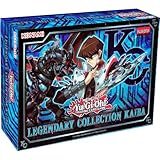
- 2025 Reprint 3 Packs included Mega Packs contains 4 Secret Rares and 6 Ultra Rares for a total of 10 foil cards per pack (that’s 30 cards per box)
5. Last Turn
Last Turn creates a special endgame in which normal battle-flow incentives and interaction are replaced by a highly unusual one-turn resolution. Effects that produce alternate or near-deterministic wins are difficult to support in tournament play because they generate rulings, timing and stalling problems beyond ordinary card advantage. Returning Last Turn without a functional rewrite would preserve those rules complications, which is why it remains Forbidden.
6. Mystic Mine
Mystic Mine is newer than the classic early-era staples, but its design is just as hostile to an unrestricted return. It can prevent monster-based interaction and encourage players to protect a stalled position rather than advance the duel. That attacks the game’s normal combat loop directly, producing drawn-out games and forcing opponents to rely on narrow answers. Even outside the oldest “classic” era, its format-warping pattern is a strong permanence signal.
Rank #4
7. Victory Dragon
Victory Dragon’s problem is structural rather than purely statistical. Its win condition operates at the match level, so a successful attack can affect an entire tournament match instead of only the current Duel. That creates concession incentives and tournament-policy complications that ordinary card effects do not. A card whose resolution changes match results is an especially poor candidate for an unerrataed return and remains Forbidden.
How to evaluate any other “never unbanned” candidate
Use these questions rather than relying on age or nostalgia. A card can be old and still return if its effect is narrow; conversely, a newer card can become a long-term ban if it attacks a fundamental game system.
Best Value
| Test | What to ask | Why it raises permanence risk |
|---|---|---|
| Universality | Does it improve almost every deck? | A generic staple spreads its power across the entire card pool. |
| Resource swing | Does it draw cards, remove opposing cards or create extra bodies? | Large gains with little or no cost are difficult to contain. |
| Graveyard exploitation | Does a discard or “cost” become useful setup? | Modern Graveyard effects can turn an old drawback into additional advantage. |
| Interaction denial | Does it shut off normal monster, Spell, Trap or battle interaction? | Lock pieces can force stalls and make the rest of the deck irrelevant. |
| Rules complexity | Does it create unusual win, match or timing states? | Policy and ruling problems can outlast changes in competitive power. |
| Errata requirement | Could it return unchanged? | If only a functional rewrite makes it safe, the original text is unlikely to return. |
What Forbidden means for players and collectors
Tournament use
In the current Advanced Format, a Forbidden card is not legal in the Main Deck, Extra Deck or Side Deck. Always check the active official list before an event because statuses can change between list updates and emergency announcements.
Owning and collecting
Forbidden status does not erase the card’s collectible value. Players may own, trade and display copies, and iconic cards can appeal to collectors precisely because their tournament history is settled. Sealed Yu-Gi-Oh! TCG packs and boxes are broad physical-product options, but sealed products cannot guarantee a named card. If you want a particular Pot of Greed, Graceful Charity or Victory Dragon, a single copy or a graded collectible is the more direct route; verify a marketplace’s current terms before buying.
Bottom line
Pot of Greed, Graceful Charity, Delinquent Duo and Painful Choice are the strongest classic permanence bets because they offer generic, scalable resource advantages. Last Turn and Victory Dragon are difficult to restore because they create unusual win or match states, while Mystic Mine suppresses ordinary monster interaction and pushes games toward stalls. None is guaranteed to stay Forbidden forever, but each would require Konami to accept a major change in power, rules or both before an unaltered return could be plausible.
Quick Recap
Product prices and availability are accurate as of the date/time indicated and are subject to change. Any price and availability information displayed on Amazon at the time of purchase will apply.

