Do these 3 things before closing this tab:
1Scan for outdated or missing drivers - takes under a minute2Clear out junk files and repair common Windows errors3Fix the driver behind crashes, sound loss and screen glitchesPlay Castlevania in release order if you want to experience how its controls, level design and storytelling evolved. Use the classic story order if Dracula, the Belmont family and the wider timeline matter more than historical context. Treat Lords of Shadow as a separate reboot trilogy, not as the next chapter of the original continuity. For the easiest modern starting point, the 2019 Castlevania Anniversary Collection gathers eight foundational games on PlayStation 4, Xbox One, Nintendo Switch and Steam.
Which Castlevania order should you choose?
There is no single perfect sequence because Castlevania has several continuities, remakes and side branches. Your goal should determine the order.
As an Amazon Associate I earn from qualifying purchases.
| Order | Best for | Main advantage | Main drawback |
|---|---|---|---|
| Release order | First-time players and series historians | Shows the progression from fixed-screen platforming to metroidvania exploration, handheld experiments and 3D games. | The story jumps backward and forward, and some early games are mechanically demanding. |
| Classic story order | Players who want the Belmont-and-Dracula narrative | Follows the commonly used IGA-era chronology from Lament of Innocence through Soma Cruz’s 2035–2036 story. | Several games have disputed placement, alternate versions or side-continuity status. |
| Lords of Shadow order | Players interested in the reboot continuity | Its three games form a compact, self-contained sequence. | It does not continue the original timeline. |
| Collection order | Players limited to current hardware | Official collections provide the most practical access to selected classics. | No collection contains the entire franchise or every story branch. |
For most newcomers, a hybrid works best: play the Anniversary Collection titles in release order, then move to the later story-focused games that interest you. If chronology is your priority, begin with Lament of Innocence, but expect large changes in gameplay between entries.
What’s actually slowing this PC down?
Pick the symptom - the matching free tool is one click away.
What Castlevania is and why the order is complicated
Castlevania debuted in 1986. Konami describes it as an action-adventure series about vampire hunters, especially the Belmont clan, fighting Dracula. The original games grew out of side-scrolling platforming: players moved through linear stages, defeated bosses and used sub-weapons such as axes, holy water and boomerangs. Later releases introduced open-ended castles, role-playing systems, multiple endings, 3D exploration and multiplayer.
#1 Best Overall

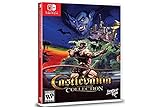
- Classics that defined the Castlevania series.
- Includes the "History of Castlevania - Book of the Crescent Moon" ebook.
- The Castlevania Anniversary Collection on physical cart for the Nintendo Switch.
- This includes eight classic Castlevania games preserved on one cart with a full-color manual. Region-free.
The games are not one uninterrupted sequence. The main classic chronology associated with producer Koji Igarashi (often called the IGA timeline) contains the best-known Belmont, Dracula and Soma Cruz stories. Other releases are remakes, reinterpretations, crossovers or branches whose place in that chronology is disputed. A sensible guide therefore labels those cases instead of pretending every title fits perfectly.
Castlevania games in release order
Release order is the clearest way to see the series’ design history. Dates below use the major original release windows supplied by Konami; regional launches sometimes occurred a year apart.
Rank #2
- 819976026033
- 1186668
| Year | Game(s) | Original platform or context |
|---|---|---|
| 1986 | Castlevania | Arcade and Japanese debut |
| 1987 US / 1988 EU | Castlevania | NES home release |
| 1988 US / 1990 EU | Castlevania II: Simon’s Quest | NES |
| 1990 US / 1992 EU | Castlevania III: Dracula’s Curse | NES |
| 1989 US / 1991 EU | Castlevania: The Adventure | Game Boy |
| 1991 | Castlevania II: Belmont’s Revenge | Game Boy |
| 1991 | Super Castlevania IV | Super Nintendo Entertainment System |
| 1994 | Castlevania: Bloodlines | Sega Genesis |
| 1995 | Castlevania: Dracula X | Super Nintendo Entertainment System |
| 1997 | Castlevania: Symphony of the Night | PlayStation and Saturn |
| 1998 | Castlevania Legends | Game Boy |
| 1998 | Castlevania | Nintendo 64 |
| 1999 | Castlevania: Legacy of Darkness | Nintendo 64 |
| 2001 | Circle of the Moon; Castlevania Chronicles | Game Boy Advance; PlayStation |
| 2002 | Harmony of Dissonance | Game Boy Advance |
| 2003 | Aria of Sorrow; Lament of Innocence | Game Boy Advance; PlayStation 2 |
| 2005 | Dawn of Sorrow; Curse of Darkness | Nintendo DS; PlayStation 2 and Xbox |
| 2006 | Portrait of Ruin | Nintendo DS |
| 2007 | The Dracula X Chronicles | PlayStation Portable |
| 2008 | Order of Ecclesia; Judgment | Nintendo DS; Wii |
| 2009 | The Adventure ReBirth | WiiWare |
| 2010 | Harmony of Despair; Lords of Shadow | Downloadable multiplayer title; PlayStation 3, Xbox 360 and other releases |
| 2013 | Lords of Shadow: Mirror of Fate | Nintendo 3DS; HD edition later in 2013 |
| 2014 | Lords of Shadow 2 | Follow-up to the reboot |
| 2018 | Requiem: Symphony of the Night & Rondo of Blood | PlayStation 4 |
| 2019 | Castlevania Anniversary Collection | PlayStation 4, Xbox One, Nintendo Switch and Steam |
| 2020 | Symphony of the Night | Mobile release |
| 2021 | Grimoire of Souls; Advance Collection | Modern digital releases |
| 2024 | Dominus Collection | Modern collection release |
What changes as you move through release history?
- The 1986–1991 games establish deliberate, stage-based platforming and the Belmont whip.
- Simon's Quest experiments with towns, passwords and day-night progression, while Castlevania III adds branching routes and playable allies.
- Super Castlevania IV refines the classic formula with eight-directional whip control and more elaborate audiovisual presentation.
- Symphony of the Night turns Dracula's castle into an interconnected map with exploration, equipment and role-playing elements. That structure becomes the template for many handheld games.
- The Game Boy Advance and Nintendo DS period produces several compact metroidvanias, while the Nintendo 64, PlayStation 2 and Xbox games test three-dimensional movement.
- Lords of Shadow shifts toward cinematic 3D action in a new continuity rather than extending the handheld storyline.
Classic Castlevania story order
The following is the commonly used narrative route for the principal classic continuity. It is a story order, not a recommendation that every game be played back-to-back. The chronology spans centuries, so characters, mechanics and even genres change substantially.
Origins and the first Belmont conflict
- Castlevania: Lament of Innocence — Set in the 11th-century portion of the commonly used chronology, it presents the origin of the Belmont-Dracula conflict and explains how the clan becomes associated with vampire hunting.
- Castlevania III: Dracula’s Curse — Trevor Belmont leads the 15th-century battle against Dracula. Konami’s collection guide describes the game as taking place 100 years before Simon Belmont’s birth and identifies Trevor as Simon’s forefather. Its branching routes and recruitable allies make it a key prequel to the NES games.
- Castlevania: Curse of Darkness — This follows the Castlevania III era in the usual chronology. It focuses on Hector, a former Dracula-associated devil forge master, and expands the period’s events beyond Trevor’s campaign.
Christopher and Simon Belmont
- Castlevania: The Adventure — Christopher Belmont’s Game Boy adventure.
- Castlevania II: Belmont’s Revenge — Christopher’s next Game Boy story, continuing his conflict with Dracula.
- Castlevania — The Simon Belmont NES game that established the series for a large home-console audience.
- Castlevania II: Simon’s Quest — Simon’s subsequent adventure after the first NES game, with towns, exploration and a quest to recover Dracula’s remains.
Richter, Alucard and the late classic era
- Castlevania: Harmony of Dissonance — Usually placed after Simon’s era, this follows Juste Belmont and demonstrates the more exploration-focused design that became standard on handheld systems.
- Castlevania: Rondo of Blood — Richter Belmont’s campaign and the kidnapping that leads directly into the next entry.
- Castlevania: Symphony of the Night — Alucard investigates Dracula’s castle after the events of Rondo of Blood. It is the major bridge between classic stage-based Castlevania and the exploration-heavy format.
- Castlevania: Order of Ecclesia — Generally treated as a late-classic-era vampire-hunter story. Its exact place is less important to the main family narrative than its status as a separate order’s campaign.
- Castlevania: Bloodlines — Set during World War I, according to Konami’s collection guide. It follows a different pair of heroes and broadens the conflict beyond a direct Belmont-led campaign.
- Castlevania: Portrait of Ruin — A later vampire-hunting story built around Jonathan Morris and Charlotte Aulin, with the wartime period and the legacy of earlier heroes informing its setting.
Soma Cruz and the 21st-century conclusion
- Castlevania: Aria of Sorrow — Moves the central conflict to 2035 and introduces Soma Cruz, whose unusual ability to absorb enemy souls changes how the series presents Dracula’s inheritance.
- Castlevania: Dawn of Sorrow — Continues Soma’s story in 2036 and serves as the direct follow-up to Aria of Sorrow.
The transition around Order of Ecclesia, Bloodlines and Portrait of Ruin is best treated as a broad late-classic sequence rather than a perfectly documented year-by-year ledger. The maintained timeline separates the principal IGA chronology from games that do not fit it cleanly.
Rank #3

- Classics that defined the Castlevania series.
- Includes the "History of Castlevania - Book of the Crescent Moon" ebook.
- The Castlevania Anniversary Collection on physical cart for the Nintendo Switch.
- This includes eight classic Castlevania games preserved on one cart with a full-color manual. Region-free.
Lords of Shadow reboot order
Lords of Shadow is a separate continuity. Do not insert it between Symphony of the Night and Aria of Sorrow; its versions of Gabriel, Trevor, Simon and Dracula belong to a rebooted interpretation.
- Castlevania: Lords of Shadow — Gabriel Belmont seeks revenge with the Brotherhood of Light.
- Castlevania: Lords of Shadow – Mirror of Fate — Begins 57 years after the first game and follows descendants Trevor and Simon. The 3DS original was followed by an HD edition in 2013.
- Castlevania: Lords of Shadow 2 — Returns to Gabriel, now Dracula, in a modern setting after the first game’s final cut scene.
Which games are connected, disputed or alternate?
| Game or group | How to classify it | How to handle it in an order guide |
|---|---|---|
| Circle of the Moon | Often treated as side continuity rather than a firm part of the IGA chronology. | Play after the early GBA-era games in release order, or as a standalone metroidvania. |
| Nintendo 64 Castlevania and Legacy of Darkness | Separate 3D branch with disputed timeline status. | Play together in release order if you want to explore the N64 experiments. |
| Castlevania Legends | Frequently separated from the maintained main chronology. | Consider it an alternate Game Boy interpretation. |
| Castlevania: Dracula X | Alternate version and reinterpretation related to Rondo of Blood, not a replacement for every version of that story. | Choose it for its SNES-specific levels and presentation; use Rondo of Blood for the original version where available. |
| Judgment | Crossover fighting game. | Play independently; its roster is not a required chronology step. |
| Harmony of Despair | Multiplayer crossover drawing from several games. | Treat it as a celebration of the series rather than a canonical chapter. |
| The Adventure ReBirth | Reimagining of the Game Boy era rather than a necessary sequel. | Play after The Adventure if you want to compare interpretations. |
Collections and the most practical way to play today
Castlevania Anniversary Collection
Released in 2019, the Castlevania Anniversary Collection is the broadest official starting package for the foundational 2D games. It includes:
Rank #4
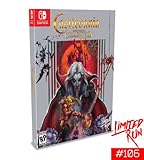
- Classic edition includes Konami-style silver box, physical game and soundtrack CD, 18 by 24" poster, and a NES-style dust sleeve to protect the game.
- Games Included in collection: Castlevania, Castlevania II Simon's Quest, Castlevania III Dracula's Curse, Super Castlevania IV, Castlevania The Adventure, Castlevania II Belmont's Revenge, Castlevania Bloodlines, and Kid Dracula.
- Box features all new art from legendary Konami cover artist Tom duBois.
- Castlevania
- Castlevania II: Simon’s Quest
- Castlevania III: Dracula’s Curse
- Super Castlevania IV
- Castlevania: The Adventure
- Castlevania II: Belmont’s Revenge
- Castlevania: Bloodlines
- Kid Dracula
Konami released digital versions for PlayStation 4, Xbox One, Nintendo Switch and Steam. The collection is particularly useful for a release-order sampler: start with Castlevania, continue through Simon's Quest and Dracula's Curse, then compare the SNES, Game Boy and Genesis entries.
Other official packages
- Requiem: Symphony of the Night & Rondo of Blood (2018) pairs the Richter and Alucard games on PlayStation 4.
- Advance Collection (2021) packages the Game Boy Advance era as a modern release. Its release is confirmed, but the supplied platform evidence does not establish a universal platform list for every region.
- Dominus Collection (2024) covers the later handheld period as a modern collection. Availability and included titles can vary by storefront and region.
- The Dracula X Chronicles (2007) is a PSP release built around the Rondo of Blood lineage.
Collections do not make every game equally accessible. The N64 titles, some downloadable releases and certain mobile or older-console versions may require hardware or storefront access that differs by country. Check the platform listing for your region before planning an entire chronology around one package.
Three playthrough plans
Plan A: Learn the series through release history
- Begin with Castlevania in the Anniversary Collection.
- Play Simon's Quest and Dracula's Curse to see the first experiments with exploration and branching routes.
- Try Super Castlevania IV, Bloodlines and Dracula X to compare 16-bit approaches.
- Move to Symphony of the Night, then sample the GBA and DS games in their release sequence.
- Finish with the 3D experiments and the separate Lords of Shadow trilogy.
Plan B: Follow the classic narrative
- Start with Lament of Innocence.
- Continue through Castlevania III, Curse of Darkness, the Christopher games and Simon’s two NES adventures.
- Play Harmony of Dissonance, Rondo of Blood and Symphony of the Night.
- Use Order of Ecclesia, Bloodlines and Portrait of Ruin as the late-classic bridge.
- End with Aria of Sorrow and Dawn of Sorrow.
Plan C: Minimize hardware hunting
- Use Anniversary Collection for the NES, SNES, Game Boy and Genesis foundations.
- Use Requiem for Rondo of Blood and Symphony of the Night where available.
- Use Advance Collection and Dominus Collection for their respective handheld eras.
- Leave disputed branches, N64 games and crossover titles for later unless one specifically interests you.
How to avoid spoilers and unnecessary repetition
- Want the surprise of the original design? Use release order and avoid reading the story chronology first.
- Want character continuity? Read the classic list before starting, because several games assume knowledge of earlier Belmonts or Alucard.
- Want the shortest complete arc? Play Rondo of Blood followed by Symphony of the Night, then Aria of Sorrow and Dawn of Sorrow; this is a focused route, not a substitute for the full history.
- Want modern 3D action? Start the independent Lords of Shadow trilogy from its first game.
The safest overall recommendation is release order for the first several classics, followed by whichever continuity you prefer. Story order is most rewarding once you accept that “chronological” means a maintained broad timeline with explicitly marked exceptions, not a flawless sequence containing every release.
Quick Recap
Product prices and availability are accurate as of the date/time indicated and are subject to change. Any price and availability information displayed on Amazon at the time of purchase will apply.

