Recommended Free Tools
Usually, no—not reliably. A hot, dry inland climate lacks the cool, moisture-rich conditions that support redwoods in nature. If you mean a coast redwood (Sequoia sempervirens), summer fog, cool temperatures and dependable soil moisture are central to its survival. If you mean a giant sequoia (Sequoiadendron giganteum), it tolerates some heat but still needs ample ground moisture and can be damaged by prolonged hot weather. A sheltered site with reliable water may improve the odds, but available guidance does not show that irrigation alone can make an arid climate suitable.
First, identify which “redwood” you mean
The common name covers two different species with different native geographies and growing conditions. Confusing them is the fastest way to choose the wrong tree for a difficult site.
As an Amazon Associate I earn from qualifying purchases.
Coast redwood
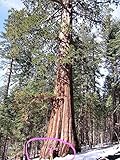
Coast redwood (Sequoia sempervirens) is native to a narrow band of California and southwestern Oregon. Oregon State University Extension Service describes its range as roughly 450 miles long and only about 5 to 35 miles wide. That narrow distribution reflects a specific maritime climate rather than a general ability to grow anywhere that winters are mild.
Its natural range has dry summers and cool, rainy winters, with conditions that also include temperate rainforest environments. Across the range, the extension guide reports about 70 inches (180 centimeters) of average annual precipitation, with 90% arriving between October and May. Those figures describe the species’ broad native range, not a minimum amount that guarantees success at a new planting site.
#1 Best Overall
- Grow the planet's tallest tree!
- Includes absolutely everything you need to grow a Coast Redwood (Sequoia sempervirens) from seed: seeds, growing medium, a mini-greenhouse, and detailed instructions
- 100% guaranteed: If your seed fails to germinate or your seedling perishes, we are happy to provide free replacement seed
- Great for kids and adults, amateurs to experts!
- A universal symbol of life, regrowth and recovery, enduring friendships and new beginnings, a tree is a wonderful gift that will only grow in value, meaning, and beauty
Giant sequoia
Giant sequoia (Sequoiadendron giganteum) is a separate species from scattered groves on the western slope of California’s Sierra Nevada. Its groves occur at elevations of approximately 4,590 to 7,050 feet, depending on location. It can withstand very cold conditions—about −12°F (−24°C)—but cold tolerance should not be mistaken for drought tolerance. Oregon State University Extension Service says it needs ample ground moisture and that extended hot temperatures may affect its health.
The National Park Service documented widespread foliage dieback in giant sequoias during California’s hotter 2012–2016 drought. That episode illustrates why a tree’s ability to survive occasional heat is different from its ability to thrive through repeated, moisture-limited summers.
Why hot, dry conditions are hard on redwoods
Coast redwoods depend on a cool summer water balance
Across the coast redwood range, the extension guide gives average temperatures of 44°F (7°C) in winter and 66°F (19°C) in summer. Temperatures rarely fall below 15°F (−9°C) or rise above 100°F (38°C) there. These are range-wide descriptions, not guaranteed tolerance limits for a newly planted tree at your address.
Windows Errors? Fix Them Before They Spread
Repair common Windows errors and clear accumulated junk for a smoother, more stable PC - no reinstall needed.Free scan · no reinstallOutdated Drivers Are Slowing You Down
One free scan finds every outdated or missing driver and matches the right update for your exact hardware.Free scan · exact hardware matchSummer fog is an important part of that balance. The National Park Service says fog accounts for nearly 40% of water uptake in the dry summer in redwood forests. That percentage is presented for redwood forests generally; it should not be treated as a fixed value for every tree, nursery plant or inland site. Fog also reduces evaporative demand and can add water through fog drip. Outside the fog belt, Oregon State University Extension Service says coast redwood is limited to areas of high moisture.
Heat increases water loss while drought reduces supply
The National Park Service explains the basic mechanism: high temperatures during drought increase tree water loss at the same time that less water is available to roots. A tree may receive irrigation yet still experience severe stress if the surrounding soil dries rapidly, the root zone is shallow, or heat raises atmospheric demand beyond what the roots and leaves can handle.
Coast redwood growth illustrates the difference between an ideal site and a stressed one. California State Parks reports that a coast redwood can add 2 to 3 feet of height per year in ideal conditions, but growth may fall to about 1 inch when the tree is stressed by inadequate moisture and sunlight. Slow growth is not the only concern: chronic stress can reduce vigor and increase vulnerability to further heat and drought.
Rank #3
- Grow the planet's most massive tree species from seed!
- Includes absolutely everything you need to grow a Giant Sequoia (Sequoiadendron giganteum) from seed: seeds, growing medium, a mini-greenhouse, and detailed instructions
- 100% guaranteed: If your seed fails to germinate or your seedling perishes, we are happy to provide free replacement seed
- Great for kids and adults, amateurs to experts!
- A universal symbol of life, regrowth and recovery, enduring friendships and new beginnings, a tree is a wonderful gift that will only grow in value, meaning, and beauty
Neither species is an arid-climate recommendation
Oregon State University Extension Service states: “Neither species thrives in sites with high water tables or arid areas.” The sentence rules out two common assumptions at once. Redwoods do not want roots sitting in saturated soil, but an arid site is not made appropriate simply by planting a moisture-loving tree and watering it occasionally. The same guide suggests conserving moisture on a drier site, including considering mulch, while still warning that arid conditions are unfavorable.
What your local site must provide
A location-specific answer requires more than a climate-zone label. Before buying a tree, evaluate the actual planting position and its seasonal water supply.
- Summer heat and dryness: Record the site’s typical daytime highs, hot spells, wind exposure and how quickly soil dries between waterings. A mild winter does not offset severe, prolonged summer heat.
- Dependable root-zone moisture: Determine whether water reaches the full future root area, not just the surface around the trunk. The available guidance does not provide an irrigation schedule or prove that irrigation can compensate for a fundamentally unsuitable arid climate.
- Soil depth and drainage: Avoid places where roots remain wet for extended periods, as well as shallow soil over rock that cannot hold moisture. For giant sequoia, the extension guide identifies deep, well-drained sandy loam as the best soil condition.
- Sunlight: Giant sequoia grows best in full sun. Coast redwood needs enough light for healthy growth, while intense reflected heat can increase stress in an inland exposure.
- Competition: Grass, shrubs and established trees can take water before a young redwood can. The extension guide recommends preparing the site to reduce competing vegetation.
- Exposure and shelter: A protected position may reduce wind and reflected heat, but shelter cannot recreate coastal fog or a cool maritime summer.
Coast redwood versus giant sequoia
| Factor | Coast redwood | Giant sequoia |
|---|---|---|
| Scientific name | Sequoia sempervirens | Sequoiadendron giganteum |
| Native geography | Coastal California and southwestern Oregon, in a narrow range about 450 miles long and 5–35 miles wide | Scattered groves on California’s western Sierra Nevada |
| Climate signal | Cool maritime conditions, winter rain, dry summers moderated by fog | Mountain groves with ample ground moisture; some high-temperature tolerance but poor performance under prolonged heat |
| Reported native-range figures | About 70 inches (180 centimeters) average precipitation; 90% falls October–May; average winter 44°F (7°C), summer 66°F (19°C) | Groves roughly 4,590–7,050 feet in elevation; best in deep, well-drained sandy loam and full sun |
| Heat and drought concern | Outside the fog belt, the extension guide limits it to high-moisture areas | Hotter drought contributed to widespread foliage dieback during 2012–2016 in California |
| Arid-site suitability | Not generally suitable | Not generally suitable |
Neither column should be read as a promise for a particular property. The figures describe native ranges or broad planting guidance, not a guarantee for a hot, dry garden.
Rank #4
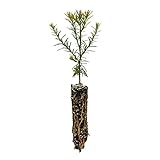
- Grow the world's tallest tree species!
- Seed-grown on California's Redwood Coast
- Transplanting and care instructions included
- Trees can provide a natural barrier against high winds, temperatures, noise pollution and soil erosion, all while benefiting local air quality, wildlife and property values — a Jonsteen seedling will only grow in value and beauty!
If you still want to attempt a planting
Proceed only after checking the site’s moisture, soil and heat constraints. Treat this as a risk-managed experiment rather than a dependable way to establish a redwood forest tree.
- Confirm the species. Ask the nursery for the scientific name. Do not buy a plant labeled only “redwood” if you need to know whether it is coast redwood or giant sequoia.
- Inspect the root zone. Dig or probe to determine soil depth, compaction, rocks and drainage. Reject a location that stays waterlogged, and be cautious about shallow soil that cannot store water through summer.
- Map summer exposure. Note afternoon sun, reflected heat from paving or walls, prevailing wind and the hottest part of the yard. A cooler, sheltered position is preferable to an exposed heat trap.
- Check water reliability. Verify that you can provide consistent moisture through the entire dry season without relying on occasional deep watering. The sources do not establish a universal schedule or a safe amount for every soil and climate.
- Prepare competing vegetation out of the planting area. Remove or suppress grass and dense shrubs so the young tree is not forced to share limited soil moisture during establishment.
- Choose stock for the site. Oregon State University Extension Service discusses both seedlings and clones and emphasizes selecting planting stock appropriate to local conditions. Ask a local extension office or qualified arborist which source is suited to your region.
- Plant for moisture conservation. Apply mulch around, but not against, the trunk to reduce evaporation and moderate soil temperature. Mulch can conserve moisture; it does not turn an arid site into a suitable redwood habitat.
- Monitor the tree through the hottest season. Look for persistent wilting, browning foliage, stalled growth or dieback. A coast redwood growing only about an inch in a season, compared with the 2–3 feet possible under ideal conditions, is a warning that the site is imposing severe stress.
- Get local advice before scaling up. Provide your extension office or arborist with the species, location, soil observations, summer temperatures and planned water source. They can assess details that a general species description cannot.
Common mistakes and what they mean
“It survived its first summer, so the site works.”
Early survival does not demonstrate long-term suitability. Root systems are small when trees are young, and cumulative heat and drought stress may appear after several seasons. Judge establishment by sustained growth and healthy foliage, not by one mild year.
“A lot of water will recreate the coast.”
Watering addresses only one part of the problem. Coastal redwoods also benefit from cool temperatures, humid air, fog and soils that remain moist without being permanently saturated. The retrieved extension guidance does not show that irrigation alone can substitute for those conditions.
Best Value

- FRESH SEEDS: 30 seeds of Redwood Tree for Bonsai. Popular for a mini Bonsai Forest
- CZ GRAIN GUARANTEE: Buy with confidence from CZ Grain. You get authentic Redwood Tree seeds. Satisfaction Guaranteed.
- PLANTING TIPS: All Natural Soil Like CZ Grain Soil, or Fox Farms Ocean Forest Soil is very good soil!
“Giant sequoia is better because it tolerates cold.”
Cold tolerance matters in winter, but it does not remove summer water requirements. The species’ mountain origin, need for ample ground moisture and observed drought-related dieback all argue against treating it as a drought-proof substitute.
“Wet soil is safer than dry soil.”
Neither extreme is appropriate. The extension guide says neither species thrives where water tables are high or in arid areas. Roots need oxygen as well as water, so persistent saturation can be as damaging as severe dryness.
How to make a responsible decision
A hot, dry location is a poor candidate if it combines extreme summer heat, shallow or fast-draining soil, no dependable water source and strong reflected or windy exposure. Do not purchase a high-value specimen until those constraints are understood.
The Tool Desk
Outbyte Driver Updater FREEScan for outdated or missing drivers - takes under a minuteDriver Scan →Outbyte PC Repair FREERepair Windows errors before they cause bigger problemsFix Now →A cautious trial may be reasonable when the property has deep, well-drained soil; a cooler, sheltered microclimate; full or adequate sunlight; limited competition; and a dependable way to maintain root-zone moisture throughout summer. Even then, describe the project accurately: you are testing whether one carefully managed site can support a tree, not proving that the regional climate is naturally suitable.
For a defensible recommendation, consult a local extension office or qualified arborist with site-specific information. Oregon State University Extension Service’s guidance is focused on Oregon planting considerations, while its precipitation and temperature figures describe the coast redwood range. Neither source set predicts performance at every hot, dry location.
Quick Recap
Sources and further reading
- Oregon State University Extension Service: Growing redwood and giant sequoia in Oregon
- California State Parks: About Coast Redwoods
- National Park Service: Giant Sequoias and Climate
- National Park Service: Coast Redwood
- USDA Forest Service: Sequoia sempervirens
Product prices and availability are accurate as of the date/time indicated and are subject to change. Any price and availability information displayed on Amazon at the time of purchase will apply.

