Yes—under the conditions of a 2018 pilot-scale experiment, engineered brewing yeast made beer that a sensory panel perceived as hoppier than conventionally hopped beer. The modified Saccharomyces cerevisiae strains produced the hop-associated aroma molecules linalool and geraniol during fermentation. That result is a scientific demonstration, not proof that yeast can reproduce every feature of hops, that consumers broadly prefer the beer, or that the strains are commercially available.
What the experiment actually demonstrated
Hops normally perform two jobs in beer. They supply bitterness and a complex set of flavor and fragrance compounds. Brewers can add hops during the boil to extract bitterness and later in the process to preserve more delicate aromas. The 2018 experiment focused on the aromatic side of that equation: it asked whether yeast could manufacture key hop-associated molecules while fermenting wort.
As an Amazon Associate I earn from qualifying purchases.
The answer was positive for the specific compounds and brewing conditions tested. Beer made with the engineered strains was judged hoppier than traditionally hopped comparison beer in a double-blind tasting. The finding comes from pilot-scale brewing and small sensory panels, so it should be read as evidence that the approach can work—not as a market-wide taste survey or a replacement for hops.
What’s actually slowing this PC down?
Pick the symptom - the matching free tool is one click away.
The primary paper, published in Nature Communications in 2018, describes the work by Charles M. Denby, Rachel A. Li and colleagues. Its abstract states: “Flowers of the hop plant provide both bitterness and ‘hoppy’ flavor to beer.” It also reports that “Beers produced using these strains are perceived as hoppier than traditionally hopped beers by a sensory panel in a double-blind tasting.”
#1 Best Overall

- Easy Home Brew - This all-in-one kit includes everything you need, from fermentation equipment to supplies and ingredients, making it the perfect kit for beer enthusiasts.
- Complete Beer Making Kit - No need for additional large pots, strainers, or brewing equipment. All you need is a Mr. Beer Kit, water and common kitchen items to get started.
- Brews in 30 Minutes - Using our hopped Malt extract, you can brew up a batch of beer in less than 30 minutes. You will have ready to drink beer in 3-4 weeks.
- Includes A Second Refill - This kit comes with a bonus refill so you can get to brewing your second batch right away. Makes a total of 4 gallons.
- DIY Kit Beer Accessory - The Mr. Beer four gallon kit comes with Canadian Blonde and Octoberfest Lager you can create your own unique craft beer.
Why linalool and geraniol matter
Hop aroma is a mixture rather than a single chemical signature. The researchers selected two monoterpenes, linalool and geraniol, because they are important contributors to the floral and hoppy character associated with beer, including beers made with Cascade hops.
Linalool
Linalool is a volatile aroma compound found in hop essential oils and in many plants. In beer, it contributes to the bright, floral part of hop character. Its volatility makes it especially relevant to what a drinker smells while lifting a glass or taking a sip.
Geraniol
Geraniol is another hop-associated monoterpene with a floral, sweet and sometimes citrus-like aroma. It is not the whole aroma of a hop flower, but changing its concentration can affect how intensely hoppy a beer seems.
The Tool Desk
Outbyte PC Repair FREEClear out junk files and repair common Windows errorsFree Scan →Outbyte Driver Updater FREEFix the driver behind crashes, sound loss and screen glitchesFind Drivers →Producing these molecules does not mean producing every compound supplied by a hop. The paper notes that traditional hop flavor probably depends on a much more diverse bouquet. A beer can therefore contain linalool and geraniol yet still differ from a beer made with a particular hop variety, harvest and processing method.
Rank #2
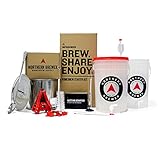
- Highest Rated Starter Kit! The Northern Brewer Brew. Share. Enjoy Homebrew Starter Kit is the perfect choice for holiday gifts and beginners, complete with foolproof instructions.
- This all-in-one kit includes everything you need to start brewing beer at home today including a Brew Kettle and our Hank's Hefeweizen recipe kit.
- Hank's Hefeweizen: This recipe brings a Bavarian classic over the pond to spread the joy of hefeweizen for all to enjoy. Expect a hazy, deep golden ale with a firm and lasting white head and heaps of flavors consisting of soft, luscious wheat notes, medium-low bitterness and fermentation derived flavors ranging from spicy clove to ripe banana.
- Kit Includes: Hank's Hefeweizen recipe kit, Hydrometer, Test Jar, Lab Thermometer, 6.5 gallon fermentor w/ Spigot, lid & Bubbler airlock, Bottling Bucket w/Spigot assembly, Bottle Filler, 5 Gallon Stainless Brew Kettle, 21” Stainless Spoon, 5 ft. Clear Tubing, Cleaner/Sanitizer - Fermenter's Favorites Oxygen Wash, Bottle Brush, Royal Crown Bottle Capper & Caps (60ct.) Yields 5 gallons of finished beer, filling 50 twelve ounce bottles.
How yeast was engineered to make hop-like aroma
Brewer’s yeast already turns wort sugars into ethanol and a range of flavor-active by-products. The team added a biosynthetic route that allowed industrial brewing strains to make linalool and geraniol as fermentation products.
- Start with an industrial brewing strain. The host was Saccharomyces cerevisiae, the species used for ordinary beer fermentation.
- Add the necessary genetic instructions. The recombinant DNA used sequences derived from yeast, mint and basil. These sequences supplied enzymes needed to assemble the target monoterpenes.
- Ferment wort with the modified strain. As the yeast consumed sugars and produced alcohol, the engineered pathway generated linalool and geraniol inside the fermenting beer.
- Compare the result with conventional brewing. The team measured the compounds and conducted sensory tests against beer made with the parental strain and traditional hop preparations.
The goal was not to make yeast imitate a hop flower in every respect. It was to move production of selected aroma molecules into the fermentation step, potentially reducing dependence on flavor-hop additions for those particular notes.
How the beers were tested
The sensory evidence came from pilot industrial fermentations and employee sensory panels rather than a representative national consumer sample. One analysis included 27 participants; another included 13. The panels evaluated beers under double-blind conditions, meaning the tasters did not know which samples came from engineered yeast and which came from the comparison process.
A separate pilot-scale comparison used a classic American Ale recipe. Beers brewed with three engineered strains were compared with beer made using the parental WLP001 strain. In the reported tasting, the engineered-yeast beers were perceived as hoppier than traditionally hopped comparisons.
Rank #3
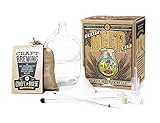
- MAKE YOUR OWN BEER – Be more than a beer drinker; be a beer maker! This craft beer kit turns beer lovers into beer brewers and gives you all the independence, experience, and fun that comes with brewing your own home beer.
- MUNICH CALLING – Oktoberfest is here, wherever and whenever you want “here” to be. With a light red hue, subtle bitterness, caramel sweetness, and a clean dry finish, you can enjoy this full-bodied, malty beer just like they do in old Bavaria.
- HOME BREW STARTER KIT – Designed to help first-timers and hobbyists alike get the most of their beer experience, this beer maker starter kit teaches you about the art of brewing with our Craft a Brew Guide to Craft Brewing.
- FULL BREWERY KIT – This homemade beer making kit comes with the right supplies to brew beer. Enjoy our beer making kits complete with everything you need to become a master brewer, so hop to it!
- CRAFT A BREW QUALITY – Each beer crafting kit is assembled by hand in Orlando, FL instilled with the core values of providing high-quality ingredients, elegant and effective design, and an environmentally sustainable mindset. Enjoy beer the right way with your own Craft a Brew kit.
That wording matters. “Perceived as hoppier” describes the panel’s sensory judgment under the test design. It does not mean every participant preferred the beer, that the beer tasted identical to a heavily hopped ale, or that a larger and more diverse consumer group would give the same result.
What “hoppier” means here—and what it does not
In this context, hoppiness refers primarily to aroma intensity and character. Smell strongly influences how people describe beer, so increasing selected volatile compounds can make a sample seem more hop-forward even when the beer does not contain the full chemical range of a hop addition.
- It does mean: the panel detected a stronger hop-like sensory impression in beer made with the engineered strains under the study conditions.
- It does not mean: the strains supplied all hop flavor compounds.
- It does not mean: the strains supplied the bitterness normally obtained from bittering hops.
- It does not mean: the result has been confirmed as a broad consumer preference.
- It does not mean: hops are obsolete or unnecessary in every recipe.
The study was designed around aroma-associated monoterpenes. Nothing in the reported result establishes that the yeast can replace the bittering function of hops, reproduce the complete flavor of a named hop variety, or provide the same extraction and timing options that brewers get from adding flowers or pellets at different stages.
Quick wins for a faster PC:
Repair Windows errors before they cause bigger problemsFix Now →Scan for outdated or missing drivers - takes under a minuteDriver Scan →Engineered yeast versus conventional hopping
The two approaches solve different parts of the brewing problem. Conventional hopping brings a broad mixture of compounds and lets a brewer blend varieties and control when those compounds enter the beer. Yeast biosynthesis can make selected molecules during fermentation, potentially with tighter control over those measured compounds.
Rank #4

- MAKE YOUR OWN BEER – Be more than a beer drinker; be a beer maker! This craft beer kit turns beer lovers into beer brewers and gives you all the independence, experience, and fun that comes with brewing your own home beer.
- BREW-S-A – Exercise your right to brew! Our decidedly patriotic American Pale Ale makes a crisp, hoppy, and bitter pale ale with light malt flavors.
- HOME BREW STARTER KIT – Designed to help first-timers and hobbyists alike get the most of their beer experience, this beer maker starter kit teaches you about the art of brewing with our Craft a Brew Guide to Craft Brewing.
- FULL BREWERY KIT – This homemade beer making kit comes with the right supplies to brew beer. Enjoy our beer making kits complete with everything you need to become a master brewer, so hop to it!
- CRAFT A BREW QUALITY – Each beer crafting kit and all our home brew recipe kits for beer are assembled by hand in Orlando, FL instilled with the core values of providing high-quality ingredients, elegant and effective design, and an environmentally sustainable mindset. Enjoy beer the right way with your own Craft a Brew kit.
| Comparison point | Conventional hopping | Yeast biosynthesis in the 2018 demonstration |
|---|---|---|
| Primary source of aroma | Hop flowers or pellets containing a broad mixture of essential-oil compounds | Engineered S. cerevisiae producing linalool and geraniol during fermentation |
| Bitterness | Can provide bitterness as well as aroma, depending on the addition and process | Not established by this experiment; the work targeted aroma compounds |
| Flavor breadth | Includes the diverse bouquet of the selected hop variety, harvest and preparation | Limited to the compounds and pathway expressed by the engineered strain; the paper does not claim a complete hop bouquet |
| Measured variation in the study | Hop-derived linalool and geraniol varied across the sampled preparations | Replicate engineered-strain fermentations showed little variation in the measured monoterpenes |
| Blending flexibility | Brewers can combine hop varieties to build a desired profile | May offer a defined biosynthetic profile, but does not automatically provide the flexibility of combining whole hop varieties |
| Evidence level | Established brewing practice | Pilot-scale scientific demonstration with small sensory panels |
Jane White of the International Centre for Brewing and Distilling at Heriot-Watt University described the approach as innovative in a 2018 Chemistry World report, while questioning whether brewers would adopt a method that removes some flexibility in combining hop varieties. That is an expert opinion from the period, not a current survey of the brewing industry.
Independent reader supportYour contribution helps us test, update, and keep practical guides available for everyone.The consistency finding
Hop composition can change with variety, farm, harvest and preparation. To examine one source of variation, the researchers compared replicated fermentations made with engineered strains against Cascade hop preparations from five farms in the Northwestern United States.
The engineered-strain replicates showed little variation in their final linalool and geraniol concentrations. The sampled Cascade preparations showed greater variation in those measured compounds. This is a useful result for understanding process control: under the tested conditions, the yeast route produced more consistent amounts of the two target molecules.
Do these 3 things before closing this tab:
1Scan for outdated or missing drivers - takes under a minute2Clear out junk files and repair common Windows errors3Fix the driver behind crashes, sound loss and screen glitchesIt is not a universal guarantee of commercial consistency. The comparison covered two compounds, a defined set of engineered fermentations and five farm sources. It did not measure every aroma chemical, every hop-growing region, or full-scale brewery performance. Nor does chemical consistency by itself prove lower cost, lower environmental impact or better flavor.
Best Value
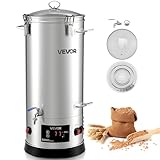
- Large Capacity Brewing: The VEVOR electric brewing system features an 8 gal / 30L kettle can mash up to 5 kg of malt per batch—ideal for home gatherings or small craft batches. Brew diverse beers like lager, IPA, ale, porter, or stout for true brewing freedom
- Craft Brewing Support: The mash and boil device features a high-power design for fast heating and excellent sugar extraction and boiling, supporting quality beer brewing. Homebrewed beer uses pure malt and natural methods, preserving authentic beer flavor
- Easy Operation: Our home brewing equipment has an electronic panel to adjust temperature, and power smoothly. Paired with precise sensors, it controls mashing temperature accurately, extracting more sugars and rich malt flavor
- Premium Materials: The brew kettle is made of 304 stainless steel with 0.5 mm thick walls, sturdy and deformation-resistant. Its smooth, seamless interior is easy to clean and prevents residue buildup for reliable use
- User-Friendly Design: This brewing pot has a glass lid for monitoring wort and a hollow midsection for inserting silicone tubes. A bottom spigot allows the collection of cooled wort. Compact size fits kitchens, garages, basements, or patios
Why breweries might care
The paper presents hops as water- and energy-intensive agricultural ingredients and points to variation in hop essential-oil content as a challenge for repeatable flavor. Producing selected aroma compounds in yeast could, in principle, give a brewer another way to standardize part of a recipe and reduce reliance on a variable agricultural input.
Those are potential advantages, not outcomes demonstrated by the tasting. The experiment did not provide a commercial lifecycle analysis, a full cost comparison, or evidence that engineered fermentation requires less total energy or water once manufacturing, quality control and brewery integration are included.
There is also a creative trade-off. Hop varieties contain many compounds that interact in ways brewers use to create distinctive profiles. A strain optimized to make linalool and geraniol may deliver a repeatable floral note while offering less of the variation that comes from changing hop varieties, farms or harvest years.
Can you buy the engineered beer or yeast?
The reviewed 2018 sources do not establish that the specific strains, or a beer made with them, are commercially available today. Do not assume that a laboratory or pilot strain can be obtained from a homebrew supplier, and do not treat a product using the words “terpene,” “hop aroma” or “bioengineered” as the same strain used in the paper.
For a conventional way to explore the aroma under discussion, a homebrewer can use Cascade hop pellets in an ordinary recipe. Cascade is the hop preparation used in the paper’s comparison, and its floral aroma is associated with linalool and geraniol. Pellets are conventional hops, not engineered yeast and not a direct equivalent to the experimental beer; follow the recipe and the pellet package for addition timing and quantity.
Important limits on the 2018 result
- Small panels: the reported sensory groups contained 27 and 13 participants, so they cannot represent all beer drinkers.
- Specialized tasters: the panels were employee groups associated with the work, not a probability sample of consumers.
- Pilot scale: results from pilot industrial fermentations may change when a process is transferred to large commercial tanks.
- Two target molecules: linalool and geraniol are important contributors, but they are only part of hop aroma.
- Bitterness was not replaced: the experiment concentrated on aroma biosynthesis and does not show that the yeast supplies hop bitterness.
- No adoption evidence: the study does not establish regulatory status, manufacturing economics, consumer demand or current brewery use.
Charles Denby summarized the broader opportunity in the 2018 science coverage by saying, “We’re just scratching the surface of what is possible,” referring to flavors brewers might eventually want to make with engineered biology. The statement describes a research direction, not a promise that every proposed flavor pathway is ready for production.
Bottom line for beer drinkers and brewers
Engineered yeast can make beer smell and taste hoppier without relying on flavor-hop additions for at least two important aroma molecules. In the 2018 double-blind pilot tasting, beers made with those strains were perceived as hoppier than traditionally hopped comparisons. The result is best understood as proof of concept: it shows that fermentation can be used to produce selected hop-associated aromas, while leaving bitterness, the wider hop bouquet, consumer preference and commercial availability unresolved.
Crashes, No Sound, or Screen Glitches?
Random freezes, missing sound and display glitches usually trace back to one bad driver. Find and replace yours safely.Free scan · under a minuteWindows Errors? Fix Them Before They Spread
Repair common Windows errors and clear accumulated junk for a smoother, more stable PC - no reinstall needed.Free scan · no reinstallQuick Recap
Product prices and availability are accurate as of the date/time indicated and are subject to change. Any price and availability information displayed on Amazon at the time of purchase will apply.

