Recommended Free Tools
Short answer: No—not reliably. Current consensus statements do not support using a consumer DNA fitness report to predict your personal exercise-injury risk or select the workout that will work best for you. Genetic variants can be associated with athletic traits, but those associations have not been validated as individual forecasts. Treat a consumer report as informational, not as a diagnosis or a substitute for assessment by a qualified medical or exercise professional.
What consumer DNA fitness tests are trying to predict
Direct-to-consumer sports DNA kits typically collect a saliva sample and report variants that a company associates with traits such as power, endurance, recovery, muscle composition or injury susceptibility. The marketing language can make a statistical association sound like a personal prescription: a result may appear to tell you to sprint, lift heavy, run long distances or avoid a particular activity.
As an Amazon Associate I earn from qualifying purchases.
A typical product combines laboratory genotyping with an interpretation algorithm. The laboratory identifies selected DNA changes, while the company turns those findings into categories, scores or recommendations. The report may look individualized because it is linked to your sample, but the interpretation can still be based on small studies, broad averages or assumptions that have not been tested in people using the recommended program.
The important distinction is between identifying a variant and proving that the variant can guide a decision for one person. A useful clinical prediction would need to show that people who receive a particular result consistently have a different injury rate or training response, and that acting on the result improves outcomes compared with ordinary assessment. The consensus statements addressing sports genetics have not found that level of evidence for currently marketed tests.
#1 Best Overall

- TOP-SELLING CONSUMER DNA TEST: From your origins in over 3,600+ places around the world to the most connections to living relatives, no other DNA test kit delivers an experience as unique and interactive as AncestryDNA.
- YOUR DATA, YOUR CONTROL: We give you full control over your genetic information. You decide what to share, and with whom.
- DNA + TRAITS: Ever wondered where your freckles came from, or why you hate cilantro? AncestryDNA + Traits lets you discover 75+ genetic traits, allowing you to explore how your genes might have influenced a range of appearance, sensory, performance, nutrient, and other personal characteristics.
- A FEW SIMPLE STEPS: Simply activate your DNA kit online and return your saliva sample in the prepaid package to our state-of-the-art lab. Your results will be available online in roughly six weeks.
- ORIGINS AND INHERITANCE: AncestryDNA is the only DNA test that can show your origins results, DNA matches, and traits by each side of the family, without your parents taking a DNA test.
What the major evidence statements concluded
| Source | What it assessed | Practical conclusion |
|---|---|---|
| British Journal of Sports Medicine consensus review, 2015 | Direct-to-consumer genetic tests marketed for sport, exercise performance or injury | Existing tests did not provide useful information for predicting training response or exercise-related injury. |
| AIS–Athlome Consortium–FIMS joint statement, 2017 | Genetic testing for exercise prescription and injury prevention | No current clinical application was established for either use. |
| FIMS consensus update, 2019 | Genetics, athletic performance and talent identification | Scientific evidence for prediction remained very limited; appropriate genetic counseling was emphasized. |
The 2015 consensus review identified 39 companies offering tests in this market at that time. Those are historical figures from the review, not a current count of vendors. In 21 of the 39 cases, the reviewers could not identify the specific DNA variants being tested. Of the 18 companies that did disclose test details, the median panel contained six variants, with a range of one to 27.
The review described ACTN3 as the most commonly tested genotype. It reported that even this genotype made only a trivial contribution to differences in sprinting performance. A commonly quoted sentence from the statement captures the scope of its conclusion: “There is currently no evidence that existing genetic tests provide information that is useful regarding either predisposition for a particular sport, prediction of the training response likely to occur to a particular training programme, or predisposition to exercise-related injury.”
That sentence describes the evidence available to the statement. It does not claim that genetics can never contribute to future sports science, nor does it imply that genetic medicine has no legitimate clinical uses outside consumer fitness products. The 2017 statement specifically described the absence of a current clinical application for exercise prescription and injury prevention, while also identifying research needed before evidence-based applications could be developed.
Why a gene association is not a personal forecast
Association is not a decision rule
A study can find that a variant occurs somewhat more often in a group of sprinters, or that a group with a variant shows a small average difference in a measured trait. That result does not tell you what will happen to your body under a particular training plan. A decision rule must work for individuals, not merely distinguish averages between research groups.
Even a statistically real group difference can have substantial overlap. People with and without the reported variant may perform similarly, and the variant may explain only a small fraction of the variation. A company must demonstrate how well the result classifies new individuals, not simply point to a finding from the study that inspired the report.
Most performance traits have many influences
Strength, endurance, coordination, fatigue and adaptation arise from many biological and behavioral factors. Training history, current workload, sleep, nutrition, technique, equipment, environment and motivation can all affect the result of a session. A small effect associated with one variant can be outweighed by those factors, and the same genetic result can appear in people with very different abilities and responses.
Age, health conditions, medications, previous injury and the demands of a person’s job or sport also shape what is safe and practical. A DNA panel generally does not measure whether you slept poorly, increased running mileage too quickly, changed shoes, or are compensating for pain. Those immediate and modifiable factors can matter far more to a training decision than a weak genetic association.
What’s actually slowing this PC down?
Pick the symptom - the matching free tool is one click away.
Small effects accumulate uncertainty
When a report combines a handful of variants, each with an uncertain or small association, the combined score can look precise without being validated. A numerical rating is not automatically a clinically tested prediction. The 2015 review’s median panel size of six variants illustrates how little genetic information some commercial interpretations used; panel size alone does not establish accuracy.
Rank #2

- REVIEW IMPORTANT TEST INFO: There is a lot to consider with genetic testing. Before purchasing, review important information about Genetic Health Risk*, Carrier Status*, and Pharmacogenetics** reports at 23andme. org/test-info and 23andme. org/test-info/pharmacogenetics. A portion of your purchase may be eligible for FSA/HSA reimbursement***.
- UNDERSTAND YOUR GENETIC HEALTH: Receive 160+ personalized genetic reports, including 50+ Conditions* and wellness reports. Get insights into heart health, metabolic health, mental health, and more. You choose whether to view certain reports.
- TRACK HEALTH GOALS: Health Tracks(SM) show how everyday choices may shape your health over time. Opt in to the Family Health History Tree to input and track information to share with your healthcare provider.
- PLAN AHEAD WITH 45+ CARRIER STATUS REPORTS*: Find out whether you carry a genetic variant for inherited conditions across categories like blood, lung, and hearing health, information you can bring to family planning conversations with your healthcare provider.
- LEARN HOW YOUR BODY MAY RESPOND: FDA-authorized pharmacogenetics reports show how your DNA may impact the way your body processes certain medications**, including some used in heart health and mental health care. Talk to your healthcare provider before making any medication changes.
Adding more markers does not automatically solve the problem. An algorithm can assign weights, but those weights need independent testing and should be reported with uncertainty. Without that validation, a larger panel may simply create a more complicated way to express the same limited evidence.
Study conditions may not match your situation
Genetic findings can depend on the population studied, the definition of the trait, the sport, the training program and the way an outcome was measured. A result observed in elite athletes or a laboratory test cannot automatically be transferred to a recreational runner, a person returning from surgery or someone beginning resistance training.
Ancestry and sample composition can also affect whether a finding generalizes. A report should identify who was studied and what outcome was measured before presenting an association as relevant to you. If those details are missing, the apparent precision of the recommendation is difficult to judge.
Can a DNA result predict your exercise-injury risk?
Not with the reliability needed to make a training or medical decision. The 2015 consensus review found no evidence that existing tests usefully predicted exercise-related injury, and the 2017 joint statement found no current clinical application for genetic testing in injury prevention.
An injury is usually the result of interacting exposures rather than one isolated characteristic. The relevant picture can include a previous injury, a sudden change in training load, movement technique, recovery, work or sport demands, health conditions and the environment in which activity occurs. A DNA report does not measure those factors, and a result associated with a tissue property cannot tell you whether an injury will occur during your next session.
For example, a person could receive a label suggesting increased susceptibility but tolerate a carefully progressed program without problems. Another person could receive a reassuring label and still be injured after an abrupt workload increase or while training through pain. The labels do not replace observation of what is happening in the body.
A report that labels you as genetically “high risk” may encourage unnecessary avoidance, while a “low-risk” label may create false reassurance. Neither label should override symptoms, a clinician’s examination or a gradual, monitored training progression.
Quick wins for a faster PC:
Repair Windows errors before they cause bigger problemsFix Now →Fix the driver behind crashes, sound loss and screen glitchesFind Drivers →What to do when you are worried about injury
- Stop treating the report as a clearance or restriction. Do not start, stop or intensify a program solely because of a genetic score.
- For persistent pain, loss of function, swelling, instability or a sudden traumatic injury, obtain an assessment from an appropriately qualified health professional.
- For planning a sport or exercise program, use a history, goals, current capacity and movement or performance assessment with a qualified coach, physiotherapist, exercise physiologist or physician as appropriate.
- Change training gradually and monitor symptoms and recovery rather than trying to follow a genetic label.
- Keep a record of changes in workload, exercise technique, sleep and symptoms so that an assessor can evaluate patterns that a DNA report cannot show.
Can a DNA test tell you the best workout?
There is no validated consumer test that can choose the best workout for an individual. The 2015 statement specifically found no evidence that existing tests predicted the training response likely to occur to a particular program. The 2017 statement likewise found no current clinical application for genetic testing in exercise prescription.
Rank #3
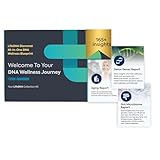
- INSIGHTS NO OTHER TIER UNLOCKS - Go deeper into the genetic factors behind your digestion, cellular renewal, and how your body supports its natural processes. Diamond includes three exclusive reports on miocrobiome, detoxification, and aging. The deepest and most comprehensive analysis LifeDNA offers.
- 165+ INSIGHTS ACROSS 11 REPORTS - Understand how your DNA may influence what you eat, which vitamins you absorb, how you recover, when you sleep best, and what your skin responds to. 8 wellness reports tailored to your genetic profile, plus 3 Diamond-exclusive premium reports. One test. No guesswork.
- THE FULL METHYLATION PICTURE - Most tests stop at MTHFR or just 5 genes. This panel analyzes 13 methylation genes, including COMT, CBS, VDR, and 9 more, then provides actionable nutrition, supplement and lifestyle optimisation across 11 reports. Backed by 500+ peer-reviewed studies and trusted by 100,000+ users.
- SIMPLE CHEEK SWAB, FAST RESULTS - No blood draws or doctor visits. This at-home DNA test kit includes everything you need. Results in 3-5 weeks. Already have DNA data from a previous test? Upload your file and get results in hours.
- YOUR DNA DATA STAYS PRIVATE - Trusted by 100,000+ users. You keep 100% ownership of your genetic data, never sold to third parties or insurance companies. An informational wellness tool designed to complement healthcare guidance, not replace it. Take control with confidence.
“Best” depends on the outcome you want and the constraints you have. A program for completing a first 5K is different from one for gaining strength, managing a chronic condition, returning after injury or preparing for competition. The useful inputs are your objective, baseline ability, schedule, preferences, available equipment, medical history and response to training. Those inputs can be reassessed as you progress; a fixed DNA result cannot substitute for that feedback loop.
Even if a variant is associated with a tendency toward power or endurance in a study, that does not establish that you should exclude other forms of exercise. A person interested in health, enjoyment or general fitness may benefit from a mix of aerobic, resistance, mobility and balance activities selected according to ability and preference. The genetic label does not determine which combination is safe, sustainable or enjoyable.
A practical way to select training without a genetic prescription
- Define the outcome. State a measurable goal, such as completing a distance, improving a lift, increasing weekly activity or restoring a movement after rehabilitation.
- Establish a safe starting point. Review health history, medications, previous injuries, current activity and any symptoms with the professional appropriate to your situation.
- Choose a progressive plan. Select activities that fit your goal and circumstances, then increase duration, intensity or complexity in manageable steps.
- Track your response. Record workload, perceived effort, performance, sleep, soreness and symptoms. Use those observations to adjust the plan.
- Reassess periodically. If progress stalls or symptoms emerge, change the program and seek professional input rather than consulting a genetic score for a definitive answer.
- Check adherence and practicality. A theoretically suitable plan is not useful if it does not fit your schedule, access to equipment, recovery capacity or preferences. These real-world constraints should guide revisions.
How to scrutinize a DNA fitness report
If you already have a report, inspect its transparency before giving any recommendation weight. The 2015 review raised concerns about undisclosed variants, scientific support and interpretation; the 2019 update highlighted the need for appropriate genetic counseling.
| Question to ask | What a transparent answer looks like | Warning sign |
|---|---|---|
| Which exact variants were tested? | The report names the gene, variant identifier and laboratory method. | A score is shown without identifying the DNA changes behind it. |
| What evidence supports this interpretation? | The provider explains the study population, outcome, effect size and limitations. | Marketing cites a gene’s presence in athletes as proof of a personal prescription. |
| How certain is the recommendation? | Results are described as associations with uncertainty and are not presented as diagnoses. | Words such as “guaranteed,” “optimized” or “injury-proof” imply certainty. |
| Who can help interpret it? | A qualified genetic counselor or relevant health professional is available, with clear limits on the service. | The company offers a definitive exercise plan without professional review. |
| Has the result been tested prospectively? | The provider can show independent testing in people who were not used to build the algorithm and report performance measures. | Only a biological explanation or a single association study is offered. |
| What happens if the result is wrong or unclear? | The company explains uncertainty, confirmatory options and how to obtain clinical advice. | The report presents a categorical risk label with no route for clarification. |
Questions worth sending to the provider
- What peer-reviewed studies tested this exact variant and this exact outcome?
- Were the participants similar to me in age, ancestry, sex, training status and sport?
- How large was the observed effect, and how often would the prediction be wrong?
- Has anyone shown that following this recommendation improves outcomes over standard training guidance?
- Does the result have a clinical interpretation, or is it an exploratory association?
- Can a qualified professional explain the report without selling an additional service?
- Are the recommendations based on one marker, a multi-variant score or an algorithm that has been independently validated?
- What parts of the report should not be used for medical, injury or return-to-sport decisions?
Do not assume that a higher-priced kit, a longer report or a larger number of traits is more accurate. The consensus statements did not establish a validated ranking of consumer tests, and no evidence cited here shows that purchasing one product leads to better injury prevention or workout selection than another. Price and product availability are commercial details, not evidence of clinical usefulness.
What a consumer result can and cannot establish
| A report may provide | It does not establish |
|---|---|
| An identified genetic variant or an ancestry-related laboratory finding | That you will sustain—or avoid—a particular exercise injury |
| A statistical association described in a study population | That you will respond better to one workout than another |
| A prompt for a conversation with a qualified professional | A diagnosis, medical clearance or individualized treatment plan |
| Information that may be interesting for personal education | That buying one test over another improves injury prevention or training results |
| A reason to ask more questions about family history or health | Permission to ignore pain, examination findings or a rehabilitation plan |
Product availability also says nothing about clinical usefulness. A company can sell a sports DNA kit even when independent consensus statements find that the test’s proposed use is not clinically established. The existence of a result, a colorful report or a ranked score should not be mistaken for validation.
When clinical genetic testing is a different question
Genetic testing has legitimate roles in medicine, including situations in which a clinician is evaluating a suspected inherited condition. Those tests are ordered and interpreted in a clinical context, with attention to symptoms, family history, examination findings and the consequences of acting on the result. A consumer fitness report is not equivalent to that process.
If a report raises a medical concern, take the underlying laboratory information to a physician or genetic counselor rather than trying to interpret the fitness label yourself. The professional can determine whether the finding is relevant, whether confirmatory testing is needed and what action—if any—is appropriate.
Windows Errors? Fix Them Before They Spread
Repair common Windows errors and clear accumulated junk for a smoother, more stable PC - no reinstall needed.Free scan · no reinstallCrashes, No Sound, or Screen Glitches?
Random freezes, missing sound and display glitches usually trace back to one bad driver. Find and replace yours safely.Free scan · under a minuteA fitness company may use medical-sounding terms without offering clinical oversight. Ask whether the laboratory is identified, whether the result is analytically confirmed and whether a licensed professional is responsible for interpreting a medically significant finding. If those answers are unclear, do not use a marketing category as a diagnosis.
Rank #4

- WEIGHT LOSS IS NOT ONE-SIZE-FITS-ALL: After you send your sample to us, our certified and highly-qualified laboratory examines your DNA and checks it for certain genetic markers connected to your weight, metabolism and body type. Using these genetic markers, we provide a personalised report by email with specific recommendations based on the results of your genetic test.
- PERSONALISED DNA TEST REPORT: With the personalised report you receive from our DNA test, you have essential information you need to tailor a weight-loss program that can achieve real results. Unlike diet books and pre-packaged meal plans, the fitness program created by results of DNA testing can offer customised solutions to help you realise a healthy weight since it’s based on your unique genetic information.
- MAKE MORE INFORMED DECISIONS: Rather than taking a one-size-fits-all approach to weight loss, the recommendations provided by the Diet and Healthy Weight DNA Test are tailored specifically to your body. You can cook smarter, eat healthier, and exercise more effectively because you have data from your DNA to help you make more informed decisions.
- COMPLETE TESTING KIT: The DNA Sample Collection Kit contains 4 x sterile mouth swabs (all 4 for 1 person), step-by-step sample collection instructions, registration form & return envelope. Results in 5-7 weeks or less from receipt of your sample at the laboratory.
- ABOUT US: AffinityDNA is an industry-leading DNA Testing company with more than 15 years’ experience in the DNA business & established partnerships with some of the most highly accredited DNA testing laboratories in the world.
Should you buy a consumer sports DNA kit?
Buy one only for a clearly limited informational purpose, not on the promise that it will prevent injury or reveal an ideal workout. The cited consensus statements do not support those promises, and no validated consumer-test ranking shows that one kit produces better training decisions than another.
Before paying, decide what question you want answered and whether a standard assessment could answer it more directly. If your goal is safer exercise, a qualified assessment and a progressive plan address the factors that a DNA report does not measure. If your goal is curiosity, keep the result in that category and avoid making high-stakes changes based on it.
Consider the privacy and counseling terms as well as the purchase price. A company should explain how samples and genetic data are stored, whether data may be used for research or shared, how long records are retained and how you can request deletion. Those practical questions do not make the exercise prediction more accurate, but they matter when deciding whether a curiosity-driven purchase is worthwhile.
Free tools Windows power users keep installed
One-click scans. No signup required.
What evidence would be needed for a useful test?
A credible exercise-genetics application would need more than a plausible biological pathway or a significant association in one study. It would need replication in relevant populations, transparent disclosure of every variant and algorithm, meaningful predictive accuracy for individuals, and prospective testing against a defined training or injury outcome.
The test would also need clearly defined outcomes. “Better fitness” is too broad to validate a prescription; researchers would need to specify measures such as a change in strength, endurance, performance or injury incidence over a stated period. The comparison should include high-quality standard coaching or medical assessment, not an untreated or poorly supervised control group.
Most importantly, researchers would have to show utility: people who followed a genetics-informed program would need better outcomes or fewer harms than comparable people who received high-quality standard guidance. The 2017 joint statement identified the absence of a current clinical application and the work still needed before evidence-based uses could be developed. Until those steps are demonstrated, a report remains an uncertain association rather than a prescription.
Bottom line for training decisions
Use your goals, health history, current ability, symptoms and measured response to guide exercise. Do not use a consumer DNA fitness result as a forecast of injury or as the deciding factor in choosing a workout. When the question is medical or injury-related, involve an appropriately qualified professional who can assess the factors the genetic report leaves out.
Do these 3 things before closing this tab:
1Clear out junk files and repair common Windows errors2Fix the driver behind crashes, sound loss and screen glitches3Repair Windows errors before they cause bigger problemsFrequently Asked Questions
Can DNA fitness results predict injury risk?
Not reliably. The 2015 British Journal of Sports Medicine consensus review found no evidence that existing consumer tests usefully predicted exercise-related injury, and a 2017 AIS–Athlome Consortium–FIMS statement found no current clinical application for genetic testing in injury prevention.
Best Value

- About HomePaternity: This DNA test will conclusively determine if a man is the biological father of a child using a simple at-home kit including cheek swabs from the father and child.
- Fast Results: Your kit includes Overnight FedEx return to the lab and results will be available within 1-2 days after your sample arrives, in our secure online portal.
- Over 99.999% Confidence: With up to 34 genetic markers examined, we confirm paternity with the highest accuracy, typically 99.999%+. Tests are run twice in our lab, which has obtained over 6 certifications.
- Easy Sample Collection: Collect your samples with mouth swabs, then return in the pre-paid Overnight mailer. Includes testing for 1 child and 1 possible father; can add more participants after kit registration.
- Internal Lab: With over 25 years of experience and over 20 million tests performed, we don’t use third-party labs.
Can a DNA test tell me the best workout?
No validated consumer test can choose an individual’s best workout. Goals, health history, current capacity, schedule, preferences and measured response provide more useful information for selecting and adjusting training.
Does the ACTN3 result tell me whether I should sprint or lift?
No. ACTN3 was commonly tested, but the 2015 review reported that its contribution to differences in sprinting performance was trivial. It should not be used as a personal prescription.
Are larger DNA panels more accurate?
Not automatically. The 2015 review found a median of six variants among companies that disclosed panel details, with a range of one to 27. Panel size alone does not demonstrate predictive accuracy or clinical usefulness.
The Tool Desk
Outbyte PC Repair FREERepair Windows errors before they cause bigger problemsFix Now →Outbyte Driver Updater FREEFix the driver behind crashes, sound loss and screen glitchesFind Drivers →Should I stop exercising if a report says I am high risk?
Do not make that decision from the report alone. Discuss symptoms or concerns with an appropriately qualified professional and use a gradual, monitored plan rather than treating a genetic label as a restriction.
Should I buy a more expensive sports DNA kit?
There is no validated consumer-test ranking showing that a more expensive or more detailed kit improves injury prevention or workout selection. Compare transparency, evidence, interpretation and counseling instead of assuming price signals usefulness.
What should I do if a consumer report suggests a medical problem?
Take the underlying result to a physician or genetic counselor. They can determine whether it is relevant, whether confirmatory testing is needed and what action is appropriate; a fitness report is not a diagnosis.
What information should a trustworthy provider disclose?
Look for the exact variants and laboratory method, supporting studies, study populations, effect sizes, limitations, uncertainty, privacy terms and access to qualified professional interpretation. Definite claims such as “injury-proof” or “guaranteed optimization” are warning signs.
The Bottom Line
Bottom line: Consumer DNA fitness reports are not validated tools for forecasting exercise injury or selecting your ideal workout. Use individualized assessment, progressive training and professional advice for decisions that affect health or injury risk.
Quick Recap
Product prices and availability are accurate as of the date/time indicated and are subject to change. Any price and availability information displayed on Amazon at the time of purchase will apply.

