Quick wins for a faster PC:
Clear out junk files and repair common Windows errorsFree Scan →Scan for outdated or missing drivers - takes under a minuteDriver Scan →Repair Windows errors before they cause bigger problemsFix Now →Yes, carbon nanotubes can adsorb hydrogen, but pure nanotubes have not been demonstrated as an ambient-temperature, onboard storage solution. The clearest benchmark comes from the U.S. Department of Energy (DOE) Hydrogen Sorption Center of Excellence: pure single-walled carbon nanotubes (SWNTs) reproducibly stored about 3 wt% hydrogen at 77 K and about 20 bar, but only about 0.5 wt% at room temperature and about 70 bar. The same DOE program found no verified pure-SWNT result at its 6 wt% ambient-temperature benchmark and concluded that undoped SWNTs did not, and probably could not, meet that materials target.
Modified nanotubes remain an active research direction. For example, a 2023 computational study of lithium-doped SWNT bundles exceeded a modeled gravimetric target at 10 MPa, while still falling short of the modeled volumetric requirement for light-duty vehicles. That is a simulation, not a tested storage tank.
As an Amazon Associate I earn from qualifying purchases.
What “storing hydrogen” means for a carbon nanotube
Carbon nanotubes (CNTs) are hollow carbon cylinders with high surface area. Hydrogen storage proposals generally use that surface, the space between bundled tubes, and any connected pores as adsorption sites. Hydrogen is held either as intact H2 molecules or, in some engineered designs, after splitting into hydrogen atoms that interact more strongly with the carbon structure or an added metal.
Do these 3 things before closing this tab:
1Repair Windows errors before they cause bigger problems2Scan for outdated or missing drivers - takes under a minute3Clear out junk files and repair common Windows errorsThis distinction matters because the strength of the interaction controls both capacity and release. Weak attraction can allow reversible filling and emptying by changing pressure, but it becomes less effective as temperature rises. Strong chemical bonding can hold hydrogen more securely, yet may require substantial heat or a slow reaction to release it. A design that looks impressive in a low-temperature material test may therefore be inconvenient in a vehicle that must fill quickly, deliver gas on demand, and operate near ambient temperature.
#1 Best Overall
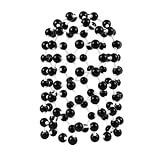
- 【Construction Style】: Built as a ball and model, it uses distinct black spheres for particles and white rods for relationships, creating a clear, easy to distinguish representation of the nanotube's interconnected framework.
- 【Visual Design】: This 3D carbon nanotube model forms a rounded cylindrical shape with an open lattice structure, offering views of internal connecting from multiple angles for demonstrations and study.
- 【Application Purpose】: Developed as a manual on teaching model, it supports classroom instruction, research facility reference, demonstrations, and individual study by making abstract nanoscale science tangible and viewable.
- 【Product Identity】: This carbon nanotube high density structure model is a three dimensional teaching tool built from glossy black spherical particle representations connected by white cylindrical linking rods, designed and materials science learning.
- 【Educational Function】: As a dedicated high density model, it visually demonstrates the open lattice arrangement of carbon particles, helping learners understand connecting patterns and the unique geometry of carbon nanotube structures.
Physisorption: reversible but temperature-sensitive
Physisorption is the attraction of molecular hydrogen to a surface through relatively weak intermolecular forces. No permanent chemical bond is required. Lowering the temperature or raising the pressure increases the amount adsorbed; warming or reducing pressure reverses the process. CNTs are attractive in this model because their nanoscale surfaces and interstitial spaces can provide many adsorption sites.
The weakness of the interaction is also the central limitation. At room temperature, thermal motion makes it difficult for a bare carbon surface to retain enough H2 unless pressure is high or the material has unusually favorable pores and binding sites.
Chemisorption and intermediate binding
Chemisorption involves stronger bonding, often after hydrogen dissociates. It can raise the effective binding energy, but the reverse reaction can consume too much energy or require temperatures that are unsuitable for practical storage. Reviews of carbonaceous materials also discuss intermediate strategies, including metal decoration and Kubas-type interactions, intended to strengthen binding without making release impractical. These are material-engineering proposals; they do not show that unmodified CNTs meet an onboard target.
Windows Errors? Fix Them Before They Spread
Repair common Windows errors and clear accumulated junk for a smoother, more stable PC - no reinstall needed.Free scan · no reinstallCrashes, No Sound, or Screen Glitches?
Random freezes, missing sound and display glitches usually trace back to one bad driver. Find and replace yours safely.Free scan · under a minuteDOE describes another important measurement issue: “Unlike chemical hydrogen or metal hydrides, the quantity that is measured either gravimetrically or volumetrically is the Gibbs surface excess.” This surface-excess value is the experimentally determined amount adsorbed at the interface. It should not automatically be treated as the total usable hydrogen in a complete tank, because the gas occupying the pores and the mass and volume of the vessel also affect what a vehicle can actually deliver.
How much hydrogen do pure carbon nanotubes store?
The most useful directly comparable figures come from the DOE Hydrogen Sorption Center of Excellence review of pure carbon SWNTs. They are materials-level measurements, not complete storage-system capacities.
| Material and condition | Reported hydrogen uptake | What the figure means |
|---|---|---|
| Pure carbon SWNTs, approximately 77 K and 20 bar | Approximately 3 wt% | Reproducible cryogenic uptake summarized by the DOE HSCoE report, published in 2010. |
| Pure carbon SWNTs, room temperature and approximately 70 bar | Approximately 0.5 wt% | Reproducible room-temperature result in the same DOE assessment. |
| Pure, undoped SWNTs at ambient temperature, including pressures below 100 bar | No verified 6 wt% result | The DOE program made a no-go assessment against its 6 wt% materials benchmark. |
“Wt%” means the mass of stored hydrogen divided by the mass basis used for the material measurement. It does not mean that a tank containing the nanotubes will deliver that percentage of hydrogen after adding a pressure vessel, valves, heat exchangers, insulation, sensors, and other balance-of-system components. Nor does a cryogenic result at 77 K describe performance at ordinary ambient temperature.
The DOE report states its scope explicitly: “Based on systematic development and testing within the HSCoE and a thorough review of the literature, it was concluded that pure undoped carbon SWNTs did not, and probably cannot, meet the 6 wt % hydrogen-storage goal (on a materials basis) at RT, even at moderate pressures (<100 bar).” This is a historical program conclusion about pure, undoped SWNTs. It is not a claim that every chemically modified CNT, composite, or future material is impossible.
Why reported CNT capacities vary so widely
Two papers can use the words “carbon nanotube” while testing materially different substances. A meaningful comparison needs the material identity, test conditions, measurement method, and system basis together.
Tube type, purity, and accessible surface
- Single-walled versus multi-walled: tube diameter, wall count, and bundle geometry alter the available surface and the size of interstitial spaces.
- Purity and impurities: residual catalyst particles, amorphous carbon, trapped solvent, and moisture change both the sample mass and the number of accessible adsorption sites.
- Defects and functional groups: oxidation or other treatments can open ends and create stronger sites, but they can also add dead mass or block pores.
- Bundling and densification: compressing a powder may improve volumetric packing while reducing access to internal surfaces. A loose powder and a compacted tank medium should not be assumed equivalent.
Temperature, pressure, and loading history
Adsorption rises with pressure and generally falls as temperature increases for physisorbed hydrogen. The precise result also depends on whether the sample was activated, dried, pressurized gradually, equilibrated for a defined period, and measured during adsorption or desorption. A peak value reached only at extreme pressure is not the same as a reversible working capacity between a vehicle’s fill and delivery pressures.
Measurement and reporting choices
Researchers may report gravimetric uptake, volumetric uptake, total hydrogen, or Gibbs surface excess. A balance can also be affected by buoyancy corrections, sample size, calibration, and the empty-space volume around a powder. Early CNT and carbon-nanofiber literature showed extreme scatter between laboratories. A 2003 review by Hirscher and Becher noted that some high carbon-nanofiber measurements did not survive cross-checking, that classical physisorption calculations could not explain certain room-temperature claims, and that chemisorption-based explanations could imply release temperatures too high for technical use.
Those historical problems do not invalidate all CNT measurements; they show why a capacity number without conditions is incomplete. DOE’s materials guidance emphasizes composition, microscopic and macroscopic structure, pore size and volume, surface area, pressure, temperature, sample size, densification, and reliable measurement as separate variables.
Rank #2
- 【Visual Design】: This 3D carbon nanotube model forms a rounded cylindrical shape with an open lattice structure, offering views of internal connecting from multiple angles for demonstrations and study.
- 【Application Purpose】: Developed as a manual on teaching model, it supports classroom instruction, research facility reference, demonstrations, and individual study by making abstract nanoscale science tangible and viewable.
- 【Product Identity】: This carbon nanotube high density structure model is a three dimensional teaching tool built from glossy black spherical particle representations connected by white cylindrical linking rods, designed and materials science learning.
- 【Construction Style】: Built as a ball and model, it uses distinct black spheres for particles and white rods for relationships, creating a clear, easy to distinguish representation of the nanotube's interconnected framework.
- 【Educational Function】: As a dedicated high density model, it visually demonstrates the open lattice arrangement of carbon particles, helping learners understand connecting patterns and the unique geometry of carbon nanotube structures.
What modified CNTs are trying to improve
Unmodified carbon offers a relatively weak hydrogen interaction at room temperature. Current proposals therefore add sites intended to raise binding energy or increase the number of accessible sites.
Metal decoration and dopants
Attaching or embedding a metal can create an intermediate interaction in which hydrogen remains molecular but binds more strongly than it would to bare carbon. Lithium, for example, is studied because it can alter the electronic environment of a nanotube bundle and provide additional adsorption sites. The engineering challenge is to prevent the metal from clustering, oxidizing, becoming inaccessible, or adding so much mass that the overall gravimetric result declines.
The 2023 lithium-doped bundle simulation
Erruboyana and Zollo’s 2023 paper modeled cubic bundles of lithium-doped SWNTs. In the modeled case with 20% lithium doping at 10 MPa, the calculated gravimetric capacity exceeded the study’s ultimate DOE target. The same work reported that the calculated volumetric performance remained insufficient for light-duty vehicle onboard storage across the explored conditions.
Because the result is computational, it should be read as a hypothesis about a material design, not as a measured tank capacity. Real synthesis may produce a different lithium distribution, defect population, pore accessibility, density, and cycling behavior than the idealized bundle. The study is valuable for identifying a direction to test, but it does not overturn the DOE result for pure SWNTs.
The Tool Desk
Outbyte PC Repair FREERepair Windows errors before they cause bigger problemsFix Now →Outbyte Driver Updater FREEScan for outdated or missing drivers - takes under a minuteDriver Scan →Functionalization and composites
Oxidation, polymer integration, metal nanoparticles, and other treatments can change pore structure and binding energy. They may improve kinetics or handling, but every additive changes the denominator used for wt% and may reduce the fraction of the tank occupied by active hydrogen-storage material. A modified CNT result therefore cannot be substituted for a pure-CNT result, and a high material uptake does not by itself establish good volumetric density, fast refueling, long cycle life, or low-cost manufacture.
Could CNTs meet an onboard hydrogen-storage target?
For a vehicle, a useful storage medium must do more than adsorb hydrogen once. It needs high usable capacity between realistic fill and delivery pressures, adequate volumetric density, manageable heat during filling and discharge, acceptable mass and volume for the vessel, rapid kinetics, thousands of cycles, safe containment, and repeatable manufacturing.
The DOE HSCoE report described approximately 15–20 kJ/mol of binding energy as the range thought necessary for more than 6 wt% dihydrogen uptake at room temperature and moderate pressure. That number is an assessment for the report’s target, not a universal specification for every sorbent. It illustrates the core compromise: binding that is too weak loses hydrogen at warm temperatures, while binding that is too strong makes regeneration energy-intensive.
The DOE center’s ambient-temperature decision also noted that no known material then met all DOE on-vehicle targets. CNTs can still be useful in a broader materials program, especially when combined with dopants, tailored pores, or thermal-management systems, but a materials-level promise must be converted into a complete, independently measured storage system before it can support a vehicle claim.
How to evaluate a new CNT hydrogen-storage claim
- Identify the exact material. Check whether it is single-walled or multi-walled, pure or modified, loose powder or a densified composite, and how much catalyst or additive remains.
- Record temperature and pressure. A result at 77 K is cryogenic; a result at room temperature should state the actual temperature and pressure, not just “high pressure.”
- Check the measurement basis. Look for gravimetric versus volumetric capacity, total uptake versus Gibbs surface excess, and whether the value is adsorption, desorption, or usable working capacity.
- Separate measured from calculated. A molecular simulation or density-functional estimate can guide material design but is not a validated device result.
- Inspect the mass denominator. Ask whether the reported wt% includes dopants, binders, moisture, support material, and the full storage vessel.
- Look for reversibility and cycling. A single equilibrium point does not establish refill time, delivery rate, degradation, or safe operation over repeated cycles.
- Check volumetric performance. A light material can look excellent gravimetrically while occupying too much volume for a practical tank.
- Demand reproducibility. Independent laboratories, calibrated equipment, blank corrections, and complete sample descriptions matter because CNT measurements have historically varied substantially between methods.
Can you buy a proven CNT hydrogen-storage system?
No source established a consumer CNT hydrogen-storage product or a commercially validated onboard system. CNT powders, dopants, catalysts, and adsorption-test equipment may be available for laboratory work, but purchasing a research sample is not the same as buying a certified hydrogen tank. A responsible supplier would need to specify composition, pressure rating, temperature range, usable capacity, cycling data, safety testing, and the complete system mass and volume.
For practical hydrogen storage today, the relevant comparison is between qualified storage technologies and their certified tanks, not between an advertised CNT powder percentage and a vehicle requirement. CNTs remain a candidate material platform whose performance depends on modification and operating conditions; pure SWNTs have not crossed the ambient-temperature benchmark described above.
Bottom line for readers
Carbon nanotubes can store hydrogen by adsorption, and pure SWNTs have reproducibly reached about 3 wt% at 77 K and about 20 bar. At room temperature, the demonstrated pure-SWNT figure in the DOE assessment was about 0.5 wt% at approximately 70 bar, with no verified 6 wt% result below 100 bar. Modified CNTs, including lithium-doped designs, may improve modeled performance, but those results remain material-specific and, in the cited 2023 case, computational. Treat every CNT capacity as a condition-dependent laboratory or modeling result until a complete, independently tested storage system proves usable gravimetric and volumetric performance.
Quick Recap
Product prices and availability are accurate as of the date/time indicated and are subject to change. Any price and availability information displayed on Amazon at the time of purchase will apply.

