PC Slower Than It Used to Be?
A free scan shows the junk files, broken settings and background clutter dragging Windows down - then fixes them in one click.Free scan · Windows 10 & 11Outdated Drivers Are Slowing You Down
One free scan finds every outdated or missing driver and matches the right update for your exact hardware.Free scan · exact hardware matchYes, cooling without an electrical power source is physically possible, but today’s evidence describes small passive-cooling prototypes—not a plug-free replacement for a whole-home air conditioner. The most promising design combines radiative cooling, evaporation and insulation. In a 2022 MIT prototype, that combination produced a reported surface temperature up to 9.3°C (18.7°F) below ambient. The result belongs to a four-inch rooftop test device, not to an entire room.
What “air conditioning without power” really means
Conventional air conditioners use electricity to run a compressor, fans and controls. A passive cooler does not supply that mechanical work. Instead, it uses naturally available heat-transfer paths: evaporation moves heat into water vapor, and thermal radiation sends heat from a surface through the atmosphere toward the cold sky. Reflective surfaces reduce solar heating, while insulation slows heat flowing back in from the surroundings.
As an Amazon Associate I earn from qualifying purchases.
“No power source” therefore means no electricity at the point of operation for the cooling mechanism described here. It does not prove zero lifecycle emissions. Manufacturing an aerogel, hydrogel, reflective film, enclosure or support structure requires energy and materials, and installation, maintenance and water delivery have impacts. The available studies do not provide a lifecycle-carbon assessment for a market-ready air conditioner.
The layered design MIT tested in 2022
MIT’s 2022 concept is an integrated stack rather than a single magic coating. Each layer handles a different way heat reaches or leaves the cooled object.
#1 Best Overall

- Experience Superior Cooling: Embrace the evaporative air cooler capabilities of the Hessaire 3,100 CFM! This portable swamp cooler combats heat and dryness while extending air coverage through its unique 3-panel intake system.
- Transform Your Living Space: Adapt to any environment with portable evaporative cooler outdoor high velocity cooling fan. This cooler fan ensures continuous water flow for 3-4 hours of use, delivering excellent cooling and fits comfortably in any space.
- Simplify Your Cooling Routine: Say goodbye to complex controls with our evaporative air cooler portable fan. This outdoor cooling fan's user-friendly design ensures easy operation. Just fill, plug, switch, and enjoy!
- Enjoy Continuous, Quiet Cooling: Molded with a lightweight polypropylene resin, the Hessaire cooler with a 10.3-gallon tank reduces refills thanks to its 80% larger evaporation surface. Its delivery system reduces noise and vibrations for a serene area.
- Cool Air Anywhere: As a trusted name in air-movement and cooling solutions since 1996, Hessaire focuses on innovation and energy efficiency and delivers reliable, low-noise evaporative air coolers that offer functionality without compromising quality.
1. A water-filled hydrogel
The hydrogel stores water and exposes moisture for evaporation. When water molecules leave the surface as vapor, they carry latent heat away. MIT compared the material to substances used commercially in cooling pads and wound dressings, but a retail evaporative cooling pad is not the same as this layered research apparatus or a zero-power room air conditioner.
2. An aerogel insulation layer
The aerogel sits above the wet layer. Its structure limits conductive heat flow while allowing water vapor to move upward and infrared radiation to pass through. That combination is important: ordinary insulation could block heat in both directions, whereas this design tries to prevent unwanted heat from entering while preserving two routes for heat to escape.
3. A reflective lower layer
The lower surface reflects incoming sunlight instead of absorbing it. Without that reflection, solar gain could overwhelm the cooling produced by evaporation and radiation, especially during the day.
The Tool Desk
Outbyte PC Repair FREERepair Windows errors before they cause bigger problemsFix Now →Outbyte Driver Updater FREEFix the driver behind crashes, sound loss and screen glitchesFind Drivers →Working together, the layers evaporate water, emit infrared energy through the atmosphere and reduce heat leakage from the environment. MIT researcher Zhengmao Lu described the novelty as bringing “the radiative cooling feature, the evaporative cooling feature, and also the thermal insulation feature all together in one architecture.”
How radiative cooling sends heat to the sky
Any warm object emits infrared radiation. A radiative cooler is engineered to emit strongly in wavelengths that can pass through the atmosphere, particularly the atmospheric infrared window commonly described as roughly 8–13 micrometres. In that band, a clear sky can act as a heat sink colder than the surrounding air.
A sun-reflecting, infrared-transparent polyethylene aerogel demonstrated the same basic idea in a separate MIT project reported in 2019. The material reflected sunlight while allowing the surface beneath it to radiate heat upward. MIT reported field results of 13°C below ambient under full sunlight at solar noon in Chile’s Atacama Desert and just under 10°C below ambient in Cambridge. Those measurements belong to that distinct radiative-cooling prototype, not to the 2022 hydrogel-aerogel-reflector system.
Rank #2

- ❄【2026 New Upgraded 3-Sided Cooling Pads】Uthfy outdoor swamp cooler with upgraded 3-sided high-density cooling pad boosts airflow to 4000 CFM and wind speed to 34 ft/s while covering large cooling area. 41” evaporative air cooler with 120° oscillation surrounds you with powerful, refreshing breeze — just like a mountain wind on a hot summer day. Perfect for patios, garage, commercial or industrial use
- ❄【3 Refill Ways Stays Cool Longer】You can choose from 3 convenient ways to refill the water: pour water into the upper tank, pull out the water port to connect a hose, or remove the bottom tank and fill it directly under a faucet. The large 13.5 gallon detachable water tank and 4 ice packs deliver up to 36 hours of continuous cooling — no frequent refills needed. Just set it and stay cool all day long
- ❄【Customize Your Cooling Summer】Create your perfect breeze with dual control. The remote and simple panel let you customize everything: 3 speeds(L/M/H), 3 modes(normal/natural/cooling) and 120° oscillation. Adjust exactly how you want — from a gentle whisper to powerful airflow. Whether you're on the patio, or in your backyard, you decide how cool and where the air goes
- ❄【12H Timer & Ambient Light】This air cooler runs at just 45dB — quiet enough for conversation or outdoor relaxation. Set the 12-hour timer for automatic shut-off without any hassle. The LED ambient light creates soft illumination for evening dinners or a gentle nightlight for kids. Control the LED ambient light with a simple on/off switch. You can turn the display screen on or off with remote control. Perfect for both indoor and outdoor use
- ❄【Portable Design & Dry-run Protection】Move it smoothly on 4 wheels (2 with brakes, 2 without) keep the securely in place. The drain port allows quick water removal when needed. A visible water line lets you check water level at a glance. In cooling mode, if there is no water or relatively little water in the water tank, the water pump will automatically stop working and stop pumping
Clouds and atmospheric moisture reduce the effectiveness of this sky-facing heat exchange. A cooler may still radiate at night under suitable conditions, but daytime performance can disappear when solar gain and atmospheric blocking dominate.
What’s actually slowing this PC down?
Pick the symptom - the matching free tool is one click away.
What the prototypes actually achieved
| System and source | Reported result | How to interpret it |
|---|---|---|
| MIT combined evaporative-radiative-insulation prototype, 2022 | Up to 9.3°C (18.7°F) below ambient | Measured on a small rooftop prototype about four inches across; not a room-temperature reduction. |
| MIT polyethylene-aerogel radiative cooler, 2019 | 13°C below ambient in the Atacama at solar noon; just under 10°C in Cambridge | A separate radiative-cooling prototype with field results in those locations. |
| Hong Kong field investigation, 2017 | 38 W/m² cooling capacity on a clear night; about 6–7°C nighttime cooling for two configurations | The tested designs cooled at night but showed no daytime cooling under the study’s hot, humid conditions. |
The figures are not interchangeable. Temperature drop depends on the surface, enclosure, weather, solar exposure and measurement method; cooling capacity in watts per square metre describes heat-removal rate rather than a guaranteed indoor temperature.
Evaporative and radiative cooling suit different weather
Evaporation works best when air is hot and dry enough to accept additional water vapor. High humidity reduces the vapor-pressure difference and slows evaporation. Radiative cooling is constrained more by clouds, atmospheric moisture and solar exposure; it can remain comparatively useful in some cooler or more humid conditions, particularly at night.
A 2022 comparison under clear-night conditions found evaporative cooling performed better at high temperature and low relative humidity. Radiative cooling was relatively more resilient at higher humidity and/or lower temperatures. The authors treated the two approaches as potentially complementary, not as universal substitutes.
| Condition or design question | Evaporative path | Radiative path |
|---|---|---|
| Hot, dry air | Generally favorable because evaporation has a strong driving force. | Can work, but depends on a clear view of the sky and surface emissivity. |
| Hot, humid air | Performance falls as the air approaches saturation. | Atmospheric moisture can reduce infrared transmission; nighttime may still be favorable. |
| Cloudy conditions | Clouds do not directly stop evaporation, although humidity and wind still matter. | Clouds radiate infrared energy back toward the cooler and can sharply reduce net cooling. |
| Water availability | Requires a replenishable water supply. | Does not consume water for the radiative exchange itself. |
| Best role in a building | Direct cooling of a surface, storage space or airflow when water is available. | Night precooling, roof-temperature reduction or heat rejection from a fluid loop. |
Water use is a practical design constraint
MIT said the combined system’s water would need replenishing about every four days in the hottest, driest areas and about once a month in wetter areas. These are reported intervals for the described concept, not a universal consumption rate. Actual refill frequency would change with exposed area, reservoir size, wind, temperature, humidity, cloud cover and how much heat the system must remove.
Quick wins for a faster PC:
Clear out junk files and repair common Windows errorsFree Scan →Scan for outdated or missing drivers - takes under a minuteDriver Scan →Repair Windows errors before they cause bigger problemsFix Now →A deployment in a dry climate may gain strong evaporative performance but face the greatest water-management burden. A humid climate may conserve water less effectively because evaporation slows, even though the local environment can supply moisture. A closed reservoir, rain capture or treated greywater could reduce logistical demand, but each adds hardware and maintenance that the prototype reports do not quantify.
Rank #3

- Powerful Cooling for Large Spaces: This portable swamp cooler is your ultimate summer companion, built to tackle hot days with ease. Measuring 41x17x23 inches and featuring 4800 CFM airflow, it delivers powerful, consistent cooling for spaces up to 1200 square feet—ideal for patios, backyards, garages, workshops, and other large indoor/outdoor areas. Equipped with 3 adjustable fan speeds (Low/Medium/High) and 120° automatic side-to-side oscillation (plus manual up-and-down adjustment), swamp cooler air conditioner distributes cool air evenly to every corner, ensuring all-day and night comfort
- Fast, Efficient Cooling with Colder Air, Less Energy: This evaporative air cooler delivers instant, icy comfort with 3-side high-density cooling pads that maximize evaporative surface area, converting warm air into crisp, cool breezes quickly. Three included ice boxes enhance the cooling effect, releasing even colder air that lasts longer to keep your space refreshing. Far more energy-efficient than portable AC units, outdoor air cooler helps reduce utility bills while keeping you cool, offering an affordable summer cooling solution
- Simple Operation & Easy Mobility: Operation is straightforward with an intuitive mechanical control panel, allowing easy adjustment of fan speed (L/M/H), cooling mode, and 120° left-right oscillation—suitable for all users, even those not tech-savvy. Four heavy-duty universal wheels (2 with brakes, 2 without) enable effortless mobility; roll it between spaces like patios, garages, and backyards, then lock the brake wheels for secure placement, no lifting or straining required
- Manual & Auto Fill with No Constant Monitoring: Designed for hassle-free use, this evaporative cooler offers dual water fill options. Top filling is quick and labor-saving, and the large 10.6-gallon water tank provides continuous operation for an entire night, ensuring uninterrupted sleep comfort. For added convenience, connect a garden hose (adapter included) for automatic water filling— the tank refills itself, eliminating the need for constant monitoring and letting you focus on enjoying the cool
- Built to Last Through Every Summer: Built for long-term durability, this outdoor evaporative cooler features a sturdy sheet metal body with electrostatic powder coating, making it impact-resistant, corrosion-resistant, and wear-resistant—perfect for outdoor use in all weather. It is also easy to clean, maintaining optimal performance with minimal effort. The new copper motor delivers superior efficiency, low energy consumption, ultra-quiet operation (non-disruptive to conversations or sleep), and an extended lifespan, ensuring reliable use season after season
Could it preserve food or cool a building?
Food storage
MIT presented food preservation as a possible off-grid application. Under very humid conditions, the institute reported a potential extension of safe storage time of about 40%; in drier conditions, it reported up to three times the safe storage time. These are associated potential outcomes, not universal food-safety guarantees. Real storage still depends on the food, starting temperature, contamination control, packaging, airflow and local health rules. A passive panel should not replace validated refrigeration where safety requires controlled temperatures.
Supplementing air conditioning
A roof or façade system could reduce the heat entering a building, pre-cool a fluid or lower the load on a conventional air-conditioning plant. Reducing compressor runtime is a more immediate engineering target than trying to keep an entire occupied building at a fixed set point with a small passive panel.
Off-grid and remote uses
Remote shelters, medicine stores, agricultural containers and telecommunications enclosures could benefit when grid power is unavailable and the cooling requirement is modest. The design must still account for nighttime-only operation, cloudy periods, water hauling, insulation thickness, condensation and the need for a backup system during extreme weather.
Why this is not yet a zero-power whole-home air conditioner
- Scale: The best-known 9.3°C result came from a prototype only about four inches across. Scaling a temperature result to a room requires a heat-load calculation, not multiplication by floor area.
- Cooling capacity: A surface temperature below ambient does not state how many watts can be removed from occupants, walls, appliances and incoming outdoor air.
- Daytime limits: The Hong Kong field study recorded no daytime cooling for its tested radiative designs under those weather conditions.
- Water dependence: The evaporative layer needs periodic replenishment, with the interval varying widely by climate.
- Materials and manufacturing: MIT reported that the aerogel was costly and would require further development for mass production.
- Weather variability: Clouds, humidity, wind and solar exposure can change performance hour by hour.
- Indoor comfort: A cooler roof or storage box is not equivalent to controlling indoor air temperature, humidity, ventilation and noise.
A sensible way to evaluate a passive-cooling installation
- Define the load. Calculate the heat entering the space, including solar gain, people, equipment, lighting, infiltration and ventilation. A surface-temperature claim cannot substitute for this step.
- Characterize the site. Record dry-bulb temperature, relative humidity, cloud cover, wind, solar exposure and nighttime sky conditions across the hottest and most humid periods.
- Choose the cooling route. Favor evaporation where hot, dry air and reliable water are available. Favor radiative exchange where the system has a clear sky view and the main opportunity is nighttime or roof-level heat rejection. Consider a hybrid when conditions vary.
- Protect the heat sink. Use reflective surfaces to limit solar absorption, insulation to reduce conductive gains and drainage or vapor-control details to prevent moisture damage.
- Plan water and maintenance. Size the reservoir for the local refill interval, provide safe access, monitor water quality and inspect the hydrogel or pad for fouling and degradation.
- Measure useful output. Log surface temperature, ambient temperature, humidity, water consumption and heat flow. If the goal is building cooling, measure indoor temperature and actual cooling load rather than surface temperature alone.
- Keep backup capacity. Design for cloudy nights, heat waves, drought restrictions and periods when the passive system cannot meet the required load.
Cost, commercialization and the next engineering hurdle
The concept’s appeal is its lack of electrical consumption during operation, but the expensive component and manufacturing complexity remain barriers. MIT described the aerogel as costly and said more work was needed to make it practical at mass-production scale. The evidence therefore supports a research direction and prototype applications, not a currently available complete product category.
Stanford’s Office of Technology Licensing lists an “Ultrahigh Performance Radiative Cooler” at the prototype stage and provides a licensing contact. That listing indicates a possible path for building-material or cooling-system integration; it does not establish current retail availability, partner terms or a deployed commercial air conditioner.
What “zero-carbon” should mean here
Calling the system zero-carbon without qualification would overstate the evidence. The mechanisms operate without electricity at the cooling surface, but the available reports do not calculate embodied carbon, manufacturing emissions, transport, installation, replacement materials or water infrastructure. A precise description is “passive cooling with no electricity at the point of operation,” followed by a separate lifecycle assessment when one exists.
Rank #4
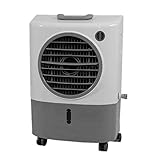
- Experience Enhanced Cooling: Tackle insufficient cooling with the Hessaire 1,300 CFM evaporative air cooler outdoor fan. Its hi-density XeL50 media provides an expanded air-intake area, optimizing your Hessaire cooler experience while helping you save up to 50% on electricity.
- Expand Your Comfort Zone: Experience extended air coverage with this water cooler fan. Its patented axial prop throws cool air farther, and its single cooling pad enhances efficient air delivery, making this outdoor cooling system perfect for larger spaces.
- Effortless Operation and Maintenance: This Hessaire MC18M stands out with its user-friendly design. Fill the tank, connect the power, and flip the switch to enjoy the refreshingly cool air. Run the water fan air cooler for 30 minutes to dry before storing.
- Opt for Lightweight Durability: Molded with lightweight ABS resin, this portable evaporative outdoor cooler with a 4.8-gallon tank is easy to carry and less fragile than traditional coolers. Its unique cooler fan design ensures less noise and vibrations.
- Cool Air Anywhere: As a trusted name in air-movement and cooling solutions since 1996, Hessaire focuses on innovation and energy efficiency and delivers reliable, low-noise evaporative air coolers that offer functionality without compromising quality.
Bottom line for readers considering the idea
Passive radiative-evaporative cooling is a credible way to reject heat without an electrical power source. The MIT work shows that combining a water-bearing hydrogel, vapor- and infrared-permeable insulation and a reflective layer can outperform a single passive mechanism in the right conditions. It does not yet demonstrate a zero-power, whole-home air conditioner. Today, the strongest use cases are targeted cooling, food-storage support, roof or equipment heat rejection and reducing the load on conventional systems—provided the design is matched to local weather, water supply and required cooling capacity.
Frequently Asked Questions
Does the 9.3°C result mean a room can be cooled by 9.3°C?
No. MIT measured up to 9.3°C (18.7°F) below ambient on a small rooftop prototype about four inches across. That surface result does not predict the temperature reduction or cooling capacity of a room.
Will passive radiative cooling work during the day?
It can, but performance depends on solar exposure, clouds and atmospheric moisture. In a 2017 Hong Kong field study, the tested radiative designs cooled at night but produced no daytime cooling under the reported weather conditions.
How often must the evaporative layer be refilled?
MIT reported about every four days in the hottest, driest areas and about once a month in wetter areas for its concept. The interval is climate- and installation-specific, not a universal rate.
Is this technology already a commercially available zero-carbon air conditioner?
No. The published work describes prototypes and possible applications. MIT reported that the aerogel was costly and needed further development for mass production, while a Stanford licensing page identifies a radiative cooler at the prototype stage.
Recommended Free Tools
Quick Recap
Product prices and availability are accurate as of the date/time indicated and are subject to change. Any price and availability information displayed on Amazon at the time of purchase will apply.

