Possibly—but the billion-dollar figure is a modeled scenario, not a tally of savings already achieved by the pharmaceutical industry. The OECD says that reducing failure rates across development phases could cut the cost of a single drug project by half, amounting to slightly more than US$1 billion per new drug under its assumptions. AI may help make that kind of improvement by guiding which experiments and molecules researchers prioritize. It does not replace laboratory testing or clinical trials, and the available evidence does not establish industry-wide savings or lower medicine prices.
What does the billion-dollar estimate actually mean?
The Organisation for Economic Co-operation and Development (OECD) describes the figure as a modeled estimate of slightly over US$1 billion per new drug. It is based on a scenario from Bender and Cortés-Ciriano (2021), discussed in the OECD’s 2023 chapter “AI in drug discovery”. It is not a verified amount that companies have already saved through deployed AI, nor a guarantee that an individual AI tool will deliver that saving.
As an Amazon Associate I earn from qualifying purchases.
The estimate depends on improving outcomes across development phases. In the OECD’s example, a 20% decrease in the failure rate at each step—for instance, reducing a rate from 30% to 24%—would halve the total cost of a single project. That is a conditional calculation: it shows how preventing failures could affect costs, not that AI has caused those reductions across the industry.
Keep the denominator in mind. The estimate is per new drug under a particular scenario; it is not an industry-wide annual savings total. Nor should it be confused with a measured reduction in experimental costs alone: the model’s central economic logic is that fewer failures mean less money spent on work that does not lead to an approved drug.
#1 Best Overall

- EXCITING AND COMPETITIVE – Not merely a deck of cards to start a conversation. This is a game. And, the balance of competition and intimacy provides an entirely unique and exciting way to connect.
- A CURE FOR THE “WE’VE FALLEN OUT OF LOVE FEELING” – The game brings all the excitement of a first date, regardless of how long you have been together. Get The discovery Game for less than it costs to go out to dinner, and be ready to pull a great date out of the box— anytime!
- UNBELIEVABLY EASY PREPACKAGED WAY TO CONNECT WITH YOUR SPOUSE – With quick-start rules, you’ll be playing in minutes. Your marriage can go from "Eh," to "Exhilarating" in one hour!
- DATE NIGHT IN A BOX – The discovery Game creates an exhilarating atmosphere— conversation, fun, and romance result naturally. And, you control the pace of the game. So, whether you want sexy or sensitive, your experience will be specifically tailored to your relationship.
- A TOOL THAT FEELS LIKE A TOY – Based on years of research, this game is designed to cultivate intimacy. It is recommended by Focus on the Family, FamilyLife, and endorsed by The American Association of Christian Counselors, as well as Shaunti Feldhahn.
How could AI reduce drug-development costs?
Drug research involves many decisions about what to test and which candidate molecules deserve further study. AI models can help researchers select targets, generate or prioritize molecules, and plan experiments. The potential economic benefit is better selection: if researchers can focus time and resources on experiments or candidates with a stronger chance of success, they may waste less effort on paths that fail.
Where AI may help
- Target selection: Help researchers identify biological targets that may be worth investigating.
- Molecule generation and prioritization: Propose candidates or help rank them for further evaluation.
- Experiment planning: Help teams choose which tests to run and what evidence to gather next.
These are aids to research decisions, not proof that a predicted molecule will work as a medicine. Models depend on data and on choices about what questions to ask; the OECD identifies data and explainability as adoption challenges. Human expertise remains important in selecting meaningful experiments and interpreting results.
Rank #2

- AWARD-WINNING STRATEGY GAME: Spy Alley Won Mensa’s Best Mind Game, a highly sought-after award only few games ever win. Spy Alley was also named Australian Game of the Year, as well as one of the Chicago Tribune’s Top Ten Games and Family Life’s Best Learning Toy, among many others.
- HIGH REPLAYABILITY FOR ALL AGES: Like beloved classics such as Chess, Checkers, and Risk, Spy Alley was designed for Adults and Families. Players can use as much or as little strategy as they would like, making it the perfect game to revisit year after year.
- THE PERFECT HOLIDAY GIFT & GATHERING GAME: This classic strategy game is an ideal gift for teens, families, and adults. Ensure your winter break and holiday parties are filled with high-stakes fun and memory-making. Give the gift of a trusted, multi-generational classic.
- TIMELESS HIDDEN IDENTITY CLASSIC: For over 30 years, families across the globe have enjoyed the thrill of this classic game of deduction and misdirection. Master the art of suspense, intrigue, and espionage in this iconic game, enjoyed by generations.
- COINCIDENCE OR COVERUP: The game's designer, William Stephenson, shares his namesake with the legendary WWII Spymaster Sir William Stephenson, Code Name: INTREPID. This fun coincidence is what gives the game its unique personality and pays tribute to the true legacy of espionage that inspired our favorite spy James Bond and brings the thrill of a spy movie to your table.
Why AI does not eliminate lab work or clinical trials
A model’s prediction must be tested against biological reality. Laboratory assays measure how a candidate behaves; clinical trials assess safety and efficacy in people. Those steps provide evidence that a computational prediction alone cannot establish and are essential to protecting patients.
What’s actually slowing this PC down?
Pick the symptom - the matching free tool is one click away.
K. Z. Szalay, author of the OECD chapter and affiliated with Turbine.AI, puts the distinction plainly: “Meticulous experiments to ensure patient safety will always be needed. However, the potential impact of AI is not to eliminate the need for clinical trials.”
Rank #3
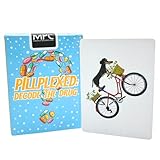
- What’s in the Box? 54 Cards: 2 Instruction and Legend Cards: Provides the rules and a guide to the symbols used. 52 Playing Cards: Each card features a creative image on the front and detailed information on the back, including the drug name and relevant facts.
- How to Play Setup: Gather at least two players. Shuffle the deck and designate a player to start as the “Practitioner.” Gameplay: The Practitioner draws a card and looks at both sides. They show the image on the front to the other players, who guess the drug’s name based on the visual clues. Players can request hints, which reduces the card’s point value. Scoring: Each correct guess awards points, with the potential to earn more by using fewer hints. The game continues with players rotating the role of Practitioner.
- Benefits of the Game Enhanced Learning: Combines visual aids with factual information, making it easier to remember complex drug details. Engaging and Fun: Transforms the often tedious task of studying into an enjoyable game. Ideal for Group Study: Encourages collaboration and discussion among players, making it perfect for study groups. Combat Burnout: Offers a refreshing break from traditional studying, helping to reduce burnout and keep learning exciting.
- Who Is This Game For? Pharmacy Students: An excellent study aid for learning and retaining drug information. Healthcare Professionals: Ideal for anyone looking to refresh their knowledge or prepare for exams. Educators: A valuable resource for interactively teaching drug information. Visual and Kinetic Learners: Perfect for those who learn best through images and active participation.
AI could change which candidates reach testing or how efficiently researchers plan work, but it cannot make the need for evidence disappear. Any cost benefit also depends on whether improved selection produces fewer costly failures without compromising the rigor needed to establish safety and effectiveness.
What do early clinical results show?
A 2024 review by Jayatunga and colleagues reported Phase I success rates of 80–90% and a Phase II success rate of approximately 40% for molecules associated with AI-native biotech companies. The authors described the results as early signs and noted that the Phase II sample was limited. The figures are not a randomized comparison showing that AI caused better outcomes, and they should not be compared directly with whole-industry success rates without accounting for cohort and stage definitions.
Rank #4

- INNOVATIVE STRATEGY MECHANICS: Plan your moves around shared dice values that shape actions and scoring each round. Gather herbs, activate runestones, and build monuments to earn prestige and victory.
- FROM DESIGNER STEFAN FELD: Created by the acclaimed designer of The Castles of Burgundy, Notre Dame, and Bora Bora, The Druids of Edora delivers deep strategy with rewarding tactical choices.
- HIGH REPLAY VALUE: Modular board sections, variable objectives, and multiple scoring paths ensure every playthrough offers fresh challenges and new strategies to master.
- IMMERSIVE ART AND COMPONENTS: Explore the enchanting forests of Edora with richly detailed artwork and sculpted "Rewood" pieces that bring ancient druidic lore to life on your tabletop.
- PREMIUM RAVENSBURGER QUALITY: Includes 1 main board (17 parts), overview board, oracle tile, 214 tokens, Rewood markers, player boards, reference sheet, and more - crafted with precision and durability you can trust.
These results are a snapshot of a limited pipeline, not confirmation that AI has transformed drug development economics. Clinical progress is relevant evidence, but it does not by itself demonstrate lower costs across all phases or establish how much money AI has saved.
Do lower research costs mean cheaper medicines?
No automatic link is established. Research and development costs, the cost of failed candidates, clinical testing, regulatory review, and the eventual price of a medicine are distinct matters. A modeled reduction in R&D expense does not show that a company will pass savings on to patients, or quantify any resulting price reduction.
Best Value
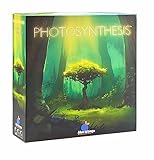
- Strategy board game: Photosynthesis is one of the best environmental board games referring to the life cycle of trees, for science and biology enthusiasts. This best-selling board game has an amazing table presence with an ever-changing forest
- Family or adult strategy game: This 2 to 4 players nature inspired game can be enjoyed by parents playing with their children as well as adults, also plays very well as a 2 players abstract board game. Best recommended for ages 8 & up
- How to play: Photosynthesis uses an action points allowance system mechanism. Take your trees through their life-cycle, from seedling to full bloom to rebirth, and Earn light points as their leaves collect energy from the revolving sun’S rays
- Photosynthesis was one of the top rated board games when it was released at gen con. It is easy to play for families enjoying other blue orange classic and award winning board games like king domino, planet, New York 1901
The World Health Organization’s 2024 discussion paper, “Benefits and risks of using artificial intelligence for pharmaceutical development and delivery,” considers public-health benefits and governance alongside commercial benefits. That broader perspective matters: the value of AI in pharmaceutical development should be judged not only by potential efficiencies, but also by whether its use is responsibly governed and benefits people who need medicines.
What is known—and what is not
- Modeled possibility: The OECD’s slightly-over-US$1-billion estimate per new drug reflects a scenario in which failure rates improve across development phases.
- Not an observed industry total: The cited sources do not provide a validated figure for realized pharmaceutical-industry savings attributable to AI.
- Early clinical evidence: A 2024 review reports promising stage-specific rates for a limited sample of AI-native-company molecules, but does not prove that AI caused the outcomes.
- No demonstrated patient-price reduction: The sources do not quantify medicine-price cuts caused by AI-related R&D savings.
For a reader asking, “Can AI really cut the cost of discovering a drug by billions?”, the careful answer is that a model shows how large the savings could be if failure rates fell substantially. Whether AI can produce that scale of repeatable, realized savings—and whether any savings benefit patients—remains unestablished by the evidence cited here.
Quick Recap
Product prices and availability are accurate as of the date/time indicated and are subject to change. Any price and availability information displayed on Amazon at the time of purchase will apply.
Free tools Windows power users keep installed
One-click scans. No signup required.

