Yes, aerogel-based insulation can be used in buildings, but a material’s spaceflight history is not proof that any blanket is suitable for a house. NASA documents a path from fragile silica aerogel research to fiber- and polymer-reinforced composites, including flexible blankets and other forms intended for terrestrial applications. For a home, the decisive evidence is product-specific: tested thermal resistance at the installed thickness, moisture and vapor behavior, fire classification, structural compatibility, durability, code acceptance and installed cost.
What aerogel is—and why it slows heat
Aerogel is a solid network whose liquid phase has been removed and replaced with gas. Silica aerogel, the best-known type in NASA’s insulation work, is about 95% porous according to NASA’s 2011 technical article, which lists an update on September 22, 2026. The material’s nanoscale pores restrict heat moving through the gas inside them. NASA research chemical engineer Mary Ann Meador summarizes the mechanism: “The pores are so small, and gas phase heat conduction is very poor.”
As an Amazon Associate I earn from qualifying purchases.
That porosity is a description of the material, not a guarantee of a particular wall’s energy performance. A building assembly also transfers heat through solid paths, air leakage, fasteners, joints and framing. Thickness, density, facing materials, compression and installation quality determine the result a homeowner experiences.
What’s actually slowing this PC down?
Pick the symptom - the matching free tool is one click away.
NASA’s explanation of the mechanism and commercial forms is available in “Aerogels: Thinner, Lighter, Stronger.”
#1 Best Overall

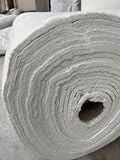
- Aerogel Insulation Hydrophobic Mat of High Temp.
- The mat is made of high quality aerogel, size: 12’’x12’’, thickness:10mm(3/8inch)
- This version of Spaceloft aerogel is great for Cryogenic temperatures of -328°F to 1200°F
- Unless it is rated for high temperature, don't go putting a torch to your Aerogel
- It is Hydrophobic, which means it will not absorb water. So, moisture from condensation is not a problem.
How a spacecraft material became a practical blanket
1992–1993: solving the handling problem
Monolithic silica aerogel can be extremely fragile. NASA Kennedy Space Center began pursuing practical cryogenic insulation in 1992 and funded Aspen Systems through Small Business Innovation Research work. NASA’s 2010 Spinoff account says the first composite blanket specimens were produced in 1993. Fibers reinforced the aerogel so it could be handled as a flexible blanket while retaining much of its insulating behavior.
The motivation was demanding spacecraft logistics. NASA’s historical account notes that fueling a Space Shuttle required more than half a million gallons of cryogenic liquid oxygen and liquid hydrogen. That figure is historical launch context, not a household insulation requirement, but it explains why NASA pursued thin, effective insulation that could survive handling.
NASA’s account of this technology-transfer route appears in “Aerogels Insulate Against Extreme Temperatures.”
Do these 3 things before closing this tab:
1Clear out junk files and repair common Windows errors2Scan for outdated or missing drivers - takes under a minute3Repair Windows errors before they cause bigger problemsReinforcement changed what could be manufactured
NASA Glenn later described polymer reinforcement and polymer-based aerogels as ways to strengthen the porous network and create flexible or translucent forms. In the 2011 article, Meador reports that a polymer-reinforced aerogel was about two orders of magnitude stronger than silica aerogel of the same density. That comparison applies to the materials described in that research; it is not a specification for every commercial blanket.
Maintaining the pore structure is central to performance. “Maintaining the gel structure is the most important thing,” Meador says. Reinforcement, fiber batting, polymer chemistry and protective facings all affect how a product handles compression, dust, moisture and installation.
Rank #2

- 30' = 142.5sq/ft, each roll is 57" wide x 30' long
- The light weight and compression strength of Spaceloft make it an excellent option for areas where weight and space may be issues.
- It is hydrophobic, which aids in preventing corrosion under insulation (CUI), which could lead to costly repairs.
- Application temperatures are greater than Cryogel Z with a range from -460°F (-270°C) to 390°F (199°C)
- Delivers up to 5 times the insulating performance of competing products.
What NASA actually used aerogel for in space
NASA’s space history includes several different aerogel functions. A Mars rover used aerogel as part of its thermal insulation, and NASA has studied aerogel-based thermal protection for flight systems. Those are insulation applications.
The Stardust mission used low-density silica aerogel panels for a different purpose: the panels “soft-caught” comet and interstellar particles so they could be returned to Earth. That mission demonstrates controlled particle capture, not wall insulation. NASA describes the Stardust use on its Stardust mission page.
Keeping those functions separate matters. A product engineered to capture particles in a spacecraft is not automatically a building insulation product, and a cryogenic blanket is not automatically appropriate behind drywall.
What is available beyond spacecraft
NASA describes commercial aerogel products in several forms:
| Form | What it is suited to | What a building buyer must verify |
|---|---|---|
| Fiber-reinforced blanket | Flexible insulation where thin layers or irregular geometry are useful | Thermal resistance at the actual thickness, compression limits, facing, dust control, moisture behavior and approved assembly |
| Composite or polymer-reinforced aerogel | Improved handling strength compared with fragile monolithic silica | Strength and flexibility for the specific product; polymer fire and temperature limits |
| Pellets or granular forms | Filling or specialty applications designed around loose material | Settlement, containment, air sealing, moisture and installation method |
| Translucent panels between glass panes | Daylighting concepts where insulation and light transmission are combined | Glazing-system ratings, condensation control, optical performance and code-listed assembly |
NASA Glenn identifies building and construction as a possible terrestrial application, especially where insulation space is limited. The sources establish that pathway, but they do not provide a current residential product comparison, whole-wall assembly data, installation instructions, code approvals, installed cost or a household energy-savings forecast.
Rank #3

- Innovative Nano Materials: Our Nano Fireproof Insulation Blanket is crafted from cutting-edge nano materials, offering superior fire resistance, thermal insulation, and water repellency. It’s your go-to solution for keeping your projects safe and efficient!
- Extreme Temperature Resistance**: Trust in a product that withstands extreme temperatures up to 1200°F (650°C). This Flame Retardant blanket ensures your industrial pipes and equipment are protected from heat damage, making it perfect for high-temperature applications.
- Hydrophobic and Soundproof**: Not only does this Aerogel Insulation provide excellent thermal insulation, but it’s also hydrophobic and soundproof! Say goodbye to moisture issues and noisy environments in your industrial spaces with our versatile insulation blanket.
- Easy Installation: Lightweight and easy to cut and sew, our insulation blanket saves you time and labor during installation. Whether you’re working on pipes, tanks, or industrial furnaces, you'll appreciate how effortlessly it fits to various shapes and sizes!
- Perfect for Various Uses: Designed for a wide range of applications, from power plants and military ship bulkheads to high-speed trains and lifeboats.
Can you use aerogel insulation in a house?
Potentially, yes—if the exact product is designed, tested and approved for the intended assembly. The most plausible situations are those in which saving thickness has a real value:
- Retrofits where existing walls or roofs cannot accommodate a thick conventional layer.
- Window, door and junction details where a bulky insulation layer would interfere with clearances.
- Curved, crowded or irregular spaces that are difficult to fill with rigid boards.
- Specialty cold or hot zones where the manufacturer provides data for the actual temperature range.
“Thinner” does not mean “install anywhere.” A blanket may need a vapor-control layer, a protected facing, mechanical restraint or an air-sealed enclosure. It may be unsuitable for below-grade wet locations, exposed exterior surfaces, high-compression areas or assemblies that require a particular fire-rated listing.
Space performance is not house performance
A current NASA catalog entry lists Aspen Aerogels’ hybrid aerogel/multilayer insulation (MLI) system for cryogenic space insulation at Technology Readiness Level 4 for Moon/Mars logistics applications. NASA says the project demonstrated advantages at cryogenic temperatures and across a range of vacuum conditions. NASA TechPort describes the hybrid system as having “outperformed MLI system at cryogenic temperatures and across a range of vacuum conditions, including high vacuum.”
Those are aerospace results under cryogenic and vacuum conditions. They do not establish how the same or another aerogel product performs in a ventilated wall, roof, basement or humid climate. The catalog entry is available through NASA’s Thermal Management page, and the project description is on NASA TechPort.
NASA also funds ongoing high-temperature aerogel research for aerospace applications; its scope and test conditions are described in “Thermally Stable Aerogels for Aerospace Applications.” High-temperature capability in that research should not be interpreted as a residential fire rating.
Quick wins for a faster PC:
Repair Windows errors before they cause bigger problemsFix Now →Scan for outdated or missing drivers - takes under a minuteDriver Scan →Rank #4
How to evaluate an aerogel product for a building
Ask for documents that describe the complete product and assembly, not just a headline claim about aerogel’s porosity or a laboratory value for a small sample.
- Identify the exact product and orientation. Record the manufacturer, model, thickness, facing and whether the material is a blanket, board, panel or loose fill.
- Request thermal data at stated conditions. Look for tested thermal resistance or conductivity at the intended mean temperature, density and thickness. Check whether the value is for the product alone or a complete wall or roof assembly.
- Check moisture and vapor behavior. Obtain water absorption, vapor permeance, drying guidance and compatibility information for the climate zone and location in the assembly.
- Verify fire evidence. Ask for the product’s fire classification, smoke data and any tested wall, ceiling or roof assemblies. Do not substitute a general statement that silica is inorganic for a listing of the finished composite.
- Confirm mechanical limits. Find allowable compression, fastening requirements, edge durability, dusting controls and minimum bend radius. A blanket that is crushed behind cladding may no longer deliver its rated thickness.
- Read installation instructions. Follow requirements for overlaps, seams, penetrations, protective layers, air sealing and exposure during construction.
- Check local acceptance. Ask the building official or a qualified designer whether the proposed assembly is recognized under the applicable code or requires an alternative-method approval.
- Calculate installed cost. Include accessories, protective membranes, labor, waste, detailing and any redesign needed to accommodate an unusual product.
Comparison with conventional insulation: the questions that decide
Aerogel should not be declared a universal winner from material porosity alone. Compare a proposed aerogel assembly with the conventional alternative using the same boundaries:
| Comparison axis | Why it matters | Evidence needed |
|---|---|---|
| Thermal resistance at thickness | Determines whether the space-saving benefit is real in the assembly | Matched test method, temperature, thickness and aging conditions |
| Installed thickness and usable space | Shows whether a thinner layer solves the project constraint | Section drawings including facings, battens, cavities and clearances |
| Moisture and vapor control | Prevents condensation and trapped water | Permeance, absorption, drying and climate-specific design data |
| Fire and assembly approval | Determines where the product may legally be installed | Classification and tested assembly reports |
| Handling and durability | Indicates whether shipping, cutting and compression damage performance | Strength, flex, dust, fastener and service-life information |
| Installed cost | Determines payback and project feasibility | Current regional quote including labor and accessories |
| Availability | Affects schedule and replacement options | Current supplier stock and lead time in your region |
The NASA sources reviewed here do not supply a complete apples-to-apples building comparison on these axes. No published building-level energy-savings figure, installed-cost figure, lifespan figure or general residential code-approval figure is established by them.
Common mistakes and how to avoid them
Assuming a space blanket can replace a wall system
Space hardware is engineered for a defined temperature, pressure, vibration and enclosure. A house adds rain, humidity, insects, fire exposure, fasteners, occupants and local code requirements. Use a product only within the manufacturer’s documented assembly.
Crashes, No Sound, or Screen Glitches?
Random freezes, missing sound and display glitches usually trace back to one bad driver. Find and replace yours safely.Free scan · under a minuteWindows Errors? Fix Them Before They Spread
Repair common Windows errors and clear accumulated junk for a smoother, more stable PC - no reinstall needed.Free scan · no reinstallUsing a material-property number as an energy forecast
“About 95% porous” describes silica aerogel’s structure. It does not predict a home’s heating or cooling reduction. Model the complete envelope with local weather, thermal bridges and air leakage included.
Best Value

- This Aerogel Insulation is New Surplus and was manufactured by Aspen Aerogels
- The light weight and compression strength of Spaceloft make it an excellent option for areas where weight and space may be issues.
- It is hydrophobic, which aids in preventing corrosion under insulation (CUI), which could lead to costly repairs.
- Application temperatures are greater than Cryogel Z with a range from -460°F (-270°C) to 390°F (199°C)
- Delivers up to 5 times the insulating performance of competing products.
Compressing or exposing the blanket
Flexible does not mean crush-proof or weatherproof. Follow the stated compression and exposure limits, and protect the material wherever the instructions require a facing or enclosure.
Ignoring the rest of the envelope
A highly insulating patch cannot compensate for uncontrolled air leakage, wet framing, thermal bridges or poorly detailed transitions. Treat aerogel as one component in an air-, water- and vapor-managed assembly.
What the evidence supports today
NASA’s record supports a clear technology pathway: porous aerogel can impede gas-phase heat transfer; reinforcement can make fragile silica practical to handle; flexible composite blankets and other commercial forms exist; and building construction is a recognized terrestrial application, particularly where thickness is constrained.
It does not support a blanket endorsement of every aerogel product for residential use. Before specifying one, obtain current, product-specific building data and have the complete assembly reviewed by a qualified designer or building official. If those documents are unavailable, conventional insulation with established local listings may be the more defensible choice, even when it requires more space.
Quick Recap
Product prices and availability are accurate as of the date/time indicated and are subject to change. Any price and availability information displayed on Amazon at the time of purchase will apply.

