No. The available studies do not show that one synthetic hormone universally stops water loss in crops. Applied abscisic acid (ABA) can reduce transpiration by encouraging stomatal closure, while film-forming antitranspirants reduce exchange at the leaf surface and the synthetic cytokinin CPPU has been studied mainly for improving cotton roots. These are different interventions with crop- and condition-specific results.
What the headline gets right—and wrong
Plants lose most of their water through transpiration: water moves from roots through the xylem and exits through microscopic pores called stomata. During drought, plants can narrow those pores, alter leaf chemistry, change root growth and, in some cases, reduce the exposed or permeable leaf surface. Each response has a cost. Closing stomata saves water but also restricts carbon dioxide entry, so photosynthesis can fall. A coating that slows evaporation can protect a crop during a short dry spell but may interfere with gas exchange when water is plentiful.
As an Amazon Associate I earn from qualifying purchases.
Abscisic acid is a naturally occurring plant hormone, not a universal “water-stop” chemical. A grower can apply ABA from outside the plant (exogenous ABA), and that application may trigger hormonal drought responses. A film antitranspirant such as di-1-p-menthene is not a hormone at all: it forms a physical layer on the plant surface. CPPU, or N-(2-chloro-4-pyridinyl)-N′-phenylurea, is a synthetic cytokinin investigated in cotton for root production. Treating these three approaches as interchangeable leads to incorrect expectations about water use and yield.
Quick wins for a faster PC:
Repair Windows errors before they cause bigger problemsFix Now →Fix the driver behind crashes, sound loss and screen glitchesFind Drivers →Where each treatment acts
| Intervention | Primary mechanism | Evidence discussed here | What was measured | What it does not establish |
|---|---|---|---|---|
| Exogenous ABA | Signals stomatal regulation and other drought responses | Spring wheat in glasshouse experiments at the reproductive stage | Leaf ABA and drought effects on yield | A universal rate, label or yield response across crops |
| Di-1-p-menthene | Film-forming barrier that reduces water loss at the leaf surface | Spring wheat in rain-sheltered field trials and glasshouse trials | ABA concentration, grain yield, grain number and water loss | That every crop, season or soil will respond in the same way |
| CPPU | Synthetic cytokinin associated with lateral-root production | Dryland cotton field work summarized by USDA Agricultural Research Service | Rooting, water-deficit stress and yield | Direct stomatal closure or a demonstrated reduction in transpiration |
The distinction matters because a higher or lower ABA concentration is not itself a direct measurement of water loss. Nor is a yield increase proof that a treatment stopped transpiration. Yield integrates many processes, including flowering, grain or boll number, root access to water and the timing of drought.
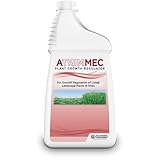
#1 Best Overall
- Useful in the management of difficult-to-mow areas and can be used to minimize the need for edging turfgrass
- Multiple applications will reduce water use and improve drought tolerance
What the spring-wheat field experiments found
Rain shelters simulated terminal drought
A study by Wiza Mphande and colleagues examined spring wheat under Mediterranean-type terminal drought. Rain shelters excluded late-season rainfall, and the researchers applied the film-forming antitranspirant di-1-p-menthene at 1.0 L/ha. The paper reports results from two field experiments, identified by year rather than as a general farm forecast.
In 2018, the treatment was associated with a 33% reduction in ABA concentration and a 16% increase in grain yield. In 2019, the reported figures were a 40% ABA reduction and a 15% yield increase. The authors averaged responses across growth stages. These percentages belong to those two experiments; they are not expected effects for every wheat variety, drought pattern, soil or application schedule. The full study is available in Agricultural Water Management.
Why lower ABA did not mean worse drought protection
Drought commonly raises endogenous ABA in leaves. In this work, the film treatment was associated with a smaller ABA increase while yield was better maintained. That result suggests that the plant’s internal ABA concentration and the crop’s final yield can move in different directions when a physical barrier changes water loss. It does not show that lowering ABA is the objective for every crop; it shows that one wheat treatment and one drought pattern produced that relationship.
What’s actually slowing this PC down?
Pick the symptom - the matching free tool is one click away.
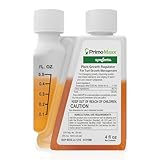
Rank #2

- KEY FEATURES: Manage growth and improve quality and stress tolerance of warm- and cool-season turf grasses
- BENEFITS: Improves rich color, lateral stems and root mass developmen and helps produce healthy, durable blades in turf grass
- USE SITES: Turf, Golf Courses
- EFFECTIVE AGAINST: Bahiagrass, Fescue, Bentgrass, Kikuyugrass, Bermudagrass, Annual bluegrass (Poa annua), Bluegrass, Ryegrass, Buffalograss, St. Augustinegrass, Carpetgrass, Zoysiagrass
- ACTIVE INGREDIENT: Trinexapac-ethyl 12%
Glasshouse comparison: a film and applied ABA behaved differently
A related study compared di-1-p-menthene at 1.0 L/ha with exogenous ABA at 100 µM in spring wheat grown in glasshouse conditions. The experiments focused on reproductive-stage drought, when water shortage can reduce the number of grains that ultimately fill.
Both treatments generally reduced the effects of drought on yield, but they changed leaf ABA in opposite directions. Drought raised leaf ABA. Plants receiving the film had a smaller increase, whereas plants receiving applied ABA had a larger increase. The authors summarized the result this way: “In conclusion, both antitranspirants generally reduced effects of reproductive-stage drought on yield despite having contrary effects on leaf ABA.” The study was published online on 17 November 2021 and appeared in the 2022 issue of the Journal of Agronomy and Crop Science. Read the article at Wiley Online Library.
This is not a head-to-head proof that one treatment is better. The trials were in a controlled glasshouse, and the two materials act through different pathways. The useful conclusion is narrower: maintaining yield during reproductive drought can occur with contrasting hormonal signatures.
Rank #3
- TRIED AND TRUSTED PGR: Pramaxis MEC contains 11.3% trinexapac-ethyl; the same active ingredient as Primo Maxx Plant Growth Regulator. For more than 30 years, trinexapac-ethyl has been the active professional turf managers trust for improved turfgrass quality and growth management.
- GROW STRESS TOLERANCE: Pramaxis MEC promotes below-ground root and rhizome growth for improved root mass and turfgrass quality. Combined with best cultural practices, treated areas can better withstand stressors such as mowing, drought, heat, and disease.
- LIGHTEN THE LABOR LOAD: Reduce mowing frequency and clipping amount with Pramaxis MEC. Labeled for cool- and warm-season turfgrasses, Pramaxis MEC slows vertical growth which saves labor and equipment. Pramaxis MEC is ideal for nearly all managed turf areas including lawns, golf courses, and athletic fields and is especially helpful in frequent-mow or difficult-to-mow areas.
- EASY-MIX FORMULA: You have better tasks to tend than mixing and re-mixing. Our advanced microemulsion concentrate (MEC) is made with extremely small particles making it easy to blend into solution. Once mixed, it resists settling, eliminating the need for further agitation. Pramaxis MEC is highly tank-mix compatible with many other pesticides and liquid fertilizers saving on application trips. Always read the product label for complete compatibility, mixing, and application instructions.
- MAKE A LASTING MARK: Pramaxis MEC may be applied before or with your marking agent to extend its visibility timeline. When applying Pramaxis MEC with a marking agent, mix Pramaxis MEC first with water, then combine with a latex-based marking agent. Refer to the Pramaxis MEC product label as well as the marking agent’s product label for complete mixing instructions.
The important trade-off: saving water can reduce photosynthesis
A separate wheat glasshouse study found that a film antitranspirant rapidly reduced crop water loss, maintained more grains per spike and improved yield under drought. Under well-watered conditions, however, treated wheat had reduced photosynthesis. The finding illustrates why “less water loss” is not an unconditional benefit. A plant needs carbon dioxide exchange to make carbohydrates; a film or closed stomata can limit that exchange when water is not limiting.
Do these 3 things before closing this tab:
1Fix the driver behind crashes, sound loss and screen glitches2Clear out junk files and repair common Windows errors3Scan for outdated or missing drivers - takes under a minuteThe study, by Abdullah and co-authors, is reported in Agricultural Water Management. Its results support evaluating water regime, crop stage and weather together rather than applying an antitranspirant simply because a product reduces transpiration in a short test.
What the cotton CPPU work actually tested
The USDA Agricultural Research Service describes a different strategy using CPPU, a synthetic cytokinin. Researchers treated cotton seed or sprayed seedlings to stimulate lateral-root production under dryland conditions. More lateral roots can help a plant explore dry, shallow soil and reach remaining water, but that is a root-architecture intervention rather than a direct stomatal treatment.
Rank #4
Across three years of field studies, yield increases associated with increased rooting ranged from 8% to 20%. The largest increases occurred where soils were dry and shallow, and treated cotton showed reduced water-deficit stress. The USDA summary does not provide a publication year in the record cited here, so the statistic should be attributed to the USDA Agricultural Research Service summary rather than assigned a year that is not stated.
Nothing in that record demonstrates that CPPU closes stomata, lowers transpiration directly or works as an antitranspirant film. Its reported benefit is consistent with improved access to soil water through roots.
Free tools Windows power users keep installed
One-click scans. No signup required.
Comparison of the evidence
| Question | Applied ABA | Di-1-p-menthene film | CPPU in cotton |
|---|---|---|---|
| Crop studied | Spring wheat | Spring wheat | Cotton |
| Study setting | Glasshouse | Rain-sheltered field and glasshouse | Dryland field studies |
| Stage or context | Reproductive-stage drought | Reproductive-stage and terminal drought | Seed or seedling treatment; greatest response in dry, shallow soils |
| Study application | 100 µM in the glasshouse comparison | 1.0 L/ha in the wheat studies | Seed treatment or seedling spray; a universal rate is not stated |
| Reported outcome | Yield effects reduced during drought; leaf ABA increased more than with the film | Lower water loss or drought damage; 33% and 40% ABA reductions and 16% and 15% yield increases in the two field years | More lateral roots, less water-deficit stress and 8–20% yield increases across three years |
| Main limitation | No broad cross-crop validation | Photosynthesis can fall in well-watered wheat; results are study-specific | Evidence concerns roots and stress, not direct transpiration control |
How to judge a claim that a crop treatment “stops” water loss
Use the following questions before interpreting a trial result or a product advertisement:
Best Value
- TRIED AND TRUSTED PGR: Pramaxis MEC contains 11.3% trinexapac-ethyl; the same active ingredient as Primo Maxx Plant Growth Regulator. For more than 30 years, trinexapac-ethyl has been the active professional turf managers trust for improved turfgrass quality and growth management.
- GROW STRESS TOLERANCE: Pramaxis MEC promotes below-ground root and rhizome growth for improved root mass and turfgrass quality. Combined with best cultural practices, treated areas can better withstand stressors such as mowing, drought, heat, and disease.
- LIGHTEN THE LABOR LOAD: Reduce mowing frequency and clipping amount with Pramaxis MEC. Labeled for cool- and warm-season turfgrasses, Pramaxis MEC slows vertical growth which saves labor and equipment. Pramaxis MEC is ideal for nearly all managed turf areas including lawns, golf courses, and athletic fields and is especially helpful in frequent-mow or difficult-to-mow areas.
- EASY-MIX FORMULA: You have better tasks to tend than mixing and re-mixing. Our advanced microemulsion concentrate (MEC) is made with extremely small particles making it easy to blend into solution. Once mixed, it resists settling, eliminating the need for further agitation. Pramaxis MEC is highly tank-mix compatible with many other pesticides and liquid fertilizers saving on application trips and tank cleanings. Always read the product label for complete instructions.
- MAKE A LASTING MARK: Pramaxis MEC may be applied before or with your marking agent to extend its visibility timeline. When applying Pramaxis MEC with a marking agent, mix Pramaxis MEC first with water, then combine with a latex-based marking agent. Refer to the Pramaxis MEC product label as well as the marking agent’s product label for complete mixing instructions.
- What is the active approach? Is it a hormone signal such as ABA, a surface film such as di-1-p-menthene, or a root-growth regulator such as CPPU?
- What was actually measured? Transpiration, leaf water status, leaf ABA, photosynthesis, grain number and final yield are different endpoints.
- When was the crop stressed? A treatment that protects reproductive-stage wheat may not behave the same way during seedling drought, heat, salinity or a long season of intermittent deficits.
- Were plants field-grown? Glasshouse responses help explain mechanisms but do not automatically predict performance under variable radiation, wind, soil depth and disease pressure.
- Was there a well-watered comparison? A benefit during drought can coexist with a photosynthesis penalty when water is adequate.
- Is the product legally labeled for the crop and location? The studies cited here do not establish a universal commercial label, safe rate or approval in any particular jurisdiction.
What growers should and should not do with these findings
The evidence supports treating antitranspirants and synthetic hormones as experimental or crop-specific tools, not as emergency substitutes for irrigation, soil-water management or drought-tolerant genetics. Do not copy the wheat rates into another crop, country or formulation. A research concentration or field rate is not a recommendation, and formulations with the same active ingredient can differ in solvent, coverage and phytotoxicity risk.
A responsible evaluation follows a decision sequence rather than a one-size-fits-all recipe:
- Define the water problem. Identify whether the risk is a short terminal drought, shallow soil, high evaporative demand or a recurring seasonal deficit.
- Match the mechanism to the problem. A stomatal signal, a surface barrier and deeper roots address different bottlenecks.
- Check local authorization. Read the current crop label and consult the relevant agricultural extension or regulatory authority for the exact formulation and jurisdiction.
- Use a comparison area. If local rules permit a trial, retain untreated plants and record crop stage, soil moisture, weather, photosynthesis or canopy symptoms and yield components.
- Watch for costs as well as gains. Reduced water loss is not useful if it causes overheating, lower carbon assimilation, leaf injury or delayed recovery after rain.
These steps help separate a plausible mechanism from a reliable farm outcome without assuming that a published experiment is a product label.
What remains unknown
The cited studies do not provide a controlled, broad comparison of ABA, di-1-p-menthene and CPPU across many species, climates and soil types. They also do not establish how long the effects last, how repeated applications affect crop development, or how treatments interact with heat, disease, nutrient status and irrigation scheduling. The wheat figures come from particular experiments in 2018 and 2019 or from glasshouse conditions; the cotton range comes from three years of dryland field work summarized by USDA.
Consequently, no defensible cross-crop statistic shows that a synthetic hormone “stops” water loss. The stronger, evidence-based statement is that plants can sometimes conserve water through hormone-mediated stomatal responses, a film on the leaf surface or improved root exploration, and that each strategy has measurable limits and trade-offs.
Quick Recap
Product prices and availability are accurate as of the date/time indicated and are subject to change. Any price and availability information displayed on Amazon at the time of purchase will apply.

