Yes—sometimes. A lightweight Linux distribution can reduce the operating system’s memory and processor overhead enough to revive an older computer for writing, email, modest web use and local media. It cannot repair failing hardware, add missing processor features or make demanding modern websites run well. Your result depends on the PC’s exact specifications and what you call “everyday tasks.”
What a lightweight Linux system can—and cannot—do
A lightweight distribution uses a less demanding desktop environment and a smaller selection of default applications. Lubuntu, for example, describes itself as a fast, lightweight system with a clean interface and uses the LXDE/LXQt desktop family alongside lightweight applications. That design can leave more memory and processor time for your programs than a heavier desktop.
As an Amazon Associate I earn from qualifying purchases.
The benefit is largest when the old computer is being slowed mainly by the operating system itself. A machine with a supported 64-bit processor, adequate RAM and a healthy drive may feel substantially more responsive after installation. The benefit is much smaller when the real bottleneck is a very old CPU, a failing hard disk, inadequate memory, unsupported graphics or a modern web workload.
Outdated Drivers Are Slowing You Down
One free scan finds every outdated or missing driver and matches the right update for your exact hardware.Free scan · exact hardware matchWindows Errors? Fix Them Before They Spread
Repair common Windows errors and clear accumulated junk for a smoother, more stable PC - no reinstall needed.Free scan · no reinstallLinux also does not bypass application requirements. A browser still has to decode today’s web pages, run JavaScript and display video. Video meetings, high-resolution streaming, multiple browser tabs and browser-based office suites can use more resources than simple local documents. Published distribution requirements are useful starting points, not speed guarantees for a particular computer.
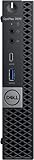
#1 Best Overall

- This Certified Refurbished product is tested and certified to look and work like new. The refurbishing process includes functionality testing, basic cleaning, inspection, and repackaging. The product ships with all relevant accessories, a minimum 90-day warranty, and may arrive in a generic box. Only select sellers who maintain a high-performance bar may offer Certified Refurbished products on Amazon.com.
- Dell OptiPlex 7050 Micro Computer, Intel Quad Core i5-6500T up to 3.1GHz, 16G DDR4, 256G SSD.
- Includes: USB Keyboard & Mouse, Microsoft office 30 days free trail.
- Ports: 1 x RJ-45, 1 x HDMI, 1 x DP, 6 x USB 3.0.
- 4K Support: Support 4K (3840x2160) Dual display, makes it easy to connect two monitors at the same time, and you can expand working Windows, mirror content, or expand a single window across multiple monitors.
Start with the PC, not the distribution
Before downloading anything, record the hardware that determines compatibility and practical speed:
- Processor: note the model, generation and whether it supports the architecture required by the distribution. An old dual-core processor may run a desktop but struggle with complex websites.
- Memory: record installed RAM and whether the system can address an upgrade. Memory is especially important when several browser tabs or applications are open.
- Storage: check free capacity and whether the disk is healthy. A nearly full or failing mechanical drive can make any operating system appear slow.
- Graphics: identify the integrated or discrete GPU and its driver support. Older proprietary graphics hardware may need an additional driver.
- Screen: record the panel’s resolution. Linux Mint lists 1024×768 as a practical requirement; lower resolutions can cause windows and controls not to fit.
- Connectivity and peripherals: test Wi-Fi or Ethernet, audio, Bluetooth, printers, scanners and any specialist devices you rely on.
- Firmware and boot mode: determine whether the computer starts in legacy BIOS mode, UEFI mode or both. This affects how installation media boots.
Do not erase the existing system until personal files are backed up elsewhere. A Linux installation can be straightforward, but a backup is the recovery plan if the disk fails or an installation choice is wrong.
How current requirements compare
The figures below come from current official guidance, but they describe different kinds of targets. Ubuntu’s figures describe resources for a comfortable Ubuntu Desktop experience, while Linux Mint labels its numbers as requirements and recommendations. They should not be treated as a benchmark or as proof that one distribution is faster on every old PC.
The Tool Desk
Outbyte PC Repair FREEClear out junk files and repair common Windows errorsFree Scan →Outbyte Driver Updater FREEScan for outdated or missing drivers - takes under a minuteDriver Scan →| System or guidance | Published memory guidance | Storage guidance | Other details |
|---|---|---|---|
| Ubuntu 26.04 LTS Desktop | 6 GB RAM for a comfortable experience | 25 GB free space | 2 GHz dual-core processor or better; Ubuntu’s release notes are dated 23 April 2026 |
| Lubuntu or Xubuntu example in Ubuntu 26.04 release notes | May be installed on systems with 2 GB RAM or more | Not stated in the cited comparison | A lower-resource option than the standard Ubuntu Desktop; actual workload performance varies |
| Linux Mint | 2 GB minimum; 4 GB recommended for comfortable use | 20 GB required; 100 GB recommended for comfortable use | 1024×768 screen resolution is listed; LTS releases receive five years of support, subject to the specific release lifecycle |
A computer with 2 GB of RAM may meet a listed installation threshold yet still be uncomfortable with several modern browser tabs. Conversely, a system with 4 GB or more may work well for documents and light browsing if its processor, graphics and storage are healthy. Leave headroom for your files, updates, browser cache and swap space rather than filling the disk to its requirement.
Rank #2

- Intel Core i3-8100T 3.10 GHz 6MB Cache 4C/4T processor provides reliable performance and efficiency
- 16GB DDR4 memory; 256GB M.2 NVMe SSD
- Integrated Intel UHD Graphics 630 for enhanced viewing and sharp details
- Windows 11 Pro OS is so familiar and easy to use, you’ll feel like an expert. It starts up and resumes fast, has more built-in security to help keep you safe, and comes with great built-in apps
- I/O Ports: 2 x USB-A 2.0 4 x USB-A 3.0 / 3.1/3.2 Gen 1 1 x 1/8" / 3.5 mm Headphone/Microphone Input/Output 1 x 1/8" / 3.5 mm Line Output 1 x RJ45 (Gigabit) 1 x DisplayPort 1.2 1 x HDMI 1.4
Choose by workload instead of by a “slow PC” label
Documents, email and local media
Lightweight Linux is most promising for word processing, spreadsheets with modest formulas, email, file management, PDFs, music and locally stored standard-definition or moderate-resolution video. These tasks generally place less sustained demand on the browser and graphics hardware than current web applications.
Web browsing
Browsing is workload-dependent. A few text-heavy sites may be comfortable, while advertising-heavy pages, webmail, online editors and social feeds can consume substantial memory. Keep the number of open tabs realistic, use extensions sparingly and close applications you are not using. These are workload-management practices, not a guarantee that every site will be usable.
Video meetings and streaming
Video calls combine camera capture, audio processing, network traffic and real-time video decoding. High-resolution streaming adds another sustained graphics and processor load. The available requirements do not establish performance for those activities on a particular old PC, so test them in a live session before committing to an installation.
Specialist or current software
Check whether the applications you require have Linux versions or dependable web alternatives. A lighter desktop cannot solve a requirement for a Windows-only driver, an unsupported peripheral or a processor instruction set that the application needs.
Rank #3

- Powerful Performance: Intel Core i5 Hexa Core processor for reliable multitasking and smooth computing.
- Fast & Efficient: 16GB DDR4 RAM and 250GB SSD for quick startup and performance.
- Windows 11 Pro: Modern operating system with professional-grade tools and enhanced security.
- Compact Design: Space-saving mini chassis fits neatly on or under your desk.
- Renewed Quality: Professionally tested and renewed to perform like new; may show minor cosmetic wear.
Test the real computer before installing
A live session is the safest way to turn generic requirements into evidence about your machine. It runs the distribution from installation media without immediately changing the internal disk.
- Back up your files. Copy documents, photos, browser data and any license information to separate storage.
- Download the ISO for the distribution and release you intend to try. Use the project’s current download and installation documentation rather than an old forum post or an archived requirement page.
- Create bootable media. Linux Mint’s installation guide states that its ISO can be used to make either a bootable DVD or a bootable USB stick. A USB flash drive is convenient, but it is optional when the computer has a working optical drive and you choose the DVD route.
- Boot from that media. Use the computer’s boot-menu key or firmware settings to select the DVD or USB. If it does not appear, check the boot mode and whether removable-media boot is enabled.
- Run the live desktop. Connect to Wi-Fi, play a representative video, open several typical sites, adjust the display, test sound and plug in the printer or other essential devices.
- Try your hardest task. If video meetings, a web-based office suite or a particular peripheral is essential, test that exact task now. A successful desktop boot alone proves only that the system starts.
- Decide from observed behavior. If the live session is already unusably slow or hardware is missing, try another lightweight option, investigate a driver, consider an upgrade or keep the current system. Do not assume installation will transform a failed live test.
Installing after the live test
Installation labels vary by distribution, but the decisions are similar. Choose the option that preserves the existing system if you need a dual-boot arrangement and have a verified backup. Choose an erase-and-install option only when the old system and its data are no longer needed. Confirm the target disk and partition choice carefully; this is the point at which an incorrect selection can destroy files.
Keep the computer connected to reliable power. Allow the installer to configure the time zone, keyboard and user account, then reboot into the internal disk and remove the installation media when prompted. After the first login, apply the distribution’s updates and restart if requested. Re-test Wi-Fi, sound, graphics acceleration, printing and your most important applications before moving all of your data.
Linux Mint says proprietary ATI/Nvidia drivers are not installed by default, although it describes them as easy to install. If your graphics card needs one, use the distribution’s documented driver tool and make a restore or recovery plan first. A driver can improve acceleration, but it can also expose compatibility problems on very old hardware.
Ways to make an old installation more usable
- Keep the desktop simple: avoid unnecessary visual effects and auto-start programs. Use the lightweight desktop’s default applications unless you have a reason to replace them.
- Control browser load: close unused tabs, remove extensions you do not need and avoid running several browser-based applications at once.
- Maintain free storage: leave room for updates, user files and temporary data. A disk operating at its limit can worsen responsiveness.
- Use the correct graphics driver: missing acceleration can make video and window drawing feel slow, while an unsuitable driver can create display failures.
- Measure the bottleneck: if the processor is continually busy, reduce demanding workloads; if memory is exhausted, fewer simultaneous applications or more RAM may help; if storage activity remains saturated, a healthy faster drive may matter more.
- Keep support in mind: Linux Mint says its LTS releases receive five years of support. Verify the lifecycle of the exact release you install instead of assuming every version has the same end date.
When a hardware upgrade is the better answer
More RAM or a solid-state drive may improve a specific computer, but neither is universally compatible or worthwhile. Identify the exact model first, then verify the supported memory type and maximum capacity, the storage interface and drive capacity, and whether the firmware can boot from the replacement drive. A RAM upgrade will not compensate for a processor that cannot handle your required web applications; an SSD will not fix unsupported Wi-Fi or graphics.
If the disk reports errors, make a backup before experimenting. Replacing a failing drive is a reliability measure as much as a speed decision. If the machine cannot meet the architecture, display or peripheral requirements of the software you need, replacing the computer may be more economical than repeatedly changing distributions.
Independent reader supportYour contribution helps us test, update, and keep practical guides available for everyone.Common problems and what they mean
The installer starts, but the desktop is extremely slow
Check whether the system is swapping because RAM is exhausted, whether the disk is failing or nearly full, and whether a graphics driver is missing. Repeat the test with fewer applications and tabs. If the live session remains slow before you add any files, choose a lighter desktop or reassess the hardware.
Free tools Windows power users keep installed
One-click scans. No signup required.
Wi-Fi, sound or a printer is missing
Record the device model and search the distribution’s current hardware and driver documentation. Try a wired network connection for updates if available. Do not assume that a distribution’s low memory requirement implies universal peripheral support.
Best Value

- Compact and efficient: The Lenovo ThinkCentre M710q mini desktop PC is a compact and efficient mini desktop PC with reliable performance, plenty of memory, and efficient storage.
- Stable Processor - 6th Gen Intel Core i3-6100T, delivering reliable processing power for a variety of tasks including office productivity, web browsing and multimedia consumption.
- AMPLE CAPACITY - 8GB DDR4 RAM provides ample memory for seamless multitasking, smooth performance and runs multiple applications at the same time; 256GB solid state drive offers fast boot times, quick data access, and enough storage space for essential files, documents and applications.
- FLEXIBLE EXPANSION - USB Type-A, DisplayPort, RJ-45, headphone/microphone combo jack, ensuring easy connection to peripherals and accessories.
- Operating System: Windows 11 Pro - a powerful, secure, compatible and more manageable operating system that helps you better manage and protect your devices and data for greater productivity and security.
Windows or application data is inaccessible after installation
Stop and restore from the backup rather than guessing at partitions. If you intended to dual-boot, verify that the existing partition was preserved and that the installer used the correct boot mode. A backup made before installation is the dependable recovery route.
Windows do not fit on the screen
Linux Mint lists 1024×768 as its screen-resolution requirement. At lower resolutions, its FAQ notes that pressing ALT while dragging with the mouse can move windows so controls become reachable. This is a workaround, not a substitute for a supported display.
A practical decision rule
Proceed when the PC meets a current distribution’s guidance, the live session handles your essential tasks and all required hardware works. Start with a lightweight option when memory is near the lower end of the published ranges, but keep expectations modest for modern web applications. Stop and investigate when the live session fails, the disk is unhealthy, the architecture is unsupported or a required device has no workable driver.
In short, lightweight Linux can make an old PC useful when it removes operating-system overhead from an otherwise serviceable machine. It cannot turn severely underpowered or failing hardware into a modern workstation. Inventory the computer, test the actual workload from bootable media and install only after that evidence supports the change.
Quick Recap
Product prices and availability are accurate as of the date/time indicated and are subject to change. Any price and availability information displayed on Amazon at the time of purchase will apply.

