No. Sarin itself is generally clear, colorless and odorless, so you cannot identify it by looking at a liquid, stain or surface, or by smelling the air. A discolored detector tube or indicator paper may show a reagent response, but a tube that was already discolored before use is unsuitable, and a post-sampling color change is only a presumptive field indication—not proof that sarin is present. If exposure may have occurred, leave the area, get clean and get help, following local-authority instructions.
What “discoloured detection” can mean
The phrase describes two different situations that must not be conflated.
As an Amazon Associate I earn from qualifying purchases.
A detector medium is discoloured before testing
Colorimetric detector tubes contain a prepared reagent and are expected to have a defined appearance before use. NIOSH guidance hosted by CDC advises not using a tube that already shows an indication of color change. A pre-existing stain can mean the reagent has reacted, degraded or been compromised. It does not indicate that sarin is in the surrounding air, and the tube cannot provide a trustworthy result once its starting condition is abnormal.
The reagent changes color during or after sampling
In a valid colorimetric test, a sampled chemical reacts with the reagent and produces a stain or other color change. OSHA’s Technical Manual describes results in terms such as stain length or degree of color change. Those readings are interpreted against the method’s instructions and operating limits; they are not a visual identification of a bottle, puddle or room. Even a response that looks like the expected pattern is a presumptive indication that requires appropriate confirmation.
#1 Best Overall

- Easy-to-use pouch provides industry leading presumptive testing results.
- Handheld field test…no calibration needed
- Sealed system eliminates contamination
- Removable Swab for acquiring sample or particulate
- 3 Step Process…Swab, Crush and View Results
Indicator paper is a separate case
A CDC-hosted technical report describes M8 paper turning yellow for G nerve agents, a class that includes sarin, in the context of that report. That observation is an agent-class indicator result under specified conditions. It does not mean that any yellow paper or yellow material is sarin, and it is not a recommendation for members of the public to approach a suspected release and test it themselves.
Why sarin itself has no reliable visual or smell signature
The CDC sarin fact sheet, updated June 10, 2026 and reviewed June 11, 2026, describes sarin as a human-made nerve agent that is generally clear and colorless and generally without smell. NIOSH materials likewise caution that odor is not a dependable warning. A clear liquid can therefore be hazardous, while a colored liquid can be something else entirely. Sight and smell cannot establish identity or safety.
How long sarin remains in an area is also not fixed. The U.S. National Response Team’s Sarin (GB) Quick Reference Guide, dated July 1, 2022, says persistence depends on the amount and purity released, the release method, environmental conditions and the materials affected. A visible residue, cloud or wet spot therefore cannot be used as a clock, a concentration estimate or a way to decide when an area is safe.
Rank #2
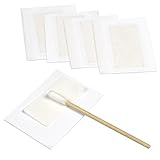
- This semen test kit contains 5 test strips, allowing you to do 5 complete tests with instant results that turn the test strip bright purple when positive, used in the field and in laboratories by forensic scientists
- Get results in seconds when testing any item for the presence of semen
- Used by actual forensic detectives in real crime scene investigations, not a consumer toy
- Contains 5 test strips for multiple testing applications
- No liquid chemicals to mix, ensuring failsafe results with simple application using included cotton swabs
Do not touch, wipe, collect or move a suspicious liquid or object to make it easier to inspect. Visual inspection can expose you without answering the identification question.
How colorimetric detection works at a high level
A colorimetric tube is a small chemical measurement system. Air is drawn through a reagent bed, and a reaction can create a colored stain. The method may use stain length, color intensity or another defined reading. The result is intended for field screening, where a trained operator compares the response with the manufacturer’s method and accounts for environmental and procedural limits.
That process has three important implications:
- The color belongs to the reagent’s chemical reaction, not to sarin acquiring a visible color.
- A response is interpreted within a validated method, not by comparing it casually with a photograph or an unrelated colored substance.
- A field indication is not automatically a confirmed identification. Confirmation may require a more selective instrument or laboratory analysis.
OSHA discusses colorimetric tubes, including their use in systems such as the C-2 kit for nerve and other chemical-agent identification, together with limitations that affect interpretation. The existence of a color response does not remove those limitations.
Rank #3
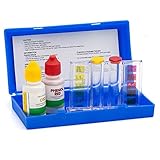
- 2 Way Pool Water Test Kit For Test For OTO, CL, and PH Level
- Includes clear view water testing unit with accurate measuring scale and integrated color for easy reading chemical leaves
- Includes one 1/2-ounce bottle chlorine test solution, one 1/2-ounce bottle pH test solution, plastic tester and carrying case
- Easy to use, just fill each test tube with pool water, add 4 drops of the proper solution into each test tube, put the test tube caps on, shake the testing block then check the Chloride, Bromine and pH readings.
- Please use it before expire date which printed on the back of the case.
What different observations can—and cannot—tell you
| Observation | Reasonable interpretation | What it cannot establish |
|---|---|---|
| Tube is already stained or has changed color before sampling | The tube may be compromised or outside its usable starting condition; NIOSH says not to use it. | It does not show that sarin is present in the environment. |
| Tube develops the method’s expected stain during sampling | A presumptive colorimetric response has occurred and must be interpreted under the method’s instructions. | It does not, by itself, prove sarin, concentration or a safe/unsafe boundary. |
| No visible change | The method produced no observable response under those test conditions. | It does not prove that the air or surface is free of sarin; concentration, range, interference and sampling conditions matter. |
| Faint, uneven or unexpected color | The result may be difficult to interpret or affected by the tube, sample or environment. | It should not be treated as a reliable identification. |
| M8 paper appears yellow | The CDC-hosted report describes yellow as an indicator response for G nerve agents in its study context. | It does not prove that arbitrary yellow material is sarin or justify public self-testing. |
Why a color change is not definitive
Accuracy and detection range
Every detector has a working range. A response can be missed when the amount is below the method’s capability, while an overloaded or otherwise out-of-range sample can produce an abnormal result. The CDC, NIOSH, OSHA and National Response Team materials cited here do not establish a sarin-specific sensitivity, accuracy, false-positive rate or detection limit that can responsibly be quoted for a general audience.
Recommended Free Tools
Interfering chemicals
Colorimetric reagents can react with substances other than the target agent or be affected by the sample matrix. NIOSH guidance discusses interference and range considerations. A color that resembles the expected stain is not enough to identify which chemical caused it.
Temperature and humidity
OSHA and NIOSH identify environmental conditions as operating considerations. Temperature and humidity can influence the reaction, the movement of air through a tube and the appearance of a stain. A result obtained outside the method’s specified conditions may not be comparable with its reference scale.
Rank #4

- At-home infidelity test (2 min): Presumptive semen detection via initial detection of acid phosphatase (AP), a semen indicator – results in approximately 2 minutes.
- Easy to use sperm detection test: Moisten the stain, apply the test strip, wait, and compare the colour to the colour guide on the package. An ideal infidelity test for home use.
- Versatile semen presence test: The semen detection test detects the presence of semen on textiles, bedding, ceramics, and paper; also suitable for old or dried stains.
- Forensic-style method (home screening): Inspired by forensic analysis (presumptive AP method); like any at-home semen presence test, a positive result requires laboratory confirmation.
- Contents & discreet packaging: 10 test strips, a spray bottle (fill with water), and instructions for use – shipped in discreet packaging.
Shelf life and storage
Reagent tubes have a usable life and storage requirements. Age, heat, moisture or damaged packaging can alter the starting reagent or its response. This is why a tube that is discolored before use is rejected rather than “corrected” by taking a reading anyway.
Stain stability after sampling
The appearance can change with time. OSHA’s discussion includes stability of the stain after sampling, so a delayed photograph or a later visual inspection may not represent the original result. A field response must be documented and interpreted within the method’s stated time window by qualified personnel.
Free tools Windows power users keep installed
One-click scans. No signup required.
Operator and method effects
Reading a boundary between colors, judging intensity or controlling a sampling flow requires training and the correct equipment. A consumer’s unaided visual judgment cannot reproduce the quality controls of a professional measurement program.
Best Value

- The Kayenqo Mold Test Kit contains 12 test plates, detailed mold guide and mold removal instructions, 12 swabs, label sheets and test gloves, complete kit for easy mold testing at home without needing to prepare anything else
- Tests Indoor Air, HVAC Systems, Cars and Home Physical Surfaces。 It tests for a variety of molds, including common household varieties. Test on 12 different parts of the home or office, such as walls, showers, cars, sinks, HVAC systems, indoor air and other moldy and moist physical surfaces.
- You can get mold samples from 12 different places, or you can conduct 2 tests on 6 areas. We divide the 12 test plates into 2 independent packages. When you detect that mold exceeds the standard, you can follow the instructions we provide Follow the mold removal guide to remove it, and then test for mold again after the removal is complete.
- Identify the type of mold,We offer a detailed mold guide and removal manual that includes images of common household molds. Compare plate test results to the images in the guide to help identify mold present in your home. When you can't identify it, pictures of the mold Send us and the lab staff will answer your question
- Furniture made of wood is a high-risk area for mold, especially black mold. It contains 12 separate tests and is of high value. Take it with you to check your cabinets, wardrobes, and beds!
How detection approaches differ
“Detection” can refer to screening air, checking a surface or analyzing a biological specimen. Those approaches answer different questions and should not be treated as interchangeable.
| Approach | What is sampled | Typical result | Important limitations | Appropriate users |
|---|---|---|---|---|
| Colorimetric detector tube | Air drawn through a reagent tube | Presumptive stain or color reading | Range, interferences, temperature, humidity, shelf life and stain stability affect interpretation; no sarin-specific performance figure is established here. | Trained emergency, industrial-hygiene or hazardous-materials personnel following the method. |
| Agent-indicator paper such as M8 | Contact with a surface or liquid under the paper’s intended procedure | Color class or presumptive indication | Class indicators are not definitive chemical identification; the CDC report’s yellow G-agent response should not be generalized to every yellow substance. | Qualified responders using approved procedures. |
| Specialized professional detection system | Usually air or surface samples, depending on the instrument | Instrument indication that may be more selective than a simple color stain | Performance depends on the specific system, calibration, operating environment and operator; the cited sources do not rank products or provide comparable sarin figures. | Specialist response teams and laboratories. |
| Laboratory analysis | Biological specimens such as blood or urine, collected through medical or investigative channels | Analytical evidence of nerve-agent exposure or its biomarkers | Requires controlled collection, chain of custody, validated methods and qualified laboratories; it is not an immediate public screening test. | Clinical, public-health and forensic laboratories. CDC’s Chemical Threats and Toxins Laboratory lists sarin within its blood and urine nerve-agent scope. |
What to do if sarin exposure is suspected
Detection uncertainty is not a reason to remain near a possible release. CDC’s public guidance is to get away, get clean and get help.
- Leave the area. Move away from the suspected release without touching containers, liquids, residue or detector media. Do not delay departure to obtain a photograph or run another test.
- Get clean. Follow emergency-services or public-health instructions for decontamination. Do not improvise with household chemicals or attempt to neutralize a substance yourself.
- Get help. Contact emergency services and explain that a chemical exposure may have occurred. Tell responders what you observed and when, without handling the suspected material to provide a sample.
- Follow local authorities. Evacuation, sheltering, medical evaluation and decontamination instructions depend on the incident. Official responders can coordinate air monitoring, scene control and laboratory confirmation.
People who may have been exposed should seek medical advice even when there is no odor or visible residue. The absence of a color change, smell or obvious liquid cannot establish that exposure did not occur.
Common mistakes to avoid
- Assuming clear means safe: Sarin’s usual appearance is not a safety test.
- Assuming yellow means sarin: Yellow can result from many chemicals, materials or indicator reactions; color alone is not selective identification.
- Using a pre-discolored tube: NIOSH says a tube showing color change before use should not be used.
- Treating a field stain as a laboratory confirmation: Colorimetric methods are presumptive and subject to operating limits.
- Relying on a generic gas alarm: No cited evidence establishes that a general-purpose alarm detects sarin reliably. Using an unsuitable alarm can create false reassurance.
- Approaching to test: Public self-testing can increase exposure and contaminate evidence. Leave and allow qualified responders to assess the scene.
What is established—and what is not
Established official guidance supports three conclusions: sarin is generally clear, colorless and odorless; a detector medium’s discoloration must be distinguished between pre-use damage and a response during testing; and suspected exposure calls for leaving the area, getting clean and getting help. Professional detector tubes, indicator papers, specialized systems and laboratory analyses are method categories, not interchangeable consumer products.
CDC, NIOSH, OSHA and National Response Team materials cited here do not provide a single sarin-specific accuracy percentage, false-positive rate or consumer-device ranking. Any article or advertisement that supplies such numbers without naming the exact method, conditions, date and validating laboratory should be treated cautiously.
Quick Recap
Product prices and availability are accurate as of the date/time indicated and are subject to change. Any price and availability information displayed on Amazon at the time of purchase will apply.

