Neither C-band nor Ku-band is the universal choice for satellite broadcasting. C-band is generally more resilient to rain fade and is associated with broad regional coverage, while Ku-band can use smaller receiving dishes and supports direct-to-home television and other broadcast services. The right choice depends on the satellite, beam, location, service requirements, and equipment—not the band name alone.
How C-band and Ku-band differ
The bands describe parts of the radio spectrum used for satellite links. The ITU gives approximate identifiers of C-band at 4/6 GHz and Ku-band at 11–12/14 GHz; these are not complete frequency allocations for every country or service. Their different frequencies affect propagation and antenna design, but do not by themselves determine a broadcaster’s footprint, price, or performance.
As an Amazon Associate I earn from qualifying purchases.
| Decision factor | C-band | Ku-band |
|---|---|---|
| Rain fade | Generally less affected by rain fade than higher-frequency bands, according to the ITU. | More susceptible to rain fade than C-band in the cited ITU comparison. |
| Receiving dish | Typically requires a larger dish relative to Ku-band. | Its shorter wavelength allows smaller dishes relative to C-band. |
| Coverage | The ITU describes fixed-satellite C-band services using global beams for broad regional coverage. | A Canadian regulator described Ku-band as having a smaller footprint than C-band in the context of its 2015 Canadian inquiry. |
| Examples of use | Fixed-satellite infrastructure, including connectivity and backhaul. | Direct-to-home and occasional-use television in Canada; other cited uses include news gathering, broadband, and backhaul. |
Sources: ITU report on telecommunications for rural and remote areas (2014), sections 5.6.1.3–5.6.1.4; CRTC Satellite Inquiry Report (2015).
What’s actually slowing this PC down?
Pick the symptom - the matching free tool is one click away.
Which band is more reliable in heavy rain?
C-band generally has the advantage when rain fade is the concern. Rain attenuates satellite signals, and the effect tends to be greater at Ku-band’s higher frequencies. The ITU states that C-band transmissions are less affected by rain fade and that C-band fixed-satellite services offer higher reliability and availability than Ku- and Ka-band networks under rain-fade conditions.
#1 Best Overall

- Designed for wall mounting
- RF-remote capable without external antenna
- Works quickly and quietly
This is a general propagation comparison, not a guarantee that a C-band service will stay up in every storm or outperform every Ku-band link. Actual availability depends on local weather, link margin, antenna and installation, satellite and beam, and network design. Ku-band systems can use techniques such as spot beams, adaptive coding and modulation, and uplink power control to mitigate rain fade for non-critical fixed-satellite service; those measures do not remove the underlying frequency difference or establish a specific uptime figure. See the ITU-hosted GSMA presentation on C-band reallocation (2013).
Why does C-band need a bigger dish?
At the frequencies described by the ITU, C-band has a longer wavelength than Ku-band. A larger receiving antenna helps collect and focus the weaker signal at the dish, so C-band installations generally use larger dishes; Ku-band’s shorter wavelength permits smaller ones. This is a relative comparison, not a universal dish-diameter specification. The required antenna depends on the service, satellite signal, location, and link design.
Rank #2

- Our ATSC digital TV converter box receives over-the-air ATSC digital TV broadcast via external antenna and converts it to your Analog and Digital TV, Projector, and Computer Monitor. TV recording, Favorite Channel List, Parental Control Function.
- Full HD: The 1080p output resolution allows you to watch and record free to air television depending on signal quality. Closed Caption, Auto Tuning, Timing Start Up & Shut Down.
- You can select view Photos, play MP3 music files and view movie files, and recorded TV program from your USB storage device.
- TV Recording Function: The function allows you to record TV programs in USB hard drive and playback on your TV or Computer.Note: This device does not have built-in storage and requires an external storage device. It is best suited for external hard drives with a FAT32 file system capacity of up to 4TB or flash drives with a capacity of up to 32GB.
- What You Get: 1 x Digital TV Box,1 x Remote Control,1 HDMI Cable, 1 Composite cable,1 year Warranty.
Which band has better coverage?
There is no universal coverage winner based on band alone. Satellite coverage depends on the spacecraft’s antenna and beam design, and whether the intended site is within the usable signal area. The ITU associates C-band fixed-satellite services with broad regional coverage using global beams. The CRTC’s observation that Ku-band has a smaller footprint than C-band applies to its Canadian inquiry, not every satellite or market.
Quick wins for a faster PC:
Clear out junk files and repair common Windows errorsFree Scan →Scan for outdated or missing drivers - takes under a minuteDriver Scan →Repair Windows errors before they cause bigger problemsFix Now →For a real broadcast or reception decision, check the operator’s footprint map and confirm service eligibility at the receiving location. “Coverage” can mean the beam’s footprint, whether a provider sells service there, or whether the signal is usable with a particular installation; those are not interchangeable.
Rank #3
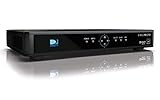
- High Definition Viewing: Enjoy crystal-clear 1080p HD picture quality on your TV with this DIRECTV H25 receiver
- Versatile Connectivity: Connect your devices seamlessly with HDMI, composite, component, and optical audio outputs
- SWM Network Compatibility: Designed to work exclusively on DIRECTV's SWiM networks, ensuring optimal performance
- Dolby Digital & DTS Audio: Immerse yourself in surround sound with supported audio formats
- Easy Setup & Use: Comes with necessary cables and an AC adapter, making installation a breeze for residential use
What does each band get used for?
Both bands support a range of satellite services, and applications vary by region, spectrum allocation, and operator. In Canada, the CRTC reported Ku-band use for direct-to-home television and occasional-use television. The ITU also lists Ku-band applications such as satellite news gathering, rural broadband, backhaul, videoconferencing, and multimedia. Its rural-connectivity material describes fixed-satellite infrastructure and backhaul uses as well.
These examples describe common applications, not exclusive capabilities. A specific broadcaster’s service is determined by its satellite, beam, licensing, and system design.
Rank #4
- SOME ITEMS ARE NEW FACTORY REMAN DISH NETWORK CERTIFIED*
Is C-band or Ku-band cheaper?
The available sources do not establish comparable current prices or show that either band is categorically cheaper. Ku-band’s smaller dish can affect ground-equipment requirements, but dish size alone does not determine total cost. Capacity, service area, equipment, installation, and required availability all matter.
The Tool Desk
Outbyte Driver Updater FREEScan for outdated or missing drivers - takes under a minuteDriver Scan →Outbyte PC Repair FREERepair Windows errors before they cause bigger problemsFix Now →To compare quotes fairly, ask each provider to specify the same market and service scope, including:
Best Value

- 【DVB-S/S2/S2X Satellite Finder】GTMEDIA V8 Finder2 satellite signal meter supports DVB-S/S2/S2X satellite signal detection, spectrum analysis, loop search, and calculation of azimuth and elevation angles. Designed for satellite dish alignment and signal checking. Not compatible with DIRECTV or ATSC
- 【3.5-Inch LCD Screen & Setup Guide】View satellite lists, signal intensity and signal quality on the 3.5-inch LCD screen. To begin, connect the satellite LNB cable to LNB IN, open Menu > Installation, select the satellite, and configure the LNB settings. Select an active transponder, adjust the dish for signal quality and lock, then press the blue Scan key to search for channels
- 【Rechargeable Battery & Built-In Speaker】The V8 Finder2 digital satellite finder combines a built-in rechargeable battery, integrated speaker, and on-screen battery-level indicator for convenient on-site operation. Monitor the remaining battery level during satellite dish adjustments and recharge when the low-battery warning appears
- 【Satellite Finder & H.264 Decoder】Combining a satellite signal meter and DVB-S/S2/S2X receiver, the V8 Finder2 supports H.264 decoding and compatible free-to-air satellite channel viewing on the built-in screen. HDMI and AV outputs provide external display connections. Channel reception requires a compatible satellite dish, LNB, and correct installation settings
- 【Setup & Dish Alignment】Connect the satellite LNB cable to LNB IN, then open Menu > Installation. Select the target satellite and configure the LNB frequency, power, 22K, and DiSEqC settings to match the installation. Select an active transponder and slowly adjust the dish while monitoring Signal Quality and the Lock indicator. Once the signal is locked, press the blue Scan key to search for channels
- Satellite service, beam, and location served
- Capacity or channel package
- Receiving equipment and installation included
- Availability or service-level target
- Quote date, recurring charges, and any one-time costs
The ITU’s comparison of antenna size and propagation characteristics is useful for understanding design trade-offs, but it is not a price comparison. See its 2017 report on telecommunications for rural and remote areas.
What to check before choosing or installing a receiver
Do not select a dish from its stated band alone. Confirm that the receiving system matches the actual satellite service and location.
- Frequency and service: Verify the band and frequencies used by the broadcaster or satellite service.
- Beam and satellite position: Confirm the intended satellite and that its beam serves the site.
- Antenna and feed: Check dish suitability and compatible feed/LNB, including the required polarization.
- Local installation: Account for the site, unobstructed alignment, and local weather conditions.
- Performance needs: Compare the service’s availability target and any rain-fade mitigation against the application’s tolerance for interruption.
Orbit is a separate consideration from frequency band. An ITU News article contributed by SES discusses C-band as an example for always-on, low-data-rate links over large areas and non-geostationary systems for targeted high-throughput, lower-latency demand; that operator perspective does not make orbit and band interchangeable choices. Read the ITU article on connectivity across geostationary and non-geostationary systems (2020).
Quick Recap
Product prices and availability are accurate as of the date/time indicated and are subject to change. Any price and availability information displayed on Amazon at the time of purchase will apply.

