What’s actually slowing this PC down?
Pick the symptom - the matching free tool is one click away.
Neil deGrasse Tyson is right in a precise, limited sense: travel into the future is a measured consequence of Einstein’s relativity. A person moving extremely fast, or spending time in a stronger gravitational field, can experience less elapsed time than people elsewhere and return to find that more of their future has passed. Travel into the past is a separate idea. Tyson discusses mathematical possibilities involving extreme spacetime curvature, black holes and wormholes, but says science does not know how to build a machine—or send a person—backward through time.
What Tyson actually said
Tyson has made the distinction in several interviews. In an ABC News interview published July 3, 2015, he said, “We have ways of moving into the future. That is to have time tick more slowly for you than others, who you return to later on.” He identified Einstein’s 1905 special theory of relativity as the prescription and explained that the required speeds would be very high relative to light.
| # | Preview | Product | Price | |
|---|---|---|---|---|
| 1 |

|
The Ministry of Time: A Novel | $11.09 | Buy on Amazon |
| 2 |

|
A Wrinkle in Time: (Newbery Medal Winner) | $5.80 | Buy on Amazon |
| 3 |

|
The Midnight Library: A GMA Book Club Pick: A Novel (The Midnight World) | $10.48 | Buy on Amazon |
| 4 |
|
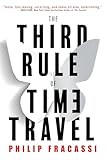
The Third Rule of Time Travel | $11.47 | Buy on Amazon |
| 5 |

|
How to Stop Time: A Novel | $9.99 | Buy on Amazon |
As an Amazon Associate I earn from qualifying purchases.
In the same interview, Tyson said, “There is a way to do it, but it requires extreme distortion in the fabric of space and time.” He used a trajectory around two nearby black holes as an illustration. He presented that scenario as a theoretical solution, not as an engineered vehicle.
During an Arizona PBS Horizon interview, Tyson put the evidence boundary plainly: “We can travel into the future, however, and we’ve been able to do that.” Asked about the past, he answered, “You’re right about the past. We don’t know yet how to go into the past.” On the official StarTalk Cosmic Queries transcript, he describes the “very clearly identified and well-tested laws of relativity” as allowing scientists to slow down or speed up one person’s time relative to other objects.
#1 Best Overall
How relativity permits one-way time travel
High speed changes elapsed time
Special relativity says that two observers moving at different speeds can measure different amounts of elapsed time between the same events. As an object’s speed approaches the speed of light, its clock accumulates less time relative to a clock that stayed in the original frame. If the traveler could make a round trip at a sufficiently high speed, the traveler would age less than the people who remained behind. On return, the traveler would therefore arrive in their future.
This is not a loophole in physics or a visual illusion. Relativistic time dilation is a tested effect used in precision timing and satellite systems. What remains impractical is the scale: dramatic differences require speeds extremely close to light speed, along with the energy, propulsion, shielding and acceleration control needed to keep a human alive.
Rank #2
Gravity changes elapsed time too
General relativity predicts gravitational time dilation. A clock deeper in a gravitational field runs more slowly relative to a clock farther away. The difference becomes pronounced near very compact objects, which is why Tyson uses black holes when describing an extreme trajectory. A traveler could, in principle, experience less proper time while more time passes for distant observers.
Quick wins for a faster PC:
Clear out junk files and repair common Windows errorsFree Scan →Scan for outdated or missing drivers - takes under a minuteDriver Scan →That does not mean a black hole is a practical transport system. Approaching one creates severe hazards, including intense tidal forces and radiation environments, and the conditions required for a useful, survivable trip are not known to exist in an accessible form.
Future travel versus travel to the past
| Question | Travel to the future | Travel to the past |
|---|---|---|
| What physics is involved? | Time dilation from very high relative speed or strong gravity. | Hypothetical paths through highly curved spacetime, including some black-hole or wormhole solutions. |
| Evidence status | Measured clock differences and well-tested relativity. | No demonstrated machine, route or human journey. |
| What would be required? | Extreme velocity or an extreme gravitational environment, plus survivable navigation and energy systems. | Control over spacetime curvature beyond any demonstrated technology; wormholes would also require conditions not shown to be available. |
| Tyson’s position | “We can travel into the future,” and humans have achieved the effect in small amounts. | “We don’t know yet how to go into the past.” |
Do equations that allow time loops prove a time machine exists?
No. General relativity has mathematical solutions in which spacetime contains closed or looping paths—routes that return to an earlier coordinate time. Wormholes and certain idealized black-hole geometries appear in discussions of this kind. A solution to an equation establishes that a scenario is mathematically compatible with a set of assumptions; it does not show that nature creates the required structure, that the structure can remain stable, or that a civilization can enter and exit it safely.
For a usable backward-time trip, physics would need to answer several unresolved engineering and foundational questions: how to create or find the route, keep it open, control its endpoints, prevent destructive tidal effects, and reconcile the trip with cause-and-effect paradoxes. Tyson’s comments do not claim those problems have been solved.
Rank #4
- Time Travel Rule 1: Your destination must be within your lifetime
- Rule 2: Each trip lasts just 90 seconds
- Rule 3: You can only watch, not interact
- These rules are absolute and unbreakable
Could a black hole send you back in time?
Black holes are relevant because they curve spacetime intensely, not because they are known portals. A carefully chosen theoretical path near extreme gravitational sources can produce large differences in elapsed time between the traveler and distant observers. That is a future-directed time-dilation effect. Turning such a path into a return to an earlier event requires additional assumptions about the global structure of spacetime, and no observation has shown that a controllable, traversable route of that kind exists.
What about the Back to the Future DeLorean?
The fictional flux capacitor and 88-mph trigger are not a recipe for relativistic time travel. Tyson has noted that 88 mph is nowhere near the speed needed to produce a dramatic time-dilation effect. The movie’s vehicle also travels to the past, a capability that has not been demonstrated by relativity experiments or any machine.
Best Value
What “possible” means in Tyson’s statement
- Established: Relativity allows different observers to experience different amounts of elapsed time, and precision clocks have measured such differences.
- Physically possible but technologically remote: A traveler could move far into other people’s future by traveling sufficiently fast or spending time in sufficiently strong gravity.
- Mathematically explored, not demonstrated: Some curved-spacetime models contain closed time paths or wormhole-like arrangements.
- Not currently known: A controllable machine or human journey into the past.
For a deeper look at the equations, see J. Richard Gott’s Time Travel in Einstein’s Universe. The official StarTalk episodes Cosmic Queries: Time Travel and Travels in Time also provide Tyson’s explanations and discussions with physicists.
The practical answer
Neil deGrasse Tyson did not prove that science-fiction time machines are real. He described two different claims under one phrase. Forward time travel is already part of tested relativity, although only tiny effects are practical with current technology. Backward time travel remains an un demonstrated possibility: equations can suggest routes, but no experiment has produced a usable passage or shown that a person can return to the past.
Quick Recap
Product prices and availability are accurate as of the date/time indicated and are subject to change. Any price and availability information displayed on Amazon at the time of purchase will apply.
The Tool Desk
Outbyte PC Repair FREEClear out junk files and repair common Windows errorsFree Scan →Outbyte Driver Updater FREEFix the driver behind crashes, sound loss and screen glitchesFind Drivers →
