PC Slower Than It Used to Be?
A free scan shows the junk files, broken settings and background clutter dragging Windows down - then fixes them in one click.Free scan · Windows 10 & 11Crashes, No Sound, or Screen Glitches?
Random freezes, missing sound and display glitches usually trace back to one bad driver. Find and replace yours safely.Free scan · under a minuteThe right brainstorming technique depends on what you need: solo exploration, a wider range of group perspectives, equal participation, or a ranked list. Choose a method that fits the task, give people room to generate ideas before judging them, and make evaluation a separate step.
Choose a brainstorming technique for the task
Brainstorming can mean anything from writing alone to a structured group process. These methods differ in whether ideas are spoken or written, whether participants contribute at once or in turn, and whether the session ends with an open list or a priority order.


| Method | Who generates ideas | How contributions are made | Useful when |
|---|---|---|---|
| Freewriting, word association, or spider-web mapping | One person | Individually, in writing or a visual map | You want to explore a topic before inviting other perspectives. PMI describes these as individual methods. |
| Open group brainstorming | A group | Participants share ideas in a free-form discussion while someone records them | You want a broad, visible pool of options quickly and the group can hold off on evaluation. ASQ describes this as a basic, unstructured format. |
| Brainwriting | A group | Participants first write independently; ideas are then shared, recorded, clarified, and ranked | You want silent idea generation before discussion. A reviewed Academy of Management Executive article discusses this sequence. |
| Nominal group technique (NGT) | A group | Silent writing, one-at-a-time sharing, clarification, and prioritization | Participation is uneven, the subject is controversial, some people think better in silence, or the group needs a ranked result. ASQ outlines the method and its uses. |
No method is established as universally best. A 2004 study summarized by RTI International found that nominal groups of four outperformed face-to-face interacting groups of four on brainstorming performance in a rule-induction task. The advantage declined when brainstorming occurred later, after more evidence had accumulated. Brainstorming did not generally improve performance on the underlying induction task, although early brainstorming produced more correct hypotheses than late brainstorming in that experiment. Those results describe one task and study, not a general guarantee about group decisions.
Generate first; evaluate separately
Idea generation and idea selection call for different kinds of thinking. Divergent thinking opens up possibilities; convergent thinking compares, combines, tests, and selects them. The OECD describes these as complementary roles, not a fixed recipe that every creative task must follow.
Free tools Windows power users keep installed
One-click scans. No signup required.
For a useful session, make the transition explicit: first capture possibilities without debate, then decide how to assess them. Mixing the phases can cause an early objection or feasibility judgment to cut off ideas before the group has seen the range of options.
How to run a solo brainstorming session
Freewriting
Choose a focused prompt and a bounded period of uninterrupted writing. During that interval, keep recording candidate ideas without stopping to correct grammar, spelling, or wording. Review and organize the notes after the generation period.
Rank #2
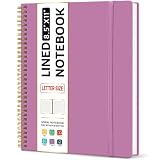
- Large Spiral Notebook: Measuring 8.5" x 11" with standard 7mm college-ruled lines, this large notebook offers ample space for detailed note-taking, journaling, and task management. Its spacious pages are perfect for capturing ideas, organizing thoughts, and managing projects—whether at work, school, or in your home office.
- Premium No-Bleeding Paper: Crafted with 100gsm smooth paper, our lined notebook ensures a luxurious writing experience without ink bleed-through. Ideal for gel pens, fountain pens, ballpoints, and highlighters. Each line flows evenly, allowing you to focus on creativity and organization without interruptions.
- Versatile for Multiple Uses: Designed for multiple purposes, Taja spiral notebook meets the needs of professionals, students, writers, and creatives alike. It’s ideal for taking meeting notes, class lectures, and project plans, or organizing Bible studies and brainstorming sessions. A perfect all-in-one tool for work and personal productivity.
- Customizable Pages & Table of Contents: Includes 4 table of contents pages to keep your notes organized and easy to reference. Contains 50 sheets/100 lined pages that allow you to write on both sides, each page allows you to customize page numbers and dates, making it the ultimate notebook for you.
- Practical Design for Long-Lasting Use: Built for long-lasting use, our journal notebook features a strong double-wire spiral binding for smooth page-turning and a lay-flat design for ease of writing. The elastic closure strap keeps your pages secure and tidy, waterproof plastic cover keep pages clean. Slim and lightweight, it fits seamlessly into briefcases, backpacks, or tote bags, making it the perfect companion for work, school, or travel.
Word association
Start with a word or phrase connected to the problem, then follow related words and connections to see whether they suggest less obvious possibilities. Treat the associations as prompts, not as proof that a proposed solution will work.
Spider-web mapping
Put the central problem or theme on a page and map related ideas around it, adding branches as connections emerge. A visual map can help you see clusters or gaps that are harder to notice in a straight list.
Quick wins for a faster PC:
Clear out junk files and repair common Windows errorsFree Scan →Fix the driver behind crashes, sound loss and screen glitchesFind Drivers →PMI describes all three as solo approaches; its practitioner guidance does not establish one as more effective than the others. Choose the one that makes it easiest for you to keep generating without editing too soon.
How to run open group brainstorming
- State the problem clearly. Give the group a shared question so people are generating ideas for the same task.
- Agree to defer criticism. During idea generation, withhold evaluation so suggestions can accumulate before the group judges them. ASQ includes this among its basic brainstorming ground rules.
- Capture ideas where everyone can see them. A flipchart, wall, or sticky notes can make the developing list visible and give the group material to review later.
- Move to assessment when generation ends. Cluster, clarify, or evaluate the recorded ideas in a separate phase rather than turning each contribution into an immediate debate.
ASQ calls a sticky-note version “sticky storm”; it can help distribute participation and reduce the chance that more vocal members dominate. It is an option, not a requirement or a guarantee of better ideas.
How to run brainwriting or nominal group technique
Use a structured format when the group needs independent thinking time, a fairer route for contributions, or an agreed priority list. ASQ defines NGT as “a structured method for group brainstorming that encourages contributions from everyone and facilitates quick agreement on the relative importance of issues, problems, or solutions.”
- State and clarify the problem. Make sure participants understand the question before anyone starts generating.
- Write ideas silently. Give everyone a set period to record ideas independently, before hearing other participants’ suggestions.
- Share one idea per person in turn. Record each contribution without discussion, continuing around the group so that each person can contribute.
- Discuss for clarification. Ask questions to make the ideas understandable; this is not yet the stage for rejecting them.
- Prioritize. Use multivoting or list reduction to identify which ideas matter most to the group.
Brainwriting and NGT both put writing before open discussion. NGT is a defined sequence that includes turn-taking, clarification, and prioritization; brainwriting can refer more broadly to written generation followed by sharing and ranking. Use the structured sequence when an open conversation is likely to leave some participants out or when the session must produce a relative order.
Recommended Free Tools
Prepare a simple, workable setup
For in-person sessions, ordinary supplies are enough. ASQ lists paper, pens or pencils, flipchart paper, markers, tape, and wall space among possible materials. Use paper and writing tools for silent generation; use a visible surface or sticky notes to capture and review ideas. These are practical aids, not prerequisites for creativity.
Before the session, decide whether the intended result is an idea pool, a set of clarified options, or a prioritized list. That choice determines whether you need only a way to capture contributions or also a voting or list-reduction step.
Quick Recap
Best Value
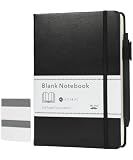
- Mr. Pen blank journal notebook set includes one 160-page notebook, one coordinating retractable pen, and 50 sticky tabs for sketching, journaling, planning, and creative note-taking.
- The durable leather hardcover helps protect the pages while providing a smooth, professional appearance suitable for everyday use.
- The notebook offers ample writing space while remaining easy to carry in backpacks, handbags, and work bags.
- The unlined pages provide complete freedom for drawing, brainstorming, lettering, scrapbooking, mind mapping, and customized layouts without printed restrictions.
- The built-in pen loop keeps the included pen close at hand, while the sticky tabs help organize sections, mark important pages, and quickly locate frequently referenced content.
Product prices and availability are accurate as of the date/time indicated and are subject to change. Any price and availability information displayed on Amazon at the time of purchase will apply.




