The best alternative depends on what you are replacing. If you must keep a diesel vehicle, tractor, generator or heating appliance, a compatible biodiesel blend or biomass-based hydrocarbon fuel such as renewable diesel may reduce petroleum use without replacing the engine. If your goal is to reduce fossil fuel across the home, the relevant choices are different: improve insulation and air sealing, replace oil or gas heating with an air-source heat pump, add residential solar where the site works, and consider an electric vehicle for passenger travel.
These options are not interchangeable, and none is automatically the cheapest or lowest-emission choice everywhere. Fuel pathway, climate, building condition, utility rates, electricity supply, equipment compatibility and local incentives all change the result.

As an Amazon Associate I earn from qualifying purchases.
Start with the use you need to change
“What can I use instead of biodiesel?” can mean two different things:
- A fuel for an existing diesel engine: You need a liquid fuel that meets the engine maker’s requirements and can be obtained and stored reliably.
- A way to cut fossil energy in the household: You may be deciding whether to change heating, insulation, electricity generation or transportation rather than choosing another diesel fuel.
The U.S. Department of Energy (DOE) describes biodiesel as a transportation fuel made from biological feedstocks. Its guidance also distinguishes biomass-based hydrocarbon fuels, which are designed to work with existing engines and fuel infrastructure. Start by identifying the appliance, vehicle or equipment involved, then compare only options that can perform that job.
#1 Best Overall
Use DOE’s biodiesel overview and biodiesel-blend guidance for definitions and operating cautions.
Write down the present fuel, annual consumption, operating season and replacement date. A diesel generator used only during outages has a different priority from a vehicle driven every day, just as an oil boiler in a poorly insulated house presents a different project from a reasonably efficient furnace nearing the end of its life. This simple inventory prevents a household from buying a product for the wrong load.
What can I use instead of biodiesel?
If you are asking about a diesel engine, renewable diesel or another biomass-based hydrocarbon fuel is the main category to investigate. If you are asking how to stop burning fuel in the home, the alternatives are efficiency work, heat pumps, solar electricity and electric transportation. A heat pump cannot fuel a diesel tractor, and renewable diesel does not replace an oil furnace unless that appliance is specifically approved for it.
Do these 3 things before closing this tab:
1Fix the driver behind crashes, sound loss and screen glitches2Repair Windows errors before they cause bigger problems3Scan for outdated or missing drivers - takes under a minuteWhat can I use in a diesel engine instead of petroleum diesel?
For an engine you already own, the practical alternatives are usually biodiesel blends and biomass-based hydrocarbon fuels such as renewable diesel. They differ in chemistry, specification, cold-weather behavior, storage needs and availability. Compatibility is not automatic: consult the engine, vehicle or equipment manufacturer before selecting a fuel or blend level.
| Option | What it is | Questions to check before use |
|---|---|---|
| Biodiesel blend | Diesel fuel blended with biodiesel made from biological feedstocks | Approved blend level; fuel specification; warranty terms; cold-weather operation; storage age and conditions; local supply |
| Biomass-based hydrocarbon fuel (such as renewable diesel) | A hydrocarbon fuel made from biomass and intended to be compatible with diesel engines and infrastructure | Whether the product meets the engine’s diesel specification; local availability; storage and handling instructions; feedstock and production pathway |
| Petroleum diesel with efficiency measures | Continue the approved fuel while reducing unnecessary engine hours and improving maintenance | Whether reducing idling, leaks and poor maintenance can cut consumption before a fuel switch is practical |
Continuing with approved petroleum diesel can be the safest short-term choice when a low-carbon fuel is unavailable, the engine warranty excludes it, or cold-weather supply is uncertain. Reducing idling and keeping filters, injectors and tires or driven equipment properly maintained does not make the fuel renewable, but it can reduce avoidable consumption while you plan a replacement.
Biodiesel blends
A blend is identified by the percentage of biodiesel. For example, a B20 blend contains 20% biodiesel and 80% petroleum diesel. The correct blend depends on the manufacturer’s approval and the operating environment. Higher biodiesel content can affect cold-weather performance, material compatibility and storage stability, so do not assume that a blend sold for one vehicle is suitable for every engine, furnace or generator.
- Find the owner’s manual or manufacturer service bulletin for the exact engine model.
- Confirm the maximum approved biodiesel percentage and required fuel specification.
- Ask the supplier which specification the fuel meets and how it has been stored.
- Plan for the lowest temperatures in your area, not just the day you buy fuel.
- After switching, watch for leaks, filter plugging or hard starting and follow the manufacturer’s maintenance schedule.
Ask whether the equipment will sit for weeks or months. Seasonal tractors, backup generators and rarely used heating equipment may face more storage-related problems than a vehicle refueled every few days. Keep a record of the blend, supplier, delivery date and any filter or starting symptoms so a technician can diagnose a problem without guessing.
Free tools Windows power users keep installed
One-click scans. No signup required.
DOE’s blend guidance explains why operating cautions and compatibility checks matter. A manufacturer’s approval remains the controlling requirement.
Renewable diesel and other biomass-based hydrocarbons
Biomass-based hydrocarbon fuels are chemically different from biodiesel. DOE describes this category as compatible with existing diesel engines and infrastructure, but that does not establish that every product is available in every region or that all products have identical environmental performance. Confirm the product’s specification, the equipment maker’s approval and the supplier’s handling instructions.
Rank #2

- Cast-Iron Construction — heavy-duty, cast-iron construction provides unmatched durability, withstanding the harshest conditions out in the field or at the job site
- High Performance — Fill-Rite’s trusted rotary vane pump technology delivers 35 gallons per minute, perfect for filling your largest equipment with fuel tanks sized at 35-140+ gallons
- Dual Voltage Motor — powered by a dual voltage 115-230V AC motor, you can conveniently select the right voltage during installation with a simple switch
- Stationary Tanks — Equipped with a 2 inch bung mount, this pump is ideal for installing onto stationary aboveground tanks
- Fluid Compatibility — designed for daily use with diesel fuel, kerosene, mineral spirits, Stoddard solvents, heptane, and biodiesel blends up to B20
Compatibility with existing infrastructure can reduce the disruption of a fuel change, but it does not remove practical checks. Verify that the distributor can deliver the same grade throughout the season, that your tank and dispensing equipment are suitable, and that service technicians recognize the product. For a shared farm or household tank, label the fuel clearly so an unapproved blend is not added later.
Do not treat “renewable” as a complete emissions score. The Environmental Protection Agency explains that “A renewable fuel pathway includes three critical components: (1) feedstock, (2) production process and (3) fuel type.” Its fuel-pathway guidance evaluates those components together. A fuel made from one feedstock and process can have a different lifecycle result from another fuel carrying the same broad label.
What’s actually slowing this PC down?
Pick the symptom - the matching free tool is one click away.
When comparing supplier claims, ask for the specific feedstock and production pathway rather than relying on a logo or a general “clean fuel” description. Also ask whether the claim concerns tailpipe operation or a full lifecycle. Those are different boundaries, and neither one alone tells you how the fuel will perform in your equipment.
Storage, weather and supply can decide the result
- Cold weather: Ask for the fuel’s low-temperature guidance and use the manufacturer’s recommendations for filters, additives and seasonal operation.
- Storage: Keep fuel in an approved, clean container protected from water and contamination. Follow the supplier’s maximum storage period.
- Availability: Verify that a dependable local supplier can provide the required grade year-round. A theoretical alternative is not useful if you cannot refuel or replenish it.
- Maintenance: A fuel change can expose deposits or clog filters; keep replacement filters and follow the engine maker’s inspection schedule.
- Handling records: Keep invoices, product specifications and maintenance notes. They help with warranty questions and troubleshooting.
How can I reduce fossil-fuel use at home?
For most households, the most durable plan is to reduce energy demand first, then replace the largest remaining fossil-fuel loads. DOE’s Residential Renewable Energy Consumer Guide places home assessments, insulation and air sealing alongside electrification and solar because the building affects every later equipment decision.
Make a simple baseline before starting: note annual oil, propane or natural-gas use, electricity consumption, major appliances and the rooms that are uncomfortable. This does not predict savings, but it gives installers a consistent reference when they present proposals. Request that each proposal state what energy use it assumes and which other projects must happen first.
1. Get a home energy assessment
An assessment identifies air leakage, insulation gaps, moisture risks, duct losses, inefficient equipment and electrical constraints. Ask the assessor to document recommended measures, expected interaction with heating equipment and any health or combustion-safety concerns. The findings can change the size of a replacement heat pump and prevent you from paying for equipment that is larger than necessary.
Recommended Free Tools
Ask for priorities, not just a long list of upgrades. The report should distinguish urgent moisture or combustion-safety repairs from measures that improve comfort and reduce load. It should also identify whether ducts, the electrical panel, drainage and ventilation can support later electrification.
2. Air-seal and insulate where the assessment supports it
Air sealing reduces uncontrolled outdoor-air leakage; insulation slows heat flow through the building envelope. Prioritize the locations identified by the assessment rather than adding insulation blindly. Check ventilation and moisture requirements when tightening the envelope, especially in older homes.
Complete envelope work early enough for the heating contractor to use the new heat-loss estimate. Otherwise, a system may be selected for the pre-upgrade load and cycle inefficiently after the house is tightened. Keep receipts, photographs and product information for future maintenance and incentive documentation.
Rank #3

- Efficient Fuel Transfer: Zoom through fuel transfers with our fuel transfer pump's 2500 r/min motor! With a speedy flow rate of up to 16 GPM, a head lift of ≥26.2 ft, and a suction lift of ≥9.8 ft, you'll have that tractor tank full in roughly 27 seconds. It's ideal for extracting gasoline, diesel, kerosene, ethanol & methanol mixture, and biodiesel.
- Automatic Shut-off Nozzle: Our portable fuel transfer pump comes with an automatic shut-off nozzle. Just press and release the trigger for hands-free fueling. There is no need to monitor the fluid level – it'll automatically shut off when the tank is full.
- Fuel Collection Box Design: No worry about those fuel puddles! Our diesel transfer pump features a fuel collection box design, catching those sneaky drips after you fill up to keep your space clean. Plus, with our sleek aluminum alloy casing, your fuel nozzle's got a classy home.
- Tough as Nails: The diesel pump body is made of a durable cast iron structure, built to brave the rough and tumble and painted up nice to ward off rust. Internally, it's equipped with thermal overload protection to prevent the motor from overheating during abnormal usage.
- Efficient Fuel Transfer: Zoom through fuel transfers with our fuel transfer pump's 2500 r/min motor! With a speedy flow rate of up to 16 GPM, a head lift of ≥26.2 ft, and a suction lift of ≥9.8 ft, you'll have that tractor tank full in roughly 27 seconds. It's ideal for extracting gasoline, diesel, kerosene, ethanol & methanol mixture, and biodiesel.
3. Replace fossil heating with an air-source heat pump when the home and climate fit
Air-source heat pumps move heat rather than creating it by burning fuel. ENERGY STAR covers both ducted systems and ductless mini-splits in its air-source heat-pump guidance. A ductless mini-split can suit a home without existing ducts, while a ducted system can use a home’s distribution network if that network is in good condition.
Crashes, No Sound, or Screen Glitches?
Random freezes, missing sound and display glitches usually trace back to one bad driver. Find and replace yours safely.Free scan · under a minuteWindows Errors? Fix Them Before They Spread
Repair common Windows errors and clear accumulated junk for a smoother, more stable PC - no reinstall needed.Free scan · no reinstallIn some climates, a cold-climate model or a dual-fuel arrangement with backup heat may be appropriate. A qualified contractor should evaluate the building envelope, local design temperatures, room-by-room loads, electrical service, ductwork, condensate drainage, defrost operation and backup strategy. ENERGY STAR’s clean-heating guidance emphasizes professional assessment and correct sizing.
For a ductless mini-split, ask how many indoor heads are needed, how air will reach closed rooms, where outdoor units will drain condensate, and how filters will be cleaned. For a ducted system, request duct leakage and airflow measurements rather than assuming existing registers and return paths are adequate. Installation quality and controls can matter as much as the equipment label.
Can a heat pump replace oil heat?
Often, yes, but the answer is house-specific. A properly selected heat pump can provide the normal heating load; a backup system may be retained for unusually cold conditions, power interruptions or a homeowner’s resilience preference. Whether removing an oil boiler or furnace is sensible depends on climate, insulation, electrical capacity, distribution design, contractor sizing and the cost and reliability of local electricity.
Do not size a heat pump by matching the nameplate capacity of an old oil appliance. Have the contractor calculate the building’s heat loss after planned envelope improvements and explain what happens at low outdoor temperatures. If you keep an oil system as backup, understand which system controls the thermostat, how often the backup runs and how it will be maintained.
Ask for a written explanation of operating modes: normal heat-pump operation, resistance or oil backup, defrost cycles, emergency heat and restart after an outage. Confirm who will service both systems and whether the old tank, chimney or fuel lines will be removed, abandoned or retained. Those details affect space, maintenance and safety responsibilities.
A DOE Office of Policy article dated February 14, 2024, reported that replacing worn-out heating equipment with the right heat pump would lower energy bills for over 90% of the households assessed in a national-laboratory analysis. That is a study-specific finding, not a guarantee for every home and not a lifecycle-emissions comparison. See DOE’s explanation of the analysis.
4. Consider residential solar after estimating the home’s electricity needs
Residential solar photovoltaic (PV) can supply some or all of a home’s electricity, depending on system size, solar resource, roof or land conditions, shading, utility rules and household demand. A heat pump, electric water heater or vehicle can increase electricity use, so estimate the post-electrification load before requesting solar proposals.
Ask installers to show production assumptions, equipment placement, interconnection steps, export compensation, maintenance responsibilities and what happens during a grid outage. Standard grid-tied systems generally do not keep a house powered during an outage unless the design includes approved backup equipment and storage. DOE’s renewable-energy guide is useful for planning categories, but it is dated 2022; verify current incentives, utility rules and installed pricing locally.
The Tool Desk
Outbyte PC Repair FREERepair Windows errors before they cause bigger problemsFix Now →Outbyte Driver Updater FREEScan for outdated or missing drivers - takes under a minuteDriver Scan →Rank #4

- 【High Capacity – 15 GPM Fast Refueling】 This 12V DC fuel transfer pump delivers up to 15 gallons per minute, making it a powerful and efficient tool for refueling trucks, tractors, construction equipment, and farm machinery. A 30-minute duty cycle supports continuous use for most transfer jobs, and its 8-foot suction lift ensures reliable pickup from barrels, tanks, or drums.
- 【Durable Cast Iron Construction – Built for Tough Jobs】 Crafted from heavy-duty cast iron, this pump is designed to withstand the demands of farm, workshop, and industrial environments. It resists wear and corrosion, providing long-lasting, reliable service even when moving rough fuels like kerosene or biodiesel.
- 【Thermal Overload Protection for Safe Operation】 Engineered with a built-in thermal overload protector, the motor automatically shuts off if it overheats to prevent damage. This exceeds industry safety standards, ensuring peace of mind during extended or demanding fueling tasks.
- 【Versatile Fuel Compatibility for Farm & Fleet】 This pump is built to transfer a wide range of fuels and oils, including Gasoline, Diesel, Kerosene, Mineral Spirits, E15, Biodiesel, and more. It's an ideal tool for refueling farm equipment, trucks, boats, jet skis, snowmobiles, and portable generators.
- 【Complete Kit – Easy Out-of-the-Box Installation】 This kit includes a 12-foot, 3/4-inch manual nozzle and comes with the necessary hardware for a straightforward setup. It is designed for a 12V DC electrical system and features an 8-foot suction lift, making installation simple and ready to go quickly.
Check the roof’s remaining life before mounting panels. A roof replacement may be less disruptive before installation. Compare proposals on system size, estimated production, shading assumptions, warranties, monitoring, permitting and who handles utility approval. Solar can complement a heat pump or EV, but it does not automatically make either technology zero-emission at every hour.
5. Replace fossil-fuel passenger travel with an electric vehicle when it fits your driving
DOE lists electric passenger vehicles among electrification technologies in its electrification overview. Compare an EV with your actual daily distance, weather, passenger and cargo needs, towing requirements, charging access and electricity rate. Home charging may require a dedicated circuit, electrical-panel work or a new service, and an electrician should verify the installation.
Map where charging would occur on ordinary days and on long trips. If home charging is unavailable, check workplace and public options before committing. Ask the electrician about load calculations, outdoor equipment location, cable protection and permitting. Include charging equipment and installation in the vehicle budget rather than treating them as incidental.
Do not assume an EV has zero emissions: its operation uses the local electricity supply, whose generation mix varies. Likewise, do not assume a heat pump or solar array has the same climate benefit in every region. The relevant comparison is your local electricity and fuel system over the equipment’s life.
Quick wins for a faster PC:
Fix the driver behind crashes, sound loss and screen glitchesFind Drivers →Clear out junk files and repair common Windows errorsFree Scan →Scan for outdated or missing drivers - takes under a minuteDriver Scan →How to choose among the alternatives
Use this sequence instead of searching for one universal “greenest” option:
- Name the load: diesel engine, oil or gas heat, household electricity or passenger transport.
- Check constraints: manufacturer approvals, climate, ducts, insulation, electrical service, roof or land, charging access and local fuel supply.
- Reduce demand: complete the assessment-supported air-sealing and insulation work that affects equipment sizing.
- Obtain comparable proposals: request written assumptions, equipment capacities, installation scope, backup operation, expected electricity or fuel use and maintenance requirements.
- Verify operating data: check current utility rates, fuel availability, electricity mix, incentives and permitting with local authorities and suppliers.
- Compare total ownership: include installation, required electrical or envelope work, maintenance, fuel or electricity, backup equipment and eventual disposal. The reviewed official sources do not establish one current nationwide price comparison, so use local quotes.
- Choose the least disruptive option that meets the need: a compliant diesel fuel may be the practical step for equipment you cannot replace, while a heat pump or EV may deliver deeper household fossil-fuel reductions over time.
Consider timing as well as technology. Replace equipment at the end of its useful life when possible, but address unsafe combustion equipment or a failing fuel tank promptly. Bundling insulation, electrical work and heating can reduce repeat visits, while a staged plan may be easier to finance and manage.
Independent reader supportYour contribution helps us test, update, and keep practical guides available for everyone.Common mistakes and how to avoid them
- Using a fuel because it is labeled renewable: Verify feedstock, production pathway, fuel specification and equipment approval.
- Putting an unapproved biodiesel blend in an engine: Follow the exact manufacturer limit, not a generic internet recommendation.
- Assuming renewable diesel and biodiesel are identical: Confirm chemistry, specification, cold-weather guidance and handling instructions for the actual product.
- Replacing an oil furnace with an undersized heat pump: Require a documented load calculation and a low-temperature and backup plan.
- Skipping envelope work: Air leakage and insulation problems can increase operating cost and force a larger replacement system.
- Assuming ducts are ready for a new system: Have duct leakage, airflow, insulation and room balance assessed.
- Ignoring ventilation or moisture after air sealing: Follow the assessor’s recommendations for safe indoor air and building durability.
- Using a solar estimate as a guarantee: Check shading, roof condition, utility interconnection and outage behavior in the contract.
- Assuming solar powers the home during an outage: Confirm whether approved storage and islanding equipment are included.
- Comparing technologies without local data: A national claim cannot substitute for your rates, climate, fuel access and electricity supply.
- Forgetting service access: Confirm local technicians, filters, parts and fuel delivery before choosing an unfamiliar system.
A practical decision checklist
- What exact appliance, vehicle or engine am I changing?
- What fuels or technologies does the manufacturer approve?
- What are my coldest temperatures and seasonal operating conditions?
- Has the home had an energy assessment and envelope inspection?
- Will the proposed equipment fit the existing ducts, electrical service and controls?
- What backup is available during extreme weather or an outage?
- Can I obtain fuel, service and replacement parts locally?
- What are the current utility rates, incentives, permitting rules and electricity sources?
- Does the proposal state assumptions and maintenance requirements in writing?
- For solar, what roof, shading, interconnection and outage assumptions are documented?
- For an EV, where will routine charging occur and what electrical work is required?
- What work should happen first so later equipment is not oversized or stranded?
Frequently asked questions
What can I use in a diesel engine instead of petroleum diesel?
Investigate a manufacturer-approved biodiesel blend or a biomass-based hydrocarbon fuel such as renewable diesel. Confirm the exact specification, blend limit, cold-weather guidance, storage requirements and local supply for your engine.
Is renewable diesel the same as biodiesel?
No. They are different fuel categories. Renewable diesel is a biomass-based hydrocarbon intended to be compatible with diesel engines and infrastructure, while biodiesel is blended with diesel. Follow the equipment maker’s instructions for the actual product.
Can I put any biodiesel blend in my generator or tractor?
No. Check the owner’s manual or service bulletin for the approved percentage and fuel specification. Cold temperatures, storage time and filter condition can affect operation.
Best Value
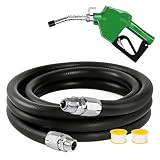
- Includes a 20-foot fuel hose and an automatic shut-off nozzle (3/4" NPT inlet, 13/16" spout). Delivers a maximum flow of 16 GPM for fast, efficient refueling
- Features a 360 swivel crimp fitting to prevent kinks. Both ends are detachable, allowing you to replace only the damaged section and save on full hose replacement costs
- The triple-layer construction consists of a fuel-resistant NBR inner liner, steel wire braid reinforcement for burst protection, and a tough CPE outer cover that resists weather, ozone, and abrasion
- Automatic shutoff prevents overfilling and spills. The 3-speed trigger lock allows for secure, hands-free operation. Includes a comfort-grip handle and storage hook for convenience
- Safely handles a wide range of fuels including diesel, gasoline, kerosene, and biodiesel for agricultural equipment, construction sites, marine applications, and backup diesel generators
How can I reduce fossil fuel use at home if I do not own diesel equipment?
Start with an energy assessment, then address recommended air sealing and insulation. Next evaluate a correctly sized air-source heat pump, residential solar and an EV according to your building, climate, electricity supply and driving needs.
Can a heat pump replace oil heat?
Often, but not universally. A contractor must evaluate heat loss, climate, ducts or distribution, electrical capacity, low-temperature performance and backup needs. A dual-fuel arrangement may be appropriate in some homes.
Will a heat pump always lower my bills?
No guarantee applies to every home. A DOE Office of Policy article dated February 14, 2024, reported lower projected bills for over 90% of households assessed in a specific national-laboratory analysis. Local rates, equipment sizing, weather and building condition determine individual results.
Does installing solar make my heat pump or EV carbon-free?
Not automatically. Solar production, grid electricity, equipment manufacturing and operating conditions all matter. Evaluate the local electricity supply and the system’s lifetime rather than relying on a single label.
Is there a single cheapest option?
No current nationwide comparison covers renewable diesel, biodiesel, heat pumps, solar and EVs on equal terms. Obtain local fuel, electricity, installation and maintenance information, and include required envelope or electrical upgrades.
Bottom line
If you are keeping diesel equipment, start with manufacturer-approved biodiesel blends or a biomass-based hydrocarbon fuel whose specification and supply you can verify. If you are reducing fossil fuel across the home, begin with an energy assessment, air sealing and insulation; then evaluate a correctly sized air-source heat pump, residential solar and an EV according to your climate, building, utility and driving conditions. EPA’s pathway framework and DOE and ENERGY STAR’s equipment guidance point to the same conclusion: the right choice is determined by the specific use and local conditions, not by the word “renewable” alone.
Frequently Asked Questions
What can I use instead of biodiesel?
For a diesel engine, investigate an approved biodiesel blend or biomass-based hydrocarbon fuel such as renewable diesel. For broader household fossil-fuel reduction, consider efficiency upgrades, heat pumps, solar and EVs instead of another liquid fuel.
Can a heat pump replace oil heat?
Often, but a contractor must assess heat loss, climate, distribution, electrical capacity, low-temperature operation and backup requirements. A dual-fuel system may be appropriate in some homes.
What should I check before using renewable diesel?
Verify the product specification, engine-maker approval, supplier availability, storage and handling instructions, cold-weather performance and the feedstock and production pathway behind environmental claims.
Will solar keep my house powered during an outage?
A standard grid-tied array generally will not. Backup operation requires approved equipment and usually storage; confirm the design and responsibilities in the installation proposal.
The Bottom Line
Match the solution to the load: approved fuel for diesel equipment, efficiency and a correctly sized heat pump for fossil heating, and locally suitable solar or EV charging for broader electrification. Verify specifications, installation requirements, operating costs and local conditions before committing.
Quick Recap
Product prices and availability are accurate as of the date/time indicated and are subject to change. Any price and availability information displayed on Amazon at the time of purchase will apply.

