The best Strands alternative depends on which part of the game you want to keep. Choose SpellTower when the connected letter grid is the appeal, Letter Boxed when you want tighter word-building constraints, Connections or Wordle for a different daily challenge, and Boggle when you want an offline or social letter grid.
Strands is difficult to replace exactly because it combines several elements: a themed set of hidden words, a grid of letters, paths traced through adjacent cells, and a spangram that crosses the board and reveals the theme. The recommendations below are therefore organized by the mechanic you want to preserve rather than by an unsupported ranking.
As an Amazon Associate I earn from qualifying purchases.
What makes NYT Strands distinctive
Strands is a themed word-search puzzle. You look for theme words hidden in a matrix of letters, then trace each word through vertically, horizontally, or diagonally adjacent cells. A cell cannot be reused within the same word. The puzzle also contains a spangram: a theme-defining word or phrase that connects opposite sides of the grid.
That combination is why ordinary word-game lists can feel unsatisfying to Strands players. A game may involve words yet remove the path-finding, the theme, or the physical sense of searching a board. A scholarly description by Alessandro Giovanni Alberti, Flavio Chierichetti, Mirko Giacchini, Daniele Muscillo, Alessandro Panconesi and Erasmo Tani calls Strands “a modern spin on classic word search puzzles.” The important part of that description is the modern combination of a word-search board with a unifying theme and a special crossing answer.
#1 Best Overall

- BIGGER BOGGLE: Now you can make longer words with a larger 5x5 grid AND you've got 3 minutes to do it
- SETUP: Shake, shake, shake the letter cubes, start the timer and let your eyes see what's right in front of you
- IT'S FUN AND SIMPLE: Each player searches the letters to make words of FOUR letters or more. When you find a word, write it down
- SCORING: Points are tallied based on the length of your word - BUT - if another player has the same word, NO ONE scores for that word! So - be unique
- HISTORY LESSON: Big Boggle debuted in 1979 as Parker Brothers Bigger Hidden WORD Game, and was enjoyed by word game players for over 30 years
Quick comparison
| Game | Core operation | Theme or category | Play pattern documented in the available sources | Why a Strands player might choose it |
|---|---|---|---|---|
| Strands | Trace themed words through adjacent letters without reusing cells; find a spangram crossing opposite sides | Yes; the spangram reveals the theme | Fixed daily puzzle | Baseline combination of grid search, theme and connected paths |
| Letter Boxed | Build a chain of words from letters around a square; consecutive letters cannot come from the same side, and every letter must be used | The objective is letter coverage and chaining rather than a themed hidden path | Daily-game alternative in the same general puzzle family | Best for players who want a more explicit strategic constraint |
| SpellTower | Find words in a letter grid; a player comment describes it as allowing any word and being “kind of like strands” | Not established by the available evidence | Broader grid play is suggested by the player description; current modes and availability should be checked | Closest lead if the grid itself matters most |
| Connections | Group visible words by hidden relationships | Yes, through category relationships rather than a letter path | Daily puzzle | Preserves deduction and a short daily ritual while changing the board mechanic |
| Wordle | Guess one hidden word | The answer is a word, but there is no documented Strands-style theme path | Daily puzzle | Good when you mainly want a compact daily word challenge |
| Boggle and Boggle With Friends | Find words in a letter grid | Not a documented themed daily puzzle | Physical or shared play; Apple’s US iPhone App Store word-game collection lists Boggle With Friends as a classic fast word puzzle | Best for face-to-face, offline or repeatable grid searching |
If the connected letter grid is the draw
Try SpellTower, with realistic expectations
SpellTower is the most natural first experiment when your favorite Strands moment is spotting a route through neighboring letters. A player comment describes it as a grid game where any word is possible and calls it “kind of like strands.” That is useful as a description of the player experience, not as an official statement of rules.
The similarity is therefore narrow but meaningful: both games put letters into a visible grid and ask you to discover words spatially. The difference is that the available evidence does not establish a Strands-like theme, spangram, fixed daily board or exact adjacency rules for SpellTower. Do not assume that a particular mode, scoring system or platform is still available until you check the current product listing.
How to decide whether the match is good enough
- Choose SpellTower first if you enjoy scanning the whole board and making many possible words.
- Stay with Strands when the theme is what turns a collection of words into one coherent puzzle.
- Expect to verify the current rules and availability yourself; the comparison comes from a community comment rather than a rules page.
If you want stricter word construction
Letter Boxed changes searching into chaining
Letter Boxed uses a square with letters placed around its sides. A word cannot take two consecutive letters from the same side. Each new word must begin with the last letter of the previous word, and the solution must use every letter.
Quick wins for a faster PC:
Repair Windows errors before they cause bigger problemsFix Now →Scan for outdated or missing drivers - takes under a minuteDriver Scan →Clear out junk files and repair common Windows errorsFree Scan →That creates a different kind of pressure from Strands. In Strands, you search for a themed answer and use the geometry of adjacent cells to trace it. In Letter Boxed, you are constructing a sequence whose transitions work and whose combined coverage reaches the entire alphabet shown around the square. The board is still visual and letter-based, but the key question is no longer “Where does this themed word run?” It is “Which word can legally follow the last one while covering letters I have not used?”
Who should pick Letter Boxed
- Pick it for constraint-driven solving: every letter must be accounted for, so unused letters remain an explicit problem to resolve.
- Pick it for chaining: the final letter of one word determines the starting point for the next.
- Do not pick it as a visual replacement: it has no documented Strands-style matrix, themed word set or spangram.
A practical transition is to keep a running note of letters already covered and the last letter of your current word. That habit makes the game’s two central constraints visible without importing Strands assumptions about neighboring cells.
Rank #2

- THE ULTIMATE FOR WORD GAMERS: Everyone loves Boggle and Big Boggle - but have you played SUPER Big Boggle? Now you can make even longer words in the largest Boggle format in a 6x6 grid. The quality and quantity of words you can make in 4 minutes will blow your mind
- SETUP: Just like in standard Boggle, put the dome on the letter cube grid, shake, shake, shake - make sure all the cubes are in place, start the timer and let your eyes do the talking
- 36 LETTER CUBES: You read that right, 36 letter cubes! There's even a special double-letter cube that includes the 6 most useful 2-letter combinations in the English language
- 4 MINUTES: You've got 2 more minutes than standard Boggle - and you'll need every second! There are a lot of words that can be formed with 36 letter cubes so take your time and focus
- 4 LETTER MINIMUM: Gone are the days of making a ton of easy 3 letter words. Super Big Boggle will challenge your brain to make 4 letter words or higher. It is a bit tricky - but we know you can do it
If you want another daily word puzzle
Connections is the closest change of reasoning
Connections presents visible words and asks you to find hidden relationships that divide them into groups. It keeps the compact, once-a-day decision cycle that many Strands players value, but it removes letter tracing entirely. Your evidence is semantic: words belong together because of a category or relationship, not because their letters touch on a board.
Choose Connections when you enjoy discovering a puzzle’s organizing idea more than physically searching for a route. It is also a useful reset after a difficult Strands board because the challenge is classification rather than path construction. The two games can feel similarly satisfying while exercising different skills.
Wordle is the simplest daily substitute
Wordle asks you to guess one hidden word. There is no documented themed collection, connected-letter path or spangram, so it is not a mechanical substitute for Strands. Its appeal is concentration: one answer, a small number of guesses and a clear daily endpoint.
Choose Wordle if your priority is a short daily word challenge and you are comfortable giving up the exploratory grid. Choose Connections instead if the pleasure comes from finding a relationship among several visible entries.
Putting the daily games in context
A 2026 proceedings paper, citing an interview with a New York Times spokesperson reported by The Verge, says the publication’s games were played “over eleven billion times” in 2024. The figure applies to the games collection as a whole, not to Strands, Connections or Wordle individually. It indicates the scale of the daily-game habit, but it does not establish that one of these alternatives is more popular, easier or better for a particular player.
Rank #3

- SHAKE UP THE WORD FUN — Experience the fast-paced, timed word search action of original Boggle reimagined. Designed for 2 to 6 players ages 8 and up, this 3-minute vocabulary challenge tests your speed to find hidden words in the 4x4 grid during family nights, parties, and group play.
- PREMIUM VINTAGE COMPONENTS — Inspired by the iconic 1976 edition, this set features a vintage-style cube tray with a signature translucent dome, 16 letter cubes, a 3-minute sand timer, 2 pencils, and a scorepad. Everything nests neatly inside the integrated internal storage tray for quick setup and simple organization.
- BEAUTIFUL ON DISPLAY, FUN TO COLLECT — Designed to resemble an elegant hardcover volume, this game doubles as sophisticated decor for your bookshelf, mantel, or coffee table. It's part of an expansive collection of over 20 unique Vintage Bookshelf Edition game titles—allowing you to collect your favorite classic games and line them up together to create a cohesive, custom library aesthetic.
- THE PERFECT GIFT — Solves the challenge of finding a memorable present for friends and family. Gifting one or a few titles starts an elegant personal game library and offers them meaningful, screen-free experiences. Future occasions like birthdays and holidays become effortless as you add new titles to their collection with each passing milestone.
- COMPACT, SPACE-SAVING & TRAVEL-FRIENDLY DESIGN — The fabric book case measures 10.6 x 8.4 x 2.6 inches for convenient, upright shelf display. Weighing under 2 pounds with a self-contained book box, it keeps the grid and timer secure, making it compact and durable enough to pack away for trips, weekend getaways, or holiday travel.
If you want an offline or social letter grid
Boggle keeps the physical search
Boggle is a letter-grid game built around finding words, making it a better fit for shared or offline play than a fixed online daily puzzle. Apple’s US iPhone App Store word-game collection currently lists Boggle With Friends as a classic fast word puzzle, which confirms a recognizable digital form of the game. The available evidence does not verify a particular tabletop edition, feature set or current retail inventory.
Do these 3 things before closing this tab:
1Fix the driver behind crashes, sound loss and screen glitches2Repair Windows errors before they cause bigger problems3Scan for outdated or missing drivers - takes under a minuteBoggle is not a direct Strands replacement. The documented comparison does not include a Strands-style theme, spangram or single daily board. Its value is elsewhere: players can search the same kind of letter-grid space together, and a physical board does not depend on a daily publication schedule.
When Boggle is the right choice
- Choose it for a group setting, travel or a screen-free session.
- Choose it when repeatable rounds matter more than preserving a daily puzzle.
- Keep Strands or another daily game in the rotation if you specifically want a supplied theme and a single published challenge.
Other connected-letter leads to investigate
A recent roundup search excerpt mentions Strings – Word Search and Strandom as possible options for connected-letter or themed-path play. Those references are discovery leads rather than verified descriptions of current rules. The roundup page could not be fetched, so treat both names as candidates to check, not as definitive recommendations.
Before relying on either game, confirm three things in its current listing: whether letters must be adjacent, whether cells can be reused, and whether puzzles are themed and delivered on a daily schedule. Those details determine whether the game actually matches the part of Strands you care about.
Independent reader supportYour contribution helps us test, update, and keep practical guides available for everyone.Choose by the feature you miss most
- You miss drawing a route through letters. Start with SpellTower, then investigate Strings – Word Search or Strandom after confirming their current rules.
- You miss a theme that organizes the answer set. Strands remains the clearest documented fit. The other named games use categories, a single hidden word or no established theme.
- You want more explicit constraints. Choose Letter Boxed, where side restrictions, word chaining and complete letter coverage define the solve.
- You want a different daily ritual. Choose Connections for relationship-based grouping or Wordle for one hidden-word guess.
- You want people around the same board. Choose Boggle or its documented digital form, Boggle With Friends.
- You want repeatable rather than fixed daily play. Boggle is the clearest documented option; the available evidence does not establish the current repeat-play structure of SpellTower.
How the mechanics compare in practice
Path versus chain
Strands asks you to validate a word spatially: every next letter must occupy an adjacent unused cell. Letter Boxed asks you to validate a sequence linguistically and positionally: consecutive letters must come from different sides, and the next word starts with the previous word’s final letter. These are both constraint systems, but they reward different habits. Strands favors visual scanning and theme recognition; Letter Boxed favors planning several legal transitions ahead.
The Tool Desk
Outbyte Driver Updater FREEFix the driver behind crashes, sound loss and screen glitchesFind Drivers →Outbyte PC Repair FREEClear out junk files and repair common Windows errorsFree Scan →Rank #4
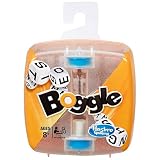
- Boggle Classic Game
Theme versus category
Strands supplies a theme that links hidden words and is exposed by the spangram. Connections also asks you to discover an organizing idea, but its links are among already visible words rather than among paths on a letter board. Wordle has a single hidden answer instead of a theme-driven set. SpellTower and Boggle should not be assumed to provide a theme unless their current versions state one.
Fixed daily puzzle versus open-ended play
The documented daily options are Strands, Connections and Wordle. Their shared schedule is useful if you want one common challenge to discuss each day. Boggle represents the opposite end: a physical or shared format suited to replay. Letter Boxed supplies a different constrained puzzle format, while the available material does not establish SpellTower’s current schedule or mode structure.
A sensible rotation for Strands players
You do not need one replacement to cover every preference. A three-game rotation can preserve variety without pretending the mechanics are identical:
- Theme-and-path day: Strands.
- Constraint day: Letter Boxed.
- Social or offline session: Boggle.
Add Connections when you want a semantic grouping challenge and Wordle when you want the shortest possible daily word task. Test SpellTower separately if the tactile act of searching a letter grid is the feature you value most, and judge it on the current version rather than on the anecdotal comparison alone.
What not to assume when comparing these games
- Do not treat “word puzzle” as a sufficient match. The decisive differences are board geometry, adjacency, theme, chaining and schedule.
- Do not convert a player comment into a specification. The SpellTower and Squaredle descriptions in community discussion are personal comparisons, not complete rules documentation. Squaredle is therefore not included as a ranked recommendation here.
- Do not infer cost, difficulty or popularity. No supported figures establish prices, subscription requirements, relative difficulty or a ranking among these games.
- Do not generalize the App Store evidence worldwide. The Boggle With Friends listing comes from a US iPhone collection and does not establish availability on every platform or in every region.
- Do not call a discovery lead a confirmed substitute. Current rules and availability for Strings – Word Search and Strandom need to be checked before you commit to them.
Bottom line
There is no exact clone of Strands among the documented alternatives. SpellTower is the closest lead for a letter-grid feel, but its similarity is based on a player description and needs current-rule verification. Letter Boxed is the strongest choice for deliberate word construction under constraints. Connections and Wordle preserve the daily habit while changing the solving method, and Boggle is the practical offline or social option. Start with the mechanic you miss, not with a generic list of games that merely contain words.
Quick Recap
Product prices and availability are accurate as of the date/time indicated and are subject to change. Any price and availability information displayed on Amazon at the time of purchase will apply.

