Quick wins for a faster PC:
Clear out junk files and repair common Windows errorsFree Scan →Scan for outdated or missing drivers - takes under a minuteDriver Scan →Repair Windows errors before they cause bigger problemsFix Now →The best TV without glare is not a model that promises a reflection-free picture—no television eliminates reflections completely. Choose by matching measured or model-specific reflection handling with enough daytime brightness for your room. Direct window or lamp reflections, overhead light, screen finish, viewing angle, and the TV’s contrast all matter. Samsung’s 2025 S95F OLED and 2026 The Frame illustrate two different approaches, but neither is a universal winner. Use the room audit and comparison method below before buying, and verify the exact model code and regional specification.
What “without glare” really means
“TV without glare” is a useful search phrase, not a literal product category. Every television can show some reflected light, and the same screen may look excellent in one room and distracting in another. The practical goal is to reduce the visibility of reflections enough that daytime content remains watchable without sacrificing the picture qualities you value.
As an Amazon Associate I earn from qualifying purchases.
Reflection performance has at least two separate parts. A screen can suppress a sharp reflection of a window or lamp, yet still raise the black level across a large portion of the panel when the room is bright. Conversely, a glossy panel can preserve deep contrast in a controlled room while showing a clear mirror-like reflection when a light source is directly opposite it. RTINGS separates these effects into total reflected light and direct reflections. Treat both as relevant rather than using “matte” or “glossy” as a complete score.
The Tool Desk
Outbyte PC Repair FREEClear out junk files and repair common Windows errorsFree Scan →Outbyte Driver Updater FREEScan for outdated or missing drivers - takes under a minuteDriver Scan →Brightness is the second half of the decision. High SDR brightness can help picture content compete with daylight, but brightness cannot erase a sharply reflected window. In rooms with several windows, lamps and overhead fixtures, a TV needs both adequate daytime output and effective reflection handling. The right balance depends on where those sources sit in relation to the screen.
#1 Best Overall

- HI - QLED MINILED: Striking contrast and vivid, lifelike color put every scene in a new light. Whether it's a sunny landscape or a candlelit drama, the picture leaps off the screen. Mini-LED backlighting uses hundreds of precise light zones to enhance contrast across the screen. Paired with Hi-QLED technology, every color comes through with stunning depth and accuracy
- NATIVE 144HZ REFRESH RATE: Fast breaks, high-speed chases, live finales — every frame stays crisp and fluid, so the action is always exactly where you need it to be. Native 144Hz refresh performance keeps movement fast and sharp, reducing blur during gameplay and live sports. The quick response helps you stay in control during competitive gaming while making rapid camera shots in shows and movies easier to follow
- BUILT-IN SUBWOOFER: Immersive deep bass from the built-in subwoofer pulls you into the heart of the moment, from the rumble of an explosion to the thump of your favorite song. Feel like you’re a part of the action
- ANTI-REFLECTION & GLARE-FREE: Bright rooms are no match for this screen. The anti-reflection and glare-free display keeps your view clean and distraction-free, so you stay focused on what matters — the show
- UNIBODY SLIM DESIGN: Edge-to-edge display and a seamless design that disappears into your room — so all you see is the picture
Start with the light sources in your room
Before comparing models, record what the TV will actually face. A five-minute room audit prevents the common mistake of buying a screen finish based on a showroom label.
Identify direct reflections
- Opposite window: A window facing the panel can appear as a distinct bright shape. This is the most demanding case for direct-reflection control.
- Lamp or light behind the seating position: A table lamp or floor lamp behind you can reflect toward your eyes even when the rest of the room is dim.
- Overhead fixtures: Ceiling lights often create broad patches or streaks that move as you change seats.
- Side windows: A side source may be less obvious from the main seat but can wash out dark scenes from an angle.
Note whether the sources are used during the hours when you watch television. A window that is dark at night may still be the dominant problem for morning sports or afternoon streaming.
Check seating and viewing angles
Reflection patterns change when you move left or right. Sit in every position normally used by household members and look at a paused dark scene with the room lights on. A panel that looks clear straight on may show a bright band from a side seat. Record the widest angle that must remain comfortable; this will influence whether you prioritize uniform reflection treatment or the strongest contrast from the main seat.
Separate room fixes from TV requirements
If the screen faces a window, moving the TV or changing the window treatment can outperform a more expensive panel. You do not need to buy a specific shade or curtain to test the principle: temporarily close existing blinds, turn off the nearest lamp, and compare the same scene. This experiment shows how much of the problem is environmental and how much must be solved by the television.
How to evaluate anti-glare performance
Use model-specific evidence whenever possible. A manufacturer’s “glare-free” label describes a treatment or design target, but it does not establish how the set behaves under your exact lighting. Independent testing is most useful when it reports both direct reflections and total reflected light rather than only naming the finish.
Direct reflections
Direct-reflection handling describes whether a light source remains recognizable as a sharp shape. If you can see the outline of a window or bulb over a dark scene, the reflection is direct and distracting. This matters most when a source is opposite the screen and when you sit close enough for the reflection to occupy a large part of your field of view.
Total reflected light
Total reflected light is the broader amount of room light returned from the panel. It can make a whole scene look gray even when no single lamp is visible. Compare this behavior with the TV’s black-level and contrast performance; a screen that diffuses a reflection may reduce the mirror effect while still lifting dark areas.
Free tools Windows power users keep installed
One-click scans. No signup required.
Finish labels
Matte, semi-matte, glossy and proprietary anti-reflective treatments are starting points, not final verdicts. RTINGS explains why reflection handling is not simply a matte-versus-glossy choice. Two panels with the same label can scatter light differently, and a coating can affect perceived sharpness, color, or contrast. Ask for a test of the exact model and year, not a general statement about a brand’s screens.
Rank #2

- 4K UltraHD Resolution: Experience incredible detail with 4X the resolution of 1080p Full HDTVs
- QLED (Quantum Dot Technology): Rich, vibrant colors covering nearly the entire DCI-P3 color space to bring images to lifeQLED – Quantum Dot Technology: Rich, vibrant colors covering nearly the entire DCI-P3 color space to bring images to life
- 144Hz Panel Refresh Rate: Watch action-packed movies, fast-paced video games, and live sports with an ultra-smooth viewing experience, free of motion blur
- TCL AIPQ Pro Processor: Powerful, advanced processor that intelligently optimizes the color, contrast, and clarity for an unrivaled 4K HDR experience
- Dolby Atmos Audio: Advanced spatial audio processing can be found in movies, TV shows, and video games.
Brightness and glare must be judged together
Daytime viewing requires enough SDR brightness to maintain a readable picture. That does not mean selecting the brightest television available. Excess brightness can be wasteful in a room where reflections remain sharp, while a dimmer panel with better reflection control may be easier to watch.
Use the content you watch as the test. News tickers, sports and sitcoms are mostly bright SDR scenes; films with dark interiors expose raised blacks and room reflections. If a television offers separate picture modes, evaluate the mode you will use for normal SDR viewing rather than relying on a vivid showroom preset.
HDR highlights are not a substitute for daytime SDR performance. A set can produce impressive small HDR highlights in a dark room yet appear subdued during an afternoon broadcast. Look for evidence about sustained SDR output and reflection behavior under ambient light, and keep those observations tied to the model code and test conditions.
Crashes, No Sound, or Screen Glitches?
Random freezes, missing sound and display glitches usually trace back to one bad driver. Find and replace yours safely.Free scan · under a minuteWindows Errors? Fix Them Before They Spread
Repair common Windows errors and clear accumulated junk for a smoother, more stable PC - no reinstall needed.Free scan · no reinstallPicture-quality trade-offs that anti-glare buyers miss
Contrast in a dark room
A coating designed to scatter room light can change how blacks and fine details appear. If you also watch at night with the lights off, compare dark-scene contrast and shadow detail rather than choosing solely on a matte label. The best bright-room solution is the one that remains satisfying when the room changes.
Uniformity across the panel
Diffuse reflections may look different at the center and edges of a large screen. Sit at your normal distance and inspect a dark gray or black scene with a lamp on. Look for broad patches, streaks or a visible window shape. Do not infer uniformity from the advertised finish.
Motion, color and viewing angle
Reflection control does not guarantee strong motion handling, accurate color or wide-angle consistency. Sports viewers should check motion settings and viewing angles; households with side seating should inspect color and contrast from those seats. These checks are separate from glare and should be part of the same purchase decision.
Two current examples—and what their evidence actually supports
The available evidence supports two illustrative choices, not a definitive cross-brand ranking. They target different buyers and carry different qualifications.
| Model example | What is documented | Best fit | Important limitation |
|---|---|---|---|
| Samsung S95F OLED (2025) | In its April 9, 2025 US announcement, Samsung calls the S95F its flagship OLED with upgraded OLED Glare-Free technology and lists 55–83-inch class sizes. See Samsung’s announcement. | Readers seeking an OLED design with Samsung-described glare-control technology and a broad size range. | The glare-free claim is the manufacturer’s statement, not an independent comparative verdict. Confirm the exact US or other regional model and current stock. |
| Samsung The Frame (2026) | Samsung UK lists the 2026 The Frame LS03HE as a glare-free QLED; the regional product page is Samsung’s UK listing. RTINGS reports that the 2026 model’s matte coating helps with reflections in bright rooms; its review is at RTINGS’ Samsung The Frame 2026 review. | People who want an art-display television and a matte presentation as part of the room’s design. | RTINGS notes that the set has no local dimming and that similarly priced conventional TVs can deliver better picture quality. The art and matte benefits come with a value and performance trade-off. |
These examples also show why year and geography matter. The Frame page is a UK listing, while the S95F announcement describes the US range. Size options, tuners, software, naming and availability can differ by market. Match the full model code on the retailer’s page to the manufacturer’s regional specification before paying.
Rank #3
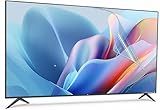
- 1.Anti blue light TV film: Our products block blue light from digital screens which can cause insomnia, eye strain, headaches, dry eyes and blurry vision; filter harmful blue light, protect your family and children's eyes, prevent myopia.
- 2.Impact and scratch resistance: This TV display protector effectively resists accidental impacts and scratches in daily life, also effectively reducing the interference of fingerprints and reflected light,reducing the risk of screen damage.
- 3.High transparency & high definition: This TV screen protector boasts excellent transparency and high definition, ensuring that your viewing experience remains crystal clear; watch your favorite shows and movies with no loss in picture quality, as if there were no protective film at all.
- 4.Easy to install and remove: The anti glare film can give full protection to the entire screen, is easy to install, and can be done in minutes; using the surrounding ring glue technology, only the edge of the screen protector is sticky.
- 5.Compatible model: This anti blue light screen protector is specially designed for 48 inches with a 16:9 aspect ratio monitor; diagonal: 48 inches / width: 1056mm / height: 596mm; please check your monitor or TV size before purchg this blue light screen protector.
Which type of buyer should consider each example?
Choose the S95F approach when picture quality remains the priority
The S95F is the more conventional choice for a buyer who wants an OLED television and is willing to rely on Samsung’s stated Glare-Free treatment. Its listed 55–83-inch classes make it easier to match screen size to a seating distance than a single-size specialty display. The evidence does not prove that it is the best bright-room TV for every room, so inspect an independent reflection test for the exact regional model when available.
Before ordering, confirm that the listing is for the 2025 S95F rather than another OLED generation, and check whether the screen size and connectivity match your equipment. A glare-control feature cannot compensate for a window directly opposite the panel if your seating and room layout create a large, sharp reflection.
Choose The Frame approach when the display is part of the décor
The 2026 The Frame is designed for readers who want a television that can present artwork when not being used for video. Its matte coating is documented as helpful in bright rooms, making it a logical candidate when visible reflections and the appearance of a traditional glossy screen are the main objections.
Do these 3 things before closing this tab:
1Scan for outdated or missing drivers - takes under a minute2Repair Windows errors before they cause bigger problems3Fix the driver behind crashes, sound loss and screen glitchesAccept the trade-off before buying. RTINGS reports no local dimming and says similarly priced conventional televisions may produce better picture quality. If you mainly watch films in a dark room, compare black-level performance and value against a conventional model rather than paying for art-display features you will not use.
A practical buying procedure
- Write down the room conditions. Record screen-to-window direction, lamp locations, overhead lights, daytime viewing hours and the widest seating angle.
- Define your non-glare priority. Decide whether the main problem is a recognizable window reflection, a generally washed-out picture, or both. This determines whether direct-reflection evidence, total-reflected-light evidence, or brightness deserves the most weight.
- Shortlist exact model codes. Include model year, screen size and market. Do not compare a UK listing with a US listing as if they were identical.
- Find model-specific reflection evidence. Prefer a test that reports direct reflections and total reflected light. Treat a manufacturer label as a feature claim until an independent test confirms performance.
- Check daytime SDR capability. Look for sustained SDR brightness information and read how it was measured. Keep the qualification—mode, window size, test conditions and date—with the number.
- Review dark-room performance. Check contrast, black uniformity and shadow detail if you watch at night. A bright-room benefit should not create an unacceptable evening compromise.
- Compare value using your priorities. Include the cost of any art or design features only if you will use them. A specialty matte set may solve a décor problem while a conventional model at a similar price offers stronger picture performance.
- Verify the delivered unit. Confirm the carton and on-screen information show the same model code you researched. Return policies matter because a showroom or online description cannot reproduce your room’s reflections.
How to set up a TV to reduce glare after purchase
Change the geometry first
Move the panel so the strongest window or lamp is not directly opposite it. Even a modest angle can shift a reflection away from the main viewing position. Recheck every seat rather than optimizing one chair.
Control the nearest light source
Turn off or relocate a lamp that reflects into the screen. During daytime tests, compare the same scene with blinds or curtains open and closed. This identifies whether the television or the room is responsible for most of the distraction.
Use a consistent picture mode
Evaluate glare with the picture mode you intend to keep. Switching to an extremely bright preset can hide some ambient washout while making color and eye comfort worse. Adjust brightness only after the room and reflection geometry are stable.
Keep the screen clean without damaging the coating
Follow the manufacturer’s cleaning instructions for the specific panel. Aggressive cleaners or rough cloths can damage an anti-reflective layer, changing the very property you bought the TV for. Do not assume that a generic glass-cleaner routine is safe for a coated display.
Rank #4

- BIG SCREEN CINEMA EXPERIENCE: Experience movies, sports, and gaming on a large display that transforms your space into a home theater.
- ANTI-GLARE FOR ANY LIGHTING CONDTION: Watch without distractions. Anti-Glare Screen technology minimizes glare from windows and ambient lighting, so you can enjoy clear, vibrant picture quality no matter where you place your TV. (Available on 65” and 75” class screen sizes only.)
- MOVIES INCLUDED WITH THE BRAVIA TV: Access SONY PICTURES CORE with Pure Stream and the largest IMAX Enhanced collection included with BRAVIA. 5 credits to redeem on latest release movies and 12 months subscription on hundreds of classics.
- CINEMATIC PICTURE AND SOUND AT HOME: Support for Dolby Vision and Dolby Atmos delivers an immersive viewing experience. DTS:X creates cinema-like audio that surrounds you.
- SMARTER PICTURE IN REAL TIME: The XR Processor uses AI scene recognition to optimize color, contrast, and clarity in every frame. XR Clear Image uses AI to restore lost detail and reduce noise in your content.
Common buying mistakes and how to correct them
- Taking “glare-free” literally: No TV removes every reflection. Reframe the goal as reducing the reflection that bothers you most.
- Choosing by finish alone: Matte does not automatically mean low total reflected light, and glossy does not automatically mean poor daytime performance. Require model-specific evidence.
- Ignoring brightness: A screen can diffuse reflections yet look too dim for afternoon viewing. Compare daytime SDR capability with reflection handling.
- Comparing different model years: Coatings and processing can change between generations. Use the exact year and code.
- Mixing regional specifications: A UK product page may not describe the US version’s sizes or features. Verify the market before comparing.
- Buying a specialty art TV for picture quality alone: The Frame’s matte presentation serves a design purpose, but RTINGS identifies the absence of local dimming and a possible picture-quality disadvantage versus similarly priced conventional sets.
- Testing only one seat: Reflections move with your position. Check the full seating area.
- Using a showroom as proof: Retail lighting and placement rarely match a home window. Use the store to inspect build and viewing angles, then rely on room-specific reasoning and model evidence.
Troubleshooting a disappointing bright-room picture
A window is visible as a sharp shape
Change the TV’s angle or seating position first, then control the window during viewing hours. If the shape remains, the panel’s direct-reflection handling is not sufficient for that geometry; a different model or room placement is more effective than simply increasing brightness.
The whole picture looks gray
This indicates broad ambient washout rather than one isolated reflection. Reduce total room light, compare another picture mode, and investigate the television’s total-reflected-light behavior. A coating that disperses the window outline may still leave dark scenes elevated.
Daytime sports look dull
Check whether you are using an SDR mode with adequate output and whether daylight is entering from several directions. If the room remains bright after controlling nearby sources, prioritize a model with stronger documented SDR brightness as well as reflection handling.
The TV looks good at noon but poor at night
Nighttime disappointment often comes from contrast, black uniformity or a lamp that turns on after dark. Repeat the test with the intended evening lighting and compare dark scenes before deciding that the anti-glare treatment failed.
What is—and is not—established about a “best” model
There is no defensible universal ranking from the available evidence. No independent comparative set here covers multiple brands, price bands, screen sizes and identical glare conditions. The named products are useful examples of two strategies: an OLED with a manufacturer-described glare-control feature and a matte art-focused QLED with independently noted bright-room benefits and picture-quality compromises.
For a genuinely ranked shopping list, you would need current, model-specific tests performed under comparable conditions, plus local pricing and stock. Until those are available for the models you can actually buy, a transparent decision based on your room is more reliable than a generic “top pick.”
Bright-room TV checklist
- Map windows, lamps, overhead fixtures and the hours you watch.
- Decide whether direct reflections, total washout or both are the main problem.
- Check independent evidence for the exact model’s direct-reflection and total-reflected-light behavior.
- Confirm daytime SDR brightness information and its test conditions.
- Compare dark-room contrast, black uniformity and viewing-angle performance.
- Verify model year, full code, screen size and country-specific specification.
- For art-focused models, decide whether the design feature justifies any picture-quality or value compromise.
- Plan placement and light control before delivery.
- Keep a return option in case the panel behaves differently in your room.
Bottom line for shoppers searching “best TV without glare”
Buy for the light in your room, not for the phrase on the box. A strong candidate combines useful daytime SDR brightness with verified handling of the particular reflections you see. Samsung’s S95F is a current OLED example whose upgraded Glare-Free feature is a Samsung claim; the 2026 The Frame is a matte, art-oriented option that RTINGS says helps in bright rooms but lacks local dimming and may trail similarly priced conventional TVs in picture quality. Treat both as starting points, verify the exact regional model, and judge the final choice against your own windows, lamps and seating.
Recommended Free Tools
Quick Recap
Product prices and availability are accurate as of the date/time indicated and are subject to change. Any price and availability information displayed on Amazon at the time of purchase will apply.

