Free tools Windows power users keep installed
One-click scans. No signup required.
Short answer: Most restaurants should begin with Toast Self-Ordering Kiosk, Clover Kiosk, or Lightspeed Self-Order Menu. Toast is the most integrated restaurant-operations route, Clover is the strongest dedicated all-in-one terminal, and Lightspeed is the most flexible iPad-based deployment. TouchBistro is worth considering for iPad-centric restaurants, but you should obtain written confirmation of its current kiosk hardware and payment offering before buying.
The right choice depends on more than the ordering screen. Menu synchronization, kitchen routing, payment hardware, receipt handling, accessibility, network resilience, software terms, processing fees, installation and support all affect whether a kiosk improves service or creates another system to manage.
As an Amazon Associate I earn from qualifying purchases.
Which Square Kiosk alternative fits your restaurant?
The four products below represent different deployment models rather than interchangeable terminals. Compare the operating model first, then compare specifications and commercial terms.
Recommended Free Tools
| Platform | Best fit | Hardware approach | Order and payment flow | Important qualification |
|---|---|---|---|---|
| Toast Self-Ordering Kiosk | High-volume quick-service and fast-casual restaurants wanting one restaurant platform | Wall-mounted or freestanding kiosk configurations | Guests browse, customize, pay, and can receive SMS pickup notifications; orders route to Toast POS and kitchen displays | Confirm available hardware models, payment devices, contract, processing rates and local availability |
| Clover Kiosk | Operators wanting a large, self-contained terminal with payment and receipt printing | 24-inch ordering display plus 8-inch payment display; countertop, wall, VESA or optional floor stand | Contactless, chip, swipe and debit PIN payments; orders synchronize with Clover POS and go to a kitchen display or printer | The advertised cost advantage is a vendor claim based on published-price comparisons |
| Lightspeed Self-Order Menu | Small and medium businesses preferring modular iPad hardware | iPad in kiosk mode with a compatible stand and payment setup | Customers order and pay on the iPad; orders are sent automatically to the kitchen and customers can be notified when ready | Verify iPad generations, reader compatibility, printer needs, network design and subscription eligibility |
| TouchBistro | iPad-centric, especially table-service, restaurants seeking a restaurant-specific POS | Apple iPad POS and hardware ecosystem | Restaurant POS workflows are documented; a direct self-order kiosk package is not established in the available product information | Request a written kiosk, payment and support specification before treating it as a replacement |
Start with the operating requirements
A kiosk is successful when it reduces ordering friction without creating a second menu, payment system or kitchen queue. Write down the requirements below before requesting quotes.
#1 Best Overall

- Deploy securely wherever your business needs a tablet station: the heavy-duty lockable steel enclosure keeps your iPad safe from tampering and unauthorized removal, purpose-built for retail managers, IT procurement teams, event coordinators, and hospitality operators who need a reliable public-facing kiosk. Ideal for retail checkout counters, hotel lobbies, church check-in stations, library information desks, and trade show booths where tablets need to stay put and stay on.
- Built for iPad Gen 7-11, A16, Air & Pro, bare tablets only: compatible with iPad Pro (10.5", 11"), iPad Air (10.5", 10.9"), iPad A16 (11"), and iPad 7-10 (10.2"-10.9"). Requires bare tablet without a case. Includes four interchangeable mounting plates that can be configured for home button access, camera cutout, or full coverage, so your enclosure fits your specific model and use case. Note: iPad 12.9" is not compatible.
- Portrait or landscape, locked exactly where you need it: rotate 90° and tilt up to 75° to find the right viewing angle for your application. Once set, both the rotation and tilt can be locked in place to prevent customers or guests from adjusting the screen, keeping your POS interface, digital signage, or check-in form exactly where it belongs.
- Keep the iPad charged and the cables out of sight: the built-in lockable power cabinet provides protected, key-accessed space for your charging adapter, while the integrated cable management system routes cords internally, so your kiosk looks clean and professional with no exposed wiring, even during continuous operation.
- Built to a commercial standard, not a lightweight stand: at 33 lbs with a wide 13.4" x 11.8" steel base, this floor stand stays firmly upright through a full day of foot traffic, open to close, without bolting to the floor. The powder-coated, high-strength steel construction resists scratches and scuffs in busy environments, so it looks as professional after months of continuous use as it did on day one.
Native POS and kitchen integration
Ask whether the kiosk uses the same menu, modifier rules, taxes, discounts, payment records and reporting as the cashier system. The crucial question is where an order is created. If it is written directly into the restaurant POS, the kitchen display system (KDS), prep tickets and sales reports can follow existing workflows. If it lands in a separate application, staff may need manual reconciliation or duplicate menu maintenance.
Request a demonstration of a complete order, including a customized item, a combo, an unavailable item and a refund. Confirm that the order appears on the intended KDS station or printer with the same routing rules as counter orders.
Hardware model and placement
Dedicated kiosks provide a purpose-built enclosure, larger screens and fewer loose components. iPad systems are easier to add one at a time and can be repurposed for table ordering or staff tasks, but they require a stand or enclosure, a payment reader and sometimes a separate printer.
Measure the entrance, queue, power outlet and network path. Decide whether the unit will be countertop, wall-mounted or freestanding. Leave enough clearance for wheelchair users and for a guest to approach, operate the screen and collect a receipt without blocking the queue.
Payments and receipts
Determine which payment methods are supported at the kiosk and what happens when a reader, internet connection or receipt printer fails. Contactless, chip, swipe and debit PIN support are not universal across iPad readers. A built-in printer can simplify operations, while a tablet setup may need a network printer or an entirely digital receipt process.
Ask for the fallback procedure: can staff complete the order at a register, can a payment be retried without creating a duplicate ticket, and how are abandoned authorizations released?
Menu, modifiers and upsells
Restaurants with complex customization need more than attractive menu tiles. Test required modifiers, ingredient exclusions, portion choices, combo substitutions, age or allergy prompts, timed menus and item availability. Verify that a price change made in the POS reaches the kiosk and that an unavailable item disappears or is blocked from checkout.
Quick wins for a faster PC:
Clear out junk files and repair common Windows errorsFree Scan →Fix the driver behind crashes, sound loss and screen glitchesFind Drivers →Repair Windows errors before they cause bigger problemsFix Now →Toast documents modifier support and upsell prompts. For every platform, ask whether managers can control which upgrades appear, whether recommendations are conditional on the item selected, and whether kiosk-specific prices or menus are supported.
Accessibility and placement
Accessibility should be tested at the installed height, not inferred from a product photograph. Check text size, contrast, touch-target spacing, screen-reader behavior, tactile controls where offered, audio prompts and the ability to complete payment without assistance. Toast documents screen-reader support and compatible tactile controls. Other platforms should be asked to provide their current accessibility documentation and supported hardware combinations.
Rank #2

- Secure any 7.9" to 11" tablet against theft, built for retail managers, IT teams, and facility coordinators: the adjustable keyed locking clamp secures iPad, Samsung Galaxy Tab, and other 7.9" to 11" tablets against theft and tampering, ideal for retail stores, healthcare check-in desks, hospitality counters, offices, trade shows, and other high-traffic public spaces. Requires bare tablet, not compatible with cases. Tablet not included.
- Works with Square, PayPal, and other audio jack card readers: unlike enclosed kiosk stands, the open clamp design keeps your tablet's audio jack fully accessible, so you can run Square, PayPal Here, and other audio jack-based card readers while the tablet is securely mounted. Turn any floor kiosk into a fully functional POS checkout station without removing your payment hardware.
- Height adjustable tablet floor stand for shared-use spaces, adjusts with the tablet already mounted: adjustable pole height allows comfortable viewing for standing or seated users without unlocking or removing the device, making this tablet kiosk floor stand suitable for customer check-in, self-service kiosks, and shared interaction points. All hardware included for a straightforward, one-person setup.
- 360 degree rotation, +/-90 degree tilt, portrait or landscape, locked in place: rotate freely between portrait and landscape orientation and tilt to eliminate glare or match your application layout. Use portrait mode for POS checkout, visitor sign-in forms, and loyalty registration; switch to landscape for digital menus, video displays, and product demos. Both rotation and tilt adjust without tools.
- Cable alignment clips keep cords organized, charging port accessible while mounted: built-in cable alignment clips on the back of the pole route charging and data cables neatly along the stand, eliminating loose wires on the floor. The tablet's charging port remains fully accessible while mounted, so you can keep your device powered throughout continuous operation without removing it from the stand. The 9.4 lb steel stand has a 13.6" x 17.4" triangular base for freestanding stability, or bolt it to the floor via pre-drilled mounting holes for permanent installations, recommended for high-interaction touchscreen environments.
Resilience and support
Ask how the kiosk behaves during a brief internet interruption, a POS outage or a kitchen-display failure. Clarify whether orders can be queued locally, whether payment requires a live connection, and how staff are alerted. Document support hours, replacement procedures, remote diagnostics and the escalation path for a restaurant that cannot take kiosk orders during service.
Commercial terms
Compare the complete cost: hardware purchase or lease, kiosk software, POS subscription, payment processing, installation, network equipment, printer supplies, support, cancellation fees and optional modules. A low monthly software figure can be outweighed by processing, hardware or required service charges.
The Tool Desk
Outbyte PC Repair FREERepair Windows errors before they cause bigger problemsFix Now →Outbyte Driver Updater FREEFix the driver behind crashes, sound loss and screen glitchesFind Drivers →Toast Self-Ordering Kiosk
How Toast’s kiosk model works
Toast defines a self-service kiosk as a touchscreen station where guests browse the menu, customize items and pay without waiting for a cashier. Its kiosk connects directly to Toast POS, sends orders to kitchen displays in real time and supports modifiers and upsell prompts. Guests can be invited to join the restaurant’s loyalty program, and SMS notifications can tell them when a pickup order is ready.
This direct path is useful when the same restaurant already relies on Toast for menu management, kitchen routing, payments and reporting. Staff do not need to copy kiosk tickets into another system, and managers can use the restaurant’s existing item and modifier structure as the starting point.
Hardware and accessibility options
Toast documents both wall-mounted and freestanding configurations. The choice affects queue design, cleaning, cable management and accessibility. A wall unit can preserve floor space but requires suitable construction and power placement; a freestanding unit is easier to reposition but occupies valuable queue area.
Toast also documents screen-reader support and compatible tactile controls. Confirm exactly which kiosk hardware and payment device combination provides those functions in your region and configuration. Accessibility features can depend on the installed model and software version.
Outdated Drivers Are Slowing You Down
One free scan finds every outdated or missing driver and matches the right update for your exact hardware.Free scan · exact hardware matchWindows Errors? Fix Them Before They Spread
Repair common Windows errors and clear accumulated junk for a smoother, more stable PC - no reinstall needed.Free scan · no reinstallBest use case
Toast is strongest for a high-volume quick-service or fast-casual operation that wants one restaurant platform from menu presentation through kitchen production. It is particularly attractive where multiple locations need consistent menus, modifiers, loyalty prompts and reporting.
Checks before signing
- Get the proposed kiosk model, screen size, mounting method and payment device in writing.
- Confirm whether SMS pickup notifications and loyalty enrollment are included in your software package or require an add-on.
- Verify kitchen-display routing for every prep station and printer.
- Review processing rates, contract length, cancellation terms, installation charges and support coverage for each location.
- Run an accessibility test with the exact hardware at the intended mounting height.
Clover Kiosk
Dedicated hardware specifications
Clover’s kiosk uses a 24-inch ordering touchscreen and a separate 8-inch payment touchscreen. A built-in thermal dot receipt printer is included, so the terminal can print receipts without a separate printer beside the customer-facing display.
The payment screen accepts contactless, chip, swipe and debit PIN transactions. Connectivity options include Wi-Fi, Ethernet and LTE, giving operators more choices for primary and backup connectivity. Clover states that transactions use end-to-end encryption.
Rank #3

- Highly flexible - The 360° rotatable base and tablet bracket holder combined with a folding arm offer unparalleled adjustment for typing or showcasing without missing any viewing angles. Turn display in a second between cashier and shopper or switch landscape/portrait mode instantly.
- Business-oriented - Two size rubber padded bracket holders collectively fit 6" - 13" tablets or any gadgets with width or height measurement in the range of 6.6"-9.6" (Please noticed that both two clips fit cases less than 0.5" thickness), An ideal docking station stand for perfect match of large or small tablet pcs typically used at restaurant shop point of sale, office home desk, etc.
- Ergonomic design - Quick attach/detach of holder with simple push of the button creates no hassle for easy storage and carrying. A true universal ipad kiosk stand with easy pull handlebar and dedicated space for power cord charging.
- Broad application - Not only does it make your ipads/android/windows surface tablets a desktop display computer, it allows you to type, press, view, swivel with great stability. Confidently interact with customers at restaurant, check out at register, collaborate in group meeting at office, present products or services at showroom, and many more.
- Steady support - Light and smooth turning of bracket holder/arm provides high efficiency in busy settings. The weighted base plus hard folding arm offer sturdy structure to withstand weights of large tablets and heavy operation on the device, a professional grade tablet stand.
Installation choices and POS synchronization
The unit can be installed on a countertop, mounted to a wall, attached using a VESA pattern or placed on an optional floor stand. Clover says the kiosk synchronizes menu and pricing with Clover POS and sends completed orders to a kitchen display or printer.
These options make Clover a practical choice when you want a conspicuous, large-format station that combines ordering, payment and receipt printing in one enclosure. The built-in printer can reduce peripheral clutter, but it also introduces a consumable and maintenance point that should be included in the service plan.
Understanding the 40% ownership claim
A 2026 Fiserv launch document says Clover Kiosk can have up to a 40% lower total cost of ownership than competitive offerings, based on a comparison of published prices. This is a vendor statement, not an independent benchmark. It does not establish what a particular restaurant will pay after processing, software, installation, support, taxes, financing or optional equipment are included.
Request a location-specific quote and build your own five-year comparison. Include the number of kiosks, replacement parts, receipt paper, network service, payment processing, software modules, installation and the cost of staff time spent maintaining menus.
Best use case
Clover is the clearest fit for an operator who values a dedicated all-in-one terminal and wants payment and receipt hardware integrated into the same product. It is less attractive if your priority is reusing existing iPads or moving kiosks between tables and counter service.
Do these 3 things before closing this tab:
1Repair Windows errors before they cause bigger problems2Scan for outdated or missing drivers - takes under a minute3Clear out junk files and repair common Windows errorsLightspeed Self-Order Menu
iPad-based ordering and payment
Lightspeed’s Self-Order Menu is available through the Apple App Store, and its kiosk mode is designed for quick-service environments. Customers order and pay directly on the iPad in one process. Completed orders are sent automatically to the kitchen, and customers can be notified when an order is ready.
The iPad model lets a restaurant start with one station, add another during peak periods or use the same platform in table-ordering mode. Lightspeed also documents a kiosk iPad setup and sells an iPad stand through its hardware store.
What you must specify yourself
Unlike a dedicated terminal, an iPad deployment is a system of components. Confirm the supported iPad generations and operating-system version, the stand or enclosure, the payment reader, charging method, receipt choice and network layout. Ask whether the reader is supplied, certified for your region and able to process the payment types your guests use.
Decide whether receipts will be printed, emailed, sent by text or omitted. If you need paper receipts, identify the compatible printer and place it where staff can reload paper without entering the customer queue. Verify that the subscription plan you have selected permits kiosk mode and the required number of devices.
What’s actually slowing this PC down?
Pick the symptom - the matching free tool is one click away.
Rank #4
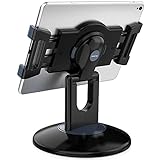
- Highly flexible - The 360° rotatable base and tablet bracket holder combined with a folding arm offer unparalleled adjustment for typing or showcasing without missing any viewing angles. Turn display in a second between cashier and shopper or switch landscape/portrait mode instantly.
- Business-oriented - Two size rubber padded bracket holders collectively fit 6" - 13" tablets or any gadgets with width or height measurement in the range of 6.6"-9.6" (Please noticed that both two clips fit cases less than 0.5" thickness), An ideal docking station stand for perfect match of large or small tablet pcs typically used at restaurant shop point of sale, office home desk, etc.
- Ergonomic design - Quick attach/detach of holder with simple push of the button creates no hassle for easy storage and carrying. A true universal ipad kiosk stand with easy pull handlebar and dedicated space for power cord charging.
- Broad application - Not only does it make your ipads/android/windows surface tablets a desktop display computer, it allows you to type, press, view, swivel with great stability. Confidently interact with customers at restaurant, check out at register, collaborate in group meeting at office, present products or services at showroom, and many more.
- Steady support - Light and smooth turning of bracket holder/arm provides high efficiency in busy settings. The weighted base plus hard folding arm offer sturdy structure to withstand weights of large tablets and heavy operation on the device, a professional grade tablet stand.
Best use case
Lightspeed is a strong modular option for small and medium restaurants that prefer Apple hardware, want a lower-commitment pilot and may switch between kiosk and table modes. It is also useful where a business wants to scale stations independently rather than install a large fixed terminal at every location.
TouchBistro as an iPad-centric alternative
TouchBistro’s product guide describes an Apple iPad-powered restaurant POS and hardware ecosystem. Its restaurant focus makes it relevant to table-service operators and other businesses that already want iPad-based workflows. A comparison of restaurant POS systems places TouchBistro among the principal alternatives to Square alongside Toast, Clover and Lightspeed.
However, the available product information does not directly establish a current self-order kiosk package with specified hardware, payment reader and kitchen behavior. Treat TouchBistro as a POS candidate rather than a confirmed kiosk replacement until its sales team supplies a written specification.
Questions to put in writing
- Is there a supported customer-facing self-order kiosk mode today, and in which countries?
- Which iPad generations, stands, enclosures and payment readers are supported?
- Can a kiosk order use the same modifiers, taxes, discounts, kitchen routing and reporting as the main POS?
- Are receipt printers, digital receipts and offline procedures supported?
- What are the software, hardware, processing, installation and cancellation costs?
Dedicated kiosk or iPad: a practical decision
Choose dedicated hardware when
- The station will run continuously in a busy queue and must withstand heavy public use.
- You want a large ordering display, a separate payment screen and an integrated receipt printer.
- Fixed mounting, cable management and a consistent appearance matter more than portability.
- Your team prefers one vendor to supply, support and replace the kiosk assembly.
Choose an iPad deployment when
- You want to pilot one station before committing to a larger installation.
- The same devices may be used for table ordering, line busting or staff operations.
- You already maintain Apple hardware and can handle stands, charging and peripheral support.
- You value modular replacement over a single large terminal.
Neither model is automatically cheaper. Dedicated hardware may include more components in one purchase, while iPad systems spread costs across the tablet, stand, reader, printer and support plan. Compare the complete installed system rather than the screen alone.
Hardware and payment checklist
Use this checklist during a product demonstration and site survey.
- Screen: Record the diagonal size, brightness, viewing angle, touch technology and cleaning requirements.
- Mount: Confirm countertop, wall, VESA and floor-stand choices, plus the finished height and wheelchair clearance.
- Power: Identify the outlet, cable route, surge protection and what happens if power is interrupted during payment.
- Network: Test Ethernet and Wi-Fi at the installation point; ask whether LTE or another backup is available and what it costs.
- Payment: Verify contactless, chip, swipe and debit PIN support, receipt signatures where applicable and the recovery path for declined or interrupted transactions.
- Receipts: Decide between a built-in thermal printer, network printer and digital receipt. Include paper storage and replacement in the operating plan.
- Peripherals: Check barcode scanners, customer displays, speakers, tactile controls and any accessibility accessories required by your site.
- Cleaning and service: Confirm approved cleaning materials, warranty coverage, spare-part availability and replacement lead times.
Implementation plan for a restaurant kiosk
A controlled rollout exposes menu, network and kitchen issues before they affect every location.
- Map the service flow. Document where guests enter, queue, order, pay, collect receipts and receive food. Select the kiosk position so it does not obstruct counter service or pickup traffic.
- Inventory the menu. List required modifiers, combos, substitutions, allergens, timed menus, taxes, discounts and unavailable-item rules. Remove ambiguous choices before loading the kiosk.
- Confirm the POS path. Demonstrate that a test order, refund, void and item-availability change appear correctly in the POS, KDS and reports.
- Specify hardware. Choose the screen, stand or mount, payment device, printer, network connection, power route and accessibility features as one approved bill of materials.
- Build the network plan. Assign the kiosk to the appropriate secure network, measure signal strength, configure Ethernet where practical and document the backup connection and outage procedure.
- Test realistic orders. Use modifiers, substitutions, discounts, split behavior, a declined card, a canceled order and a printer-out condition. Check both the guest receipt and the kitchen ticket.
- Train staff. Teach employees how to help without taking over unnecessarily, move an order to a register, clear a stuck session, replace paper, handle refunds and report a connectivity failure.
- Pilot during a controlled shift. Start with one station or one location, watch queue times and kitchen capacity, collect guest feedback and correct menu or routing problems before expanding.
- Review after launch. Compare kiosk sales, modifier errors, abandoned carts, payment failures, refund reasons and support incidents. Use those findings to adjust menu layout and staffing.
Costs, contracts and total ownership
Ask every provider for a quote that separates one-time and recurring charges. A useful comparison includes:
- Ordering application or kiosk-mode subscription.
- Restaurant POS subscription and required modules.
- Hardware purchase, lease or financing.
- Payment processing rates, authorization fees and any minimums.
- Installation, configuration, shipping and site surveys.
- Mounts, stands, enclosures, printers, paper and replacement parts.
- Primary and backup connectivity.
- Support, software updates, training and replacement service.
- Contract length, renewal terms, cancellation fees and data-export rights.
Ask the provider to model one kiosk and the number you expect at peak demand. Then calculate the cost per station over the contract term. Keep vendor claims separate from your own assumptions: the Clover ownership statement, for example, is based on published-price comparisons and says up to 40%, not a guaranteed saving for every restaurant.
Common failure points and fixes
Menu changes do not appear
Check whether the item was changed in the master POS menu, whether the kiosk has synchronized, and whether a location-specific menu overrides the global one. Keep a test item and a documented publish process so managers can verify a change before opening.
Best Value

- Enhanced Security: Featuring a sophisticated lock and key mechanism, this kiosk tablet stands ensures your iPad is safe from theft and unauthorized access. Its robust aluminum and steel frame anchors firmly to any floor, deterring tampering in public areas like restaurants or trade shows.
- Compatible iPad Model: This locking tablet floor stand is designed to fit 9.7" iPad, 10.2" iPad, 9.7" iPad Air, 9.7" iPad Air 2, 10.5" iPad Air, 9.7" iPad Pro and latest 10.5" iPad Pro. The security iPad floor stand suitable for varied professional needs and environments.
- Optimal Viewing & Interaction: The floor kiosk iPad stand features a -90°~90° tilt function, enhances engagement by reducing glare. Its height can be adjusted from 27.6" to 45.3", catering to various user heights and preferences.
- Robust Design with Enhanced Stability: AboveTEK's iPad kiosk floor stand features an attachable base with screw holes for extra security, complemented by an anti-slip pad for enhanced stability. 0.16” thick and weighing 3kg (6.6lb), guarantees a strong, stable foundation suitable for daily use.
- Neat Setup Locking Stand with Cable Management: This anti-theft iPad stands integrates efficient cable management, keeping charging cords neatly tucked away. It's built with longevity in mind, using premium materials that withstand the rigors of constant use while maintaining a professional appearance.
Orders reach the wrong kitchen station
Review prep-station routing, printer assignments and modifier rules in the POS. Run a test with each major category and confirm that kitchen staff see the same information as they do for cashier-entered orders.
Payment succeeds but no ticket appears
Stop duplicate attempts, check the POS transaction log and follow the provider’s recovery procedure before asking the guest to pay again. Staff should know how to identify an authorized payment with a missing order and how to issue a refund if required.
Printer or paper failures
Provide a digital-receipt fallback, keep the correct thermal paper on site and train staff to identify an empty roll, open cover or network-printer error. A built-in printer reduces cabling but still needs routine cleaning and paper replacement.
Guests cannot complete the screen
Review touch-target size, contrast, language, screen-reader behavior and mounting height. Place clear staff assistance instructions nearby without forcing every guest to request help. Test with users who have different mobility, vision and hearing needs.
Network interruptions stop ordering
Use wired networking where practical, monitor the signal at the kiosk and document the manual fallback. Confirm in advance whether the platform supports queued orders or requires a live connection for every authorization.
Contract costs exceed the quote
Reconcile the signed order form with the invoice for hardware, software modules, processing, installation, support and cancellation obligations. Do not rely on a headline device price when a required subscription or payment agreement is listed elsewhere.
Decision guide by restaurant type
| Restaurant situation | Most logical starting point | Why | First verification |
|---|---|---|---|
| High-volume QSR with an established Toast operation | Toast Self-Ordering Kiosk | Direct POS and kitchen integration, modifiers, upsells, loyalty prompts and SMS pickup notifications | Exact hardware, payment device, contract and local availability |
| Restaurant wanting a large fixed station with receipt printing | Clover Kiosk | 24-inch ordering display, 8-inch payment display, built-in printer and multiple mounting options | Location-specific total-cost quote and processing terms |
| Small or medium business testing self-ordering | Lightspeed Self-Order Menu | iPad kiosk mode, modular hardware and automatic kitchen dispatch | Supported iPad, reader, stand, printer and plan eligibility |
| Table-service operation standardized on iPad | TouchBistro, subject to confirmation | Restaurant-focused iPad POS ecosystem | Written confirmation of self-order kiosk hardware and payment support |
| Multi-location operator comparing platforms | Run pilots with the leading fit for each location | Queue volume, kitchen layout and accessibility needs can differ by site | Measure complete installed cost and operational reliability, not only software price |
How to make the final choice
Select Toast when integrated restaurant operations and high-volume kitchen coordination are the priority. Select Clover when a purpose-built, large-format terminal with integrated payment and receipt printing is more important than tablet flexibility. Select Lightspeed when you want an iPad-based system that can be deployed incrementally or used in more than one service mode. Consider TouchBistro only after its current kiosk and payment specifications are documented for your location.
Recommended Free Tools
Whichever route you take, require a live demonstration using your real menu, modifiers, payment methods and kitchen routing. The best Square Kiosk alternative is the one that keeps the guest transaction, payment record, kitchen ticket, receipt and reporting in a single dependable workflow at the cost your location can actually sustain.
Quick Recap
Product prices and availability are accurate as of the date/time indicated and are subject to change. Any price and availability information displayed on Amazon at the time of purchase will apply.

